

Federal White Collar Crimes Lawyer Chicago, IL. Federal investigations rarely begin with a dramatic knock at the door. In many white collar cases, the paper trail comes first: bank records, emails, business documents, subpoena responses, agency interviews, and a theory prosecutors are already testing.
When federal agents are involved, every move counts. Before you answer questions or produce documents, talk to an experienced Chicago, IL federal crimes defense lawyer who knows how these investigations unfold.
Federal white collar cases can put your career, business, finances, and name on the line. Combs Waterkotte’s Chicago, IL federal white collar crimes lawyers defend clients facing subpoenas, target letters, search warrants, agency interviews, and criminal charges tied to alleged financial misconduct.
Need a federal white collar crimes lawyer in Chicago, IL? Call Combs Waterkotte at (314) 900-HELP or contact us online now for a free, confidential consultation.
Cases Handled
Over 10,000
Jail Days Saved
Over 1 Million
Google Reviews
500+ Perfect
Legal Experience
100+ Years
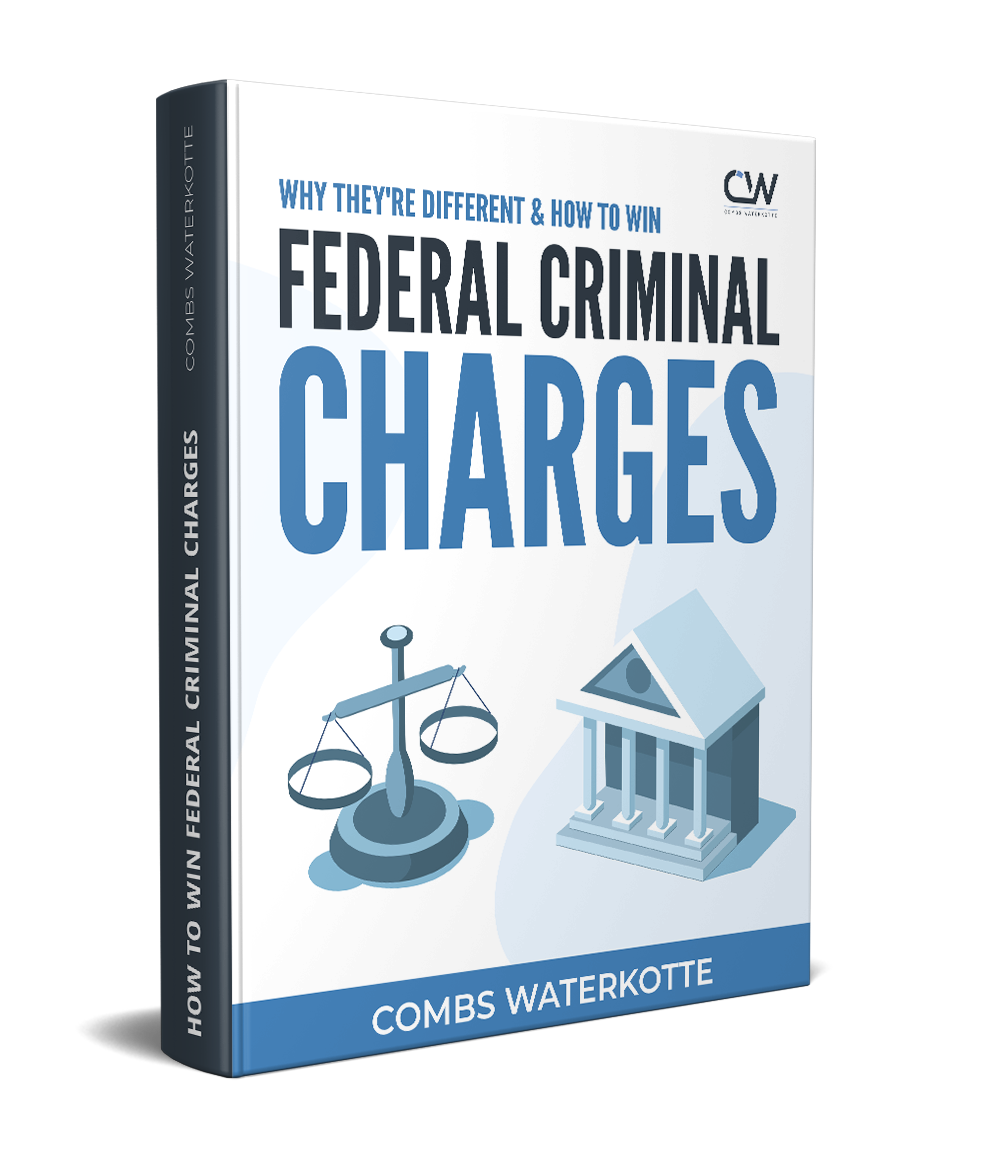
Free book
Facing Federal Criminal Charges? Why They’re Different and How to Win
Combs Waterkotte, a leading federal criminal defense law firm, has handled over 10,000 cases successfully. This ebook guides you through the federal criminal defense process, how federal charges are different, and how to win.
Here’s what you’ll find below:
- What counts as a federal white collar crime
- The charges prosecutors often bring in federal financial crime cases
- How to respond if federal agents, subpoenas, or target letters are involved
- How defense lawyers challenge federal white collar allegations
- Potential penalties and long-term consequences
- When to get a federal criminal defense lawyer involved
Legal Videos
Can Federal Charges Be Reduced Or Dismissed?
Can Federal Charges Be Reduced Or Dismissed? Chris Combs and Andrew Russek, lawyers with Combs Waterkotte, a leading federal criminal defense firm, talk about proffers, probation, and federal …
Should I Hire A Lawyer Experienced In Federal Defense?
Should I Hire A Lawyer Experienced In Federal Defense? Chris Combs and Andrew Russek from the leading federal criminal defense firm Combs Waterkotte discuss the importance of hiring a lawyer with …
What Penalties Apply To Federal Sex Crime Convictions?
What Penalties Apply To Federal Sex Crime Convictions? Andrew Russek and Chris Combs from Combs Waterkotte federal criminal defense firm discuss potential penalties related to federal sex crime …
Do Federal Sex Crimes Require Sex Offender Registration?
Do Federal Sex Crimes Require Sex Offender Registration? Andrew Russek, a lawyer with leading federal criminal defense firm Combs Waterkotte, discusses the sex offender registry and federal sex …
What Makes A Sex Crime Federal Rather Than State?
What Makes A Sex Crime Federal Rather Than State? Andrew Russek and Chris Combs of Combs Waterkotte discuss factors that play into a sex crime being classified as federal, rather than …
What Are Federal Sex Crime Charges?
What Are Federal Sex Crime Charges? Chris Combs and Andrew Russek of Combs Waterkotte discuss the most common federal sex crime charges. Interview Transcript Scott Michael Dunn: Well, let's …
Can Federal Charges Be Reduced Or Dismissed?
Can Federal Charges Be Reduced Or Dismissed? Chris Combs and Andrew Russek, lawyers with Combs Waterkotte, a leading federal criminal defense firm, talk about proffers, probation, and federal …
Should I Hire A Lawyer Experienced In Federal Defense?
Should I Hire A Lawyer Experienced In Federal Defense? Chris Combs and Andrew Russek from the leading federal criminal defense firm Combs Waterkotte discuss the importance of hiring a lawyer with …
What Penalties Apply To Federal Sex Crime Convictions?
What Penalties Apply To Federal Sex Crime Convictions? Andrew Russek and Chris Combs from Combs Waterkotte federal criminal defense firm discuss potential penalties related to federal sex crime …
Do Federal Sex Crimes Require Sex Offender Registration?
Do Federal Sex Crimes Require Sex Offender Registration? Andrew Russek, a lawyer with leading federal criminal defense firm Combs Waterkotte, discusses the sex offender registry and federal sex …
What Makes A Sex Crime Federal Rather Than State?
What Makes A Sex Crime Federal Rather Than State? Andrew Russek and Chris Combs of Combs Waterkotte discuss factors that play into a sex crime being classified as federal, rather than …
What Are Federal Sex Crime Charges?
What Are Federal Sex Crime Charges? Chris Combs and Andrew Russek of Combs Waterkotte discuss the most common federal sex crime charges. Interview Transcript Scott Michael Dunn: Well, let's …
When Does a White Collar Case Become Federal?
In most cases, a federal white collar crime is a nonviolent offense involving money, documents, business activity, or a position of trust. Prosecutors may claim the person used that access or authority to gain money, avoid obligations, mislead others, or secure an unlawful advantage.
Not every fraud or financial crime case belongs in federal court. The federal hook usually comes from the statute involved, the money at issue, the agencies investigating, or the way the alleged conduct crossed state lines. A case may become federal when it involves:
- Alleged conduct that falls under a federal criminal statute, such as wire fraud, mail fraud, bank fraud, money laundering, tax fraud, or conspiracy
- Interstate activity, including emails, phone calls, wire transfers, electronic payments, or online transactions that crossed state lines
- A financial institution connected to the federal banking system, including banks, lenders, or federally insured accounts
- Federal money, including government contracts, grants, benefits, disaster relief funds, or federally backed loans
- Tax allegations that draw the attention of IRS Criminal Investigation
- Allegations involving securities, investors, public markets, or financial disclosures reviewed by the SEC Division of Enforcement
- Billing, reimbursement, referral, or medical necessity issues involving Medicare, Medicaid, or other federal health care programs and the U.S. Department of Health and Human Services Office of Inspector General
- An investigation involving the FBI, U.S. Attorney’s Office, or another federal agency
The government often builds federal white collar cases from documents before anyone is charged. Emails, bank records, contracts, billing data, internal policies, audit trails, and interviews can all become part of the prosecution’s narrative. A defense lawyer’s job is to organize the evidence, separate mistakes from crimes, and show where the government’s case does not hold together.
White Collar Federal Cases Our Chicago, IL Defense Lawyers Handle
Combs Waterkotte represents clients in Chicago, IL facing serious federal white collar investigations and charges, including:
- Wire fraud, 18 U.S.C. § 1343: Wire fraud charges often involve emails, phone calls, electronic payments, texts, online forms, or other interstate communications allegedly used to carry out a scheme to defraud.
- Mail fraud, 18 U.S.C. § 1341: Mail fraud cases focus on whether the mail or a private delivery service was used as part of an alleged fraud.
- Bank fraud, 18 U.S.C. § 1344: Bank fraud cases usually involve allegations that someone defrauded, or attempted to obtain money or property from, a federally insured financial institution.
- Health care fraud, 18 U.S.C. § 1347: Federal health care fraud cases often start with billing data, medical records, coding decisions, referral patterns, or claims the government believes were false or improper.
- Securities and commodities fraud, 18 U.S.C. § 1348: These cases often involve allegations of misleading investors, hiding material information, manipulating transactions, or using false statements in connection with securities or commodities.
- Tax evasion and false tax filings, 26 U.S.C. §§ 7201 and 7206: Tax prosecutions often come down to willfulness, records, income reporting, deductions, returns, and what the government claims the person knew at the time.
- Money laundering, 18 U.S.C. §§ 1956 and 1957: Money laundering cases focus on transactions the government says involved criminal proceeds or were designed to hide, move, or promote unlawful activity.
- Embezzlement and theft from federal programs or institutions: Federal embezzlement allegations often depend on where the money came from, who controlled it, and whether the funds were tied to a bank, agency, program, contract, or federally regulated institution.
- Identity theft and aggravated identity theft, 18 U.S.C. § 1028A: These charges can arise from names, Social Security numbers, account information, benefits records, employment documents, or other identifiers used in connection with another alleged federal crime.
- Computer fraud and unauthorized access, 18 U.S.C. § 1030: Prosecutors may use this statute when they claim someone improperly accessed business systems, financial data, consumer records, protected computers, or government information.
- False statements, 18 U.S.C. § 1001: False statement charges can arise from interviews, forms, audits, certifications, or communications with federal agents or agencies, even when no separate fraud charge is filed.
- Federal conspiracy, 18 U.S.C. § 371 or § 1349: In many white collar cases, conspiracy gives prosecutors a way to charge an alleged agreement, not just a completed fraud.
In Chicago, IL, a federal white collar case may start with one allegation but expand quickly. Prosecutors may add conspiracy, laundering, false statements, obstruction, forfeiture, or restitution claims depending on the records and theory of the case.
What Makes Federal White Collar Cases in Chicago, IL Different?
Federal white collar cases are often built long before an arrest. Investigators may use subpoenas, search warrants, forensic accountants, cooperating witnesses, grand jury proceedings, and agency audits before charges are filed.
Federal charges often come after a long investigation, which means the government may already have months or years of records organized around its theory before the case reaches court.
In federal white collar cases, the sentence may depend on more than the name of the charge. Loss calculations, victim counts, alleged leadership role, obstruction issues, and claims of sophisticated means can change the exposure dramatically.
Warning Signs of a Federal White Collar Case in Chicago, IL
If federal agents, subpoenas, or agency questions are already in the picture, do not wait for formal charges. Contact Combs Waterkotte’s Chicago, IL federal white collar crimes lawyers if:
- The FBI, IRS, HHS-OIG, SEC, or another federal agency contacted you at home, work, or by phone
- A subpoena requests documents, emails, phone records, bank records, billing files, or other data
- A subpoena went to your employer, company, bank, client, vendor, accountant, or another third party
- A search warrant was used to collect records, computers, phones, files, or business materials
- Federal agents started asking questions of people connected to your work, finances, or business dealings
- You were told you are a target, subject, or witness in a federal investigation
- A routine audit started turning into something larger, more serious, or more investigative
- Agents asked you to explain a payment, invoice, tax return, application, transfer, billing entry, or business decision
Do not assume a casual conversation with agents is harmless. Even if they seem friendly, their job is to gather evidence. Truthful answers can create problems if they are incomplete, misinterpreted, or inconsistent with records the government already has.
How Combs Waterkotte Builds a Federal White Collar Defense in Chicago, IL
Federal white collar defense starts with the records, then moves to the story behind them. The issue is often intent: did the government uncover fraud, or is it looking at a mistake, business dispute, compliance problem, accounting issue, misunderstanding, or good-faith decision through the wrong lens?
Combs Waterkotte’s Chicago, IL federal white collar crimes lawyers can help by:
- Handle contact with investigators, agencies, and the U.S. Attorney’s Office
- Analyze the scope of subpoenas, warrants, target letters, and agency requests
- Analyzing financial records, emails, contracts, returns, and transaction histories
- Attack the legal and factual assumptions behind the government’s theory
- Expose problems with the investigation, the witnesses, or the way the government connects the evidence
- Work with specialists who can help explain the records and challenge the government’s math
- Intervene before indictment when there is room to do so
- Build the case for motions, negotiation, trial, or sentencing from day one
From day one, Combs Waterkotte’s Chicago, IL federal white collar defense lawyers prepare as though the case may have to be fought in court. That trial-ready approach gives your defense leverage at every stage.
Potential Penalties of a Federal White Collar Crimes Conviction in Chicago, IL
The punishment in a federal white collar case depends on the charge, the loss amount, the evidence, and the defendant’s role in the alleged offense. A conviction may lead to:
- A federal prison sentence, including years or decades behind bars in serious cases
- Restitution payments based on the government’s claimed losses
- Financial penalties ordered by the court
- Loss of property or funds the government claims are connected to the case
- Federal supervised release after prison
- Problems keeping or renewing a professional license
- Being barred from federal contracts, health care programs, or other government-funded work
- Immigration consequences
- Career disruption, business fallout, and public damage to your reputation
Get Help From a Federal White Collar Crimes Lawyer in Chicago, IL
Whether you have been charged, received a subpoena, or suspect you are under investigation in Chicago, IL, the safest move is to get legal help before the case moves any further.
Combs Waterkotte’s Chicago, IL federal white collar crimes lawyers defend clients against serious federal allegations involving fraud, tax issues, health care billing, money laundering, conspiracy, and records-heavy investigations.
Start protecting yourself now. Call (314) 900-HELP or contact us online for a free, confidential case review.

