

Virginia Federal White Collar Crimes Lawyer. A federal white collar case can be moving long before anyone is arrested. If the FBI, IRS, SEC, HHS-OIG, or another federal agency has reached out to you, assume the government may already be working from documents, subpoenas, financial data, and witness statements.
The earlier you bring in an experienced Virginia federal crimes defense lawyer, the more room your defense may have to protect your freedom, your reputation, and your future.
If the government is asking questions about your records, billing, taxes, transactions, contracts, or business practices, do not treat it like routine paperwork. Combs Waterkotte’s Virginia federal white collar crimes lawyers defend individuals, professionals, business owners, executives, contractors, health care providers, and organizations in high-stakes federal investigations.
Need a federal white collar crimes lawyer in Virginia? Call Combs Waterkotte at (314) 900-HELP or contact us online now for a free, confidential consultation.
Cases Handled
Over 10,000
Jail Days Saved
Over 1 Million
Google Reviews
500+ Perfect
Legal Experience
100+ Years
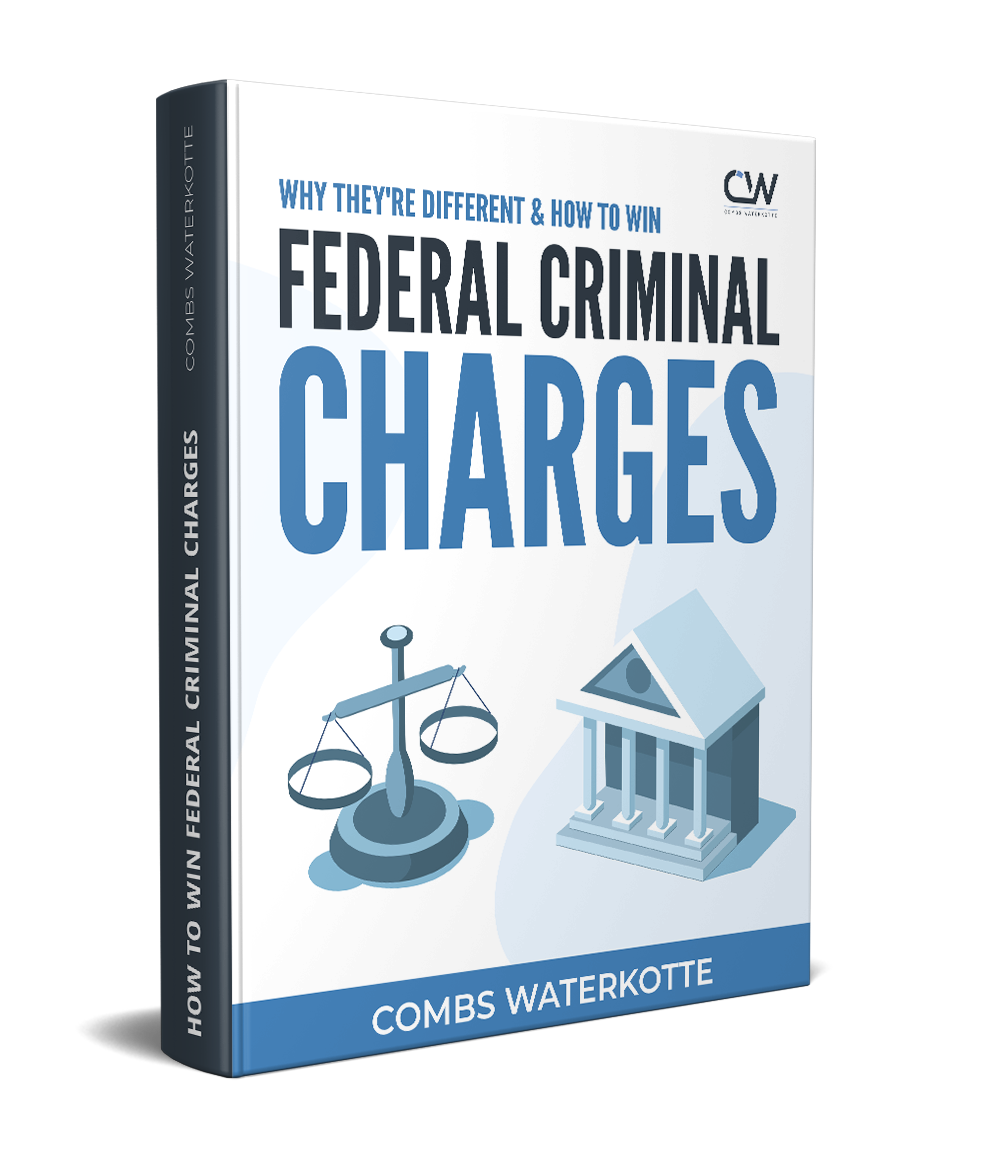
Free book
Facing Federal Criminal Charges? Why They’re Different and How to Win
Combs Waterkotte, a leading federal criminal defense law firm, has handled over 10,000 cases successfully. This ebook guides you through the federal criminal defense process, how federal charges are different, and how to win.
This page covers:
- What federal white collar crimes are
- Common white collar charges, including fraud, conspiracy, and money laundering
- What steps to take if you think the government is investigating you
- How intent, records, and the government’s theory can be challenged
- The penalties that can follow a federal white collar conviction
- When to get a federal criminal defense lawyer involved
Legal Videos
Can Federal Charges Be Reduced Or Dismissed?
Can Federal Charges Be Reduced Or Dismissed? Chris Combs and Andrew Russek, lawyers with Combs Waterkotte, a leading federal criminal defense firm, talk about proffers, probation, and federal …
Should I Hire A Lawyer Experienced In Federal Defense?
Should I Hire A Lawyer Experienced In Federal Defense? Chris Combs and Andrew Russek from the leading federal criminal defense firm Combs Waterkotte discuss the importance of hiring a lawyer with …
What Penalties Apply To Federal Sex Crime Convictions?
What Penalties Apply To Federal Sex Crime Convictions? Andrew Russek and Chris Combs from Combs Waterkotte federal criminal defense firm discuss potential penalties related to federal sex crime …
Do Federal Sex Crimes Require Sex Offender Registration?
Do Federal Sex Crimes Require Sex Offender Registration? Andrew Russek, a lawyer with leading federal criminal defense firm Combs Waterkotte, discusses the sex offender registry and federal sex …
What Makes A Sex Crime Federal Rather Than State?
What Makes A Sex Crime Federal Rather Than State? Andrew Russek and Chris Combs of Combs Waterkotte discuss factors that play into a sex crime being classified as federal, rather than …
What Are Federal Sex Crime Charges?
What Are Federal Sex Crime Charges? Chris Combs and Andrew Russek of Combs Waterkotte discuss the most common federal sex crime charges. Interview Transcript Scott Michael Dunn: Well, let's …
Can Federal Charges Be Reduced Or Dismissed?
Can Federal Charges Be Reduced Or Dismissed? Chris Combs and Andrew Russek, lawyers with Combs Waterkotte, a leading federal criminal defense firm, talk about proffers, probation, and federal …
Should I Hire A Lawyer Experienced In Federal Defense?
Should I Hire A Lawyer Experienced In Federal Defense? Chris Combs and Andrew Russek from the leading federal criminal defense firm Combs Waterkotte discuss the importance of hiring a lawyer with …
What Penalties Apply To Federal Sex Crime Convictions?
What Penalties Apply To Federal Sex Crime Convictions? Andrew Russek and Chris Combs from Combs Waterkotte federal criminal defense firm discuss potential penalties related to federal sex crime …
Do Federal Sex Crimes Require Sex Offender Registration?
Do Federal Sex Crimes Require Sex Offender Registration? Andrew Russek, a lawyer with leading federal criminal defense firm Combs Waterkotte, discusses the sex offender registry and federal sex …
What Makes A Sex Crime Federal Rather Than State?
What Makes A Sex Crime Federal Rather Than State? Andrew Russek and Chris Combs of Combs Waterkotte discuss factors that play into a sex crime being classified as federal, rather than …
What Are Federal Sex Crime Charges?
What Are Federal Sex Crime Charges? Chris Combs and Andrew Russek of Combs Waterkotte discuss the most common federal sex crime charges. Interview Transcript Scott Michael Dunn: Well, let's …
Understanding Federal White Collar Crimes
A federal white collar crime is not usually about force or violence. It is typically about money, records, transactions, public programs, professional duties, or business decisions the government claims were used unlawfully.
The line between a state white collar case and a federal one usually comes down to jurisdiction. If the alleged conduct involves federal statutes, federally connected money, interstate transactions, or federal agencies, the case can move into federal court. Common federal triggers include:
- A federal criminal statute, such as wire fraud, mail fraud, bank fraud, money laundering, tax fraud, or conspiracy
- Use of interstate channels, including email, phones, banking networks, payment processors, wire transfers, or online platforms
- A bank, lender, or federally insured financial institution
- Money tied to a federal program, such as contracts, grants, public benefits, disaster relief funds, or federally backed loans
- Federal tax issues investigated by IRS Criminal Investigation
- Allegations involving securities, investors, public markets, or financial disclosures reviewed by the SEC Division of Enforcement
- Medicare, Medicaid, or other federal health care programs involving the U.S. Department of Health and Human Services Office of Inspector General
- A broader federal investigation led by the FBI, U.S. Attorney’s Office, or another federal agency
Federal white collar cases are built differently than many other criminal cases. Instead of one witness or one arrest, the government may rely on months of financial records, emails, contracts, billing data, internal policies, audit trails, and interviews. A strong defense has to organize that material, challenge the government’s assumptions, and throw doubt on the prosecution’s case.
Federal White Collar Charges We Defend in Virginia
Our Virginia federal white collar defense lawyers handle document-heavy, high-stakes cases involving charges such as:
- Wire fraud, 18 U.S.C. § 1343: Wire fraud charges often involve emails, phone calls, electronic payments, texts, online forms, or other interstate communications allegedly used to carry out a scheme to defraud.
- Mail fraud, 18 U.S.C. § 1341: Mail fraud charges are based on allegations that the mail or a private carrier was used to advance a fraudulent transaction, application, invoice, contract, or scheme.
- Bank fraud, 18 U.S.C. § 1344: Bank fraud charges often claim that false information, hidden facts, or misleading documents were used to affect a bank or federally insured lender.
- Health care fraud, 18 U.S.C. § 1347: Federal health care fraud cases often start with billing data, medical records, coding decisions, referral patterns, or claims the government believes were false or improper.
- Securities and commodities fraud, 18 U.S.C. § 1348: These cases often involve allegations of misleading investors, hiding material information, manipulating transactions, or using false statements in connection with securities or commodities.
- Tax evasion and false tax filings, 26 U.S.C. §§ 7201 and 7206: These cases may involve alleged underreporting, false documents, hidden income, improper deductions, or statements the IRS believes were knowingly false.
- Money laundering, 18 U.S.C. §§ 1956 and 1957: A money laundering charge can turn ordinary-looking transfers, deposits, purchases, or business transactions into evidence if prosecutors claim the funds came from illegal activity.
- Embezzlement and theft from federal programs or institutions: These cases may involve allegations that someone misused, diverted, or took money connected to a federal program, public contract, financial institution, or benefit plan.
- Identity theft and aggravated identity theft, 18 U.S.C. § 1028A: Aggravated identity theft is often charged alongside fraud when the government claims another person’s identifying information was used during the alleged offense.
- Computer fraud and unauthorized access, 18 U.S.C. § 1030: Computer fraud cases often turn on whether access to a system, file, account, database, or network was authorized.
- False statements, 18 U.S.C. § 1001: These cases can arise from interviews with agents, agency forms, compliance documents, audits, certifications, or written responses to the government.
- Federal conspiracy, 18 U.S.C. § 371 or § 1349: In many white collar cases, conspiracy gives prosecutors a way to charge an alleged agreement, not just a completed fraud.
It is common for federal prosecutors to charge more than one offense in a white collar case. Fraud allegations may be tied to conspiracy, money laundering, false statements, obstruction, asset forfeiture, and restitution demands.
Why Federal White Collar Charges in Virginia Are Different
Federal white collar investigations do not always move in public. Long before charges are filed, agents may be collecting records, serving subpoenas, analyzing financial data, interviewing witnesses, and using agency audits to test the government’s theory.
This is why waiting can be dangerous. If the government has already organized the records around its theory, the defense has to move quickly to find missing context, weak assumptions, bad math, and alternative explanations.
In federal white collar cases, the sentence may depend on more than the name of the charge. Loss calculations, victim counts, alleged leadership role, obstruction issues, and claims of sophisticated means can change the exposure dramatically.
Warning Signs of a Federal White Collar Case in Virginia
You do not have to wait for an indictment before getting legal help. Contact Combs Waterkotte’s Virginia federal white collar crimes lawyers right away if:
- Federal agents showed up at your home, workplace, business, or called you directly
- The government asked for business records, emails, account information, phone data, or financial documents
- Someone connected to your work, company, accounts, or transactions received a subpoena
- Federal agents served or executed a search warrant
- People around you were contacted or interviewed by federal investigators
- A target letter, grand jury subpoena, or grand jury notice arrived
- An audit that started as a civil or administrative issue now feels like a criminal investigation
- Agents asked you to explain a payment, invoice, tax return, application, transfer, billing entry, or business decision
Do not treat an agent interview like a routine conversation. What feels like a simple explanation can become evidence, especially if your answer does not match records you have not seen.
How Our Virginia Federal White Collar Crimes Lawyers Build a Defense
Federal white collar defense starts with the records, then moves to the story behind them. The issue is often intent: did the government uncover fraud, or is it looking at a mistake, business dispute, compliance problem, accounting issue, misunderstanding, or good-faith decision through the wrong lens?
Combs Waterkotte helps clients in Virginia by:
- Communicating with agents and prosecutors on your behalf
- Review subpoenas, search warrants, target letters, and document demands
- Build a timeline from records, communications, contracts, returns, and financial data
- Push back on alleged intent, what you knew, what mattered legally, what caused the loss, and how the loss was calculated
- Find weak points in searches, interviews, witness statements, and the prosecution’s chronology
- Work with specialists who can help explain the records and challenge the government’s math
- Negotiating before indictment when possible
- Build the case for motions, negotiation, trial, or sentencing from day one
Combs Waterkotte prepares federal white collar cases with the courtroom in mind from the start. If prosecutors will not back down, our Virginia defense lawyers are ready to challenge the government’s case and fight for your freedom.
Penalties and Consequences of Federal White Collar Crimes in Virginia
Federal white collar penalties can be financial, professional, and personal. If convicted, you may be facing consequences such as:
- Years or decades in prison
- Restitution
- Financial penalties ordered by the court
- Asset forfeiture claims by the federal government
- Supervised release
- Career damage through licensing impacts, board discipline, or professional restrictions
- Exclusion from government programs
- Serious immigration consequences, including deportation risk in some cases
- Career disruption, business fallout, and public damage to your reputation
Get Help From a Federal White Collar Crimes Lawyer in Virginia
If federal agents are asking questions or charges have already been filed in Virginia, now is the time to get a defense lawyer involved.
Our Virginia federal white collar defense team handles high-stakes cases involving financial records, business decisions, billing practices, tax allegations, alleged fraud, money laundering, and conspiracy charges.
To speak with a federal white collar crimes lawyer, call (314) 900-HELP or contact us online for a free, confidential consultation.

