

Federal Drug Lawyer. If federal agents have contacted you, you received a target letter or subpoena, or you are already facing federal drug charges, the situation is serious and every second matters.
Federal drug investigations are not built overnight. By the time law enforcement makes contact, agents and prosecutors have often been working the case for months.
These cases also carry some of the harshest penalties in the criminal justice system. Depending on the allegations, you may be facing mandatory minimum prison sentences, asset forfeiture, supervised release, and long-term damage to your career, finances, and reputation.
You need a federal drug law firm that is prepared from the start and will not back down from a fight, even when the full force of the U.S. Government is against us.
Combs Waterkotte is a nationally recognized federal criminal defense firm with decades of experience defending clients against serious federal criminal charges. We represent individuals at every stage of a federal drug matter, from the earliest signs of investigation through trial and sentencing.
Contact Combs Waterkotte today for a confidential, no-cost consultation. Available 24/7. Call us at (314) 900-HELP or contact us online.
This page covers:
- What a federal drug lawyer does and why that role matters at every stage
- How and why drug cases become federal offenses
- Common federal drug charges, from distribution to conspiracy
- How federal investigations are built, often long before an arrest
- Penalties in federal drug cases, including mandatory minimums
- Defenses that may be available and why early legal intervention matters
Cases Handled
Over 10,000
Jail Days Saved
Over 1 Million
Google Reviews
500+ Perfect
Legal Experience
Over 80 Years
Legal Videos
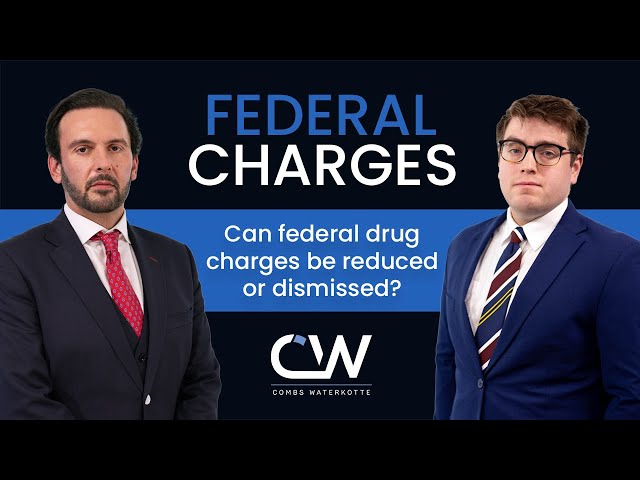
Can Federal Charges Be Reduced Or Dismissed?
Can Federal Charges Be Reduced Or Dismissed? Chris Combs and Andrew Russek, lawyers with Combs Waterkotte, a leading federal criminal defense firm, talk about proffers, probation, and federal …

Should I Hire A Lawyer Experienced In Federal Defense?
Should I Hire A Lawyer Experienced In Federal Defense? Chris Combs and Andrew Russek from the leading federal criminal defense firm Combs Waterkotte discuss the importance of hiring a lawyer with …
What Penalties Apply To Federal Sex Crime Convictions?
What Penalties Apply To Federal Sex Crime Convictions? Andrew Russek and Chris Combs from Combs Waterkotte federal criminal defense firm discuss potential penalties related to federal sex crime …
Do Federal Sex Crimes Require Sex Offender Registration?
Do Federal Sex Crimes Require Sex Offender Registration? Andrew Russek, a lawyer with leading federal criminal defense firm Combs Waterkotte, discusses the sex offender registry and federal sex …
What Makes A Sex Crime Federal Rather Than State?
What Makes A Sex Crime Federal Rather Than State? Andrew Russek and Chris Combs of Combs Waterkotte discuss factors that play into a sex crime being classified as federal, rather than …
What Are Federal Sex Crime Charges?
What Are Federal Sex Crime Charges? Chris Combs and Andrew Russek of Combs Waterkotte discuss the most common federal sex crime charges. Interview Transcript Scott Michael Dunn: Well, let's …
Can Federal Charges Be Reduced Or Dismissed?
Can Federal Charges Be Reduced Or Dismissed? Chris Combs and Andrew Russek, lawyers with Combs Waterkotte, a leading federal criminal defense firm, talk about proffers, probation, and federal …
Should I Hire A Lawyer Experienced In Federal Defense?
Should I Hire A Lawyer Experienced In Federal Defense? Chris Combs and Andrew Russek from the leading federal criminal defense firm Combs Waterkotte discuss the importance of hiring a lawyer with …
What Penalties Apply To Federal Sex Crime Convictions?
What Penalties Apply To Federal Sex Crime Convictions? Andrew Russek and Chris Combs from Combs Waterkotte federal criminal defense firm discuss potential penalties related to federal sex crime …
Do Federal Sex Crimes Require Sex Offender Registration?
Do Federal Sex Crimes Require Sex Offender Registration? Andrew Russek, a lawyer with leading federal criminal defense firm Combs Waterkotte, discusses the sex offender registry and federal sex …
What Makes A Sex Crime Federal Rather Than State?
What Makes A Sex Crime Federal Rather Than State? Andrew Russek and Chris Combs of Combs Waterkotte discuss factors that play into a sex crime being classified as federal, rather than …
What Are Federal Sex Crime Charges?
What Are Federal Sex Crime Charges? Chris Combs and Andrew Russek of Combs Waterkotte discuss the most common federal sex crime charges. Interview Transcript Scott Michael Dunn: Well, let's …
What Does a Federal Drug Lawyer Do?
At Combs Waterkotte, representation begins the moment you contact our federal drug crime lawyer.
Before charges are filed, a federal drug lawyer can step in to protect your rights, communicate with investigators or federal prosecutors on your behalf, and work to prevent the most serious charges from being brought.
If you have already been charged, your attorney will review the government’s evidence, identify constitutional problems, challenge how that evidence was obtained, and build a defense strategy around the facts of your case.
Throughout the process, your lawyer may:
- negotiate with prosecutors
- prepare motions to suppress unlawfully obtained evidence
- prepare you and your witnesses for major stages of litigation
- challenge the government’s theory of the case
- present your defense at trial if necessary
- fight for the lowest possible sentence if conviction occurs
In federal court, the difference between an experienced defense lawyer and an unprepared one can mean years of your life.

When Does a Drug Case Become Federal?
Not every drug arrest leads to federal charges. Still, several factors can trigger federal jurisdiction.
A case may become federal when it involves:
- activity crossing state lines or using interstate transportation
- drug importation from outside the United States
- investigation by agencies such as the DEA, FBI, or Homeland Security
- large-scale trafficking operations
- allegations involving multiple defendants or organized criminal enterprises
- conspiracy accusations connecting people across geographic areas
Even someone with a relatively minor role can end up in a federal case if the broader operation draws federal attention.
Federal prosecutors also have wide discretion in deciding who to charge and how aggressively to charge them. That is one reason early legal guidance matters so much.
Common Federal Drug Charges
Distribution and Possession With Intent to Distribute
These charges allege that a person possessed a controlled substance not simply for personal use, but with the intent to sell or distribute it.
Prosecutors often rely on quantity, packaging, cash, digital communications, and other surrounding facts to support that claim.
Drug Trafficking
Federal drug trafficking charges are often tied to the type and quantity of the controlled substance involved. They can carry some of the most severe mandatory minimum penalties in federal law.
The substance at issue, whether fentanyl, methamphetamine, heroin, cocaine, marijuana, or another drug, can significantly affect both the charge and the sentencing range.
Drug Conspiracy
Conspiracy is one of the government’s most common tools in federal drug prosecutions.
A person does not have to personally handle drugs to be charged with conspiracy. In many cases, prosecutors only need to allege that the person knowingly agreed to participate in a drug distribution scheme and took some step in furtherance of it.
That makes conspiracy charges especially dangerous. A defendant may be held responsible for conduct carried out by others in the alleged conspiracy, even when that conduct was not personally committed.
Importation-Related Offenses
Cases involving drugs brought across international borders or through ports of entry fall under federal jurisdiction and often include additional allegations related to customs violations, smuggling, or cross-border trafficking.
Multi-Defendant and Enterprise-Style Cases
Federal investigations often target groups rather than individuals.
These cases may involve multiple co-defendants, enterprise-style allegations, or prosecution theories that attempt to connect each person to the conduct of the larger operation.
Related Firearms and Money Laundering Allegations
Federal drug cases are frequently paired with other serious charges, especially illegal firearms possession and money laundering.
Those charges bring their own penalties and may dramatically increase overall sentencing exposure.
How Federal Drug Investigations Are Built
Federal investigations are methodical, long-running, and often invisible until the government decides it is ready to act.
Agencies such as the DEA, FBI, and DHS may spend months or years building a case before making a single arrest. During that time, they may use:
- physical surveillance
- confidential informants and cooperating witnesses
- controlled drug buys
- phone interceptions and electronic surveillance
- search warrants
- subpoenas for financial, phone, or business records
- layered evidence designed to support a broader prosecution theory
By the time a target letter arrives or federal agents knock on your door, the case is usually well underway.
If you have been contacted by federal law enforcement, even informally, treat that contact seriously. Do not assume it is routine. Do not assume you can explain your way out of it.
What to Do If Federal Agents Contact You About a Drug Case
The steps you take in the first hours and days after contact with federal law enforcement can shape the entire case.
- Do not answer questions. You have the right to remain silent. Use it. Even a statement that feels harmless or clarifying can be used against you or someone else.
- Do not consent to searches. Politely and clearly decline. Agents may still search if they have a warrant, but you should never voluntarily give up your rights.
- Do not try to explain yourself. People often believe they can talk their way out of trouble. In federal investigations, that instinct usually makes things worse.
- Do not discuss the case with others. Do not contact co-defendants, witnesses, or anyone connected to the investigation. Conversations, texts, and calls can create new problems fast.
- Contact a federal drug lawyer immediately. The sooner counsel gets involved, the sooner your rights can be protected and a defense strategy can begin.

Penalties in Federal Drug Cases
Federal drug sentences are among the harshest in the American legal system.
Many drug offenses carry mandatory minimum sentences, meaning the judge may be required to impose a certain baseline term of imprisonment based on the type and quantity of drug involved. In serious trafficking cases, mandatory minimums of five, ten, or more years are common.
In conspiracy cases, the danger can be even greater. A defendant may be sentenced not only for personal conduct, but also for conduct deemed reasonably foreseeable within the alleged conspiracy. That can dramatically increase the amount of drugs attributed to one person, which can drive the sentencing range much higher.
A federal drug conviction may also bring consequences beyond prison, including:
- forfeiture of assets tied to the alleged offense
- lengthy supervised release after incarceration
- loss of benefits or professional opportunities
- immigration consequences for non-citizens
- long-term harm to employment and housing prospects
Understanding the full penalty picture is critical before making decisions in a federal case.
Defenses to Federal Drug Charges
A strong federal drug defense starts with a careful review of the government’s evidence and how that evidence was obtained.
Potential defenses may include:
- Illegal search and seizure. Evidence obtained without proper legal authority, or in violation of your Fourth Amendment rights, may be subject to suppression. In some cases, that can weaken the prosecution significantly.
- Unlawful surveillance or wiretaps. Federal wiretap laws are technical and strict. If investigators failed to follow the required procedures, intercepted communications may be challenged or excluded.
- Lack of knowledge or intent. Many federal drug charges require proof that the defendant knowingly participated. If a person did not know about the drugs, or did not understand the nature of what was happening, that may support a defense.
- No actual possession or weak connection to the drugs. Proximity is not enough. The government must prove actual or constructive possession beyond a reasonable doubt.
- Mere presence. Being near drug activity is not the same as participating in it. Presence alone, without agreement or active involvement, is not enough for a conviction.
- Unreliable informants or cooperators. Cooperating witnesses often have strong incentives to help the government. Their motives, credibility, and inconsistencies should be examined closely.
- Evidentiary weaknesses. Chain-of-custody problems, lab mistakes, record gaps, and other evidentiary issues can create reasonable doubt.
- Case dismissal or reduction. In some situations, federal drug charges can be challenged and dismissed before trial. This may happen through motions to suppress evidence, legal challenges to how the case was built, or weaknesses in the government’s proof. Even when full dismissal is not possible, these issues can sometimes lead to reduced charges or a stronger plea negotiating position.
- Sentencing mitigation. Even when conviction is a serious possibility, effective defense work can still matter enormously at sentencing. The right strategy may reduce the sentence imposed.
Frequently Asked Questions About Federal Drug Charges
What is the difference between a federal drug charge and a state drug charge?
Federal drug charges are prosecuted in federal court under federal law, usually by U.S. attorneys. They often involve federal investigative agencies and may carry more severe penalties, including mandatory minimums.
State drug charges are prosecuted under state law in state court. The same conduct may sometimes be charged at either level, depending on how the case is investigated and how prosecutors choose to proceed.
I received a target letter. What does that actually mean?
A target letter is a formal notice from the Department of Justice indicating that you are a target of a federal grand jury investigation.
It is a serious development, not a routine communication. If you receive one, do not respond without speaking to a federal defense lawyer first.
Do I have to talk to federal agents if they contact me?
No.
You have the constitutional right to remain silent. You do not have to answer questions at your home, your workplace, or anywhere else. The safest move is to decline and contact counsel immediately.
Can federal drug charges be dismissed before trial?
Yes. Some cases are challenged through motions to suppress evidence, motions to dismiss, or other pretrial strategies. Others may resolve through negotiations that change the direction of the case.
Every case depends on the facts, the evidence, and the legal issues involved.
How are mandatory minimum sentences determined?
Mandatory minimums are generally tied to the type and quantity of the controlled substance involved. Other factors, including prior record or related allegations, may also affect exposure.
These sentencing rules can be severe, which is why early legal analysis matters.
What happens in a federal drug conspiracy case?
In a federal conspiracy case, you may be accused of responsibility for acts carried out by co-conspirators if those acts were considered reasonably foreseeable within the alleged scheme.
That can greatly expand sentencing exposure and make conspiracy charges especially dangerous.
How long do federal drug investigations usually take?
They can last months or even years.
Federal agencies often spend substantial time gathering records, building witness testimony, using surveillance, and structuring a broader case before charges are filed.
Why Choose Combs Waterkotte for Federal Drug Defense
Combs Waterkotte has spent decades defending individuals facing the most serious criminal charges in the federal system. Our team brings real federal defense experience to every case it takes on.
Clients choose Combs Waterkotte because we offer:
- A strong record of serious criminal defense experience. With over 10,000 cases handled and more than 500 five-star client reviews, our federal drug lawyers bring substantial experience to high-stakes matters.
- Former prosecutors. Our team includes three former prosecutors who understand how federal cases are built, how charging decisions are made, and how the government approaches trial.
- Trial-tested representation. Our federal drug attorneys are prepared to take cases to trial when trial is the right path. We do not pressure clients to accept plea offers just because it is easier.
- Strategic, individualized defense. We evaluate every case on its own facts, challenge the government’s evidence aggressively, and build a defense around the real issues that matter.
- Direct, honest communication. People facing federal drug investigations are under enormous pressure. We believe clients deserve clarity, responsiveness, and straightforward guidance.
- A client-centered approach. We understand that our clients are not case numbers. They are people with families, careers, and futures worth protecting.
- Nationwide federal representation. Combs Waterkotte represents clients in federal courts across the country and offers flexible payment options when serious legal representation is needed most.
Call Combs Waterkotte at (314) 900-HELP or contact us online for a free, confidential consultation. We are available 24 hours a day, 7 days a week.

