

Federal Violent Crimes Lawyer Texas. Federal violent crime allegations can escalate quickly. You may already be on the government’s radar before charges are filed. You may have already been indicted. Or you may be trying to help a loved one after federal agents, officers, or prosecutors entered the picture.
Combs Waterkotte helps Texas clients protect themselves before the case gets further ahead of them. We represent clients nationwide in serious federal violent crime cases and help them get a clear picture of what prosecutors must prove, what penalties may be on the table, and how to start protecting themselves now.
If federal violent crime allegations are threatening you or someone you love in Texas, call Combs Waterkotte at (314) 900-HELP or contact us online for a confidential consultation. We offer free consultations and are available 24/7.
Cases Handled
Over 10,000
Jail Days Saved
Over 1 Million
Google Reviews
500+ Perfect
Legal Experience
Over 80 Years
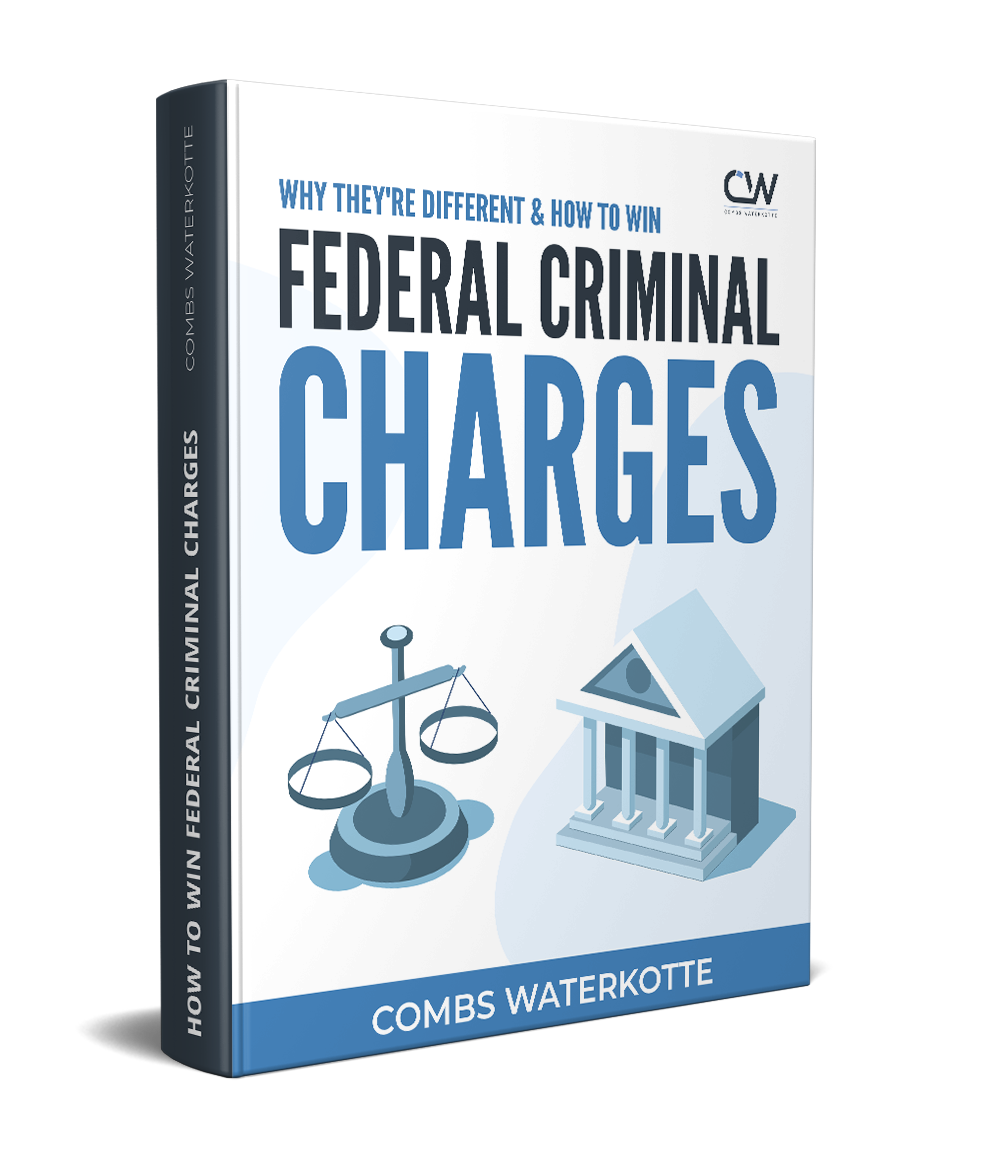
Free book
Facing Federal Criminal Charges? Why They’re Different and How to Win
Combs Waterkotte, a leading federal criminal defense law firm, has handled over 10,000 cases successfully. This ebook guides you through the federal criminal defense process, how federal charges are different, and how to win.
Below, you’ll find a practical breakdown of:
- How to respond if federal agents contact you in Texas
- What can make a violent crime a federal offense
- What makes federal prosecutions different from local or state criminal cases in Texas
- Examples of federal violent crime allegations, including Hobbs Act robbery, carjacking, kidnapping, firearm-related offenses, RICO, and conspiracy allegations
- How Combs Waterkotte approaches serious federal criminal defense
Legal Videos
Can Federal Charges Be Reduced Or Dismissed?
Can Federal Charges Be Reduced Or Dismissed? Chris Combs and Andrew Russek, lawyers with Combs Waterkotte, a leading federal criminal defense firm, talk about proffers, probation, and federal …

Should I Hire A Lawyer Experienced In Federal Defense?
Should I Hire A Lawyer Experienced In Federal Defense? Chris Combs and Andrew Russek from the leading federal criminal defense firm Combs Waterkotte discuss the importance of hiring a lawyer with …
What Penalties Apply To Federal Sex Crime Convictions?
What Penalties Apply To Federal Sex Crime Convictions? Andrew Russek and Chris Combs from Combs Waterkotte federal criminal defense firm discuss potential penalties related to federal sex crime …
Do Federal Sex Crimes Require Sex Offender Registration?
Do Federal Sex Crimes Require Sex Offender Registration? Andrew Russek, a lawyer with leading federal criminal defense firm Combs Waterkotte, discusses the sex offender registry and federal sex …
What Makes A Sex Crime Federal Rather Than State?
What Makes A Sex Crime Federal Rather Than State? Andrew Russek and Chris Combs of Combs Waterkotte discuss factors that play into a sex crime being classified as federal, rather than …
What Are Federal Sex Crime Charges?
What Are Federal Sex Crime Charges? Chris Combs and Andrew Russek of Combs Waterkotte discuss the most common federal sex crime charges. Interview Transcript Scott Michael Dunn: Well, let's …
Can Federal Charges Be Reduced Or Dismissed?
Can Federal Charges Be Reduced Or Dismissed? Chris Combs and Andrew Russek, lawyers with Combs Waterkotte, a leading federal criminal defense firm, talk about proffers, probation, and federal …
Should I Hire A Lawyer Experienced In Federal Defense?
Should I Hire A Lawyer Experienced In Federal Defense? Chris Combs and Andrew Russek from the leading federal criminal defense firm Combs Waterkotte discuss the importance of hiring a lawyer with …
What Penalties Apply To Federal Sex Crime Convictions?
What Penalties Apply To Federal Sex Crime Convictions? Andrew Russek and Chris Combs from Combs Waterkotte federal criminal defense firm discuss potential penalties related to federal sex crime …
Do Federal Sex Crimes Require Sex Offender Registration?
Do Federal Sex Crimes Require Sex Offender Registration? Andrew Russek, a lawyer with leading federal criminal defense firm Combs Waterkotte, discusses the sex offender registry and federal sex …
What Makes A Sex Crime Federal Rather Than State?
What Makes A Sex Crime Federal Rather Than State? Andrew Russek and Chris Combs of Combs Waterkotte discuss factors that play into a sex crime being classified as federal, rather than …
What Are Federal Sex Crime Charges?
What Are Federal Sex Crime Charges? Chris Combs and Andrew Russek of Combs Waterkotte discuss the most common federal sex crime charges. Interview Transcript Scott Michael Dunn: Well, let's …
What to Do If Federal Agents Contact You in Texas
If federal agents contact you or you receive a target letter, the situation is already serious. At that point, you may not know whether the government views you as a witness, a target, or someone connected to a larger investigation. In a federal violent crime investigation, a brief conversation can still become evidence.
You do not have to answer questions without a lawyer. Federal agents often ask questions after they have already gathered records, interviews, surveillance, or other evidence. Trying to be helpful can backfire if your words are misunderstood, incomplete, inconsistent, or inaccurate, and lying to federal agents can create new criminal exposure.
If you are contacted by federal investigators in Texas:
- Keep your composure and avoid arguing
- Do not lie, guess, exaggerate, or try to explain your way out of the situation
- Do not discuss what happened, who was involved, or what you know without legal counsel
- If agents approach you in person, ask whether you are free to leave
- Do not consent to a search before speaking with a lawyer
- Do not destroy records, delete messages, or coach anyone about what to say
- Keep copies of business cards, voicemails, letters, subpoenas, search warrants, and any paperwork agents provide
- Call an experienced Texas federal criminal defense lawyer as soon as possible
Asking for a lawyer is the most important way to protect yourself before decisions are made, statements are recorded, or charges are filed. Combs Waterkotte’s Texas federal violent crimes lawyers can deal with agents or prosecutors for you, help determine where you stand, and begin preparing a defense before the case advances.

What Is a Federal Violent Crime?
A violent crime can become a federal case in several different ways. Sometimes the alleged offense crosses state lines. Sometimes the FBI, ATF, DEA, or another federal agency is involved early. In other cases, prosecutors argue that the conduct affected interstate commerce, involved firearms, involved a federal victim or location, or was connected to drugs, organized activity, or a broader conspiracy.
Federal cases are handled differently than state cases in Texas. They often involve longer investigations, grand jury subpoenas, federal agents, detailed discovery, detention hearings, sentencing guidelines, and prosecutors who may have spent months building the case before an arrest is made.
Examples of federal violent crime charges in Texas include:
- Federal assault
- Armed robbery
- Hobbs Act robbery
- Carjacking
- Kidnapping
- Firearm-related violent offenses
- Gang-related or RICO-related allegations
- Murder-for-hire
- Conspiracy to commit a violent crime
- Violent crimes connected to drug trafficking
The penalties in these cases can be severe, from long federal prison sentences and possible mandatory minimums to supervised release, fines, and lasting consequences for your record, career, and family. An allegation is not a conviction, and a Texas federal violent crimes lawyer can start examining the weaknesses in the government’s case immediately.
How Federal Violent Crime Cases in Texas Differ From State Cases
Federal violent crime cases are not just Texas criminal cases with a different courthouse. The federal government may have agencies, analysts, prosecutors, task forces, and months of investigative work behind the charge. Depending on the allegations, agencies such as the FBI, ATF, DEA, U.S. Marshals, or local task forces may be involved.
A federal investigation may be active for weeks or months before you know about it, with agents gathering interviews, surveillance, phone records, search warrants, cooperating witnesses, forensic evidence, or grand jury testimony. That does not mean the case is unbeatable. It means you need a defense strategy that catches up quickly and starts pushing back.
How Combs Waterkotte Approaches Federal Violent Crime Defense in Texas
Combs Waterkotte brings former prosecutors, federal court experience, and trial-tested defense strategy to serious federal criminal cases in Texas. We know how prosecutors think, how charging decisions are made, and how small details can change the direction of a case.
A federal violent crime defense strategy may involve:
- Breaking down the indictment, complaint, warrants, and discovery piece by piece
- Looking beyond the government’s version of events
- Challenging unlawful searches, seizures, or statements
- Challenging whether prosecutors can prove the federal elements of the offense
- Reviewing witness credibility, cooperation agreements, and incentives to testify
- Preparing for detention hearings and bond arguments
- Negotiating with federal prosecutors when appropriate
- Preparing as though the case may need to be fought in court
- Preparing sentencing arguments when reducing exposure becomes critical
Some cases need aggressive trial preparation. Others call for careful negotiation designed to reduce risk and preserve options. Many require both tracks at once. Our job is to give you a clear view of your options, explain what each decision means, and fight for the best possible outcome at every stage.

Common Federal Violent Crime Charges We Handle in Texas
Federal Assault
Federal assault charges may arise from alleged violence on federal property, against certain protected persons, or in situations that give federal courts jurisdiction. The defense may focus on intent, self-defense, injury, witness reliability, jurisdiction, and whether prosecutors can prove each element beyond a reasonable doubt.
Hobbs Act Robbery
The Hobbs Act, 18 U.S.C. § 1951, allows federal prosecutors to bring robbery or extortion charges when they allege the conduct affected interstate or foreign commerce. Prosecutors often use it when they claim a robbery had some connection to business, commerce, or goods moving between states.
Carjacking
A federal carjacking case can become especially serious when prosecutors claim a firearm, bodily injury, threats, or coordinated activity were involved. These cases may require a close look at identification, intent, alleged force or intimidation, witness statements, and whether the evidence actually supports a federal carjacking charge.
Kidnapping
Federal kidnapping cases may involve allegations that someone was transported across state lines, restrained against their will, or moved under circumstances that create federal jurisdiction. The defense needs to examine the timeline, communications, witness statements, alleged movement, and whether prosecutors can prove the specific facts required for the charge.
Firearm-Related Violent Offenses
A firearm allegation can dramatically increase the stakes in a federal violent crime case. Federal firearm charges are often paired with robbery, drug trafficking, conspiracy, or other serious allegations. The defense may challenge possession, use, knowledge, intent, and whether the evidence actually supports the firearm enhancement or charge.
RICO, Gang, and Conspiracy Allegations
In some cases, prosecutors use conspiracy, racketeering, or gang-related theories to connect one person to conduct allegedly committed by others. The danger in these cases is that prosecutors may try to treat separate people, separate acts, and separate evidence as part of one larger story. The defense must focus on what you personally knew, what you actually did, and whether prosecutors can prove an agreement, participation, and intent.
Murder-for-Hire and Violent Crime Conspiracies
Murder-for-hire and violent crime conspiracy allegations often depend on messages, recordings, informants, undercover activity, digital evidence, and witness credibility. Because these charges are so serious, the defense must examine what was said, what was done, what was recorded, and whether prosecutors are reaching beyond the actual evidence.
Texas Federal Violent Crimes Lawyer FAQs
What makes a violent crime federal?
A violent crime can become federal when prosecutors allege interstate commerce, state-line issues, federal property, a federal interest, firearms, drug trafficking, conspiracy, or racketeering. The exact reason depends on the charge and the facts.
Should I talk to federal agents if I have nothing to hide?
You should not discuss the facts of the case with law enforcement without a federal criminal defense lawyer. Even truthful answers can be incomplete, misunderstood, or used against you later. Asking for a lawyer is a lawful way to protect yourself.
What happens after a federal indictment?
After a federal indictment, the next steps may include an initial appearance, arraignment, release or detention arguments, discovery, motions, negotiations, and trial preparation. Some cases are resolved through negotiation, while others must be prepared for trial. The path depends on the evidence, charges, and defense strategy.
Can federal violent crime charges be reduced?
It may be possible, depending on the facts. A reduction may come through negotiations, legal challenges, evidence problems, witness issues, or gaps in the government’s proof. In other cases, the strongest strategy may be to prepare for trial. A federal defense lawyer can review the facts and explain what options are realistic.
Are federal violent crimes punished more harshly than state crimes?
Federal violent crime charges can carry severe penalties, particularly when the case involves firearms, mandatory minimums, conspiracy allegations, or prior convictions. The federal sentencing guidelines can play a major role in the potential outcome. The earlier the defense starts addressing sentencing exposure, the better positioned the client may be.
Can Combs Waterkotte help before charges are filed?
Yes. If you believe you are under federal investigation, legal help before charges are filed can be extremely valuable. A lawyer may be able to communicate with investigators, protect you from harmful statements, respond to subpoenas, preserve evidence, and prepare for possible next steps.
Contact a Federal Violent Crimes Lawyer in Texas
A federal violent crime case can put your freedom, future, family, and reputation at risk. But you still have rights. You still have options. And prosecutors still carry the burden of proof.
Combs Waterkotte defends people across the country facing serious federal charges. Our team brings former prosecutor insight, federal court experience, trial experience, 24/7 availability, and free consultations to clients who need answers quickly.
Call Combs Waterkotte at (314) 900-HELP or contact us online today for a confidential consultation with a federal violent crimes lawyer in Texas.

