

Federal Drug Lawyer in Oakland, CA. Things can move fast once federal authorities get involved. If agents have reached out, if a target letter or subpoena has arrived, or if you are already facing federal drug charges in Oakland, CA, you are in a serious position and time matters.
Federal drug cases are usually developed piece by piece, often long before anyone reaches out to you. By the time law enforcement makes contact, agents and prosecutors may have already been at work for months.
The fallout from these allegations can be life-changing. In addition to possible mandatory minimum prison sentences, you may be at risk of losing property, serving a term of supervised release, and suffering long-term damage to your finances, career, and reputation.
You need a federal drug law firm in Oakland, CA that is prepared from the start and will not back down from a fight, even when the full force of the U.S. Government is against us.
Combs Waterkotte is a nationally recognized federal criminal defense firm with decades of experience defending clients against serious federal criminal charges. We represent Oakland, CA individuals at every stage of a federal drug matter, from the earliest signs of investigation through trial and sentencing.
Contact Combs Waterkotte today for a confidential, no-cost consultation. Available 24/7. Call us at (314) 900-HELP or contact us online.
This guide explains:
- What a federal drug lawyer in Oakland, CA does and why that role matters at every stage
- How and why drug cases become federal offenses
- The kinds of federal drug charges people commonly face, including distribution and conspiracy
- The way federal drug investigations are put together, often months before charges or an arrest
- What is at stake in a federal drug case, including exposure to mandatory minimum sentences
- Defenses that may be available and why early legal intervention matters
Cases Handled
Over 10,000
Jail Days Saved
Over 1 Million
Google Reviews
500+ Perfect
Legal Experience
100+ Years
Legal Videos
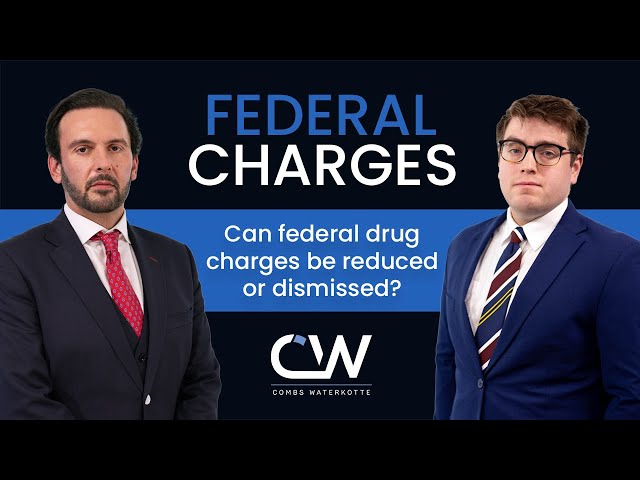
Can Federal Charges Be Reduced Or Dismissed?
Can Federal Charges Be Reduced Or Dismissed? Chris Combs and Andrew Russek, lawyers with Combs Waterkotte, a leading federal criminal defense firm, talk about proffers, probation, and federal …

Should I Hire A Lawyer Experienced In Federal Defense?
Should I Hire A Lawyer Experienced In Federal Defense? Chris Combs and Andrew Russek from the leading federal criminal defense firm Combs Waterkotte discuss the importance of hiring a lawyer with …
What Penalties Apply To Federal Sex Crime Convictions?
What Penalties Apply To Federal Sex Crime Convictions? Andrew Russek and Chris Combs from Combs Waterkotte federal criminal defense firm discuss potential penalties related to federal sex crime …
Do Federal Sex Crimes Require Sex Offender Registration?
Do Federal Sex Crimes Require Sex Offender Registration? Andrew Russek, a lawyer with leading federal criminal defense firm Combs Waterkotte, discusses the sex offender registry and federal sex …
What Makes A Sex Crime Federal Rather Than State?
What Makes A Sex Crime Federal Rather Than State? Andrew Russek and Chris Combs of Combs Waterkotte discuss factors that play into a sex crime being classified as federal, rather than …
What Are Federal Sex Crime Charges?
What Are Federal Sex Crime Charges? Chris Combs and Andrew Russek of Combs Waterkotte discuss the most common federal sex crime charges. Interview Transcript Scott Michael Dunn: Well, let's …
Can Federal Charges Be Reduced Or Dismissed?
Can Federal Charges Be Reduced Or Dismissed? Chris Combs and Andrew Russek, lawyers with Combs Waterkotte, a leading federal criminal defense firm, talk about proffers, probation, and federal …
Should I Hire A Lawyer Experienced In Federal Defense?
Should I Hire A Lawyer Experienced In Federal Defense? Chris Combs and Andrew Russek from the leading federal criminal defense firm Combs Waterkotte discuss the importance of hiring a lawyer with …
What Penalties Apply To Federal Sex Crime Convictions?
What Penalties Apply To Federal Sex Crime Convictions? Andrew Russek and Chris Combs from Combs Waterkotte federal criminal defense firm discuss potential penalties related to federal sex crime …
Do Federal Sex Crimes Require Sex Offender Registration?
Do Federal Sex Crimes Require Sex Offender Registration? Andrew Russek, a lawyer with leading federal criminal defense firm Combs Waterkotte, discusses the sex offender registry and federal sex …
What Makes A Sex Crime Federal Rather Than State?
What Makes A Sex Crime Federal Rather Than State? Andrew Russek and Chris Combs of Combs Waterkotte discuss factors that play into a sex crime being classified as federal, rather than …
What Are Federal Sex Crime Charges?
What Are Federal Sex Crime Charges? Chris Combs and Andrew Russek of Combs Waterkotte discuss the most common federal sex crime charges. Interview Transcript Scott Michael Dunn: Well, let's …
How Can a Federal Drug Lawyer in Oakland, CA Help?
At Combs Waterkotte, representation begins the moment you contact our Oakland, CA federal drug crime lawyers.
Some of the most important work happens before charges are ever filed. At that stage, a federal drug lawyer can take control of communications with the government, help shield your rights, and push back before the case becomes more serious.
If the case has already been filed, your lawyer’s job is to test the government’s proof from every angle. That includes examining the evidence, uncovering constitutional issues, attacking the legality of the investigation, and shaping a defense around the facts of your case.
Depending on where the case stands, your Oakland, CA federal drug crimes lawyer may:
- negotiate with prosecutors
- file motions to suppress evidence that was obtained illegally
- prepare you and your witnesses for major stages of litigation
- attack the government’s version of events
- present your defense at trial if necessary
- work to reduce sentencing exposure as much as possible if conviction occurs
A federal case leaves very little room for mistakes. In Oakland, CA, the gap between an experienced defense lawyer and an unprepared one can be measured in years of your life.

When Can a Drug Case Become a Federal Matter?
Some drug arrests stay in state court, while others end up as federal prosecutions depending on the circumstances.
A case may become federal when it involves:
- activity crossing state lines or using interstate transportation
- drug importation involving sources outside the United States
- investigation by agencies such as the DEA, FBI, or Homeland Security
- a large trafficking operation
- allegations involving multiple defendants or organized criminal enterprises
- conspiracy allegations involving people in different locations
A person with only a limited role can still be pulled into a federal case if the larger operation attracts federal attention.
Federal prosecutors have broad discretion when deciding whom to charge and how far to take a case. That is one reason early legal guidance can matter so much.
Federal Drug Charges Commonly Filed in Oakland, CA
Distribution and Possession With Intent to Distribute
These allegations focus on possession that goes beyond personal use and points instead to an intent to sell or distribute a controlled substance.
To support that allegation, prosecutors may point to the amount involved, the way the substance was packaged, cash, digital communications, and other surrounding facts.
Trafficking Charges
The type and quantity of the controlled substance often shape a federal drug trafficking charge, and those cases can expose a person to some of the harshest mandatory minimum penalties in federal law.
The specific drug involved, whether fentanyl, methamphetamine, heroin, cocaine, marijuana, or something else, can heavily influence both the charge filed and the possible sentencing range.
Federal Drug Conspiracy
Conspiracy is one of the government’s most common tools in federal drug prosecutions.
A person can face conspiracy charges without ever touching the drugs. The government may only need to claim there was a knowing agreement to take part in the scheme and some act that helped advance it.
The risk is broader than many people realize. In some cases, a defendant may be held responsible for actions attributed to other alleged participants, even when the defendant did not personally carry them out.
Importation-Related Offenses
When drugs are alleged to have crossed an international border or entered through a port of entry, the case often lands in federal court and may include accusations involving customs violations, smuggling, or cross-border trafficking.
Multi-Defendant and Enterprise-Style Cases
Federal investigations often target groups rather than individuals.
Prosecutors may frame these cases around multiple defendants, larger-enterprise allegations, or arguments that link each accused person to the conduct of the overall operation.
Related Weapons and Money Laundering Allegations
It is common for a federal drug case to include additional charges, particularly illegal firearms possession or money laundering.
Each of those allegations carries separate penalties and can sharply increase the total sentencing exposure in the case.
How Federal Drug Cases in Oakland, CA Are Often Built
Federal investigations are methodical, long-running, and often invisible until the government decides it is ready to act.
Before making an arrest, agencies such as the DEA, FBI, and DHS may spend months or even years putting a case together. Along the way, they may rely on:
- surveillance in the field
- confidential informants and cooperating witnesses
- controlled drug buys
- phone interceptions and electronic surveillance
- court-approved search warrants
- record subpoenas for phone, financial, or business information
- layered evidence designed to support a broader prosecution theory
A visit from federal agents or a target letter usually means the government has been building the case for some time already.
If federal law enforcement in Oakland, CA has reached out to you, treat it as a serious development, even if the contact seems informal. It is rarely routine, and trying to talk your way out of it can make things worse.
What to Do When Federal Agents in Oakland, CA Contact You About a Drug Investigation
What you do in the first few hours after federal agents make contact can affect the direction of the entire case.
- Do not answer questions. Start with silence. You have the right to remain silent, and even a comment that seems minor or helpful can be turned against you or someone else.
- Do not consent to searches. Politely and clearly decline. Agents may still search if they have a warrant, but you should never voluntarily give up your rights.
- Do not try to explain yourself. People often believe they can talk their way out of trouble. In federal investigations, that instinct usually makes things worse.
- Do not discuss the case with others. That includes potential witnesses, co-defendants, friends, or anyone tied to the investigation. A single call, text, or message can give the government something new to work with.
- Contact a federal drug lawyer in Oakland, CA immediately. The sooner counsel gets involved, the sooner your rights can be protected and a defense strategy can begin.

Penalties in Oakland, CA Federal Drug Cases
People convicted in federal drug cases can face some of the harshest sentences imposed anywhere in the American legal system.
Many drug offenses carry mandatory minimum sentences, meaning the judge may be required to impose a certain baseline term of imprisonment based on the type and quantity of drug involved. In serious trafficking cases, mandatory minimums of five, ten, or more years are common.
The sentencing risk can grow sharply in a conspiracy case. That is because a defendant may be held accountable for more than personal conduct if other acts within the alleged conspiracy were reasonably foreseeable, and that can lead to a much higher drug amount and a much higher guideline range.
Prison is only part of the picture. A federal drug conviction may also lead to:
- asset forfeiture connected to the alleged offense
- extended supervised release after a prison sentence
- lost benefits or professional opportunities
- serious immigration consequences for non-citizens
- long-term harm to employment and housing prospects
Defenses to Federal Drug Charges
Building a strong federal drug defense in Oakland, CA begins with close scrutiny of the government’s evidence and the way investigators gathered it.
Possible defense strategies may include:
- Illegal search and seizure. Evidence gathered through an unlawful search, or in violation of your Fourth Amendment rights, may be kept out of court. In the right case, that can strip significant strength from the prosecution.
- Illegal surveillance or intercepted communications. Wiretap law is highly technical, and federal investigators must follow strict procedures. If they did not, recorded calls or intercepted communications may be vulnerable to challenge.
- Absence of knowledge or intent. Many federal drug offenses depend on proof that the defendant knowingly took part. If someone was unaware of the drugs or did not understand what was actually happening, that can form the basis of a defense.
- No actual possession or weak connection to the drugs. Close physical proximity is not the same as possession. Prosecutors must still prove actual or constructive possession beyond a reasonable doubt.
- Presence without participation. Simply being nearby does not make someone guilty. The government still needs evidence of participation or agreement, not just presence.
- Questionable informants or cooperating witnesses. Many cooperating witnesses are working toward their own benefit. That makes their motives, credibility, and conflicting statements important areas for attack.
- Evidentiary weaknesses. A defense may focus on flaws in the proof, including broken chain of custody, laboratory errors, missing records, or other evidentiary gaps that create reasonable doubt.
- Challenges that lead to dismissal or reduced charges. Some federal drug cases can be attacked before trial in ways that lead to dismissal or reduction. Suppression issues, legal flaws in the investigation, and weaknesses in the government’s evidence can all create that opportunity. Even if the entire case is not thrown out, those problems may still support reduced charges or stronger plea negotiations.
- Sentencing mitigation. Even in a case where conviction remains a serious risk, the fight is not over. A well-developed sentencing strategy can still make a major difference in the final outcome.
Frequently Asked Questions About Federal Drug Charges in Oakland, CA
What makes a drug charge federal instead of state?
Federal drug charges are prosecuted in federal court under federal law, usually by U.S. attorneys. They often involve federal investigative agencies and may carry more severe penalties, including mandatory minimums.
State drug charges are prosecuted under state law in state court. The same conduct may sometimes be charged at either level, depending on how the case is investigated and how prosecutors choose to proceed.
What does it mean if I got a target letter?
Receiving a target letter usually means the Department of Justice considers you a target in a federal grand jury investigation.
That is a serious development. Before answering questions or taking any action, you should speak with a federal defense lawyer.
Do I have to talk to federal agents if they contact me?
No.
Federal agents may ask to speak with you, but you do not have to answer their questions. Your right to remain silent applies, and the safest step is usually to decline and speak with a lawyer immediately.
Is it possible to get federal drug charges dismissed before trial?
Yes. Some cases are challenged through motions to suppress evidence, motions to dismiss, or other pretrial strategies. Others may resolve through negotiations that change the direction of the case.
Every case depends on the facts, the evidence, and the legal issues involved.
How do mandatory minimums work in federal drug cases?
Mandatory minimum sentences often turn on the kind of controlled substance involved and the amount attributed to the defendant. Other circumstances, including criminal history or related allegations, may also affect the outcome.
That is one reason early legal analysis can matter so much in a federal drug case.
What happens in a federal drug conspiracy case?
In a federal drug conspiracy case, the government may try to hold you responsible for conduct committed by other alleged participants if that conduct was considered reasonably foreseeable within the conspiracy.
That can broaden sentencing exposure significantly and is one reason conspiracy charges are so dangerous.
How long can a federal drug investigation last?
They can last months or even years.
Federal agencies often spend substantial time gathering records, building witness testimony, using surveillance, and structuring a broader case before charges are filed.
Why Hire Combs Waterkotte for Federal Drug Defense in Oakland, CA
Combs Waterkotte has spent decades defending Oakland, CA individuals facing the most serious criminal charges in the federal system. Our team brings real federal defense experience to every case it takes on.
Clients choose our Oakland, CA federal drug lawyers because we offer:
- A strong record of serious criminal defense experience. With over 10,000 cases handled and more than 500 five-star client reviews, our federal drug lawyers bring substantial experience to high-stakes matters.
- Former prosecutors. Our team includes three former prosecutors who know how the government builds a case, evaluates charges, and thinks about trial strategy in federal court.
- Trial-tested representation. Our federal drug attorneys are prepared to take cases to trial when trial is the right path. We do not pressure clients to accept plea offers just because it is easier.
- Strategic, individualized defense. We do not use a one-size-fits-all approach. We assess each case on its own facts, push hard against the government’s evidence, and focus the defense on the issues most likely to matter.
- Direct, honest communication. People facing federal drug investigations are under enormous pressure. We believe clients deserve clarity, responsiveness, and straightforward guidance.
- A client-centered approach. Behind every case is a real person whose family, work, and future may be affected. We treat our clients accordingly.
- Nationwide federal representation. Combs Waterkotte represents clients in federal courts in Oakland, CA across the country and offers flexible payment options when serious legal representation is needed most.
Need help now? Call Combs Waterkotte at (314) 900-HELP or contact us online for a free, confidential consultation. Our team is available 24 hours a day, 7 days a week.

