

Federal Drug Lawyer in Maine. A call from federal agents. A target letter. A subpoena. Any one of those can signal a serious situation where delay can hurt you.
Federal drug cases are usually developed piece by piece, often long before anyone reaches out to you. By the time law enforcement makes contact, agents and prosecutors may have already been at work for months.
The fallout from these allegations can be life-changing. In addition to possible mandatory minimum prison sentences, you may be at risk of losing property, serving a term of supervised release, and suffering long-term damage to your finances, career, and reputation.
You need a federal drug law firm in Maine that is prepared from the start and will not back down from a fight, even when the full force of the U.S. Government is against us.
Combs Waterkotte is a nationally recognized federal criminal defense firm with decades of experience defending clients against serious federal criminal charges. We represent Maine individuals at every stage of a federal drug matter, from the earliest signs of investigation through trial and sentencing.
Contact Combs Waterkotte today for a confidential, no-cost consultation. Available 24/7. Call us at (314) 900-HELP or contact us online.
What you will find on this page:
- The job a federal drug lawyer in Maine performs, and why that work can matter from the beginning of a case to the end
- How and why drug cases become federal offenses
- The kinds of federal drug charges people commonly face, including distribution and conspiracy
- How federal investigations are built, often long before an arrest
- Penalties in federal drug cases, including mandatory minimums
- Defenses that may be available and why early legal intervention matters
Cases Handled
Over 10,000
Jail Days Saved
Over 1 Million
Google Reviews
500+ Perfect
Legal Experience
100+ Years
Legal Videos
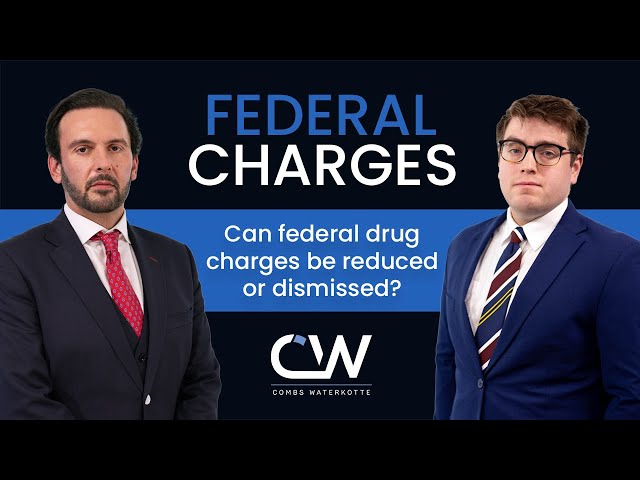
Can Federal Charges Be Reduced Or Dismissed?
Can Federal Charges Be Reduced Or Dismissed? Chris Combs and Andrew Russek, lawyers with Combs Waterkotte, a leading federal criminal defense firm, talk about proffers, probation, and federal …

Should I Hire A Lawyer Experienced In Federal Defense?
Should I Hire A Lawyer Experienced In Federal Defense? Chris Combs and Andrew Russek from the leading federal criminal defense firm Combs Waterkotte discuss the importance of hiring a lawyer with …
What Penalties Apply To Federal Sex Crime Convictions?
What Penalties Apply To Federal Sex Crime Convictions? Andrew Russek and Chris Combs from Combs Waterkotte federal criminal defense firm discuss potential penalties related to federal sex crime …
Do Federal Sex Crimes Require Sex Offender Registration?
Do Federal Sex Crimes Require Sex Offender Registration? Andrew Russek, a lawyer with leading federal criminal defense firm Combs Waterkotte, discusses the sex offender registry and federal sex …
What Makes A Sex Crime Federal Rather Than State?
What Makes A Sex Crime Federal Rather Than State? Andrew Russek and Chris Combs of Combs Waterkotte discuss factors that play into a sex crime being classified as federal, rather than …
What Are Federal Sex Crime Charges?
What Are Federal Sex Crime Charges? Chris Combs and Andrew Russek of Combs Waterkotte discuss the most common federal sex crime charges. Interview Transcript Scott Michael Dunn: Well, let's …
Can Federal Charges Be Reduced Or Dismissed?
Can Federal Charges Be Reduced Or Dismissed? Chris Combs and Andrew Russek, lawyers with Combs Waterkotte, a leading federal criminal defense firm, talk about proffers, probation, and federal …
Should I Hire A Lawyer Experienced In Federal Defense?
Should I Hire A Lawyer Experienced In Federal Defense? Chris Combs and Andrew Russek from the leading federal criminal defense firm Combs Waterkotte discuss the importance of hiring a lawyer with …
What Penalties Apply To Federal Sex Crime Convictions?
What Penalties Apply To Federal Sex Crime Convictions? Andrew Russek and Chris Combs from Combs Waterkotte federal criminal defense firm discuss potential penalties related to federal sex crime …
Do Federal Sex Crimes Require Sex Offender Registration?
Do Federal Sex Crimes Require Sex Offender Registration? Andrew Russek, a lawyer with leading federal criminal defense firm Combs Waterkotte, discusses the sex offender registry and federal sex …
What Makes A Sex Crime Federal Rather Than State?
What Makes A Sex Crime Federal Rather Than State? Andrew Russek and Chris Combs of Combs Waterkotte discuss factors that play into a sex crime being classified as federal, rather than …
What Are Federal Sex Crime Charges?
What Are Federal Sex Crime Charges? Chris Combs and Andrew Russek of Combs Waterkotte discuss the most common federal sex crime charges. Interview Transcript Scott Michael Dunn: Well, let's …
How Can a Federal Drug Lawyer in Maine Help?
At Combs Waterkotte, representation begins the moment you contact our Maine federal drug crime lawyers.
Before charges are filed, a federal drug lawyer can step in to protect your rights, communicate with investigators or federal prosecutors on your behalf, and work to prevent the most serious charges from being brought.
Once charges are on file, the focus shifts to breaking down the government’s case. Your attorney can analyze the evidence, look for legal and constitutional weaknesses, challenge how key evidence was gathered, and develop a defense strategy based on the facts.
Throughout the process, your Maine federal drug crimes lawyer may:
- engage prosecutors in plea or charge discussions
- prepare motions to suppress unlawfully obtained evidence
- prepare you and your witnesses for major stages of litigation
- challenge the government’s theory of the case
- try the case and present your defense in court if that becomes necessary
- work to reduce sentencing exposure as much as possible if conviction occurs
In federal court, the difference between an experienced Maine defense lawyer and an unprepared one can mean years of your life.

When Can a Drug Case Become a Federal Matter?
Not every drug arrest leads to federal charges. Still, several factors can trigger federal jurisdiction.
A drug case may be prosecuted federally when it involves:
- drug activity that crosses state lines or relies on interstate transportation
- bringing drugs into the United States from abroad
- investigation by agencies such as the DEA, FBI, or Homeland Security
- high-volume drug trafficking activity
- claims involving multiple defendants or organized criminal activity
- conspiracy claims that connect individuals across geographic areas
A person with only a limited role can still be pulled into a federal case if the larger operation attracts federal attention.
Who gets charged, and how aggressively, is often left to the judgment of federal prosecutors. That is part of why early legal guidance matters so much.
Federal Drug Charges Commonly Filed in Maine
Distribution and Possession With Intent to Distribute
In cases like these, the government claims the controlled substance was possessed for sale or distribution rather than for personal use alone.
The government often tries to prove intent through surrounding circumstances such as quantity, packaging, cash, digital communications, and similar evidence.
Drug Trafficking
The type and quantity of the controlled substance often shape a federal drug trafficking charge, and those cases can expose a person to some of the harshest mandatory minimum penalties in federal law.
Whether the case involves fentanyl, methamphetamine, heroin, cocaine, marijuana, or another substance can make a major difference in both the charge and the sentencing range.
Drug Conspiracy
In many federal drug cases, prosecutors lean heavily on conspiracy allegations.
A person can face conspiracy charges without ever touching the drugs. The government may only need to claim there was a knowing agreement to take part in the scheme and some act that helped advance it.
That is part of what makes conspiracy charges so dangerous. A defendant can be blamed for conduct carried out by others in the alleged scheme, even without personally committing those acts.
Importation and Cross-Border Drug Charges
Cases involving drugs brought across international borders or through ports of entry fall under federal jurisdiction and often include additional allegations related to customs violations, smuggling, or cross-border trafficking.
Multi-Defendant Federal Drug Cases
Federal investigations often target groups rather than individuals.
Prosecutors may frame these cases around multiple defendants, larger-enterprise allegations, or arguments that link each accused person to the conduct of the overall operation.
Firearms and Money Laundering Charges
Federal drug cases are frequently paired with other serious charges, especially illegal firearms possession and money laundering.
Those charges bring their own penalties and may dramatically increase overall sentencing exposure.
How Federal Authorities Build Drug Cases in Maine
Federal drug investigations usually unfold over time, often without public signs, until the government is prepared to move.
Before making an arrest, agencies such as the DEA, FBI, and DHS may spend months or even years putting a case together. Along the way, they may rely on:
- physical surveillance
- confidential sources and cooperating witnesses
- controlled buys arranged by investigators
- intercepted communications and other electronic surveillance
- searches carried out through warrants
- record subpoenas for phone, financial, or business information
- evidence gathered piece by piece to support a wider prosecution theory
When a target letter arrives or federal agents show up at your door, the investigation is usually already far along.
If federal law enforcement in Maine has reached out to you, treat it as a serious development, even if the contact seems informal. It is rarely routine, and trying to talk your way out of it can make things worse.
What to Do When Federal Agents in Maine Contact You About a Drug Investigation
The steps you take in the first hours and days after contact with federal law enforcement can shape the entire case.
- Do not answer questions. You have the right to remain silent. Use it. Even a statement that feels harmless or clarifying can be used against you or someone else.
- Do not consent to searches. Politely and clearly decline. Agents may still search if they have a warrant, but you should never voluntarily give up your rights.
- Do not try to explain yourself. Federal agents are not showing up for an informal misunderstanding session. Attempts to smooth things over or offer context can quickly become evidence.
- Do not discuss the case with others. Reaching out to other people connected to the case can make a bad situation worse. Conversations, texts, and calls are often misunderstood, misused, or added to the government’s theory.
- Contact a federal drug lawyer in Maine immediately. The earlier a lawyer steps in, the sooner someone can protect your rights, deal with the government, and begin building your defense.

Possible Penalties in Maine Federal Drug Cases
Some of the toughest penalties in the American legal system are tied to federal drug sentences.
In many federal drug cases, the sentence is shaped in part by mandatory minimums tied to the type and quantity of the drug involved. For serious trafficking allegations, it is common to see exposure starting at five years, ten years, or even more.
Conspiracy allegations can raise the stakes even further. In some cases, a defendant may be sentenced not just for individual conduct, but for conduct considered reasonably foreseeable within the broader conspiracy, which can push the drug quantity higher and increase the sentencing range.
A federal drug conviction may also bring consequences beyond prison, including:
- loss of property through forfeiture tied to the alleged offense
- lengthy supervised release after incarceration
- loss of benefits or professional opportunities
- immigration consequences for non-citizens
- long-term harm to employment and housing prospects
Defenses to Federal Drug Charges
A strong federal drug defense in Maine starts with a careful review of the government’s evidence and how that evidence was obtained.
Potential defenses may include:
- Searches and seizures that violated the law. Evidence obtained without proper legal authority, or in violation of your Fourth Amendment rights, may be subject to suppression. In some cases, that can weaken the prosecution significantly.
- Improper surveillance or wiretaps. Wiretap law is highly technical, and federal investigators must follow strict procedures. If they did not, recorded calls or intercepted communications may be vulnerable to challenge.
- Lack of knowledge or intent. Many federal drug offenses depend on proof that the defendant knowingly took part. If someone was unaware of the drugs or did not understand what was actually happening, that can form the basis of a defense.
- No actual possession or weak connection to the drugs. Being near drugs does not automatically prove possession. The government still has to establish actual or constructive possession beyond a reasonable doubt.
- Being there is not enough. Being near drug activity is not the same as participating in it. Presence alone, without agreement or active involvement, is not enough for a conviction.
- Credibility problems with informants or cooperators. Informants and cooperators may have powerful reasons to say what the government wants to hear. Their motives, inconsistent statements, and overall credibility can become central defense issues.
- Weaknesses in the evidence. The government’s case can weaken when the evidence has holes, whether through chain-of-custody issues, lab mistakes, missing documentation, or other proof problems.
- Case dismissal or reduction. Some federal drug cases can be attacked before trial in ways that lead to dismissal or reduction. Suppression issues, legal flaws in the investigation, and weaknesses in the government’s evidence can all create that opportunity. Even if the entire case is not thrown out, those problems may still support reduced charges or stronger plea negotiations.
- Sentencing mitigation. Even in a case where conviction remains a serious risk, the fight is not over. A well-developed sentencing strategy can still make a major difference in the final outcome.
Frequently Asked Questions About Federal Drug Charges in Maine
What is the difference between a federal drug charge and a state drug charge?
Federal drug charges are prosecuted in federal court under federal law, usually by U.S. attorneys. They often involve federal investigative agencies and may carry more severe penalties, including mandatory minimums.
State drug charges are prosecuted under state law in state court. The same conduct may sometimes be charged at either level, depending on how the case is investigated and how prosecutors choose to proceed.
What does it mean if I got a target letter?
A target letter is a formal notice from the Department of Justice indicating that you are a target of a federal grand jury investigation.
It is a serious development, not a routine communication. If you receive one, do not respond without speaking to a federal defense lawyer first.
Am I required to speak with federal agents if they contact me?
No.
Federal agents may ask to speak with you, but you do not have to answer their questions. Your right to remain silent applies, and the safest step is usually to decline and speak with a lawyer immediately.
Can a federal drug case be thrown out before trial?
Yes. Some cases are challenged through motions to suppress evidence, motions to dismiss, or other pretrial strategies. Others may resolve through negotiations that change the direction of the case.
Every case depends on the facts, the evidence, and the legal issues involved.
How do mandatory minimums work in federal drug cases?
Mandatory minimum sentences often turn on the kind of controlled substance involved and the amount attributed to the defendant. Other circumstances, including criminal history or related allegations, may also affect the outcome.
That is one reason early legal analysis can matter so much in a federal drug case.
What does a federal drug conspiracy allegation mean?
In a federal conspiracy case, you may be accused of responsibility for acts carried out by co-conspirators if those acts were considered reasonably foreseeable within the alleged scheme.
That can greatly expand sentencing exposure and make conspiracy charges especially dangerous.
Do federal drug investigations usually take a long time?
Some federal drug investigations move slowly and may continue for months or years before charges are filed.
During that time, agencies may gather documents, develop witness testimony, conduct surveillance, and build a broader prosecution strategy.
Why Choose Combs Waterkotte for Maine Federal Drug Defense
For decades, Combs Waterkotte has defended Maine individuals accused of some of the most serious crimes charged in federal court. Every case we take benefits from genuine federal defense experience.
Clients hire our Maine federal drug lawyers for several key reasons:
- A strong record of serious criminal defense experience. With over 10,000 cases handled and more than 500 five-star client reviews, our federal drug lawyers bring substantial experience to high-stakes matters.
- Former prosecutors. Three former prosecutors are part of our team, giving us insight into how federal cases are developed, how charging decisions get made, and how the government prepares for trial.
- Trial-tested representation. Our federal drug attorneys are ready for trial when that is what the case demands, and we do not steer clients toward plea deals just because trial would be harder.
- Strategic, individualized defense. We do not use a one-size-fits-all approach. We assess each case on its own facts, push hard against the government’s evidence, and focus the defense on the issues most likely to matter.
- Direct, honest communication. Federal drug investigations put people under extreme pressure, and we believe clients deserve clear answers, timely communication, and straightforward guidance.
- A client-centered approach. We never lose sight of the fact that our clients are people, not file numbers, with families, careers, and futures on the line.
- Nationwide federal representation. Combs Waterkotte represents clients in federal courts in Maine across the country and offers flexible payment options when serious legal representation is needed most.
Call Combs Waterkotte at (314) 900-HELP or contact us online for a free, confidential consultation. We are available 24 hours a day, 7 days a week.

