






Additional Links
- What Are the Long-Term Consequences of a Felony Conviction in Illinois?
- Can a Felony Be Reduced to a Misdemeanor in Illinois?
- What’s the Difference Between a Felony and a Misdemeanor in Illinois?
- How Much Prison Time Do You Face for a Felony in Illinois?
- What Happens After You’re Arrested in Illinois?
- What Are the Penalties for Drug Possession in Illinois?
- What to Do After Being Caught With Drugs in Illinois
- How to Beat a Drug Charge in Illinois
- What Are the Penalties for Criminal Sexual Assault in Illinois?
- What Counts as Domestic Battery Under Illinois Law?

Chicago Felony Attorneys Representing All of Cook County
Facing a felony charge in Chicago, Illinois is an overwhelming ordeal. Illinois’s criminal statutes are notoriously tough, and the penalties for a felony conviction can come with thousands of dollars in fines and decades (or even life) in prison.
If you’re facing a felony in Chicago or anywhere in the Cook County area, you don’t have to go through it alone. Combs Waterkotte’s criminal defense attorneys can help. We’ve handled over 10,000 criminal cases and saved our clients from more than a combined 1 million days in jail.
“I was charged with a felony. The prosecutor wanted to give me 5 years probation and all kinds of scary stuff that would have messed up my life. [Combs Waterkotte] was able to get it to a misdemeanor and a fine. It was more than expected. I was so happy with the outcome of my case and I cannot thank [them] enough. Excellent professional service. Trustworthy and reliable.
-V.V. | Combs Waterkotte Client
When you hire us to handle your Chicago felony case, we start with a consultation to understand your version of events. We then use the facts of the case to start building you the very best defense available utilizing the combined skills and resources of our expert staff. The entire Combs Waterkotte team will work together to get you the best outcome possible to minimize the impact of your felony charge on your life.
If you live in the Chicago area and you’re ready to start fighting your felony charges head on, get in touch with us online or give us a call today at (314) 900-HELP. Don’t delay — your rights, freedom, and future are at stake.
What Is a Felony in Chicago?
Felonies are the most serious laws in the books in Chicago, Illinois. The Illinois Compiled Statutes outline five felony classes that apply to crimes committed in the Cook County area. From most to least serious, they are:
In Chicago, felony charges apply to a wide range of violent crimes, sex crimes, drug offenses, repeat DUIs, and more. They carry the steepest penalties under Illinois law. An individual convicted of a felony in Chicago could face any or all of the following punishments:
- Prison sentences (from 1 year to life in prison)
- Extended-term sentencing (increasing time spent in prison)
- Mandatory minimum sentences, or Truth-in-Sentencing (TIS) requirements
- Significant fines, often up to $25,000 or more
- Lengthy probation or conditional release
- A permanent criminal record with long-term collateral consequences
Chicago Felony Classifications and Sentencing Guidelines
Each Chicago felony charge carries a different prison sentence and probation possibility. Sentences range from 1 to 60 years and carry a high possibility of probation to no possibility of probation. These factors depend on the crime committed and the felony category into which the crime falls.
Class X felonies are the most serious felonies in Chicago under Illinois law. Their possible penalties include:
- 6 to 30 years in prison
- 30 to 60 years in prison for an extended term
- Probation not permitted
- Common Class X felony offenses:
Class 1 felonies are the next-most serious type of felonies in the Chicago area. Possible penalties for a Class 1 felony conviction include:
- 4 to 15 years in prison
- 15 to 30 years for an extended term
- 4 years probation possible in some instances (for those without a past Class 1 felony conviction)
- Common Class 1 felony offenses:
- Drug manufacturing and delivery (for large quantities of controlled substances)
- Criminal sexual assault
- Aggravated battery (for certain factors)
- Residential burglary
The next-most serious class of felonies in Chicago is Class 2 felonies. They often include theft, weapon, or certain drug offenses, and their possible penalties include:
- 3 to 7 years in prison
- 7 to 14 years for an extended term
- 4 years probation relatively common
- Common Class 2 felony offenses:
Class 3 felonies are the second-least severe type of felony offenses in Chicago and the Cook County area. Possible penalties for a Class 3 felony conviction include:
- 2 to 5 years in prison
- 5 to 10 years for an extended term
- 2.5 years of probation common
- Common Class 3 felony offenses:
- Theft (with a mid-level value)
- Possession of a controlled substance (mid-level quantities)
- Deceptive practices
- Aggravated fleeing or attempting to elude police
Class 4 felonies carry the least severe penalties in Chicago under Illinois law (though a Class 4 felony charge should still be taken very seriously). Possible penalties for a Class 4 felony include:
- 1 to 3 years in prison
- 3 to 6 years for an extended term
- 2.5 years (or less) of probation common
- Common Class 4 felony offenses:
- Retail theft (over $300 or for a repeat offense)
- Possession of a controlled substance (small quantities)
- Forgery
- Obstructing justice (certain instances)
One last thing to note about Chicago felonies is the default classification rule. This rule states that if an offense is categorized as a felony or requires a prison sentence of 1 year or more but has not been assigned a specific felony class, the offense will be classified as a Class 4 felony.
What Causes an Extended Term for a Felony in Chicago?
While felonies in the Chicago area already carry some of the longest prison sentences under Illinois law, some felony criminal acts may trigger the extended term clause. This clause states that when certain aggravating factors exist around the felony, longer prison terms are possible for the defendant.
Some of the most common aggravating factors that trigger the extended term clause are:
- Committing the same or a more serious felony within 10 years of a previous conviction
- Offenses committed with “exceptionally brutal or heinous conduct”
- Committing felonies against certain victim classes, like:
- Elderly people
- People who are physically disabled
- Members of the Armed Forces on active duty
- Committing felonies with a hate crime or bias motivation due to someone’s:
- Race
- Religion
- Sexual orientation
- Drug offenses committed near protected areas, like:
- Schools
- Parks
- Public housing
| Felony Class | Standard Range | Extended Term |
| Class X | 6 to 30 years | 30 to 60 years |
| Class 1 | 4 to 15 years | 15 to 30 years |
| Class 2 | 3 to 7 years | 7 to 14 years |
| Class 3 | 2 to 5 years | 5 to 10 years |
| Class 4 | 1 to 3 years | 3 to 6 years |
It’s important to note that even when an individual’s actions make them eligible for an extended sentence, they do not necessarily automatically receive one. The discretion as to whether or not to impose an extended sentence is left up to a judge under Illinois law.
What to Do If You’re Arrested for a Felony in Chicago
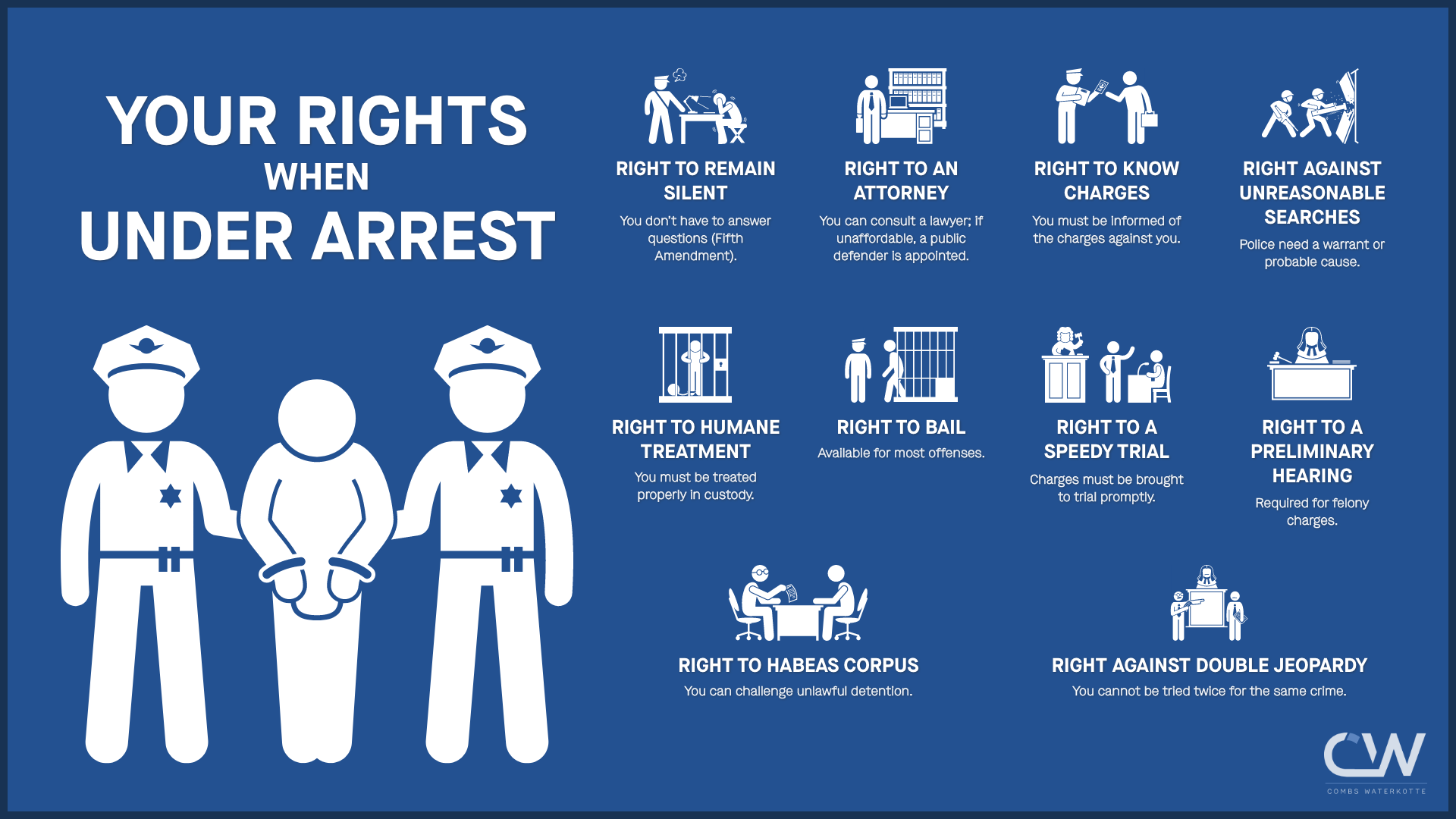
If you’re arrested or charged with a felony in Chicago, Illinois, it’s important to remember that you have certain rights under the United States Constitution. Combs Waterkotte’s Chicago defense attorneys strongly suggest doing the following to help mitigate the effects of a felony charge.
Exercise Your Right to Remain Silent
Chicago felony cases are built by investigators on statements and evidence. Do not give law enforcement anything to use against you. Even small comments can be taken out of context and used against you to maximize your sentence. Remember that you have the right to remain silent under the Fifth Amendment.
Contact an Experienced Chicago Felony Defense Lawyer Immediately
Felony convictions can result in years in prison, steep fines, and other permanent consequences. The sooner you involve a skilled defense attorney, the better your chances of protecting your rights and minimizing the impact of your felony charge on your life. If you’re arrested for a felony in Chicago, call (314) 900-HELP as soon as you’re able.
Refuse Consent to Any Searches
Felony prosecutors in Chicago rely heavily on physical evidence which they acquire from searches. Under the Fourth Amendment, you have the right to refuse unreasonable searches and seizures when police do not have a warrant. Do not give police permission to search your property, vehicle, or devices if they don’t have a warrant.
Do Not Discuss Your Case with Anyone but Your Lawyer
In Chicago felony cases, prosecutors actively look for statements to use against you to strengthen their case. Conversations with friends, family, or even social media posts can quickly become evidence in court. Discuss your felony charges only with your lawyer.
Document and Preserve Critical Evidence
Complex facts and high-stakes allegations are common in felony cases in the Cook County area. That’s why it’s important for you to document anything you remember about the incident and preserve any digital messages, photos, videos, or other records that could support your defense.
Strictly Follow All Bond and Court Requirements
Missing court appointments, violating bond conditions, or failing to comply with court-ordered restrictions can lead to additional charges or immediate detention. Make sure you comply with any court requirements to the letter.
Criminal Defense Strategies Against Felony Charges in Chicago
While there are plenty of stakes and scrutiny on felony charges in Chicago, a good criminal defense attorney can still use the facts and evidence of the case to build a solid defense. Here are some of the most common criminal defense strategies that Combs Waterkotte uses to combat felony charges in the Cook County and Chicago area.
Alibi
One of the strongest defenses in any Chicago felony case is proving you were somewhere else when the alleged offense occurred. For example, if you're accused of a violent felony like murder or armed robbery, surveillance footage, phone GPS data, or witness testimony showing you had an alibi could lead to a full dismissal or not guilty verdict.
Fourth Amendment Violations (Unlawful Search and Seizure)
Law enforcement officers must follow strict constitutional rules when gathering evidence. If they conduct an illegal search or seizure, this is a violation of your Fourth Amendment rights, and that evidence must be thrown out.
Fifth Amendment Violations (Self-Incrimination)
You have the right not to incriminate yourself. If police obtained statements through coercion or without proper legal safeguards, those statements may be a violation of your Fifth Amendment rights and therefore be inadmissible.
Miranda Rights Violations
Police are required to inform you of your Miranda rights before custodial interrogation. If they fail to do so, any statements you make may be excluded from evidence.
Lack of Intent
Many Chicago felony charges require prosecutors to prove that you acted knowingly or intentionally. If intent cannot be established, the charge may not hold. Proving a lack of intent is a powerful tool in a defense lawyer’s toolbelt.
Self-Defense or Defense of Others
In certain violent felony cases in Chicago, the use of force may be legally justified. If you’re charged with felony assault or even homicide, showing that you acted to defend yourself or defend another person from imminent harm can be a good defense strategy.
Duress or Coercion
If you committed an alleged felony because you were under immediate threat of harm, this may serve as a valid duress or coercion defense.
Entrapment
Entrapment happens when law enforcement induces someone to commit a crime they would not have otherwise committed. This defense is often used in felony drug distribution, prostitution, or undercover sting operations. If police crossed a line, the charges may be dismissed.
Consent
In certain felony cases in Chicago, consent may eliminate the criminal nature of the alleged conduct. This defense is often relevant in felony-level sex offense or assault allegations where the interaction was voluntary.
No single defense applies to every case. At Combs Waterkotte, we analyze every detail from police procedures to witness credibility to determine which strategy (or combination of strategies) gives you the best chance at avoiding a felony conviction. With decades of experience and a trial-ready approach, we fight to protect your rights, your freedom, and your future.