What happens after you’re arrested in Illinois? Getting arrested isn’t ever a part of someone’s plans for the day. It’s stressful, the police officers are intimidating, and the process can be confusing to follow. Without a top Southern Illinois criminal defense lawyer, you won’t have anyone on your side and will be left to navigate the process alone.
Don’t let that happen to you. Combs Waterkotte is here to protect your rights and freedom. Our expert Southern Illinois criminal defense attorneys know the Illinois systems, courts, and laws, and can help protect you from the long-term consequences of an arrest.
If you’ve been arrested, call (314) 900-HELP or reach out online as soon as you can, to start working on your defense right away.
What Happens After You’re Arrested in Illinois – Blog Summary
Today, we’re reviewing what happens after you’re arrested in Illinois, including:
- How to handle being arrested
- What to be prepared for during booking
- How to invoke your right to an attorney
- How to be released after an arrest
- What might come next after you are released
What to Do During an Illinois Arrest
Knowing what to say, what not to say, and how to respond to police requests during an arrest is important not only in making sure everyone is safe, but also in setting up your defense for success.
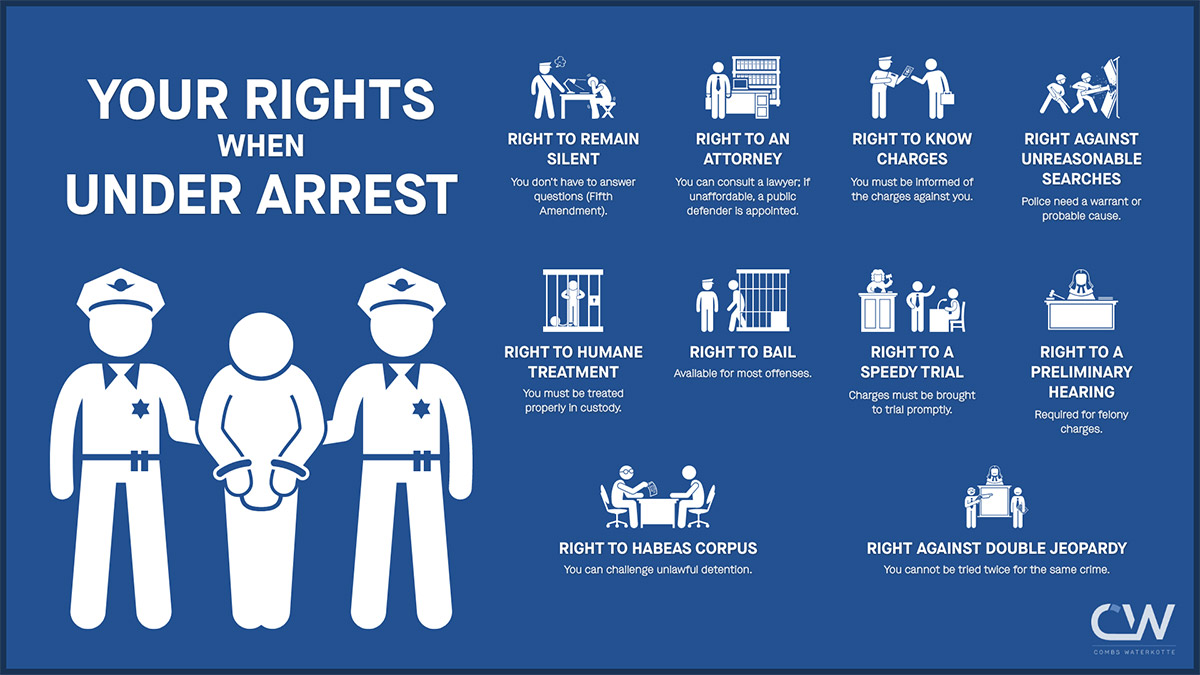
Here are some tips on how to handle an arrest, and rights you need to remember, should you ever go through one:
- Verify that you are in fact arrested – Here are two questions to ask:
- “Am I being detained or am I free to leave?”
- “Why am I being arrested?”
- Remain calm and don’t resist – while it might be tempting to argue that you’re innocent with the officer, being aggressive will only hurt your case, and can lead to charges for resisting.
- Stop talking – You are not required to answer any questions, besides your name and basic information. If the police ask more questions, politely tell them that you are invoking your right to remain silent.
- Refuse Extra Searches – Unless the police have a warrant or probable cause, police need your consent to search your property.
- Invoke Your Right to a Lawyer – If police are asking questions, respond with “I want to speak with my attorney.”

The Illinois Arrest Process – Do You Go Straight to Jail?
After the arrest, you will likely be taken to jail for the booking process. This is a relatively standard process in Illinois, and typically involves the police taking the following steps:
- Record Your Information
- Take Your Mug Shot
- Confiscate Your Held Belongings
- Take Your Fingerprints
- Giving You a Full-Body Search
- Searching Police Records for Warrants
- Providing a General Health Screening
After you’ve gone through booking, you will typically be given the opportunity to make a phone call, then be confined in the jail facilities.
During this process, our advice is largely the same – stay calm, don’t talk, and request or call an attorney as soon as you get the opportunity.
How To Get Released After Being Arrested in Illinois
After an arrest, there are three ways you can be released:
- Released Without Charge – In Illinois, typically you will only be held for a limited time without being charged, and will be released after that time. With luck, you won’t have to go through any of the Illinois court processes discussed below.
- Released On Bail/Bond – If you are charged, there is often a bail hearing (which we’ll discuss more below) where you can make an agreement with the court for release from jail, with financial penalties if you miss future court appearances.
- Released On ‘Own Recognizance‘ – Being released on your own recognizance is similar to bail, except without the potential financial penalties. This is more common for lesser alleged offenses and those who are considered low-flight-risks
After the Arrest: Illinois Court Processes
We touched on it earlier, but to recap: You may need to remain in jail for a limited time before being formally charged. It’s possible you’ll be questioned during this time (you can probably guess what to do – don’t talk and contact your attorney), but not guaranteed. Meanwhile, the state is building its case.
If they feel they have sufficient evidence against you, you can expect the prosecutor to file charges against you. This is then followed by an arraignment, a court process where you are informed of the charges and asked to enter a plea. This is sometimes combined with a bail hearing, where the court may decide to release you while waiting on the case.
The next steps after the arraignment/bail hearing tend to be a bit more variable from case to case, but they generally involve a preliminary hearing, where the prosecution will attempt to convince a judge that there is enough evidence for a trial. If the judge agrees, a trial date will be set. In the meantime, it’s possible for your defense attorney to negotiate a plea bargain with reduced charges and penalties, or even fight for an outright dismissal.
Regardless of where you are in the process, having a top Southern Illinois criminal defense attorney at your side is a must – without one, you risk serious prison time.
To summarize your steps after an arrest:
- Filing of Charges (Done by the prosecutor behind the scenes – you are not directly involved here)
- Arraignment
- Bail Hearing (sometimes combined with arraignment)
- Preliminary Hearing
- Trial, if applicable
After an Illinois Arrest, Call Combs Waterkotte Right Away to Build Your Defense
No matter what the charges are, call Combs Waterkotte as soon as you can after an arrest. Our Southern Illinois criminal defense lawyers are ready to help from day one. When you work with us, you’re getting:
- 24/7 availability on our phones, because arrests don’t just happen from 9 to 5.
- A client-centered approach where you’re treated like a person, not a case number.
- A highly experienced legal team with over 100 years of combined experience.
- We’ll make every effort to get the charges dropped or dismissed, and
- We have a trial-ready, fearless defense if the charges aren’t.
We’re available and ready to help whenever an arrest happens – Call Combs Waterkotte right away at (314) 900-HELP or set up a free, confidential consultation online today.