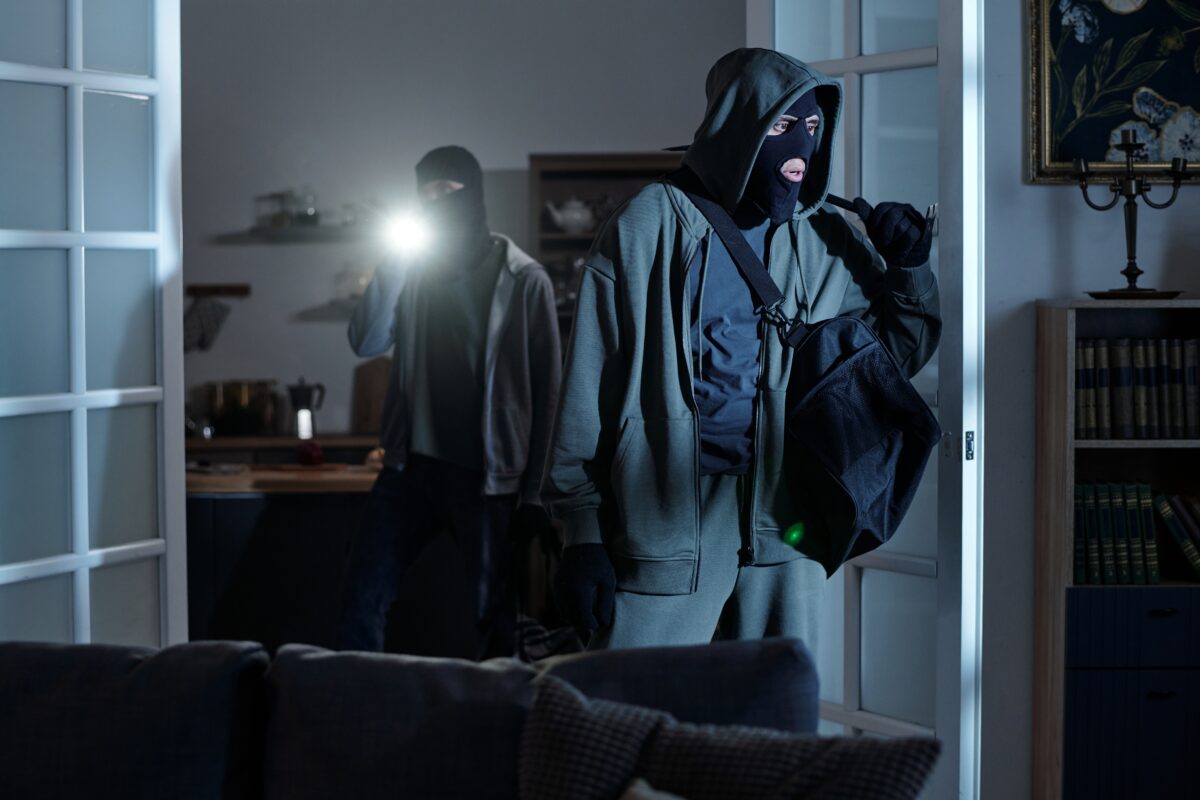








What is a Residential Burglary Charge in Chicago, Illinois?
A Class 1 felony. residential burglary involves knowingly entering and/or remaining in someone’s dwelling without their authority and with the intention of committing a felony or theft.
Additionally, you can be charged with this offense if you falsely impersonate a telecommunications, utilities or government employee to gain entry into someone’s home to commit a crime.
Sometimes these charges can come with aggravating factors such as threats, weapons and violence, turning them into a “home invasion” offense. Other similar charges in Chicago to residential burglary include burglary (where vehicles or non-residential buildings are involved) and criminal trespass to a residence (when someone enters without authority, knowing someone is present).

Examples of Common Chicago Residential Burglary Cases
You could be charged with this crime if any of the following circumstances apply to your case:
- You entered a dwelling (house, apartment or condo) without permission
- You stayed inside without permission (example: you refused to leave)
- You used deception to gain entry (impersonating a worker or guest)
- You entered through an unlocked door or open window
- You intended to commit a crime inside (whether that crime be theft, assault or vandalism)
Sometimes these cases can involve simple misunderstandings, such as entering a roommate’s private bedroom to borrow something without asking permission, entering a home you used to have access to (as an ex-partner or former roommate), entering a locked or private bedroom/office to take something, taking property during an argument, entering someone else’s home to retrieve property you believe is yours, thinking you’re allowed to stop by someone’s residence and pick something up or entering the wrong apartment while intoxicated or confused.
Because conflicts between roommates, partners or friends can escalate into a residential burglary allegation, it is important that you retain a skilled Chicago residential burglary lawyer to protect your reputation and future. Call our Chicago criminal defense attorneys today at (314) 900-HELP.
Penalties for a Residential Burglary Charge in Chicago
Residential burglary is a serious criminal offense in Chicago, Illinois, carrying mandatory prison sentences of 4-15 years.
Other penalties can include:
- Possible extended-term sentencing
- Mandatory supervised release after prison
- Fines up to $25,000
- Additional penalties, depending on your criminal history and any aggravating factors
Additionally, because residential burglary is a felony offense, you will be facing the adverse effects of a felony conviction upon your criminal record. This limits your future housing and employment opportunities, can cause you to lose any professional licenses you hold and can result in the loss of civil rights such as your gun rights.

What to Expect in a Chicago Criminal Court Case
The first step in a Chicago residential burglary case is the police investigation, where you can be arrested if it is determined that probable cause exists.
From there, your case will follow the below structure:
- Bond hearing: Within 48 hours, a judge will decide if you need to be detained longer or if you can be released. A judge’s decision will be based on whether you are considered a danger to the community or a flight risk.
- Arraignment: This is where your charges and rights will be read and you can plead guilty or not guilty.
- Preliminary hearing: When a case is a felony, a preliminary hearing takes place to determine if the prosecution has enough evidence to proceed to trial.
- Pre-trial proceedings: This is when your Chicago criminal defense attorney will review the evidence the prosecution has against you, file motions to suppress evidence and negotiate with the prosecution.
- Trial or plea negotiations: If no plea agreement is reached, resulting in reduced charges, the case will proceed to a jury or judge (bench trial) where evidence will be heard, witnesses cross-examined and a verdict delivered.
- Sentencing: If you are found guilty, a separate hearing will decide your sentence.
- Appeals: You are allowed to appeal a conviction to a higher court within 30 days of the decision.
Actions to Take Following Your Chicago Arrest
It is important to remember that the first few hours after your arrest set the trajectory for your case. The most vital first step you should take is to quickly retain experienced criminal defense to ensure your rights are protected and you don’t accidentally do anything that will jeopardize your case.
Other actions to take following your Chicago arrest should include:
- Staying calm
- Invoking your right to remain silent
- Refusing to answer questions without your lawyer present
- Avoiding discussing the case with cellmates or on social media
- Refraining from contacting the alleged victim in your residential burglary case
How Chicago Prosecutors Try Residential Burglary Cases
The prosecutor must prove beyond a reasonable doubt that you knowingly entered a dwelling without authority and with the intent to commit a felony or theft.
- Knowingly entered: In these cases, a prosecutor may show evidence such as forced entry signs, surveillance footage, witness statements and forensic evidence such as DNA or fingerprints to establish that you knowingly entered a residence.
- Intent to commit a felony or theft: A prosecutor doesn’t have to prove that a theft took place, only that there was the intent to commit a felony or theft. Prosecutors will use the circumstances of your case and/or your conduct and statements to attempt to establish that you had the required intent. A prosecutor may also show that you possessed tools that are common in break-ins as evidence of intent.
Defenses That Could Protect You in Your Chicago Residential Burglary Case
In a Chicago residential burglary case, there are a variety of defenses we may be able to apply to your case, such as:
- You had permission to enter the building: In this instance, the resident or owner gave you permission.
- You never intended to take anything: There was no intent to commit a felony or theft inside, which is a required element in a residential burglary case.
- You were coerced into entering the residence: You received threats or were in physical danger from another person, forcing you to enter the residence.
- You were involuntarily or voluntarily intoxicated: When this factor is present, it can be shown that you lacked intent to carry out a crime.
- You reasonably believed you had the right to enter or remove property: This is normal in circumstances where you own the property, you have ongoing permission to enter the residence, the property is jointly owned, you previously lived in the residence, you were told you could come in or when you’re acting on someone else’s permission (whether or not that person has actual authority to invite you in).
- You were mistaken as the perpetrator of the residential burglary: When an offense happens quickly or at night, it is not uncommon for there to be poor eyewitness identification.
- You were unlawfully searched and/or evidence was unlawfully seized: Your criminal defense attorney can file a motion to have evidence suppressed, in situations where your Fourth or Fifth Amendment rights were violated.
- You never actually entered the residence in question: This creates reasonable doubt, which weakens the intent arguments of the prosecution and may result in your charges being dismissed or reduced.