



Additional Links
- First-Time DUI in Illinois: What You Need to Know
- Can I Get a Hardship License After a DUI in Illinois?
- What Is the Statutory Summary Suspension in Illinois?
- What Happens After an Arrest in Chicago?
- Legal Video | What Should I Do if Pulled Over for a DUI in Illinois?
- Legal Video | Can You Refuse a Breathalyzer or Field Sobriety Test in Illinois?
- Legal Video | What is Considered an Aggravated DUI in Illinois?
- Legal Video | How Does a DUI Affect Your Driver’s License in Illinois?
- Legal Video | Can a DUI Charge Be Reduced or Dismissed in Illinois?
DUI Accident Attorneys Serving Chicago, IL and All of Cook County
A DUI accident charge in Chicago or Cook County can quickly turn into a high-stakes legal battle. Prosecutors often pursue these cases aggressively, especially when there is alleged property damage, injury, or a death involved. The consequences of a conviction can extend far beyond fines and jail time, affecting your driving privileges, employment opportunities, and long-term reputation.
At Combs Waterkotte, we understand that DUI accidents don’t always tell the full story. Factors like faulty breathalyzer results, improper police procedures, or unclear fault in an accident can all play a role in your defense. That’s why we take the time to investigate every detail of your case fully and build a defense strategy tailored to your specific circumstances.
“I am forever grateful to [Combs Waterkotte] for [their] exceptional service. I was charged with my second DWI and was very scared as to what might happen. [They were] able to get my charge reduced and my license was not suspended for one day. I would strongly recommend [them] to anyone charged with a DWI.”
-Joe | Combs Waterkotte Client
When you work with our firm, you get more than just legal representation. You get a dedicated team committed to protecting your rights. Our attorneys, law clerks, and support staff collaborate to examine evidence, challenge the prosecution’s claims, and identify opportunities to reduce or dismiss the charges against you. From negotiation to trial, we’re prepared to fight for the best possible outcome.
If you’re ready to take control of your situation and defend your future, Combs Waterkotte is here to help. Contact our DUI accident attorneys today at (314) 900-HELP or reach out to us online to schedule your free, confidential consultation. The sooner you act, the stronger your defense can be.
What Is a DUI Causing an Accident in Chicago?
Illinois criminal law defines certain scenarios and thresholds for which someone is considered to be “driving under the influence” of alcohol or other substances. According to Illinois’s Compiled Statutes, someone can be charged with driving under the influence under 625 ILCs 5/11-501 when:
- Their blood alcohol content (BAC) is .08% or higher
- They under under the influence of alcohol
- They are under the influence of intoxicating compounds that make them unable to drive safely
- They are under the influence of a drug that makes them unable to drive safely
- They are under the influence of a combination of alcohol, intoxicating compounds, or drugs that make them unable to drive safely
- They are under the influence of controlled substances defined in the Illinois Controlled Substances Act
- They test positive for tetrahydrocannabinol (THC) within 2 hours of driving
Causing an accident when driving while intoxicated falls under a list of offenses referred to as “aggravated DUI.” The statute lists four specific offenses that involve car accidents due to driving while intoxicated:
- 625 ILCS 5/11-501(d)(1)(C) — Causing a motor vehicle crash that results in great bodily harm or permanent disability or disfigurement to another
- 625 ILCS 5/11-501(d)(1)(E) — Crashing one’s vehicle in a school zone and causing bodily harm to another
- 625 ILCS 5/11-501(d)(1)(F) — Causing the death of another person
- 625 ILCS 5/11-501(d)(1)(J) — Causing bodily harm (but not great bodily harm) to a child under 16
What Are the Penalties for a DUI Accident in Chicago?
While the standard charged for a DUI in Chicago or Cook County is a Class A misdemeanor, a DUI accident that causes a death or injury (aggravated DUI) is automatically charged as a felony offense. The base-level charge for aggravated DUI in Illinois is a Class 4 felony with a mandatory 10-day jail sentence or 480 hours of community service.
On top of the Class 4 felony charge, an individual convicted of aggravated DUI may face additional penalties or enhanced felony classification depending on the circumstances of the accident. The sentencing enhancements include:
- DUI causing great bodily harm — A prison sentence between 1 and 12 years
- DUI causing harm to a child under 16 — Charge elevated to a Class 2 felony if the child experiences great bodily harm or permanent disability or disfigurement
- DUI causing death — Class 2 felony with specific sentencing structure:
- 3 to 14 years in prison for causing 1 death
- 6 to 28 years in prison for causing 2 or more deaths
On top of any potential prison sentences, drivers involved in a DUI accident in Chicago or Cook County also need to be ready for consequences that may affect their driver’s license.
How Does a DUI Accident in Chicago Affect My Driver’s License?
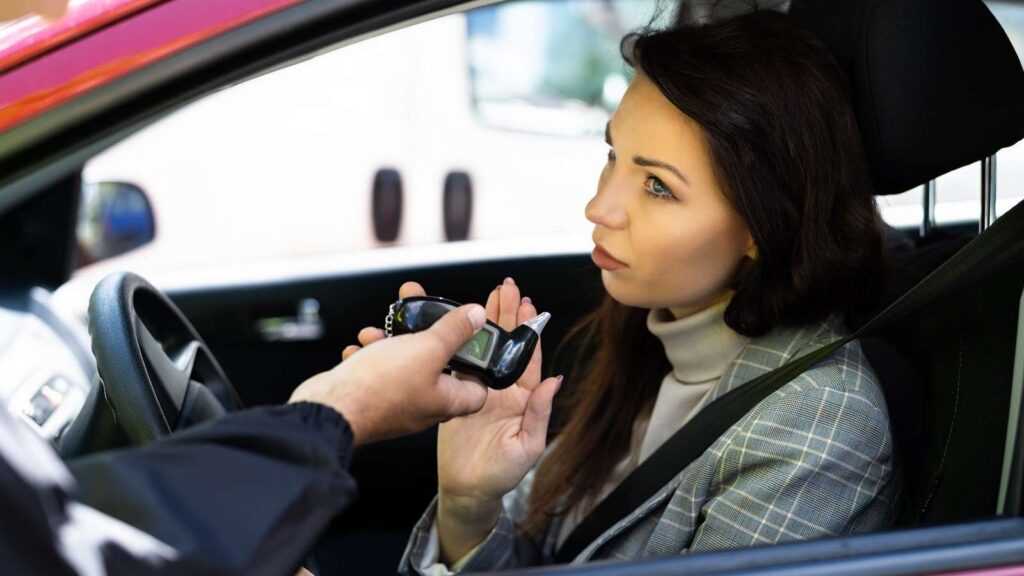
Illinois drivers are subjected to implied consent rules. This means that simply by driving on Illinois’s roads, drivers automatically consent to blood, breath, and other chemical tests when pulled over for a DUI. If you refuse (or fail) a blood or breath test while under suspicion of driving drunk, you’ll receive a statutory summary suspension (SSS) — a note telling you that your driver’s license will be suspended.
If you fail a blood or breath test, your license will be suspended for 6 months if you’re a first-time offender (or 1 year for repeat offenders). If you refuse a blood or breath test, though, your license will be suspended for 1 year for first-time offenders (and 3 years for repeat offenders).
Your driver’s license becomes suspended 46 days after receiving your statutory summary suspension. During this time, though, you have the opportunity to request an administrative hearing to try to have the suspension reversed.
Administrative hearings in Illinois are handled by the office of the Illinois Secretary of State. The process for these hearings is outlined in 625 ILCS 5/2-118.1, which says to get their license back, a driver must:
- Demonstrate that they are not a risk to public safety
- Have addressed their alcohol and/or drug issues
- Are likely to comply with any court-ordered restrictions (like a BAIID device)
Unfortunately, for DUIs that result in an accident causing injury or death, keeping your license is difficult. The Secretary of State’s Illinois DUI Fact Book mentions that crashes are a factor that will be considered in an administrative hearing, and Illinois’s Aggravated DUI/Reckless Homicide Information Sheet specifically mentions a 2-year revocation for DUIs causing death.
If your administrative hearing doesn’t go according to plan, the next step is to request a restricted driving permit (RDP), also known as a hardship license. To obtain one, you must present evidence of a legitimate need to drive, such as school attendance, employment, or medical necessity.
Criminal Defense Strategies for a DUI Accident in Chicago
Although a DUI car accident is very serious, that doesn’t mean a good lawyer can’t help. At Combs Waterkotte, we’ve helped people all over the Chicago and Cook County area with DUI charges, and we’ve found some criminal defense strategies to be very effective in handling both the criminal and license-related aspects of a DUI accident charge.
Challenging the Traffic Stop Under the Fourth Amendment
One of the most effective DUI defenses in Chicago is arguing that law enforcement lacked reasonable suspicion to initiate the traffic stop in the first place. Under the Fourth Amendment, any evidence obtained from an unlawful stop may be suppressed. In DUI accident cases, officers often rely on the crash itself as evidence, but if the stop or investigation exceeded legal bounds, key evidence like observations or test results may be excluded.
Scrutinizing Chemical Test Accuracy and Administration
Even though Illinois law requires chemical testing for DUIs with injury or death, breath, blood, and urine tests must still be administered according to strict standards. A defense attorney may challenge improper calibration of equipment, contamination of test samples, or unqualified personnel. In accident cases, hospital-administered blood draws can raise chain-of-custody issues. If testing procedures were flawed, the results may be deemed unreliable or inadmissible, significantly weakening the prosecution’s case.
Disputing Proximate Cause of the Accident
In aggravated DUI cases in Chicago, the prosecution must prove the defendant’s impairment was a main (proximate) cause of the crash. This means showing the DUI contributed to the accident, not just that the driver was impaired. A strong defense may demonstrate that another driver, road conditions, or mechanical failure caused the crash, breaking the legal link between intoxication and the resulting injuries.
Arguing Lack of Impairment Despite Alcohol Consumption
A driver in Cook County can be charged with DUI even without a high BAC if police officers claim impairment. However, the defense can argue the defendant was not actually impaired at the time of the accident. Factors like fatigue, medical conditions, or stress from the crash itself can mimic signs of intoxication. This strategy focuses on undermining subjective officer observations and field sobriety test interpretations.
Suppressing Statements Under Miranda and the Fifth Amendment
If Chicago law enforcement failed to properly advise the defendant of their Miranda rights during an interrogation, any statements made may be inadmissible. DUI accident scenes are often chaotic, and questioning may occur without proper warnings. A defense attorney can seek to exclude damaging admissions under the Fifth Amendment, limiting the prosecution’s ability to prove impairment or causation.
Arguing Necessity or Emergency Circumstances
In rare cases, a necessity defense may apply if the defendant drove under the influence to prevent a greater harm. For example, transporting someone during a medical emergency could be a legitimate justification. While difficult to prove, this defense focuses on showing that the defendant’s actions were reasonable under the circumstances and intended to avoid a more serious outcome.
Challenging Police Reports and Officer Credibility
DUI accident cases in Chicago and Cook County often rely heavily on officer reports and testimony. A defense strategy may involve identifying inconsistencies, exaggerations, or omissions in those reports. Body camera footage, dashcam video, and witness statements can contradict an officer’s narrative. Undermining credibility can create reasonable doubt about both impairment and how the accident occurred.
Using Accident Reconstruction and Expert Witnesses
Expert testimony can play a critical role in Chicago DUI accident defenses. Accident reconstruction specialists can analyze vehicle damage, skid marks, and road conditions to determine the true cause of the crash. Medical or toxicology experts may also challenge impairment assumptions. This approach is especially effective in serious injury or fatality cases where the cause of the accident can be heavily contested.