






Additional Links
- What to Do After Being Caught With Drugs in Illinois
- How to Beat a Drug Charge in Illinois
- What Are the Penalties for Drug Possession in Illinois?
- What Happens After an Arrest in Chicago?
- What Are the Different Felony Classes in Illinois?
- Legal Video | What Happens if I’m Caught With Drugs in Illinois?
- Legal Video | What’s the Difference Between a Misdemeanor and Felony Drug Charge in Illinois?
- Legal Video | Can I Be Charged if the Drugs Weren’t Mine in Illinois?
- Legal Video | What Are Drug Schedules in Illinois?
Drug Conspiracy Lawyer in Chicago, Illinois Serving All of Cook County
Drug conspiracy charges in Chicago, Illinois can quickly become overwhelming, especially when multiple conspirators, federal agencies, and serious penalties are involved. Prosecutors in Cook County often pursue these cases aggressively, seeking harsh sentences that can impact your freedom, finances, and future for years to come.
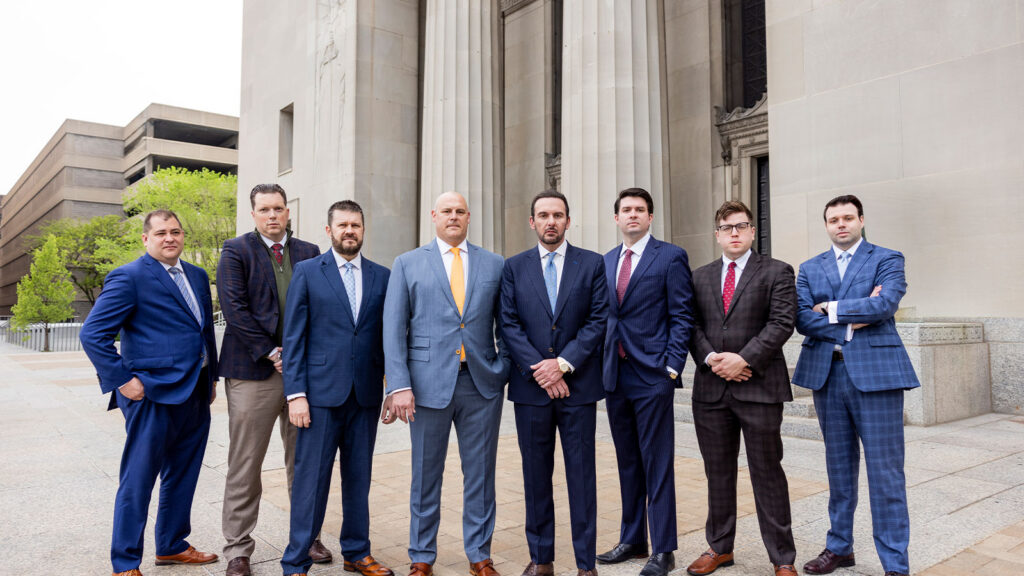
At Combs Waterkotte, we understand that drug conspiracy allegations are often built on complex evidence, assumptions, or the actions of others. Our team brings more than 100 years of combined experience to every case, carefully analyzing the prosecution’s evidence, identifying weaknesses, and building a defense strategy tailored to your situation.
“[Combs Waterkotte] is upfront and honest. [They’re] extremely knowledgeable and [have] helped me make informed decisions. I have recommended this law firm to a number of other people and each person has been satisfied. In times of trouble, it’s important to choose someone you can trust and I truly believe you can trust [Combs Waterkotte].”
-Kyle E. | Combs Waterkotte Client
From the start, we work to have your drug charges reduced or dismissed whenever possible. If your case goes to trial, we’re fully prepared to fight for you in court. Throughout the process, we keep you informed and involved, so you always know what’s happening at each step of your drug conspiracy case.
If you’re ready to fight your drug conspiracy charges, protect your rights, and take control of your future, contact Combs Waterkotte online or call us today at (314) 900-HELP. The sooner you have a skilled defense team on your side, the stronger your position will be.
What Is a Drug Conspiracy in Chicago, Illinois?
To understand Illinois’s drug conspiracy law, first, it’s important to understand what constitutes conspiracy in general under Illinois law. There are two important elements that define a criminal conspiracy in Illinois. According to 720 ILCS 5/8-2, a person commits a conspiracy when:
- They agree to commit a criminal offense with another person
- They (or their co-conspirator) take some action to further that agreement
In drug conspiracies, the actions taken to further the conspiracy don’t need to amount to much. Even small acts apply under the law, including:
- Texting someone about buying specific amounts of controlled substances
- Calling a supplier to confirm the availability of a drug
- Messaging a buyer about product or the timing of a sale
- Sending an address for a meet-up
- Agreeing on a price for a drug deal
- Scheduling a delivery time for a drug deal
- Driving to meet a co-conspirator
- Possessing baggies, scales, or other paraphernalia
- Carrying large amounts of cash
- Acting as a lookout during a drug deal
- Introducing buyers and sellers to each other
To be charged with a conspiracy, it doesn’t matter if your co-conspirator hasn’t been prosecuted or convicted, has been convicted of a different offense, has been acquitted, or even lacked the ability to commit the offense in question. As long as you conspire with them, you can be charged with a criminal conspiracy.
Under the Illinois Compiled Statutes, there are three types of drug conspiracy offense with which a Chicago or Cook County resident may be charged:
- Criminal drug conspiracy (720 ILCS 570/405.1)
- Calculated criminal drug conspiracy (720 ILCS 570/405)
- Streetgang criminal drug conspiracy (720 ILCS 570/405.2)
There’s a lot of crossover between each offense, but each charge also has its own nuances and penalties.
Criminal Drug Conspiracy in Chicago, Illinois
Criminal drug conspiracy charges are brought in Cook County for violations of certain offenses of Article IV of the Illinois Controlled Substances Act. If, with a co-conspirator, an individual agrees to commit any of the following offenses (and they or their conspirator take any action to further the offense), that individual can be charged with criminal drug conspiracy:
- Manufacture, delivery, or possession with intent to distribute (720 ILCS 570/401)
- Controlled substance trafficking (720 ILCS 570/401.1)
- Possession of a controlled substance (or analog) (720 ILCS 570/402)
- Selling drugs to minors (720 ILCS 570/407)
- Delivering controlled substances to a pregnant woman (720 ILCS 570/407.2)
Calculated Criminal Drug Conspiracy in Chicago, Illinois
The calculated criminal drug conspiracy law in Illinois was essentially written to target mid and high-level drug dealers. The charge is brought against individuals who:
- Violate the manufacture, delivery, or possession with intent to distribute law
- Violate the possession of a controlled substance (or analog) law
- Commit either offense as part of a conspiracy with 2 or more other individuals
- Obtain at least $500 (in cash or property value) from the offenses
Streetgang Criminal Drug Conspiracy
Written with the intent to combat gang-related drug activity in Illinois (specifically in the Chicago area), the streetgang criminal drug conspiracy law requires the following components for an offender to be charged:
- Violation of the manufacture, delivery, or possession with intent to distribute law or the Methamphetamine Control and Community Protection Act
- The act is part of a conspiracy with 2 or more other individuals
- The act is carried out as part of activities related to an organized gang
- The offender is the one who organized the drug deal
It’s clear that this law was written to target individuals at the highest level of the drug trade in the Chicago and Cook County areas. As such, the penalties for a conviction for streetgang criminal drug conspiracy are some of the harshest under Illinois law.
Drug Conspiracy Sentences in Chicago, Illinois
Drug conspiracy charges are almost always felonies in Chicago. In very rare instances, some very low-level offenses may be charged as misdemeanors. The penalties vary widely depending on the conspiracy charge, the underlying offense, and the type and amount of controlled substances involved.
Criminal Drug Conspiracy Sentences in Chicago, Illinois
The criminal drug conspiracy statute has the most varied sentencing guidelines under Illinois law. This is because offenders are charged for their conspiracy involvement in the underlying offense, and a number of underlying offenses qualify for criminal drug conspiracy.
Below is a comprehensive list of underlying criminal drug conspiracy offenses in the Chicago and Cook County area and the possible penalties that come with them:
- Conspiracy to manufacture or deliver, or possess with intent to distribute:
- Class X felony for large amounts of heroin, fentanyl, cocaine, morphine, or LSD
- Class 1 felony for medium amounts of heroin, fentanyl, cocaine, morphine, LSD, and other schedule I or schedule II substances
- Class 2 felony for dihydrocodeine, LSD, amphetamine, or BZP
- Class 3 felony for schedule III, schedule IV, and schedule V substances
- Conspiracy to traffick controlled substances:
- Class 2 felony (with a fine up to $100,000)
- Conspiracy to possess a controlled substance:
- Class 1 felony for large amounts of heroin, cocaine, morphine, peyote, and LSD
- Class 4 felony for controlled substances not specifically mentioned in the statute
- Class C misdemeanor for possession of anabolic steroids
- Class B misdemeanor for a subsequent anabolic steroid offense
- Conspiracy to sell drugs to minors (when the offense is committed within 500 feet of a school, public park, church, senior center, truck stop, or rest area):
- Class X or Class 1 felony for large amounts of heroin, fentanyl, cocaine, morphine, or LSD
- Class 2 felony for any amount of dihydrocodeine, LSD, amphetamine, fentanyl or BZP
- Class 3 felony for any amount of any schedule I, schedule II, schedule III, schedule IV, or schedule V controlled substance
- Conspiracy to deliver a controlled substance to a pregnant woman:
- Class 1 felony with a fine up to $250,000
Calculated Criminal Drug Conspiracy Sentences in Chicago, Illinois
In contrast to criminal drug conspiracy, the sentence for calculated criminal drug conspiracy in Chicago is a bit more straightforward. The offense is always charged as a Class X felony, a conviction for which results in 6 to 30 years in prison.
A calculated criminal drug conspiracy conviction can also come with a massive fine, potentially up to $500,000. The statute also mentions that the offender must forfeit any money or property gained from their participation in the conspiracy.
Streetgang Criminal Drug Conspiracy Sentences in Chicago, Illinois
A streetgang criminal drug conspiracy conviction carries the harshest drug conspiracy penalties under Illinois law. The offense is always a Class X felony, but it comes with specific mandatory minimum sentences:
- 15 to 60 years for large amounts of heroin, fentanyl, cocaine, morphine, or LSD
- 10 to 30 years for medium amounts of heroin, fentanyl, cocaine, morphine, LSD, and other schedule I or schedule II substances
If convicted, the defendant may have to pay a large fine up to $500,000. They must also forfeit any money or property they gained from participating in the conspiracy. On top of that, the statute also mentions that the court is allowed to issue orders of protection against the defendant if necessary to protect co-conspirators or others involved in the case.
Criminal Defense Strategies Against Drug Conspiracy Charges in Chicago
Drug conspiracy charges require a meticulous defense strategy due to the complexities and nuances of the laws. For this reason, hiring a criminal defense attorney is the most important step you can take if you’re facing a drug conspiracy crime in Chicago or the Cook County area.
At Combs Waterkotte, we have plenty of experience in defending Chicago area clients against drug charges of all types. We’ve found the following criminal defense strategies to be particularly effective at securing favorable outcomes in drug conspiracy cases.
Lack of Intent to Join a Drug Conspiracy
One of the most effective defenses in Chicago drug conspiracy cases is showing the defendant never intended to participate in a criminal agreement. Under Illinois law, intent is a required element of a conspiracy offense. A defense attorney may argue that the defendant’s actions were misunderstood, incidental, or unrelated to any drug activity. Mere presence, association, or vague text messages do not establish intent. Without clear proof of a knowing agreement, the prosecution’s case can collapse due to a lack of intent on the part of the defendant.
No Agreement Between Alleged Co-Conspirators
A drug conspiracy in Cook County requires proof of an actual agreement between two or more people. Defense counsel can argue that no agreement existed, even if the defendant knew others were involved in drugs. Courts distinguish between parallel conduct and coordinated action. Simply being around drug users or dealers is not enough to be charged with conspiracy. If prosecutors cannot show a shared plan for a drug conspiracy, the charge fails regardless of other suspicious circumstances.
No Overt Act in Furtherance of the Drug Conspiracy
Even if Chicago prosecutors allege an agreement, they must show that someone committed an act in furtherance of it. A defense strategy may focus on the absence of any concrete step toward committing a drug offense. If the evidence shows only discussion or planning without action, this element is not satisfied. Challenging whether alleged acts like travel or communication actually advanced a criminal objective can be a strong way to undermine the charge.
Entrapment by Law Enforcement
Entrapment is a powerful defense when Cook County police or informants improperly persuade someone to commit a crime they otherwise would not have committed. In Chicago drug conspiracy cases, undercover officers and confidential informants are common. If the defense can show the idea originated with law enforcement and the defendant lacked real intent, the charge may be dismissed. This is especially relevant in cases involving repeated pressure, coercive tactics, or offers that escalate criminal behavior.
Coercion or Duress
A defendant may argue they participated in a drug conspiracy only because they were threatened with immediate harm. Under Illinois law, coercion or duress can excuse criminal conduct if a reasonable person would have felt compelled to comply. For example, threats of violence from co-conspirators or gang members may negate voluntary participation. This defense requires showing there was no reasonable opportunity to escape the situation without facing serious danger.
Illegal Searches and Seizures
Chicago drug conspiracy cases often rely heavily on evidence obtained through searches, wiretaps, or surveillance. If law enforcement violated the Fourth Amendment, that evidence may be suppressed. A defense attorney may challenge search warrants, traffic stops, or electronic surveillance methods. If key evidence (drugs, phones, or recorded conversations) is excluded, the prosecution may lose its ability to prove the conspiracy beyond a reasonable doubt.
Fifth Amendment and Miranda Violations
Statements made during police interrogations in Chicago drug conspiracy cases can play a major role in supporting the prosecution’s charges. If officers failed to provide proper Miranda warnings or used coercive interrogation tactics, those statements may be inadmissible due to Fifth Amendment violations. A defense attorney can file motions to suppress confessions or incriminating admissions. Without those statements, prosecutors may struggle to prove intent or agreement.
What to Do If You’re Arrested for a Drug Conspiracy in Chicago
If you’re arrested or charged with drug conspiracy in Chicago, it’s important to take action to preserve your innocence and minimize your culpability. The drug charge lawyers at Combs Waterkotte recommend taking the following steps during and after a Cook County, Illinois drug conspiracy arrest.
Use Your Right to Remain Silent
After an arrest, you have a constitutional right to remain silent under the Fifth Amendment. Let officers know that you are invoking this right and do not answer questions. In drug conspiracy cases, even seemingly inoffensive statements can be used to establish intent or agreement. Law enforcement may try to engage you in conversation to gather evidence. The safest course is to say nothing until your attorney is present.
Ask for an Attorney Right Away
Requesting a lawyer is one of the most important steps you can take after being arrested. Once you ask for an attorney, police should stop questioning you. In complex cases like drug conspiracy where evidence often includes communications, surveillance, and co-conspirator statements, having legal counsel early on can make a big difference. An experienced Chicago defense attorney can guide you, protect your rights, and begin building your defense immediately.
Do Not Resist Arrest
If you are arrested for a drug conspiracy in Chicago, your first priority should be to remain calm and avoid resisting law enforcement. Resisting arrest can lead to additional criminal charges that complicate your case. Even if you believe the arrest is unjustified, it is critical to comply in the moment. Your attorney can challenge the legality of the arrest later, but your behavior during it can significantly impact how your case proceeds.
Do Not Consent to Searches
You have the right to refuse consent to searches of your person, vehicle, or property if officers do not have a search warrant. Consenting to a search can make it much harder to get evidence thrown out later. In drug conspiracy cases, physical and digital evidence is often central to the prosecution’s case, so preserving your Fourth Amendment rights gives your attorney more opportunities to fight that evidence in court.
Be Cautious About Phone and Digital Communications
Assume that any phone, text, email, or social media activity may be monitored or later reviewed by law enforcement. Drug conspiracy cases in Chicago, Illinois frequently rely on digital evidence to establish agreements and overt acts in the conspiracy. Do not attempt to delete messages or contact others about the situation, as this could lead to obstruction charges. Instead, preserve your rights by avoiding any discussion of the case altogether through electronic communication.
Do Not Discuss Your Case with Anyone
Avoid talking about your case with anyone other than your attorney. This includes friends, family members, and especially co-defendants. Phone calls from jail are often recorded, and conversations can be used as evidence. In Cook County conspiracy cases, statements made to others may be interpreted as admissions or used to connect you to alleged co-conspirators. Keeping silent outside of attorney-client communications is critical to protecting your defense.