





Additional Links
- The Illinois DUI Laws Chicago Drivers Need to Know
- What Is the Statutory Summary Suspension in Illinois?
- How to Beat a License Suspension in Chicago
- Can I Get a Hardship License After a DUI in Illinois?
- What Happens After an Arrest in Chicago?
- Legal Video | What Should I Do if Pulled Over for a DUI in Illinois?
- Legal Video | What is Considered an Aggravated DUI in Illinois?
- Legal Video | What Are the Potential Defenses Against a DUI Charge in Illinois?
- Legal Video | What Are the Penalties for a DUI in Illinois?
- Legal Video | How Long Does a DUI Stay on Your Record in Illinois?
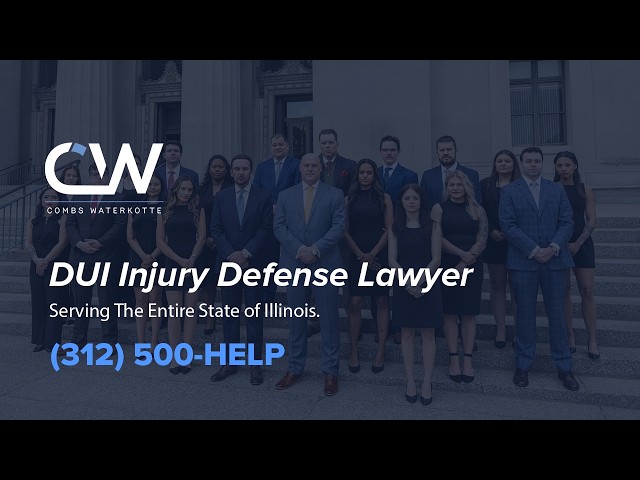
DUI Injury Defense Lawyers in Chicago Serving All of Cook County
A DUI injury charge in Chicago or anywhere in Cook County is not something you can afford to take lightly. Prosecutors often pursue the harshest penalties possible in these cases, seeking felony convictions, lengthy prison sentences, and extended license revocations that can disrupt every aspect of your life. You need a defense team that understands both the criminal stakes and the administrative consequences tied to your driving privileges.
“[Combs Waterkotte are] by far the BEST defense [lawyers] I came across! [They] helped me with DWI charges... It was even better than I was hoping for. It was my 2nd DWI, but not only did I NOT lose my driving license, but charges were reduced... I also didn’t have to do community service, which was the case with my first DWI that [Combs Waterkotte] didn’t represent me on. [Their] confidence and professionalism were very reassuring which helped me to get through this very tough period of my life. I would ABSOLUTELY recommend [Combs Waterkotte] to anyone who is looking for a great defense lawyer.”
-T.S. | Combs Waterkotte Client
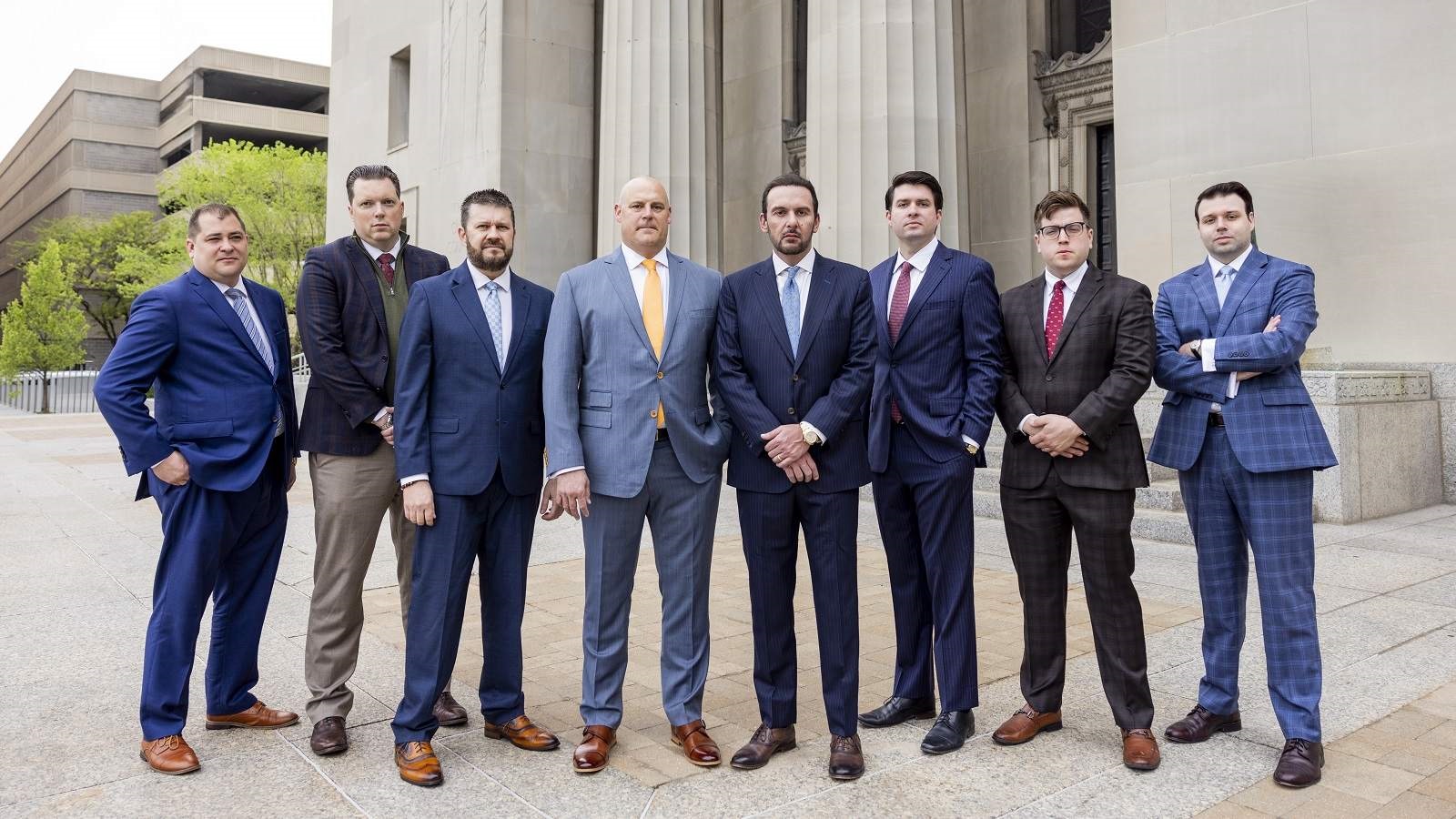
At Combs Waterkotte, we bring over 100 years of combined experience defending clients against serious DUI charges, including those involving injury. We know how to challenge the prosecution’s evidence, question the validity of field sobriety and chemical tests, and identify weaknesses that can lead to reduced charges or case dismissals. Our team takes a personalized, client-focused approach, ensuring you understand your options at every stage while we build a defense strategy tailored to your situation.
From negotiating with prosecutors to aggressively representing you at trial and hearings, we’re prepared to fight for the best possible criminal and administrative outcomes in your case. If you’re ready to protect your rights, your license, and your future, contact Combs Waterkotte today at (314) 900-HELP or reach out to us online. The sooner you act, the stronger your defense can be.
What Is a DUI Causing Injury in Chicago, Illinois?
Under Illinois law, an individual can be charged with driving under the influence in a few different scenarios. The state’s DUI Statute (625 ILCS 5/11-501) mentions a person can be charged with driving under the influence if they:
- Drive with a blood alcohol content of .08% or higher
- Drive under the influence of alcohol, drugs, or a combination of the two
- Drives with any amount of a controlled substance in their system
- Is proven to have tetrahydrocannabinol (THC) in their system within 2 hours of driving
The statute goes on to cover a variety of DUI-related offenses, from first-time DUI and DUIs with high blood alcohol content to DUI car accidents and DUIs resulting in death. Regarding DUIs resulting in an injury, Illinois law pays particular attention to the following scenarios:
- DUIs resulting in great bodily harm or permanent disability or disfigurement (625 ILCS 5/11-501(d)(1)(C))
- DUIs in a school zone that cause great bodily harm (625 ILCS 5/11-501(d)(1)(E))
- DUIs that cause bodily harm (but not great bodily harm) to a child in one’s car under 16 years old (625 ILCS 5/11-501(d)(1)(J))
What Are the Penalties for a DUI Causing Injury in Chicago, Illinois?
The standard penalty for a DUI in Chicago or Cook County is a Class A misdemeanor. DUI causing injury, though, is classified as “aggravated DUI,” an offense that is typically charged as a Class 4 felony and requires a minimum 10-day jail sentence or 480 hours of community service.
There are certain enhancements to a DUI injury charge, though, that may result in additional penalties (on top of any other jail or prison sentence one may receive). These include:
- A $2,500 fine and 25 days of community service in a program benefiting children for DUI causing injury to a child under 16
- A possible prison sentence between 1 and 12 years for causing great bodily harm or permanent disability or disfigurement
On top of the potential criminal penalties for a Chicago DUI, anyone charged or arrested for a DUI causing an injury also has to worry about the effect the case can have on their driver’s license.
How Does a DUI Causing Injury Affect my Driver’s License in Chicago?
DUIs in Chicago and Cook County, Illinois may result in two types of sanctions for your driver’s license:
- A statutory summary suspension (SSS) in the immediate aftermath of the DUI
- The revocation of a driver’s license after a DUI conviction
Both of these driver’s license consequences result in the loss of driving privileges, but they’re handled differently under Illinois law.
Statutory Summary Suspension in Chicago, Illinois
A statutory summary suspension is essentially a notice from a law enforcement officer that your driver’s license will be suspended within 46 days of receiving the notice. An SSS is not issued specifically for DUIs causing injury, but for any DUI in which:
- A driver fails a breath or blood test
- A driver refuses a breath or blood test
Failing a test results in a 6-month suspension of one’s driver’s license for first-time offenders and a 1-year suspension for repeat offenders. Refusing a field sobriety test results in a 1-year license suspension for first-time offenders and a 3-year suspension for repeat offenders.
Statutory summary suspensions are automatic and have fixed terms. If you receive an SSS after a Chicago or Cook County DUI, you have 90 days to file for a hearing in order to get the suspension overturned.
Driver’s License Revocation in Chicago, Illinois
Even if you manage to get a statutory summary suspension overturned and regain your driving privileges, the Illinois Secretary of State’s office still has the authority to revoke your driver’s license after a DUI conviction. Unlike an SSS, a driver’s license revocation is indefinite, and overturning it entails an entirely separate process.
To overturn a driver’s license revocation in Chicago, you need to request either an informal or a formal hearing with the Illinois Secretary of State’s office. For DUIs resulting in an injury, a formal hearing is typically required, and it has much stricter rules and procedures than an informal hearing.
A formal hearing is like a mini trial. It’s held before a Secretary of State hearing officer and requires a written request. During the hearing, the driver must:
- Prove that their alcohol or drug use related to their DUI is under control
- Bring proof of a completed substance abuse evaluation
- Bring proof of completion of any other requirements set forth by the court
Going into the hearing, a defendant may either request full restoration of their driving privileges or, more commonly in DUI cases involving injury, request a restricted driving permit (RDP). Restricted driving permits, also known as hardship licenses, typically involve the installation of a breath alcohol ignition interlock device (BAIID) on a person’s car and allows them to drive only in certain instances, like:
- To work
- To school
- To medical appointments
- To substance abuse treatment appointments
At the completion of a formal hearing, the Secretary of State hearing office may reinstate full driving privileges, approve a restricted driving permit, or deny your driving privileges altogether. If your privileges are denied, you can request another formal hearing within 90 days of the decision.
Criminal Defense Strategies for a Chicago Injury DUI
A DUI causing an accident is a serious offense in Chicago or Cook County. Even still, at Combs Waterkotte, we’ve helped hundreds of Chicago residents handle DUI charges before. This experience has allowed us to develop some effective criminal defense strategies to get DUI criminal charges reduced or dismissed.
Challenging the Traffic Stop (Fourth Amendment)
A Chicago DUI case often begins with a traffic stop, and police must have reasonable suspicion to initiate it. If the stop was unlawful, any evidence gathered afterward (like field sobriety tests or chemical results) may be suppressed. In injury DUI cases, this can be critical, as removing key evidence may significantly weaken the prosecution’s case or lead to dismissal.
Suppressing Unlawful Searches and Seizures
Beyond the initial stop, officers must follow constitutional limits when searching a driver or vehicle. Illegal searches like warrantless blood draws without proper justification can violate the Fourth Amendment. If evidence was obtained improperly, a defense attorney may file a motion to suppress, potentially excluding critical proof of intoxication and undermining the State’s ability to prove impairment.
Challenging Chemical Test Results
Breath, blood, and urine tests are central to Cook County and Chicago DUI prosecutions, but they are not infallible. Errors in administration, improper calibration, or chain-of-custody issues can all affect reliability. In injury DUI cases where the stakes are higher, scrutinizing test procedures and maintenance records can reveal weaknesses that cast doubt on whether the defendant was actually over the legal limit.
Challenging Field Sobriety Tests
Field sobriety tests are subjective and often influenced by factors unrelated to intoxication, such as fatigue, medical conditions, or uneven pavement. In a Chicago injury DUI case, a defense attorney may question how the tests were administered and whether the officer properly interpreted the results. Demonstrating unreliability can weaken the State’s overall impairment argument.
Lack of Proximate Cause of Injury
To elevate a DUI to an aggravated offense under Illinois law, prosecutors must prove the defendant’s impairment directly caused the injury. A defense may argue that another factor like road conditions, another driver, or mechanical failure was the true cause. If proximate cause cannot be established, the charge may be reduced from aggravated DUI to a lesser offense.
Fifth Amendment Violations
The Fifth Amendment protects against self-incrimination. If Cook County law enforcement obtained statements without properly advising the defendant of their rights, those statements may be inadmissible. In DUI cases involving injury where officers may conduct extensive questioning at the scene or hospital, improper interrogation practices can become a key issue in limiting the prosecution’s evidence.
Miranda Rights Violations
If a driver is in custody in Chicago and subjected to interrogation without being read their Miranda rights, any resulting statements may be excluded from evidence. This often arises in DUI injury cases when defendants are questioned in police custody or medical settings. Challenging these violations can prevent damaging admissions from being used in court.
How a Chicago DUI Injury Defense Lawyer Can Help Protect Your Driver’s License
A driver’s license suspension or revocation can disrupt your entire life. If you’ve been accused of a DUI offense that resulted in an injury, you need a Chicago DUI lawyer equipped to help you deal with the possible consequences to your driver’s license. At Combs Waterkotte, we use the following strategies to help Cook County residents maintain some or all of their driving privileges.
Challenging the Statutory Summary Suspension (SSS)
A DUI arrest in Illinois triggers an automatic statutory summary suspension, but it can be challenged in court. A defense lawyer can file a petition to rescind the suspension and argue that the traffic stop, arrest, or chemical testing was unlawful. Successfully rescinding the suspension can allow a driver to retain full driving privileges while their criminal case is still pending.
Navigating Revocation and Reinstatement Requirements
License revocation after a DUI is indefinite and does not automatically end. A defense attorney helps clients understand the steps required for reinstatement, including waiting periods, evaluations, and hearings. By ensuring all requirements are met and deadlines are followed, a lawyer can streamline the process and avoid unnecessary delays in restoring driving privileges.
Protecting Eligibility for Driving Permits
Even after a license suspension or revocation in Chicago, some drivers may qualify for limited driving privileges. A lawyer can help determine eligibility for permits such as a monitoring device driving permit (MDDP) or restricted driving permit (RDP). By guiding clients through the application process and ensuring compliance with requirements, an attorney helps maintain essential driving access for work, school, or medical needs.
Preparing for the Secretary of State Hearing
After a DUI conviction, restoring driving privileges requires a Secretary of State hearing (a formal hearing in the case of an aggravated DUI with injury). A defense lawyer plays a critical role in preparing the client, gathering required documentation, and ensuring the client meets hearing requirements. This includes substance abuse evaluations, treatment records, and testimony. Proper preparation can significantly improve the chances of obtaining a restricted driving permit or full reinstatement.
Seeking a Restricted Driving Permit (RDP)
When full reinstatement is not yet possible, a restricted driving permit can allow limited driving for essential purposes. A defense lawyer can request an RDP during a formal hearing and tailor the request to the client’s needs. By demonstrating low risk and a legitimate hardship, an attorney increases the likelihood that the Secretary of State will grant restricted driving privileges.
Building Evidence of Rehabilitation
To regain driving privileges after revocation, Chicago, Illinois drivers must prove they are no longer a risk. An attorney helps clients compile evidence of rehabilitation, such as completion of treatment programs, sobriety efforts, and lifestyle changes. Presenting clear and convincing evidence that the issue is under control and unlikely to recur is essential for persuading the Secretary of State to grant relief.
Minimizing Long-Term License Consequences
A DUI causing injury can have lasting effects on a driver’s record and future eligibility for relief. A defense attorney works to minimize these consequences by challenging evidence, negotiating outcomes, and advising on compliance with Illinois Secretary of State requirements. Early legal intervention can make a meaningful difference in preserving long-term driving privileges and avoiding extended periods without a license.