
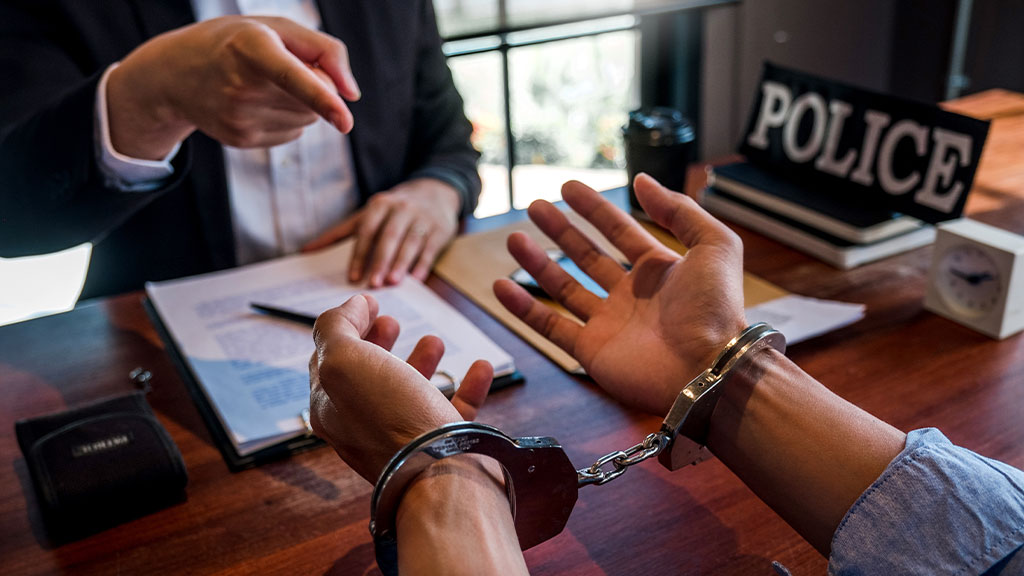
Child Pornography Lawyer Monroe County, IL. Sometimes the first sign of a CSAM investigation is a knock at the door. Police may arrive with a warrant, seize your phone, computers, hard drives, or other electronics, and begin building a case around alleged child sexual abuse material before you have had a chance to understand what they think the evidence shows.
Finding files is only the beginning. The real questions are how they arrived, whether anyone knowingly accessed them, who controlled the device or account, and whether the digital evidence actually connects the alleged activity to you.
Combs Waterkotte‘s Monroe County, IL criminal defense lawyers represent people throughout Illinois who are under investigation or facing charges involving possession, distribution, production, and other allegations involving child pornography or CSAM. Our attorneys examine the evidence behind the accusation rather than accepting the government’s interpretation of it.
You do not have to wait for charges to be filed. If police have searched your home, taken an electronic device, or identified you as the subject of a CSAM investigation, call (314) 900-HELP or reach out to our firm online for a free, confidential consultation.
Cases Handled
Over 10,000
Jail Days Saved
Over 1 Million
Google Reviews
500+ Perfect
Legal Experience
100+ Years
This page covers:
- How Illinois law defines child pornography and child sexual abuse material
- What prosecutors have to prove under 720 ILCS 5/11-20.1
- How Illinois classifies these offenses and the penalties that may follow
- The role electronic devices, online accounts, IP addresses, and forensic evidence can play in these investigations
- Legal and factual issues that can weaken the prosecution’s case
- When federal agencies or prosecutors may become involved in a Monroe County, IL child pornography case
- Registration requirements and the other ways a conviction can affect your life after the criminal case ends
- How Combs Waterkotte defends complex child pornography and CSAM cases
Legal Videos
What is Grooming Under Illinois Law?
What is Grooming Under Illinois Law? Combs Waterkotte attorneys Christopher Combs and Joshua Boardman discuss everything you need to know about Illinois sex crime charges, including sexual assault …
What is Internet Solicitation of a Minor in Illinois?
What is Internet Solicitation of a Minor in Illinois? Attorneys Christopher Combs and Joshua Boardman from Combs Waterkotte discuss everything you need to know about Illinois sex crime charges …
Can I Be Charged for Sending Unsolicited Explicit Images?
Can I Be Charged for Sending Unsolicited Explicit Images? Combs Waterkotte attorneys Christopher Combs and Joshua Boardman discuss everything you need to know about Illinois sex crime charges …
What Is Unlawful Dissemination of Private Sexual Images in Illinois?
What Is Unlawful Dissemination of Private Sexual Images in Illinois? Attorneys Christopher Combs and Joshua Boardman from Combs Waterkotte discuss everything you need to know about Illinois sex …
Can Minors Be Charged for Sexting in Illinois?
Can Minors Be Charged for Sexting in Illinois? Combs Waterkotte attorneys Christopher Combs and Joshua Boardman discuss everything you need to know about Illinois sex crime charges, including …
Can Adults Be Charged for Sexting in Illinois?
Can Adults Be Charged for Sexting in Illinois? Attorneys Christopher Combs and Joshua Boardman from Combs Waterkotte discuss everything you need to know about Illinois sex crime charges, including …
What is Grooming Under Illinois Law?
What is Grooming Under Illinois Law? Combs Waterkotte attorneys Christopher Combs and Joshua Boardman discuss everything you need to know about Illinois sex crime charges, including sexual assault …
What is Internet Solicitation of a Minor in Illinois?
What is Internet Solicitation of a Minor in Illinois? Attorneys Christopher Combs and Joshua Boardman from Combs Waterkotte discuss everything you need to know about Illinois sex crime charges …
Can I Be Charged for Sending Unsolicited Explicit Images?
Can I Be Charged for Sending Unsolicited Explicit Images? Combs Waterkotte attorneys Christopher Combs and Joshua Boardman discuss everything you need to know about Illinois sex crime charges …
What Is Unlawful Dissemination of Private Sexual Images in Illinois?
What Is Unlawful Dissemination of Private Sexual Images in Illinois? Attorneys Christopher Combs and Joshua Boardman from Combs Waterkotte discuss everything you need to know about Illinois sex …
Can Minors Be Charged for Sexting in Illinois?
Can Minors Be Charged for Sexting in Illinois? Combs Waterkotte attorneys Christopher Combs and Joshua Boardman discuss everything you need to know about Illinois sex crime charges, including …
Can Adults Be Charged for Sexting in Illinois?
Can Adults Be Charged for Sexting in Illinois? Attorneys Christopher Combs and Joshua Boardman from Combs Waterkotte discuss everything you need to know about Illinois sex crime charges, including …
Under Investigation for Child Pornography in Monroe County, IL? What to Do Next
If police are already asking questions, seeking access to devices, or investigating your online activity, the case has started even if no one has put you in handcuffs. That is enough reason to speak with a lawyer.
Some people learn about an investigation when detectives ask them to come in for an interview. Others find out when officers arrive with a search warrant. In cases involving online accounts, investigators may have already collected records from internet providers, social media companies, cloud services, or other platforms.
If you think police are looking at you, keep these rules in mind:
- Do not try to explain the situation to investigators on your own. Questions that sound routine, such as who knows a password or who normally uses a computer, may later be used to connect you to a device, account, or file.
- Do not consent to additional searches. If police have a warrant, do not interfere with it. That does not mean you need to give permission for searches beyond what the warrant authorizes.
- Do not delete files, accounts, messages, or browsing history. What looks damaging at first may contain information your attorney or a forensic examiner needs to understand what actually occurred.
- Do not destroy, wipe, reset, or replace a device.
- Do not discuss the investigation with friends, coworkers, or other people who could later become witnesses.
- Let your lawyer communicate with investigators. You do not need to talk your way out of an allegation before understanding the evidence behind it.
Trying to explain a technical situation from memory can create statements that become part of the prosecution’s case. First find out what investigators have and what they are claiming it proves.
Illinois Child Pornography and CSAM Laws
Illinois child pornography charges are primarily prosecuted under 720 ILCS 5/11-20.1.
The statute covers several different forms of alleged conduct. Depending on the subsection involved, a person may be accused of:
- Producing prohibited visual material involving a minor
- Copying or disseminating prohibited material
- Offering to share prohibited material or displaying it to others
- Possessing prohibited material with the intent to disseminate it
- Using solicitation, persuasion, inducement, enticement, or coercion to involve a minor in prohibited material
- Permitting a minor in someone’s care or custody to be used in prohibited material
- Knowingly possessing material prohibited by the statute
Calling every case a “child pornography charge” can hide important differences. Illinois law treats possession allegations differently from cases involving distribution or the creation of prohibited material.
Can AI-Generated or Digitally Altered Images Lead to CSAM Charges in Illinois?
Illinois law is not limited to conventional photographs and recorded video.
The statute addresses certain computer-created, adapted, or modified depictions that appear to involve a person under 18, as well as manipulated material using part of an actual child.
That makes the source and creation of a file potentially important. A case involving an altered digital image can present different factual and legal questions from one involving a conventional photograph or video.
An AI-generated or altered image does not automatically fall outside Illinois law. What the file depicts, how it was created, and which subsection prosecutors are relying on all need to be examined.
Monroe County Resources
Below are quick links to important websites that may assist you with your legal matters in Monroe County and Illinois.
- Illinois Criminal Defense Resources
- Illinois Criminal Defense Practice Areas
- Illinois Compiled Statutes
- Illinois Courts
- Illinois Supreme Court Rules
- Illinois Secretary of State
- Illinois State Police
- Illinois Department of Corrections
- Monroe County Website
- Monroe County Court
- Monroe County Jail
- Monroe County Sheriff’s Office
- Christopher Combs
- Steven Waterkotte
What Must Prosecutors Prove in a Monroe County, IL Child Pornography Case?
A file showing up on an electronic device may be important evidence, but it does not answer every question prosecutors must prove.
Prosecutors still carry the burden of proving every required element of the charged offense beyond a reasonable doubt.
For a possession charge under 720 ILCS 5/11-20.1(a)(6), the case may turn on questions such as whether:
- The material actually qualifies as CSAM under Illinois law
- The accused had possession of the material
- The accused knew the nature or contents of the material
- Where required, the accused knew or reasonably should have known the depicted person’s age
- The possession satisfies Illinois’ requirement that it be voluntary
Illinois law specifically addresses that last point.
Illinois treats possession as voluntary when a person knowingly procures or receives the material and has enough time to terminate possession. In a digital case, that requirement can become significant if the files were stored temporarily, downloaded automatically, synced from another device, received through an application, or placed somewhere the user did not intentionally create.
Different allegations bring different burdens. Production, distribution, solicitation, and related charges each require prosecutors to establish more than the elements of simple possession.
The name of the charge tells only part of the story. The charging language and the underlying forensic evidence need to be examined together.
What Penalties Can Follow a Child Pornography Charge in Monroe County, IL?
Illinois treats child pornography and CSAM offenses as felony charges, but there is no single felony level for every case. The classification can change based on what prosecutors say occurred, whether the material is moving or still, the age of the child depicted, qualifying prior convictions, and other statutory factors.
For possession under 720 ILCS 5/11-20.1(a)(6):
- Possession involving a photograph or another non-moving depiction is generally a Class 3 felony
- A film, video, or other moving depiction generally raises possession to a Class 2 felony
- Possession involving a child under 13 is generally a Class 2 felony
The standard Illinois sentencing range is 2 to 5 years for a Class 3 felony and 3 to 7 years for a Class 2 felony, although sentencing can change based on criminal history and other factors.
The sentencing picture becomes much more serious when prosecutors allege production, dissemination, solicitation, or involvement of a minor in creating the material. Depending on the conduct and the type of depiction, those charges can rise to a Class 1 felony or Class X felony.
The ordinary prison ranges increase accordingly:
- Class 1 felony: 4 to 15 years
- Class X felony: 6 to 30 years
A standard Class X sentence does not allow probation, and qualifying prior convictions can increase the punishment further.
Prison is not the only statutory penalty. Illinois also requires minimum fines for violations of §11-20.1, with the amount varying according to the specific charge.
How the Number of Files Can Affect a Child Pornography Case
In these cases, quantity is not just a detail. It can affect how many charges prosecutors pursue.
Illinois law provides that each individual film, video, photograph, or other prohibited depiction can constitute a separate violation. Identical copies of the same depiction are treated differently and do not automatically create separate possession offenses.
The difference between distinct files and duplicate copies can have a major effect when investigators recover a large amount of material.
If police report that a device contained 100 or 1,000 files, the defense should not simply accept the number printed in the report. The files need to be examined to determine which are actually distinct, which are duplicates, what they contain, where they were stored, and how they arrived there.
What Digital Evidence Can Show in a Monroe County, IL Child Pornography Case
Many of these cases begin online.
The investigation can begin in several ways: a report from an online service, a CyberTip from the National Center for Missing & Exploited Children, activity on a peer-to-peer network, evidence found during another investigation, or account data obtained through legal process.
From there, investigators may pursue account records, device evidence, or search warrants involving:
- Records from internet service providers
- IP addresses
- Email accounts
- Messaging platforms and social media accounts
- Cloud storage
- Search terms and browsing records
- Download activity
- Peer-to-peer file-sharing programs
- Mobile phones and tablets
- Personal and work computers
- External hard drives
- USB devices and memory cards
A forensic examination goes well beyond clicking through folders. Investigators can preserve a bit-for-bit copy of the device and analyze information that may be hidden, deleted, automatically generated, or stored by applications in the background.
The resulting data may show file paths, timestamps, browser records, deleted files, account details, application activity, metadata, login history, cloud synchronization, and when files were created, moved, accessed, or modified.
None of those data points explain themselves.
Digital records can narrow the field without finishing the job. An IP address may point to a household, a file may exist on a shared machine, and a timestamp may show activity at a particular moment without proving which person was responsible.
The police report gives you the conclusion. The defense needs to examine the data underneath it.
Key Defense Questions in a Monroe County, IL CSAM Case
A strong defense starts with the facts, not a canned list of arguments. The right questions depend on the devices, accounts, files, searches, and forensic evidence involved in the individual case.
Did You Know the File Was There?
Possession cases often turn on one deceptively simple question: did the person actually know the material was there?
The path a file took onto a device can be critical. Investigators may need to distinguish an intentional download from a synced folder, an automatically saved attachment, cached material, or content placed there by someone else. File location, access history, timestamps, and surrounding activity can all bear on whether the State can prove knowledge.
Who Had Access to the Device, Network, or Account?
A computer sitting in someone’s home is not necessarily used by only one person.
The defense may need to account for everyone who could access the relevant device or account, including spouses, children, roommates, coworkers, guests, and other authorized or unauthorized users.
User profiles, account logins, passwords, timestamps, device activity, and access records can help answer who was actually using the system when the alleged conduct occurred.
What Does the Forensic Timeline Show?
Digital files leave trails, but those trails are not always simple.
A forensic review may help determine:
- The date and time the file reached the device
- Whether the file came from a website, app, cloud account, shared folder, or another device
- Whether the file was accessed after arriving
- Whether the file was transferred, copied, or relocated
- Whether it was deleted
- Who appeared to be logged into the device at the relevant time
- Whether an application or operating system acted automatically
- Whether another device synchronized the material
- The surrounding activity before and after the file appeared
The prosecution may have a theory about what the data means. That theory can be tested.
Did Police Stay Within the Search Warrant?
Search warrants in digital cases deserve close scrutiny.
The defense can examine what police told the judge to obtain the warrant, what devices or accounts the judge actually authorized them to search, and whether investigators went further than the warrant allowed.
If police obtained evidence through an unconstitutional search or interrogation, the defense may seek to suppress it.
How Many Separate Violations Does the Evidence Actually Support?
The file count can directly affect the number of charges, which makes accurate identification essential.
A folder containing hundreds of entries does not necessarily mean hundreds of distinct criminal violations. Duplicate copies, thumbnails, cached material, alternate file formats, and automatically generated artifacts can complicate the math.
Is the Alleged Material Covered by §11-20.1?
Not every illegal or inappropriate image is automatically child sexual abuse material under §11-20.1.
The file itself matters. Questions about age, content, digital manipulation, how the depiction was created, and what the image actually shows can all affect whether §11-20.1 applies.
Illinois also recognizes a limited statutory affirmative defense involving a reasonable belief that the person depicted was at least 18, but it requires more than simply claiming you did not know the person’s age. The statute requires specified steps to have been taken beforehand to determine age.
When Can a Monroe County, IL CSAM Case Move Into Federal Court?
A child pornography investigation in Monroe County, IL does not necessarily stay in Illinois state court.
Federal agencies and prosecutors may become involved when allegations concern interstate internet activity, online platforms, file-sharing networks, federal investigations, or other conduct falling within federal jurisdiction.
Cases may involve agencies such as:
- FBI agents
- Homeland Security Investigations
- U.S. Postal Inspection Service
- Federal and local Internet Crimes Against Children task forces
- State and local officers participating in a federal investigation
Many federal possession, receipt, and distribution cases are charged under 18 U.S.C. §2252A. Allegations involving production are often prosecuted under 18 U.S.C. §2251.
Federal sentencing can be severe.
For many first-offense possession cases under §2252A, the statutory maximum is 10 years, with a higher maximum in certain cases involving particularly young children. Receipt or distribution generally carries 5 to 20 years in federal prison, while a first production conviction under §2251 generally carries 15 to 30 years. Prior qualifying convictions can raise the stakes even further.
The statutory prison range is only part of the picture. Federal cases can also involve the U.S. Sentencing Guidelines, supervised release, forfeiture, restitution, and registration obligations.
How the material allegedly reached the device matters. A case that sounds like simple possession in everyday language may be charged as receipt federally, which can carry a mandatory minimum sentence.
Seeing federal agents on the warrant or at the door is not a minor detail. Their involvement can change where the case is prosecuted, what penalties apply, and how the defense should approach the investigation from the beginning.
Because Combs Waterkotte handles Illinois prosecutions as well as federal criminal defense, our attorneys can evaluate whether a case is likely to remain in state court or move into the federal system.
Registration and Long-Term Consequences of an Illinois Child Pornography Conviction
Prison is not the only concern.
Under the Illinois Sex Offender Registration Act, a conviction under 720 ILCS 5/11-20.1 can create extensive reporting obligations. Depending on the case, that may include information about a person’s residence, job, vehicles, telephone numbers, email addresses, online accounts, and other internet activity, along with additional IP-address reporting requirements tied to §11-20.1 convictions.
Depending on the conviction and the registration law that applies, those obligations can continue for many years and, in some situations, for life.
Beyond registration and incarceration, a serious Illinois sex offense conviction can create problems involving:
- Job opportunities and workplace consequences
- Licensing in regulated professions
- Where a person can live
- School enrollment and educational opportunities
- Child custody and visitation
- Immigration consequences for non-citizens
- The right to possess firearms
- Use of computers, phones, or the internet while under supervision
- Personal relationships and professional reputation
What follows a conviction depends heavily on the specific offense and outcome. That makes the difference between charges, plea terms, dismissals, and trial results especially important.
What Sets Combs Waterkotte Apart in Monroe County, IL Child Pornography Cases?
A child pornography case in Monroe County, IL can involve far more than the files themselves. The defense may need to understand serious sex crime allegations, digital forensics, police procedure, search warrants, and how prosecutors assemble a theory from electronic evidence.
Our team includes former prosecutors who have handled serious cases involving children, tried felonies before juries, and received advanced digital-investigation and computer-forensics training through the U.S. Secret Service National Computer Forensics Institute.
That experience gives our defense team a better framework for testing claims about phones, computers, online accounts, forensic extractions, and digital timelines rather than accepting an investigator’s conclusion at face value.
Combs Waterkotte also employs an in-house investigator with a law enforcement background. That gives the defense another set of trained eyes to review evidence, trace how the investigation unfolded, locate witnesses, and question conclusions drawn in police reports.
Some cases call for additional technical review. When they do, we can bring in forensic professionals or other experts to examine the evidence more closely and challenge conclusions that do not hold up under scrutiny.
Our clients also benefit from:
- 100+ years of combined legal experience
- Experience drawn from more than 15,000 cases
- Former prosecutors who know how charging decisions are made
- An in-house investigator with a law enforcement background
- Forensic and expert resources available when the evidence calls for deeper analysis
- Trial-ready representation for serious felony and federal internet sex crime charges
- Hundreds of five-star client reviews, including more than 500 on Google
Our job is to determine what the government can actually prove, identify the parts of its case that deserve to be challenged, and prepare for trial when that is where the case needs to go.
Get Help From a CSAM Defense Lawyer in Monroe County, IL
If police already have your phone or computer, the investigation is not waiting for you to catch up.
A defense team can do more once it understands the scope of the investigation: which devices were seized, what police are claiming, whether anyone gave statements, and which agencies are working the case.
We represent clients in Monroe County, IL and across Illinois in both state and federal child pornography and CSAM investigations.
Call (314) 900-HELP or contact us online for a free, confidential consultation with a child pornography lawyer in Monroe County, IL.

