
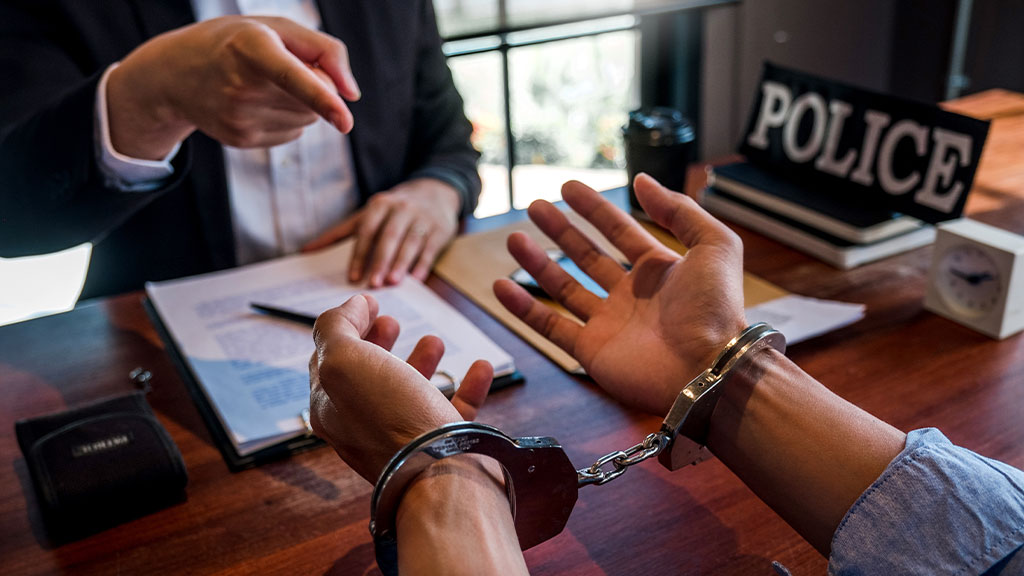
Child Pornography Lawyer Niles, IL. A child pornography investigation in Niles, IL may begin long before you know police are looking at you. By the time officers arrive with a search warrant, they may already be focused on CSAM allegedly tied to your phone, computer, online accounts, or internet connection, and they may leave with several of your electronic devices.
From there, the important questions become much more specific. What files were actually found? How did they get there? Were they opened or viewed? Who had access to the device or account? What does the forensic data show? And can prosecutors connect that evidence to you beyond a reasonable doubt?
People accused of possessing, distributing, producing, or otherwise being involved with child pornography or CSAM need more than the government’s version of what happened. Combs Waterkotte‘s criminal defense lawyers serving Niles, IL review the underlying evidence, how it was obtained, and what it actually proves.
If police have contacted you, searched your home, seized a device, or told you that you are the target of an investigation, call (314) 900-HELP or contact us online for a free, confidential consultation.
Cases Handled
Over 10,000
Jail Days Saved
Over 1 Million
Google Reviews
500+ Perfect
Legal Experience
100+ Years
This page covers:
- How Illinois law defines child pornography and child sexual abuse material
- What the State must prove to obtain a conviction under Illinois’ CSAM statute
- The felony levels, prison exposure, and other penalties tied to Illinois child pornography charges
- The role electronic devices, online accounts, IP addresses, and forensic evidence can play in these investigations
- Evidence problems and legal issues that may undermine the State’s case
- Why some CSAM investigations in Niles, IL move from state court into the federal system
- How a conviction can lead to sex offender registration and other long-term consequences
- How Combs Waterkotte defends complex child pornography and CSAM cases
Legal Videos
What is Grooming Under Illinois Law?
What is Grooming Under Illinois Law? Combs Waterkotte attorneys Christopher Combs and Joshua Boardman discuss everything you need to know about Illinois sex crime charges, including sexual assault …
What is Internet Solicitation of a Minor in Illinois?
What is Internet Solicitation of a Minor in Illinois? Attorneys Christopher Combs and Joshua Boardman from Combs Waterkotte discuss everything you need to know about Illinois sex crime charges …
Can I Be Charged for Sending Unsolicited Explicit Images?
Can I Be Charged for Sending Unsolicited Explicit Images? Combs Waterkotte attorneys Christopher Combs and Joshua Boardman discuss everything you need to know about Illinois sex crime charges …
What Is Unlawful Dissemination of Private Sexual Images in Illinois?
What Is Unlawful Dissemination of Private Sexual Images in Illinois? Attorneys Christopher Combs and Joshua Boardman from Combs Waterkotte discuss everything you need to know about Illinois sex …
Can Minors Be Charged for Sexting in Illinois?
Can Minors Be Charged for Sexting in Illinois? Combs Waterkotte attorneys Christopher Combs and Joshua Boardman discuss everything you need to know about Illinois sex crime charges, including …
Can Adults Be Charged for Sexting in Illinois?
Can Adults Be Charged for Sexting in Illinois? Attorneys Christopher Combs and Joshua Boardman from Combs Waterkotte discuss everything you need to know about Illinois sex crime charges, including …
What is Grooming Under Illinois Law?
What is Grooming Under Illinois Law? Combs Waterkotte attorneys Christopher Combs and Joshua Boardman discuss everything you need to know about Illinois sex crime charges, including sexual assault …
What is Internet Solicitation of a Minor in Illinois?
What is Internet Solicitation of a Minor in Illinois? Attorneys Christopher Combs and Joshua Boardman from Combs Waterkotte discuss everything you need to know about Illinois sex crime charges …
Can I Be Charged for Sending Unsolicited Explicit Images?
Can I Be Charged for Sending Unsolicited Explicit Images? Combs Waterkotte attorneys Christopher Combs and Joshua Boardman discuss everything you need to know about Illinois sex crime charges …
What Is Unlawful Dissemination of Private Sexual Images in Illinois?
What Is Unlawful Dissemination of Private Sexual Images in Illinois? Attorneys Christopher Combs and Joshua Boardman from Combs Waterkotte discuss everything you need to know about Illinois sex …
Can Minors Be Charged for Sexting in Illinois?
Can Minors Be Charged for Sexting in Illinois? Combs Waterkotte attorneys Christopher Combs and Joshua Boardman discuss everything you need to know about Illinois sex crime charges, including …
Can Adults Be Charged for Sexting in Illinois?
Can Adults Be Charged for Sexting in Illinois? Attorneys Christopher Combs and Joshua Boardman from Combs Waterkotte discuss everything you need to know about Illinois sex crime charges, including …
What to Do During a CSAM Investigation in Niles, IL
If police are already asking questions, seeking access to devices, or investigating your online activity, the case has started even if no one has put you in handcuffs. That is enough reason to speak with a lawyer.
A request to “come in and answer a few questions” may be the first clue that you are under investigation. For someone else, it may be officers showing up in Niles, IL with a search warrant. Either way, police may already have records from internet providers, cloud accounts, social media platforms, or other online services before they ever speak with you.
If you believe you are under investigation:
- Do not answer investigators’ questions without an attorney. Questions about passwords, devices, usernames, online activity, or who uses a computer may be intended to establish knowledge or control.
- Do not consent to additional searches. If police have a warrant, do not interfere with it. That does not mean you need to give permission for searches beyond what the warrant authorizes.
- Do not delete files, accounts, messages, or browsing history. What looks damaging at first may contain information your attorney or a forensic examiner needs to understand what actually occurred.
- Do not destroy, wipe, reset, or replace a device.
- Keep the case off the group chat. Friends, coworkers, roommates, and even family members can become witnesses if you discuss what happened with them.
- Put your attorney between you and the investigation. Your lawyer can find out what police want and handle communications without forcing you to improvise answers about evidence you have not even seen.
This is not the time to guess how a file appeared on a computer or reconstruct months of online activity from memory. An inaccurate answer can become evidence too. Find out what investigators actually have before deciding how to respond.
Understanding Illinois Child Sexual Abuse Material Laws
Illinois child pornography charges are primarily prosecuted under 720 ILCS 5/11-20.1.
Illinois law does not treat every CSAM allegation as the same offense. The statute separately addresses conduct such as:
- Producing prohibited visual material involving a minor
- Copying or disseminating prohibited material
- Offering to share prohibited material or displaying it to others
- Possessing prohibited material while intending to distribute it
- Using solicitation, persuasion, inducement, enticement, or coercion to involve a minor in prohibited material
- Allowing a minor in someone’s care or custody to be used in prohibited material
- Knowingly having prohibited material in one’s possession
The distinction matters. A case involving possession is not charged the same way as an allegation involving production, distribution, or solicitation.
What Happens When a CSAM Case Involves AI or Manipulated Images?
Illinois law is not limited to conventional photographs and recorded video.
The statute addresses certain computer-created, adapted, or modified depictions that appear to involve a person under 18, as well as manipulated material using part of an actual child.
How the image was created may become part of the case. Digitally altered or computer-generated material can raise questions that are different from those presented by an ordinary photograph or recorded video.
An AI-generated or altered image does not automatically fall outside Illinois law. What the file depicts, how it was created, and which subsection prosecutors are relying on all need to be examined.
Cook County Resources
Below are quick links to important websites that may assist you with your legal matters in Cook County and Illinois.
- Illinois Criminal Defense Resources
- Illinois Criminal Defense Practice Areas
- Illinois Compiled Statutes
- Illinois Courts
- Illinois Supreme Court Rules
- Illinois Secretary of State
- Illinois State Police
- Illinois Department of Corrections
- Cook County Website
- Cook County Court
- Cook County Jail
- Cook County Sheriff’s Office
- Christopher Combs
- Steven Waterkotte
What Must Prosecutors Prove in a Niles, IL Child Pornography Case?
Finding files on an electronic device is not the end of the case.
Prosecutors still carry the burden of proving every required element of the charged offense beyond a reasonable doubt.
For a possession charge under 720 ILCS 5/11-20.1(a)(6), the case may turn on questions such as whether:
- The material actually qualifies as CSAM under Illinois law
- The accused had possession of the material
- The accused knew the nature or contents of the material
- The accused knew or reasonably should have known the age of the person depicted, where applicable
- The possession was voluntary
Voluntary possession deserves particular attention because Illinois law defines what it means.
Possession is considered voluntary when a person knowingly procures or receives the material and has enough time to terminate possession. That can become important when files appear in temporary storage, automatic downloads, synced folders, messaging applications, shared accounts, or other locations the user may not have deliberately created.
For charges involving distribution, production, solicitation, or other conduct, prosecutors have additional elements to establish.
Start with the actual charge, then look at the forensic evidence supporting it. Both matter.
What Penalties Can Follow a Child Pornography Charge in Niles, IL?
Child pornography or CSAM offenses under Illinois law are felonies, but the felony classification depends on the conduct alleged, the type of material involved, the age of the child depicted, prior qualifying convictions, and other statutory factors.
When the allegation is possession under 720 ILCS 5/11-20.1(a)(6), the basic classifications are:
- A photograph or other non-moving depiction generally results in a Class 3 felony possession charge
- Possession involving a film, video, or another moving depiction is generally a Class 2 felony
- Possession involving a child under 13 is generally a Class 2 felony
Under Illinois’ standard sentencing ranges, a Class 3 felony carries 2 to 5 years, while a Class 2 felony carries 3 to 7 years. Criminal history and other sentencing rules can alter the ultimate exposure.
The sentencing picture becomes much more serious when prosecutors allege production, dissemination, solicitation, or involvement of a minor in creating the material. Depending on the conduct and the type of depiction, those charges can rise to a Class 1 felony or Class X felony.
The ordinary prison ranges increase accordingly:
- Class 1 felony: 4 to 15 years
- Class X felony: 6 to 30 years
A standard Class X sentence does not allow probation, and qualifying prior convictions can increase the punishment further.
Section 11-20.1 also carries mandatory minimum fines, and the required amount depends on the subsection involved.
One Investigation Can Produce Many Counts
File count can change the stakes of the case quickly.
Illinois law provides that each individual film, video, photograph, or other prohibited depiction can constitute a separate violation. Identical copies of the same depiction are treated differently and do not automatically create separate possession offenses.
In a case involving hundreds or thousands of files, that distinction can dramatically change the number of counts on the table.
If police report that a device contained 100 or 1,000 files, the defense should not simply accept the number printed in the report. The files need to be examined to determine which are actually distinct, which are duplicates, what they contain, where they were stored, and how they arrived there.
How Niles, IL Child Pornography Investigations Use Digital Evidence
A large number of CSAM investigations start with online activity rather than an in-person complaint.
An investigation may develop from a report by an internet platform, information provided through the National Center for Missing & Exploited Children’s CyberTipline, activity observed on a file-sharing network, another criminal investigation, or evidence obtained from an online account.
From there, investigators may pursue account records, device evidence, or search warrants involving:
- Records from internet service providers
- IP address information
- Email accounts
- Social media or messaging applications
- Cloud storage accounts
- Search terms and browsing records
- Download activity
- Peer-to-peer and file-sharing software
- Phones, tablets, and mobile devices
- Laptop and desktop computers
- External hard drives and storage devices
- USB drives and memory cards
Seizing a device gives investigators access to much more than the visible folders on the screen. They can create a forensic copy and examine system-level data, deleted material, application records, and other information a normal user may never see.
Forensic data may include timestamps, file paths, deleted material, account information, browser records, application data, metadata, login activity, cloud synchronization records, and information showing when a file was created, modified, transferred, or accessed.
None of those data points explain themselves.
An IP address may identify a connection, not necessarily the person behind the keyboard. A file path can show where material was stored without proving who placed it there. A timestamp can establish when something happened while leaving the identity of the user open to dispute.
The details matter more than the headline in the police report.
Key Defense Questions in a Niles, IL CSAM Case
There is no universal defense to a child pornography charge. The useful questions come from the evidence in the individual case.
Can Prosecutors Prove You Knew About the File?
A file can exist on a device without automatically proving knowing possession. That distinction matters.
The path a file took onto a device can be critical. Investigators may need to distinguish an intentional download from a synced folder, an automatically saved attachment, cached material, or content placed there by someone else. File location, access history, timestamps, and surrounding activity can all bear on whether the State can prove knowledge.
Who Actually Used the Device or Account?
Finding material on a device does not automatically identify the person who put it there.
Shared access is common. Family members, roommates, coworkers, visitors, or other users may have access to phones, computers, Wi-Fi networks, cloud storage, streaming devices, or online accounts.
Attribution should be tested, not assumed. Login history, device records, account access, passwords, profiles, timestamps, and other forensic clues may support or undermine the government’s claim that a particular person was responsible.
Can the Digital Timeline Support the Prosecution’s Story?
Digital files leave trails, but those trails are not always simple.
A forensic review may help determine:
- When a file arrived
- The source of the file
- Whether it was opened
- Whether the file was transferred, copied, or relocated
- Whether the file was removed and when
- Which account was active
- Whether software performed an action automatically
- Whether another phone, computer, or cloud account caused the file to appear
- What other activity occurred before and after the event
The prosecution may have a theory about what the data means. That theory can be tested.
Was the Search Legal?
Search warrants in digital cases deserve close scrutiny.
A warrant review may focus on probable cause, the facts presented to the judge, the specific devices or accounts listed, and whether officers remained inside the boundaries the court approved.
If investigators crossed constitutional lines while searching, seizing evidence, or questioning the accused, the defense can ask the court to exclude evidence obtained through the unlawful search.
Did Prosecutors Count the Files Correctly?
When each distinct depiction can become another count, file identification matters.
A forensic collection may contain duplicates, thumbnails, cached files, converted copies, automatically created data, and other artifacts that inflate the raw number investigators report. The defense can examine whether each alleged count actually corresponds to a legally distinct depiction.
Is the Alleged Material Covered by §11-20.1?
The label “illegal image” does not by itself establish that the material satisfies every requirement of §11-20.1.
The file itself matters. Questions about age, content, digital manipulation, how the depiction was created, and what the image actually shows can all affect whether §11-20.1 applies.
Illinois law includes a narrow affirmative defense based on a reasonable belief that the person depicted was at least 18. It is not enough to simply say you were mistaken about age; the statute requires particular steps to have been taken beforehand to verify it.
When Can a Niles, IL CSAM Case Move Into Federal Court?
State charges are not the only possibility. Some child pornography investigations in Niles, IL develop into federal criminal cases.
Federal agencies and prosecutors may become involved when allegations concern interstate internet activity, online platforms, file-sharing networks, federal investigations, or other conduct falling within federal jurisdiction.
Depending on how the investigation develops, law enforcement may include:
- FBI agents
- Homeland Security Investigations
- The U.S. Postal Inspection Service
- Federal and local Internet Crimes Against Children task forces
- State and local officers participating in a federal investigation
At the federal level, 18 U.S.C. §2252A commonly applies to possession, receipt, and distribution offenses, while 18 U.S.C. §2251 addresses production-related conduct.
Federal sentencing can be severe.
A first-offense federal possession charge under §2252A can carry up to 10 years in prison in many cases, with a higher maximum applying to certain material involving young children. Receipt or distribution generally carries a 5-year mandatory minimum and up to 20 years, while production under §2251 generally carries 15 to 30 years in federal prison for a first conviction. Prior qualifying convictions can increase those penalties significantly.
Federal cases also involve the U.S. Sentencing Guidelines, supervised release, forfeiture, restitution, and federal registration requirements.
In federal court, possession and receipt are not interchangeable labels. The way prosecutors say the files were obtained can affect which charge they pursue and the sentencing range that follows.
Federal involvement changes the terrain. If agents participate in a search, interview, CyberTip investigation, or device seizure, the defense needs to recognize that early because federal procedure, sentencing, and case strategy can differ significantly from an Illinois prosecution.
Because Combs Waterkotte handles Illinois prosecutions as well as federal criminal defense, our attorneys can evaluate whether a case is likely to remain in state court or move into the federal system.
What Happens After a CSAM Conviction in Niles, IL?
Even after the criminal case ends, the consequences can keep going.
A conviction under 720 ILCS 5/11-20.1 can trigger obligations under the Illinois Sex Offender Registration Act. Those registration requirements may require a person to report details about where they live and work, vehicles, phone numbers, email addresses, online identities, and other internet activity. People convicted under §11-20.1 can also face additional IP-address reporting rules.
Registration is not necessarily short-term. Depending on the offense and the law that applies, the obligation may last for years or continue for life.
A felony sex offense conviction can also affect:
- Current and future employment
- Licensing in regulated professions
- Where a person can live
- College, training, or other educational programs
- Family court issues involving custody or visitation
- Immigration status for non-citizens
- Firearm ownership and possession rights
- Use of computers, phones, or the internet while under supervision
- Personal and professional relationships
What follows a conviction depends heavily on the specific offense and outcome. That makes the difference between charges, plea terms, dismissals, and trial results especially important.
Why Choose Combs Waterkotte for a Child Pornography Case in Niles, IL?
These are not ordinary felony cases. Defending a CSAM allegation in Niles, IL may require experience with Illinois sex crime law, technical evidence, criminal investigations, and the way prosecutors turn digital records into criminal charges.
Combs Waterkotte brings prosecutorial experience to the defense side. Members of our team have worked serious child-related felony cases from the prosecution side and completed specialized computer-forensics training through the U.S. Secret Service National Computer Forensics Institute.
When prosecutors rely heavily on a device extraction or forensic report, our attorneys know the right questions to ask: what the data actually proves, what assumptions were made, and where the government’s interpretation may be vulnerable.
An in-house investigator who previously worked in law enforcement can help our attorneys dig deeper into the case, from witness development and evidence review to examining the steps police took before recommending charges.
Some cases call for additional technical review. When they do, we can bring in forensic professionals or other experts to examine the evidence more closely and challenge conclusions that do not hold up under scrutiny.
Beyond the digital-forensics and investigative capabilities, Combs Waterkotte offers:
- A legal team with more than a century of combined experience
- More than 15,000 cases handled
- Former prosecutors who understand charging decisions from the other side
- Full-time investigative support from someone who has worked inside law enforcement
- The ability to involve forensic professionals and other experts when needed
- Preparation for trial from the beginning, whether the case involves an Illinois felony or federal internet sex crime allegations
- 500+ five-star Google reviews
Every defense starts with the same question: what can the government prove? From there, we identify the evidence worth challenging, develop the strongest available strategy, and prepare the case for trial when necessary.
Other cases we take on in Niles, IL include:
Talk to a Niles, IL Child Pornography Lawyer About Your Case
If police already have your phone or computer, the investigation is not waiting for you to catch up.
A defense team can do more once it understands the scope of the investigation: which devices were seized, what police are claiming, whether anyone gave statements, and which agencies are working the case.
We represent clients in Niles, IL and across Illinois in both state and federal child pornography and CSAM investigations.
Call (314) 900-HELP or contact us online for a free, confidential consultation with a child pornography lawyer in Niles, IL.

