

North Aurora, IL Murder / Homicide Lawyer. A homicide investigation in Illinois can develop for days or weeks without anyone being taken into custody. By then, detectives may have collected video, searched devices, questioned witnesses, reviewed weapons evidence, and decided how they think the death occurred. When officers finally ask for your version, they may be testing it against a theory they have already built.
Do not try to talk your way out of a murder investigation. Speak with a defense lawyer before you answer questions. Combs Waterkotte defends people facing murder and homicide allegations in North Aurora, IL and across Illinois. Our North Aurora, IL criminal defense lawyers can step in during an investigation and continue the defense through arrest, detention proceedings, negotiations, and trial. Call (314) 900-HELP to arrange a free and confidential case review.
Cases Handled
Over 10,000
Jail Days Saved
Over 1 Million
Google Reviews
500+ Perfect
Legal Experience
100+ Years
Topics covered below:
- Murder and homicide charges that may be filed under Illinois law
- What prosecutors must prove in an Illinois murder case
- Prison sentences and firearm enhancements
- Ways a murder or homicide accusation may be challenged
- Steps to take when police suspect you were involved in a death
- What to expect following a North Aurora, IL murder arrest
- The work our defense team does before a homicide case reaches trial
Legal Videos
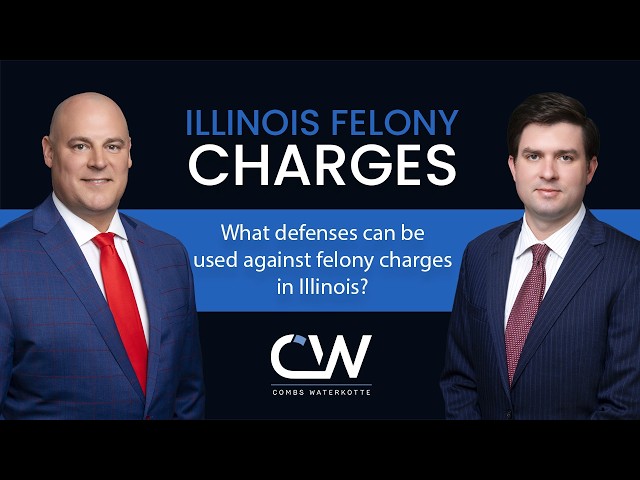
Everything You Need to Know About Felony Charges in Illinois
Everything You Need to Know About Felony Charges in the State of Illinois. Attorneys Steve Waterkotte and Joshua Boardman from Combs Waterkotte discuss everything you need to know about Illinois …
Can I Seal or Expunge My Criminal Record in Illinois?
Can I Seal or Expunge My Criminal Record in Illinois? Dealing with a criminal record in the state of Illinois? Combs Waterkotte attorney Joshua Boardman discusses the possibility of expunging your …
Can the Police Legally Search Me or My Property in Illinois?
Can the Police Legally Search Me or My Property in Illinois? Facing criminal charges in the state of Illinois? Combs Waterkotte attorney Joshua Boardman discusses probable cause and when police can …
Do I Need a Lawyer if I’m Innocent in Illinois?
Do I Need a Lawyer if I'm Innocent in Illinois? Facing criminal charges in the state of Illinois? Combs Waterkotte attorney Andrew Russek talks about it being more important to have a lawyer if …
What Penalties Could I Face Under Illinois Law?
What Penalties Could I Face Under Illinois Law? Facing criminal charges in the state of Illinois? Combs Waterkotte attorney Joshua Boardman talks about the possible penalties under Illinois …
What Are My Rights if I’m Arrested in Illinois?
What Are My Rights if I'm Arrested in Illinois? Facing criminal charges in the state of Illinois? Combs Waterkotte attorney Joshua Boardman discusses your rights following an arrest in …
Everything You Need to Know About Felony Charges in Illinois
Everything You Need to Know About Felony Charges in the State of Illinois. Attorneys Steve Waterkotte and Joshua Boardman from Combs Waterkotte discuss everything you need to know about Illinois …
Can I Seal or Expunge My Criminal Record in Illinois?
Can I Seal or Expunge My Criminal Record in Illinois? Dealing with a criminal record in the state of Illinois? Combs Waterkotte attorney Joshua Boardman discusses the possibility of expunging your …
Can the Police Legally Search Me or My Property in Illinois?
Can the Police Legally Search Me or My Property in Illinois? Facing criminal charges in the state of Illinois? Combs Waterkotte attorney Joshua Boardman discusses probable cause and when police can …
Do I Need a Lawyer if I’m Innocent in Illinois?
Do I Need a Lawyer if I'm Innocent in Illinois? Facing criminal charges in the state of Illinois? Combs Waterkotte attorney Andrew Russek talks about it being more important to have a lawyer if …
What Penalties Could I Face Under Illinois Law?
What Penalties Could I Face Under Illinois Law? Facing criminal charges in the state of Illinois? Combs Waterkotte attorney Joshua Boardman talks about the possible penalties under Illinois …
What Are My Rights if I’m Arrested in Illinois?
What Are My Rights if I'm Arrested in Illinois? Facing criminal charges in the state of Illinois? Combs Waterkotte attorney Joshua Boardman discusses your rights following an arrest in …
Under Investigation for Murder in North Aurora, IL?
You may already be a focus of a homicide investigation even if no one has arrested you or used the word “suspect.” Police may describe you as a witness, invite you to the station, ask to look through your phone, or say they have only a few questions. How detectives describe the conversation may have little to do with the role they believe you played.
Speak with a lawyer first whenever detectives contact you about a death and you could be connected to their investigation. Do not assume you can explain a misunderstanding, correct someone else’s story, or prove your innocence by cooperating. An answer that feels minor can become central once police compare it with footage, device records, witness statements, or forensic findings.
A defense lawyer can start preserving important evidence before the State files charges. Counsel may move to preserve video, locate people with useful information, secure records, document injuries, review search authority, and track property seized by police. In a serious homicide case, some of the most useful defense work can happen before the first court date.
If you have already been arrested, the same rule applies: do not discuss the facts of the case with police, other inmates, friends over recorded jail calls, or anyone other than your attorney. The prosecution has begun assembling its evidence. Your defense should be doing the same.
Murder and Homicide Charges We Handle in North Aurora, IL
The word “homicide” covers several situations in which one person’s actions are blamed for another person’s death. Prosecutors choose the charge by looking at the person’s alleged state of mind, the cause of death, any related felony, and facts involving justification, provocation, recklessness, controlled substances, or driving.
Our North Aurora, IL homicide defense team handles allegations involving:
- An Illinois first-degree murder charge: Purposely causing a death, acting while knowing death or great bodily harm was highly likely, or causing a death while committing certain felonies classified as forcible offenses.
- Illinois felony murder: When prosecutors blame a person for a death tied to a qualifying felony, even though that person did not personally deliver the fatal injury.
- Second-degree murder: A case that meets the basic requirements of first-degree murder but includes serious provocation or an honest, unreasonable belief that deadly force was justified.
- Attempted first-degree murder: Trying to kill someone and taking a real step toward doing so, even though the person survives.
- Helping or taking part in another person’s crime: A person can face an Illinois murder charge without firing the weapon or personally causing the death. The State may argue that the accused planned the offense, encouraged it, or helped another person commit it.
- An involuntary manslaughter allegation and reckless homicide: Charges based on an accidental death allegedly caused by behavior that created an unjustifiable risk. Reckless homicide often involves a car or another type of vehicle.
- A drug-induced homicide charge: An allegation that a person unlawfully delivered drugs and the recipient died after using them.
- Related murder and obstruction allegations: A murder-for-hire accusation, asking someone else to commit murder, conspiracy, hiding a death, related gun charges, as well as obstruction or evidence-related charges.
The State still has to prove the required elements with legally admissible proof. Sometimes the central issue is whether the State has accused the right person. In others, it is intent, causation, justification, accountability, or whether a separate felony can support a felony-murder theory.
What the State Must Prove for First-Degree Murder in North Aurora, IL
Illinois defines first-degree murder in 720 ILCS 5/9-1 using three different sets of circumstances. Prosecutors can pursue the charge by claiming the person:
- meant to kill or seriously injure someone, or knew the conduct would result in death;
- knew the actions were highly likely to kill someone or cause great bodily harm; or
- took part in a qualifying forcible felony and a death was caused by the accused or another person involved.
The State may try to prove intent or knowledge through surrounding facts, including statements, weapons, injury patterns, prior communications, behavior leading up to the death, and what the accused did next. The same facts may be read in very different ways. A defense lawyer can challenge the distance between the actual proof and the conclusions prosecutors want jurors to draw.
How Second-Degree Murder Works in North Aurora, IL
Illinois second-degree murder is not defined merely as a killing committed with less intent. The State must still establish the elements of intentional or knowing first-degree murder. The difference is that the defense may be able to show that one of two circumstances was present:
- The person acted in a sudden and intense emotional state after being seriously provoked; or
- The person genuinely believed deadly force was needed to protect themselves or another person, although the law considers that belief unreasonable.
The legal framework appears in 720 ILCS 5/9-2. The State keeps the burden of proving the underlying murder elements beyond a reasonable doubt. If self-defense is part of the case, they may also have to prove that the killing was not legally justified.
Small details can make a major difference in these cases. Earlier threats, visible injuries, weapons, witness observations, emergency calls, and the sequence immediately before the death may shape the charge and defense. Those facts may support self-defense, second-degree murder, another homicide charge, or an argument that no crime was committed at all.
Prison Sentences for Murder and Homicide in Illinois
A person convicted of first-degree murder generally faces a prison term of 20 to 60 years under Illinois first-degree murder sentencing law. Certain aggravating facts can raise the range to 60 to 100 years or result in life without release. A judge cannot sentence a person convicted of first-degree murder to probation or conditional discharge. The official Illinois sentencing statute sets out the applicable prison terms.
An allegation involving a gun can add many years to the sentence for first-degree murder. The sentence may increase by 15 years if the person was armed, 20 years if the person personally discharged the gun, and 25 years to natural life if that gunfire caused great bodily harm, permanent disability, permanent disfigurement, or death. Depending on the circumstances, prosecutors may file additional Illinois gun crime charges, depending on who possessed the weapon and the circumstances surrounding it.
- Attempted first-degree murder: Usually sentenced as a Class X felony, with a standard range of 6 to 30 years. The possible sentence can rise sharply when special circumstances or firearm enhancements apply.
- Second-degree murder: A Class 1 felony with a special prison range of 4 to 20 years under Illinois law for Class 1 felony sentences.
- Illinois involuntary manslaughter and reckless homicide: Under the Illinois statute covering involuntary manslaughter and reckless homicide, the usual charge is a Class 3 felony with a prison range of 2 to 5 years. When an aggravating circumstance listed in the law applies, the offense may become a Class 2 felony carrying 3 to 7 years. Examples include certain cases with multiple deaths or victims who were peace officers, emergency responders, construction workers, school crossing guards, or family or household members.
- Drug-induced homicide: Illinois drug-induced homicide law covers unlawful deliveries of certain controlled substances when the recipient dies after taking them. It is a Class X felony, with some cases carrying 15 to 30 years in prison and an extended-term sentence of 30 to 60 years.
Defenses to Murder and Homicide Charges in North Aurora, IL
No single defense applies to every murder or homicide accusation. The defense has to fit the specific charge, the State’s evidence, and the facts counsel can verify outside the police reports. Several issues appear often.
Self-Defense or Defense of Another Person
Under Illinois law on self-defense and defense of others, a person is allowed to defend themselves or someone else when they reasonably believe unlawful force is about to be used. A person may use deadly force only if they reasonably believe it is necessary to prevent death, severe bodily injury, or the commission of specified serious felonies.
A self-defense claim depends on the evidence surrounding the encounter, not simply on saying the act was self-defense. Whether the belief was reasonable can depend on threats, wounds, weapons, distances, prior behavior known to the accused, witness accounts, and what happened second by second.
The State Accused the Wrong Person
Identification evidence may be mistaken. A witness may have seen clothing, build, or movement rather than a face. Digital evidence may place a device near an area without identifying its user. Another person may have motive, access, or possession of the weapon. Independent work may uncover video, records, timing problems, alibi evidence, or overlooked witnesses that challenge the State’s identification.
The State Cannot Prove Intent or Knowledge
A death does not by itself establish first-degree murder. Except in a felony-murder case, prosecutors must prove that the accused had the intent or knowledge required by the theory they charged. Evidence may instead support lack of intent because the death resulted from an accident, reckless conduct, or events that happened differently from the State’s account. Medical and forensic findings may also undercut claims about intent.
The State Cannot Prove What Caused the Death
A homicide conviction requires a legally sufficient link between the alleged conduct and the fatal result. Causation may be contested when multiple people or injuries were involved, treatment was delayed, substances affected the person, another event intervened, or the deceased had an existing medical problem. Medical records and independent pathology review may change how the sequence is understood.
Police Violated the Accused Person’s Rights
The defense may challenge warrants, device searches, searches of homes or cars, police questioning, identification procedures, and arrests that violated constitutional protections. Phones deserve especially close attention because they can contain messages, photographs, searches, location records, and years of other personal information. The defense should examine whether Illinois police can search a phone without a warrant as well as the scope of information officers may review.
Felony Murder or Accountability Has Been Stretched Too Far
Prosecutors sometimes argue that a person’s association with others makes them responsible for everything the group allegedly did. The defense can challenge whether the accused shared the required intent, actually aided the offense, withdrew before it occurred, or was merely present. In Illinois felony-murder cases, the defense may challenge the underlying felony, whether the death occurred during or in furtherance of it, and who actually caused the death.
What to Do When Police Ask About a Murder in North Aurora, IL
Do not answer questions about the death without an attorney. Fear, lack of sleep, and pressure can cause even innocent people to misspeak or fill in details they do not actually remember. Small inconsistencies can later be presented as evidence of guilt. Tell officers plainly that you will remain silent and that you want a lawyer.
Do not consent to a search. Never fight with officers or try to block the execution of a warrant. Say that you do not consent, remain calm, and allow your lawyer to challenge the search later if appropriate.
Preserve your messages, accounts, and records. Deleting digital material can damage the defense, make innocent activity look suspicious, and potentially create another legal problem. Keep existing data and records intact. Avoid discussing testimony with witnesses, and remember that conversations from custody are generally monitored.
Give your attorney the complete account. Your lawyer may need names, earlier threats, photographs of injuries, information about missing items, camera locations, receipts, rideshare records, and witnesses who saw you around the time of the death. Keep the information within the attorney-client relationship instead of posting or texting about it.
What Happens After a Murder Arrest in North Aurora, IL?
The State may seek pretrial detention in cases involving first-degree or second-degree murder. The accusation is severe, but detention still requires a court ruling under Illinois law. The court must review a State petition, apply Illinois’s detention standards, and decide whether any release conditions could address the risk prosecutors identify. The current procedure appears in 725 ILCS 5/110-6.1.
The case may then proceed through a preliminary hearing or grand jury indictment, arraignment, discovery, motion practice, negotiations, and trial. A homicide prosecution may produce thousands of report pages along with hours of video, complete phone downloads, laboratory records, and expert analysis. Even with a large discovery file, counsel should act early on disappearing evidence, potentially unlawful statements, hard-to-find witnesses, and expert analysis that becomes more difficult as time passes.
The decisions made in the first days after an arrest can affect the rest of the case. The defense may be affected by who you speak with, what you disclose, whether you authorize searches, and what records or physical evidence remain available. The following guide to what you should do after a North Aurora, IL felony arrest offers a more detailed breakdown of the early stages.
How We Build a Murder or Homicide Defense in North Aurora, IL
Combs Waterkotte has taken on over 10,000 criminal cases and has earned over 500 five-star Google reviews. The defense team brings together former prosecutors, lawyers who understand police work, an in-house investigator, and outside experts when specialized analysis is needed. A murder defense needs real investigative resources because prosecutors begin with support from police, forensic laboratories, analysts, and specialists.
Depending on the case, our defense work may include:
- stepping between the client and investigators before an interview or surrender;
- organizing reports, recordings, digital files, and physical evidence so the defense can evaluate the entire case;
- creating a separate timeline based on footage, messages, documents, and interviews conducted for the defense;
- reviewing searches, questioning, identification procedures, and the collection of evidence for constitutional or procedural violations;
- having qualified professionals independently examine the State’s scientific, medical, digital, and weapons-related claims;
- preparing motions that narrow or weaken the State’s proof;
- considering negotiation options without treating a plea agreement as the default outcome; and
- building the defense with a possible jury trial in mind from the start.
Preparing seriously for trial can change how prosecutors, witnesses, and experts approach the case. Weak witnesses have to be found. Experts must be able to defend their methods and opinions under questioning. The prosecution’s sequence must make sense down to the minute. The State can tell the difference between a defense that is ready for trial and one that is hoping for a deal.
Other criminal cases we handle in North Aurora, IL include:
Talk to a Murder / Homicide Lawyer in North Aurora, IL Now
Police do not have to announce that you are their suspect. They may approach you as a witness, ask to see your phone, or suggest that a quick conversation will clear everything up. Talk to a lawyer before responding to investigators or giving them permission to search.
Call Combs Waterkotte at (314) 900-HELP. You can also send our team a message online to discuss the case privately at no cost. A North Aurora, IL murder and homicide lawyer from our team is available 24 hours a day.

