






Additional Links
- Legal Video | What Should I Do if I’m Charged With a Crime in Illinois?
- Legal Video | What Should I Do If Arrested in Illinois?
- Legal Video | What Are My Rights if I’m Arrested in Illinois?
- Legal Video | What Penalties Could I Face Under Illinois Law?
- Legal Video | Can the Police Legally Search Me or My Property in Illinois?
- How Much Prison Time Do You Face for a Felony in Illinois?
- What Are the Long-Term Consequences of a Felony Conviction in Illinois?
- What Are the Different Felony Classes in Illinois?
- What Happens After an Arrest in Chicago?
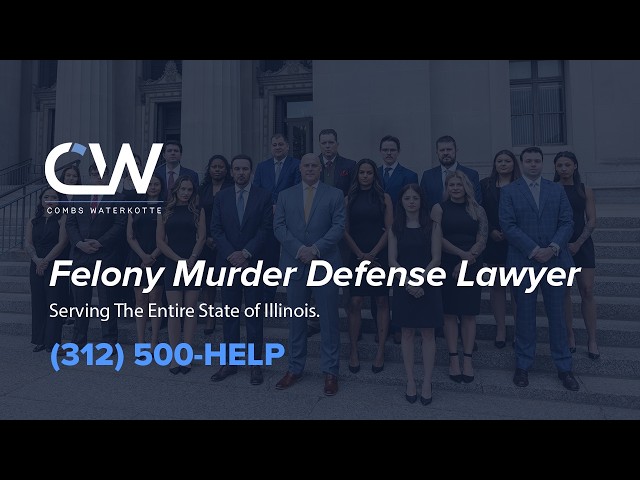
Felony Murder Lawyer in Chicago, Illinois Serving All of Cook County
A felony murder charge in Chicago or anywhere in Cook County can turn your life upside down overnight. Chicago and Cook County prosecutors do everything they can to secure convictions in these cases, often building their arguments around complex legal theories that can be difficult to challenge without experienced representation. When so much is on the line, having a knowledgeable defense attorney is critical to protecting your rights and your future.
At Combs Waterkotte, we bring more than 100 years of combined criminal defense experience to every case we handle. Our team understands the nuances of Illinois felony murder law and how prosecutors attempt to secure convictions. We take a proactive, detail-oriented approach, digging into the evidence, identifying weaknesses in the state’s case, and developing a defense strategy tailored specifically to the circumstances of your case.
“I recently went to trial with [Combs Waterkotte] and [they] won a ‘not guilty’ verdict for me... When you are sitting in trial all kinds of thoughts enter your mind, and you’re constantly saying to yourself: oh, ask this question, bring up that point, etc. With [Combs Waterkotte], every time one of those thoughts entered my mind [they were] already on top of it and driving the point home better than I ever thought it could be... I simply could not have been more happy with [their] performance. I was amazed. This has been the best experience I have ever had with a lawyer and the legal system, and I owe it to [them].”
-Matt | Combs Waterkotte Client
When you choose Combs Waterkotte, you get more than just legal representation. You get a dedicated team that prioritizes communication and preparation. We’ll walk you through every stage of the process, from your initial consultation to potential trial, ensuring you understand your options and feel confident in your defense. We’ll even work with you to develop a payment plan to ensure you can afford the best legal defense available.
If you or a loved one is facing a felony murder charge in Chicago or anywhere in Cook County, don’t wait to get help. Contact Combs Waterkotte today at (314) 900-HELP or reach out to us online for a free, confidential consultation. The sooner you involve an experienced defense lawyer, the stronger your position will be moving forward.
Felony Murder Rule in Chicago, Illinois
Illinois’s federal murder rule is a homicide offense that exists under Illinois’s first degree murder statute, 720 ILCS 5/9-1. This statute says an individual may be charged with first degree murder in Chicago and Cook County when, while performing an act that causes a death, they:
- Intend to kill or do great bodily harm, knowing their actions will cause death
- Know that their actions will create a strong probability of death or great bodily harm
- Commit or attempt to commit a forcible felony alone or with others and, while doing so (or fleeing from the scene), they or an accomplice cause the death of someone else
It’s this third point that constitutes felony murder in Chicago: committing a forcible felony while causing someone else’s death. 720 ILCS 5/2-8, the statute that defines forcible felonies under Illinois law, includes these common offenses:
If an individual commits these or any other forcible felonies and causes a death during the commission of the underlying felony, they can be charged with felony murder in Chicago or Cook County. It’s important to note that, under the law:
- Felony murder does not require intent
- Felony murder can be charged against people who did not directly cause the death
As long as you’re an accomplice during the commission of a forcible felony that results in someone else’s death, you can be charged with felony murder. There are, however, a few nuances to consider.
Agency vs. Proximate Cause in Chicago, Illinois Felony Murders
While Illinois’s first degree murder and felony murder laws are structured similarly to other states’ laws, the Land of Lincoln is in the minority when it comes to applying agency instead of proximate cause to felony murders.
In these cases, agency says a defendant is only liable for a killing if:
- They kill someone directly, or
- Their accomplice kills someone directly
Proximate cause, on the other hand, says that a defendant is liable for any death that comes as a "foreseeable result” of a forcible felony. This means an individual can be charged with felony murder if:
- A police officer kills someone a result of your underlying felony
- A bystander kills someone (including your accomplice) as part of a felony
Proximate cause essentially casts a wide net, extending culpability for felony murder to a wide variety of scenarios. Agency, which Illinois law uses, applies much more narrowly, giving defendants a bit of leeway in building their defense.
Felony Murder Sentence in Chicago, Illinois
It should come as no surprise that felony murder carries the possibility of several years in prison under Illinois law. In fact, the first degree murder statute (under which felony murder is charged) is not even subject to felony sentencing guidelines. Rather, first-degree murder in Chicago and Cook County has its own sentencing statute.
According to 730 ILCS 5/5-4.5-20, the sentencing for felony murder in Chicago is as follows:
- 20 to 60 years in prison
- 60 to 100 years in prison for extended term sentences
- Natural life in prison enhancements possible
- No possibility of parole
- 3 years of mandatory supervised release (MSR) required at the end of a prison sentence
On top of these major prison sentences, individuals convicted of felony murder in Chicago and Cook County very often face collateral consequences that can follow them for the rest of their lives. After being released, felony murder offenders can experience:
- Employment Barriers — A felony murder conviction creates permanent barriers to employment, with background checks, employer bias, and limited opportunities severely restricting long-term career prospects.
- Housing Issues — Felony murder convictions make securing housing extremely difficult, as landlords routinely deny applicants with violent felony records, limiting both public and private options.
- Professional Licensing Impacts — A felony murder conviction can disqualify individuals from obtaining or maintaining professional licenses, effectively barring entry into many skilled trades and regulated careers.
- Loss of Firearm Rights — A felony murder conviction results in a lifetime ban on firearm possession under Illinois and federal law, eliminating the right to own or carry weapons.
What Factors Cause Sentence Enhancements for Chicago Felony Murders?
While the standard felony murder sentence in Illinois ranges from 20 to 60 years, certain factors can dramatically increase penalties, sometimes resulting in enhanced sentences of 60 to 100 years or more. Conduct likely to cause felony murder sentence enhancements in Chicago includes:
- Use or possession of a firearm during the alleged offense
- Personally discharging a firearm causing death
- The victim was a police officer, firefighter, or protected official
- The murder was committed during certain aggravating felonies
- The defendant has prior violent felony convictions
- Multiple victims or multiple counts of first-degree murder
- Particularly brutal or heinous conduct indicative of exceptional cruelty
- The defendant acted as a leader or organizer in the criminal activity
Because these enhancements can drastically increase prison exposure, it is critical to speak with an experienced Chicago murder defense attorney immediately to protect your rights and future.
Criminal Defense Strategies Against Felony Murder in Chicago
Felony murder offenses in Chicago are about as much trouble as one can legally be in. That’s why it’s critical to hire a defense attorney to help you through the situation.
At Combs Waterkotte, we’re no stranger to high-pressure murder cases. We’ve helped clients fight murder charges in the past, and we’ve found the following criminal defense strategies to be particularly effective in achieving acquittals, sentence reductions, and dismissals.
Challenging Whether a Forcible Felony Occurred
In Chicago, felony murder requires proof that an underlying forcible felony occurred during the alleged murder. A defense attorney can argue the alleged conduct does not legally qualify, especially in cases involving lesser theft, drug offenses, or ambiguous use of force. By attacking this threshold element, the defense can undermine the felony murder charge entirely, forcing prosecutors to pursue lesser charges that carry significantly reduced penalties.
Challenging the Connection Between the Felony and the Death
Illinois law requires a clear link between the alleged felony and the death of the victim. In Chicago and Cook County felony murder cases, defense attorneys often argue the killing was not a foreseeable result of the underlying crime or that the chain of events did not necessarily directly lead to the death. In Chicago cases involving multiple actors or chaotic scenes, establishing a cause of death that cannot be attributed directly to you can be critical to defeating felony murder liability.
Invoking the Agency Theory
Illinois felony murder charges follow the agency theory, meaning defendants are generally not liable for killings committed by third parties like police officers or bystanders. A defense lawyer can argue that neither the defendant nor their accomplice caused the death. This is especially powerful in robbery or burglary cases where a law enforcement officer or a witness fatally shoots someone during the incident.
Establishing Withdrawal from the Underlying Felony
A defendant who effectively withdrew from the felony before the killing occurred may avoid felony murder liability. Defense counsel can present evidence that the accused abandoned the criminal plan and communicated that withdrawal or was no longer participating when the death happened. In group-based offenses common in Chicago and Cook County prosecutions, this strategy can create reasonable doubt about your continued involvement.
Suppressing Statements Due to Fifth Amendment and Miranda Rights Violations
Chicago felony murder cases often rely heavily on statements an alleged offender makes during police interrogation. If officers failed to properly administer Miranda warnings or engaged in coercive tactics during their questioning, a defense attorney can move to suppress those statements due to Fifth Amendment violations. Removing a confession or incriminating admission can significantly weaken the prosecution’s case, particularly where direct evidence tying the defendant to the felony is limited.
Challenging Illegal Searches Under the Fourth Amendment
Evidence like weapons, phones, clothing, fingerprints, or DNA may be central to proving participation in the underlying felony. If Chicago police obtained that evidence through an unlawful search or seizure, it may be excluded. Defense attorneys scrutinize warrants, traffic stops, and any other law enforcement encounters to identify potential constitutional violations. Suppressing evidence can strip the prosecution of key components they need to establish felony murder.
Arguing Duress or Coercion in Participation in the Felony
Because Chicago felony murder charges rely on participation in the underlying crime, a defense may focus on why the defendant participated at all. If the accused acted under threats of immediate harm, attorneys can argue duress or coercion. While not always a complete defense to homicide, it can undermine the voluntary nature of the alleged felony and create doubt about the defendant’s culpability.
Asserting Self-Defense or Defense of Others
Although felony murder does not require intent to kill under Illinois law, the circumstances of the death still matter. If the fatal act arose from self-defense or defense of others, a lawyer can try to argue the killing was legally justified. In Chicago cases involving confrontations that escalate unexpectedly, this strategy can challenge whether the death should be attributed to criminal conduct at all.
Negotiating a Reduction to a Lesser Charge
In some Chicago felony murder cases, the strongest defense strategy is negotiating with prosecutors to reduce the charge to a lesser offense, such as second-degree murder or another felony. This may be possible when there are weaknesses in the evidence, questions about the underlying felony, or limited involvement by the defendant. An experienced Chicago defense attorney can leverage these issues to pursue a plea agreement that significantly reduces potential sentencing exposure and long-term consequences.
What to Do If You’re Arrested for Felony Murder in Chicago
If you’re arrested for or charged with felony murder in Chicago, it’s absolutely essential to assert your legal rights during every stage of the process. The expert lawyers at Combs Waterkotte suggest anyone charged with felony murder in Chicago or Cook County take the following steps.
Invoke Your Right to Remain Silent At All Times
After a felony murder arrest, anything you say can be used to build a first-degree murder case against you, even if you didn’t intend to kill anyone. Politely but firmly tell officers you are invoking your right to remain silent and that you want an attorney. Do not try to explain your role or “clear things up.” In Chicago investigations, statements made early often become the backbone of the prosecution’s case. Remain silent and let your attorney speak for you.
Request a Criminal Defense Attorney Experienced in Murder Cases
Felony murder charges are among the most serious in Illinois, mandating decades in prison. You need an attorney with experience handling homicide cases in Cook County courts. When hiring an attorney, ask specifically about their experience with felony murder, not just general criminal defense. Early involvement allows your lawyer to protect your rights during questioning, begin an independent investigation, and shape your defense strategy from the outset.
Do Not Consent to Searches or Provide Access to Your Phone
CPD may ask to search your phone, vehicle, home, or any other property you own for evidence tied to the alleged murder. Understand that you are not required to consent to these searches if police don’t have probable cause or a warrant. Politely refuse and request to see a warrant. Digital evidence like texts, emails, location data, or social media posts can be critical in felony murder cases. Limiting voluntary access can protect your defense and give your attorney the opportunity to challenge how evidence is obtained.
Work with Your Attorney to Preserve Evidence Early
Time-sensitive evidence like surveillance footage, phone data, witness accounts can disappear or become otherwise unavailable quickly in Chicago cases. Your attorney may send preservation letters, obtain video, or locate witnesses before evidence that can help you becomes lost. Family members can also assist by identifying potential alibi witnesses or relevant information. Acting quickly can make a significant difference in building a strong defense against a felony murder charge.
Never Attempt to Contact Co-Defendants or Witnesses
Reaching out to alleged accomplices or witnesses can be seen by the court as intimidation or obstruction, potentially leading to additional charges. In felony murder cases involving multiple participants, prosecutors closely monitor communication. Let your attorney handle all contact and investigation. Maintaining distance protects you from further legal exposure and prevents actions that could be misinterpreted or used against you in court.
Stay Off Social Media
Prosecutors in Chicago routinely review social media accounts when building felony murder cases. Posts, photos, messages, or even indirect references to the incident can be taken out of context and used as evidence of involvement or intent. Do not post about your arrest, the murder, or people involved. Ask friends and family not to post on your behalf, too. Staying silent online helps prevent unnecessary damage to your defense.
Ensure Family Members Coordinate With Your Defense Attorney
Family members often want to help, but uncoordinated actions can harm a felony murder defense. They should avoid speaking to police or investigators and communicate directly with your attorney instead. Your family members can assist by gathering documents, identifying witnesses, and coordinating conversations and meetings with your lawyer if you’re stuck in jail. In high-stakes Chicago murder cases, a coordinated approach between the defendant, family, and defense team can make a meaningful difference.
Prepare for the First Court Appearance and Bond Hearing
After a Chicago felony murder arrest, you will appear before a judge who will address detention or bond conditions. With serious charges like these, prosecutors often seek to keep defendants in custody. Your attorney can argue for your release or favorable conditions by presenting background information, community ties, and weaknesses in the case. Preparation for this early stage can influence how your case proceeds.