

Murder / Homicide Lawyer Cahokia Heights, IL. A homicide case in Illinois can be well underway before anyone is arrested. By then, detectives may have collected video, searched devices, questioned witnesses, reviewed weapons evidence, and decided how they think the death occurred. When officers finally ask for your version, they may be testing it against a theory they have already built.
Trying to explain your way out of a murder investigation can make the situation worse. Get legal help first. Combs Waterkotte defends people facing murder and homicide allegations in Cahokia Heights, IL and across Illinois. Our criminal defense attorneys in Cahokia Heights, IL can step in during an investigation and continue the defense through arrest, detention proceedings, negotiations, and trial. Dial (314) 900-HELP for a free, confidential case review.
Cases Handled
Over 10,000
Jail Days Saved
Over 1 Million
Google Reviews
500+ Perfect
Legal Experience
100+ Years
This page covers:
- First-degree murder, second-degree murder, felony murder, and other homicide charges
- What prosecutors must prove in an Illinois murder case
- Prison sentences and firearm enhancements
- Legal and factual defenses that may apply to a homicide case
- What to do if police believe you were involved in a homicide
- The court process after an arrest for murder in Cahokia Heights, IL
- How Combs Waterkotte prepares homicide cases for trial
Legal Videos
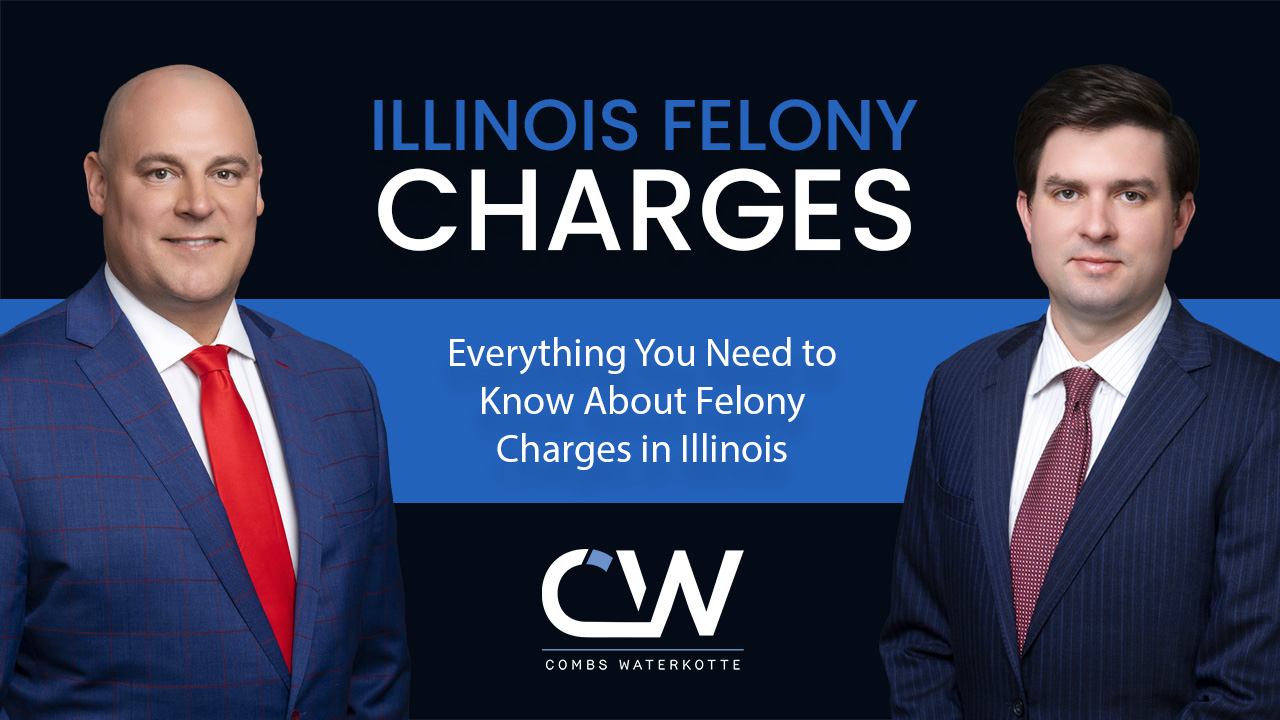
Everything You Need to Know About Felony Charges in Illinois
Everything You Need to Know About Felony Charges in the State of Illinois. Attorneys Steve Waterkotte and Joshua Boardman from Combs Waterkotte discuss everything you need to know about Illinois …
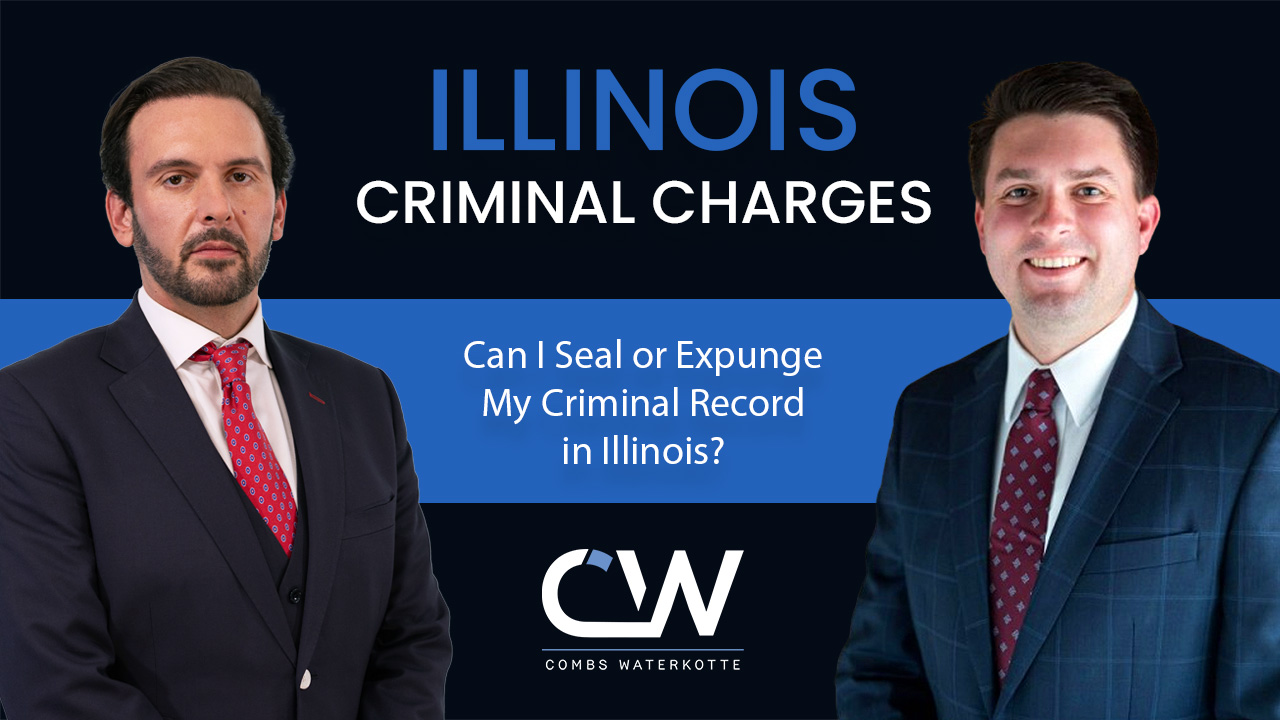
Can I Seal or Expunge My Criminal Record in Illinois?
Can I Seal or Expunge My Criminal Record in Illinois? Dealing with a criminal record in the state of Illinois? Combs Waterkotte attorney Joshua Boardman discusses the possibility of expunging your …
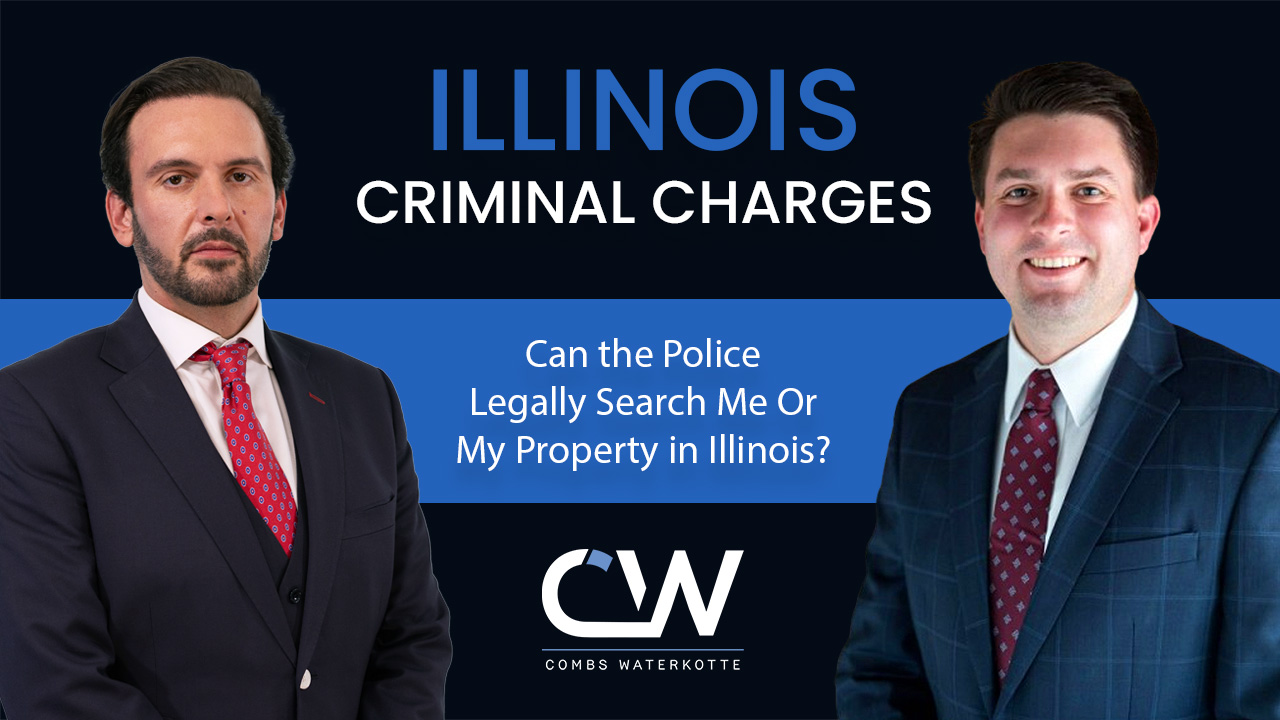
Can the Police Legally Search Me or My Property in Illinois?
Can the Police Legally Search Me or My Property in Illinois? Facing criminal charges in the state of Illinois? Combs Waterkotte attorney Joshua Boardman discusses probable cause and when police can …
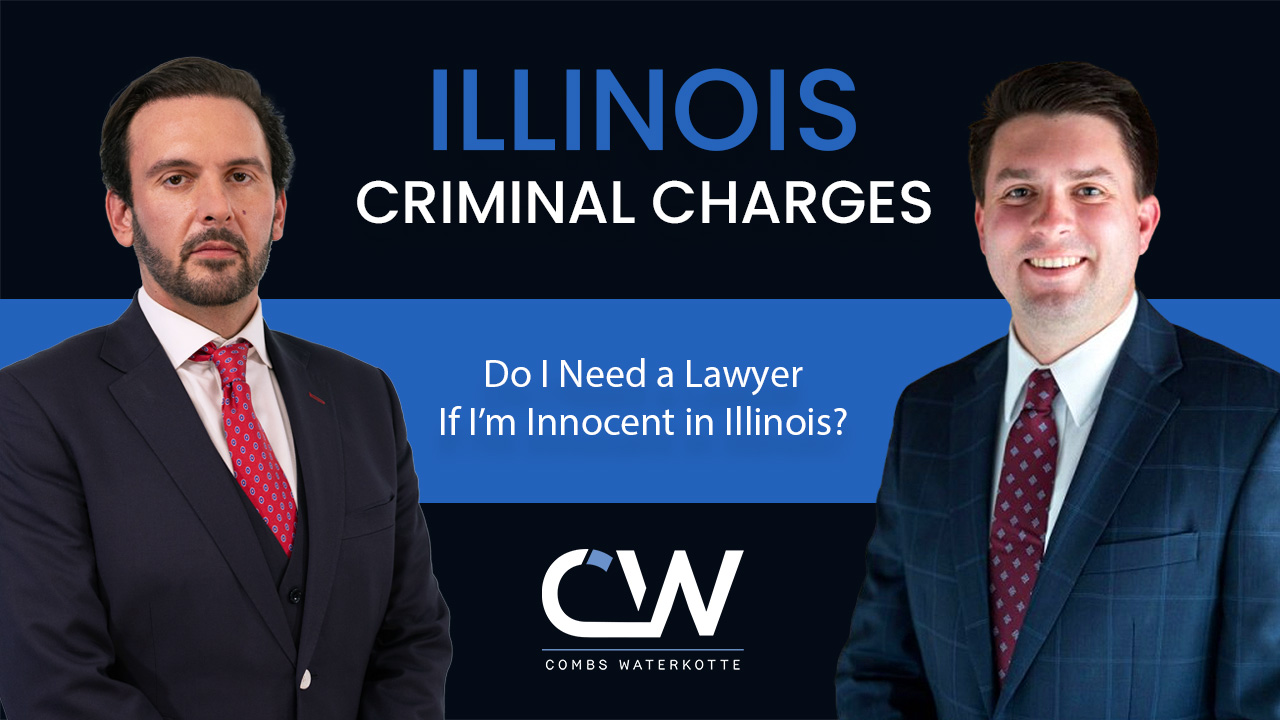
Do I Need a Lawyer if I’m Innocent in Illinois?
Do I Need a Lawyer if I'm Innocent in Illinois? Facing criminal charges in the state of Illinois? Combs Waterkotte attorney Andrew Russek talks about it being more important to have a lawyer if …
What Penalties Could I Face Under Illinois Law?
What Penalties Could I Face Under Illinois Law? Facing criminal charges in the state of Illinois? Combs Waterkotte attorney Joshua Boardman talks about the possible penalties under Illinois …
What Are My Rights if I’m Arrested in Illinois?
What Are My Rights if I'm Arrested in Illinois? Facing criminal charges in the state of Illinois? Combs Waterkotte attorney Joshua Boardman discusses your rights following an arrest in …
Everything You Need to Know About Felony Charges in Illinois
Everything You Need to Know About Felony Charges in the State of Illinois. Attorneys Steve Waterkotte and Joshua Boardman from Combs Waterkotte discuss everything you need to know about Illinois …
Can I Seal or Expunge My Criminal Record in Illinois?
Can I Seal or Expunge My Criminal Record in Illinois? Dealing with a criminal record in the state of Illinois? Combs Waterkotte attorney Joshua Boardman discusses the possibility of expunging your …
Can the Police Legally Search Me or My Property in Illinois?
Can the Police Legally Search Me or My Property in Illinois? Facing criminal charges in the state of Illinois? Combs Waterkotte attorney Joshua Boardman discusses probable cause and when police can …
Do I Need a Lawyer if I’m Innocent in Illinois?
Do I Need a Lawyer if I'm Innocent in Illinois? Facing criminal charges in the state of Illinois? Combs Waterkotte attorney Andrew Russek talks about it being more important to have a lawyer if …
What Penalties Could I Face Under Illinois Law?
What Penalties Could I Face Under Illinois Law? Facing criminal charges in the state of Illinois? Combs Waterkotte attorney Joshua Boardman talks about the possible penalties under Illinois …
What Are My Rights if I’m Arrested in Illinois?
What Are My Rights if I'm Arrested in Illinois? Facing criminal charges in the state of Illinois? Combs Waterkotte attorney Joshua Boardman discusses your rights following an arrest in …
If Police Are Investigating You for Murder in Cahokia Heights, IL
You do not have to be arrested or formally named as a suspect for a murder investigation to become dangerous. Investigators might request a voluntary interview, ask for your device, or suggest that a short conversation will settle a few loose ends. None of those descriptions tells you where you actually stand in the investigation.
If police are asking about a death and there is any possibility they believe you were involved, speak with a lawyer before answering questions. Do not assume you can explain a misunderstanding, correct someone else’s story, or prove your innocence by cooperating. Detectives may later place an offhand comment beside surveillance video, phone data, witness accounts, and physical evidence.
Bringing in counsel early allows the defense to protect evidence while the investigation is still active. That may mean identifying surveillance footage, locating witnesses, preserving messages or records, documenting injuries, reviewing search warrants, and determining what investigators have already seized. The period before the first hearing can be critical in a murder or homicide case.
If you have already been arrested, the same rule applies: do not discuss the facts of the case with police, other inmates, friends over recorded jail calls, or anyone other than your attorney. Prosecutors and investigators are already working on the case against you. Your lawyer should be building the other side of the record just as quickly.
Cahokia Heights, IL Murder and Homicide Charges We Defend
The word “homicide” covers several situations in which one person’s actions are blamed for another person’s death. Which offense is filed depends on the alleged intent, how the death occurred, whether another felony was taking place, and whether the case involves self-defense, provocation, reckless conduct, drugs, or a vehicle.
Our Cahokia Heights, IL homicide defense team handles allegations involving:
- Murder in the first degree: Allegedly intending to kill or seriously injure someone, knowingly creating a strong chance of death or serious injury, or causing a death during specified serious forcible felonies.
- A felony-murder allegation: A death that occurs during certain serious felonies, including cases where another participant caused it.
- Second-degree murder: A killing that would otherwise qualify as first-degree murder, but happened after serious provocation or because the person honestly believed deadly force was necessary, even though that belief was unreasonable.
- An attempted first-degree murder charge: An accusation that someone intended to kill another person and moved beyond planning, although no one died.
- Accountability for another person’s actions: A person can face an Illinois murder charge without firing the weapon or personally causing the death. The State may argue that the accused planned the offense, encouraged it, or helped another person commit it.
- Involuntary manslaughter and Illinois reckless homicide: Unintentional deaths that prosecutors say resulted from reckless conduct. Reckless homicide frequently arises from the use of a car, truck, or another vehicle.
- Drug-induced homicide: A case in which the State connects an illegal drug delivery to another person’s fatal overdose.
- Other related charges: Murder-for-hire charges, solicitation, conspiracy, concealment of a death, related gun charges, and accusations of obstructing the investigation.
No matter how serious the allegation sounds, the State must prove it using evidence the court allows the jury to consider. In one case, the defense may focus on mistaken identity. In another, the dispute may involve intent, cause of death, self-defense, accountability, or the felony used to support a felony-murder charge.

What the State Must Prove for First-Degree Murder in Cahokia Heights, IL
Illinois defines first-degree murder in 720 ILCS 5/9-1 in three main ways. The prosecution may allege that a person:
- intended to kill or cause great bodily harm, or knew the acts would cause death;
- understood that the conduct created a strong chance of death or serious injury; or
- committed or attempted a forcible felony, during which the accused or another participant caused a death.
The State may try to prove intent or knowledge through surrounding facts, including statements, weapons, injury patterns, prior communications, behavior leading up to the death, and what the accused did next. Those facts can support more than one interpretation. The defense must show where the evidence ends and the State’s assumptions begin.
How Second-Degree Murder Works in Cahokia Heights, IL
Illinois second-degree murder is not defined merely as a killing committed with less intent. Prosecutors still have to prove that the person committed intentional or knowing first-degree murder. The difference is that the defense may be able to show that one of two circumstances was present:
- The killing followed serious provocation that triggered a sudden, intense emotional response; or
- The person genuinely believed deadly force was needed to protect themselves or another person, although the law considers that belief unreasonable.
These rules are set out in the Illinois second-degree murder statute, 720 ILCS 5/9-2. The defense does not relieve prosecutors of their duty to prove the intentional or knowing killing beyond a reasonable doubt. If self-defense is part of the case, they may also have to prove that the killing was not legally justified.
Small details can make a major difference in these cases. Earlier threats, visible injuries, weapons, witness observations, emergency calls, and the sequence immediately before the death may shape the charge and defense. Depending on the evidence, the case may involve lawful self-defense, second-degree murder, a different homicide offense, or no criminal conduct.
Penalties for Murder and Homicide in Illinois
A first-degree murder conviction ordinarily carries 20 to 60 years in prison under Illinois law governing first-degree murder sentences. Certain aggravating facts can raise the range to 60 to 100 years or result in life without release. First-degree murder is not eligible for probation or conditional discharge. The Illinois General Assembly’s first-degree murder sentencing provision lists these sentencing ranges and restrictions.
Firearm allegations can add decades to a first-degree murder sentence. Being armed can add 15 years, personally firing the weapon can add 20 years, and causing great bodily harm, permanent disability, permanent disfigurement, or death by firing it can add 25 years to natural life. Depending on the circumstances, prosecutors may file additional gun charges under Illinois law, in addition to the homicide count.
- Illinois attempted first-degree murder: This offense is generally a Class X felony carrying 6 to 30 years in prison. Special aggravating circumstances and firearm findings can increase that range substantially.
- Murder in the second degree: A Class 1 felony with a special prison range of 4 to 20 years under the Illinois Class 1 felony sentencing statute.
- Involuntary manslaughter and reckless homicide: Under Illinois law on involuntary manslaughter and reckless homicide, the usual charge is a Class 3 felony with a prison range of 2 to 5 years. Certain circumstances can raise the charge to a Class 2 felony, which carries 3 to 7 years in prison. The higher classification may apply when the case involves more than one death, certain public-safety workers, a construction zone, a school crossing guard, or a family or household victim.
- Sentencing for drug-induced homicide: Illinois law on drug-induced homicide can apply when an illegal drug delivery is alleged to have caused another person’s death. It is a Class X felony, with some cases carrying 15 to 30 years in prison and an extended-term sentence of 30 to 60 years.

Defenses to Murder and Homicide Charges in Cahokia Heights, IL
A homicide case cannot be defended with a one-size-fits-all strategy. The right approach depends on the charge, the evidence, and what can be proved independently. Some defenses and factual disputes are more common than others.
Self-Defense and Defense of Others
Under Illinois law on self-defense and defense of others, someone may use force when they reasonably believe it is needed to stop an immediate threat of unlawful force against themselves or another person. The law permits deadly force only when the person reasonably believes it is needed to stop imminent death, great bodily harm, or certain forcible felonies.
A self-defense argument has to be supported by the circumstances before and during the use of force. Injuries, threats, weapons, relative positions, prior conduct known to the accused, witness accounts, and the few seconds surrounding the use of force can all affect whether the belief was reasonable.
The State Accused the Wrong Person
Identification evidence may be mistaken. Someone may remember a jacket, body type, or way of moving without ever getting a clear look at the person’s face. A digital record may connect a phone to an area but not establish that the accused was carrying it. Another person may have motive, access, or possession of the weapon. Independent work may uncover video, records, timing problems, alibi evidence, or overlooked witnesses that challenge the State’s identification.
The Evidence Does Not Prove Intent or Knowledge
A fatal result alone is not enough to establish the intent required for first-degree murder. Except in a felony-murder case, prosecutors must prove that the accused had the intent or knowledge required by the theory they charged. Evidence may instead support a lack-of-intent defense including an accidental act, recklessness rather than intent, or another explanation for the fatal injury. Autopsy findings and other forensic evidence may weaken the State’s theory about what the accused meant to do.
The State Cannot Prove What Caused the Death
Prosecutors have to prove that the accused person’s actions caused the death. That can become disputed when there were several injuries, several participants, delayed medical treatment, intoxication, an intervening event, or a preexisting condition. An independent review of the medical evidence and pathology can lead to a different account of how and when the death occurred.
Police Obtained Evidence Unlawfully
Evidence from a phone, house, vehicle, interrogation, lineup, or arrest may be contested when officers acted outside the law. Device searches require close scrutiny because a single phone may contain communications, images, browsing activity, location data, and a long record of someone’s private life. There are legal limits on when police can search your phone and whether investigators stayed within the authority they had.
Mere Association Is Being Treated as Participation
In a multi-person case, prosecutors may try to turn association into participation. The defense can challenge whether the accused shared the required intent, actually aided the offense, withdrew before it occurred, or was merely present. In felony murder cases, counsel may also attack the alleged predicate felony, the connection between that felony and the death, and the claim that the accused or another participant caused it.
Steps to Take If Police Connect You to a Cahokia Heights, IL Murder
Do not give an interview without a lawyer. A person who did nothing wrong can still give a damaging answer while scared, tired, or trying to figure out what police know. Prosecutors may later portray minor differences between statements as signs of guilt. State clearly that you are invoking your right to remain silent and want an attorney.
Do not voluntarily agree to let police search. Do not physically interfere if police present a warrant or proceed with a search. You can decline voluntary consent and let your lawyer examine whether the search was lawful afterward.
Do not erase or alter digital information. Erasing texts, photos, social media, account data, or location records may remove helpful evidence and lead to additional accusations. Preserve what exists. Do not contact witnesses to coordinate stories, and assume calls from a jail are recorded.
Tell your lawyer the whole sequence. Details such as threats, injuries, property, surveillance cameras, transaction records, transportation logs, and the people you encountered before or after the incident can become important. Give that information privately to counsel rather than posting it or sending it around by text.
What Happens After a Murder Arrest in Cahokia Heights, IL?
First-degree and second-degree murder are among the offenses for which prosecutors may ask a judge to order pretrial detention. A serious charge alone does not automatically mean the judge must order detention. The State must file a petition and meet the requirements of Illinois pretrial law, and the court must consider whether release conditions can address the specific risk alleged. Illinois sets out that procedure in the Illinois pretrial detention statute, 725 ILCS 5/110-6.1.
The next stages may include a preliminary hearing or grand jury, formal arraignment, exchange of evidence, pretrial motions, negotiations, and a jury trial. Murder cases can involve thousands of pages of reports, long video files, phone extractions, laboratory material, and expert opinions. Reviewing that volume takes time, but the defense should identify urgent issues early: evidence at risk of being lost, statements that may be suppressible, witnesses who need to be located, and expert work that should begin before memories and physical evidence change.
The decisions made in the first days after an arrest can affect the rest of the case. That includes what you say, whether you consent to searches, who you discuss the case with, and whether potentially useful evidence is preserved. Our guide to what you should do after a Cahokia Heights, IL felony arrest offers a more detailed breakdown of the early stages.
Preparing a Cahokia Heights, IL Homicide Case for Trial
Combs Waterkotte has represented clients in more than 10,000 criminal matters and has earned over 500 five-star Google reviews. The defense team brings together former prosecutors, lawyers who understand police work, an in-house investigator, and outside experts when specialized analysis is needed. A murder defense needs real investigative resources because prosecutors begin with support from police, forensic laboratories, analysts, and specialists.
Depending on the case, our defense work may include:
- stepping between the client and investigators before an interview or surrender;
- obtaining and organizing the full discovery record rather than relying on a police summary;
- reconstructing events through surveillance, communications, records, and first-hand witness accounts;
- examining warrants, interrogations, identifications, and evidence handling for legal problems;
- using investigators and qualified experts to test forensic, medical, digital, or weapons evidence;
- preparing motions that narrow or weaken the State’s proof;
- measuring any offer against the evidence while continuing to prepare other routes; and
- preparing the case for a jury from the beginning.
Preparing seriously for trial can change how prosecutors, witnesses, and experts approach the case. Weak witnesses have to be found. Forensic and medical opinions need to hold up when challenged. The prosecution’s sequence must make sense down to the minute. Prosecutors know when the defense has done that work and when it has not.
Other criminal cases we handle in Cahokia Heights, IL include:
Speak With a Cahokia Heights, IL Murder / Homicide Lawyer
Investigators are not required to tell you that they view you as a suspect. They may approach you as a witness, ask to see your phone, or suggest that a quick conversation will clear everything up. Speak with counsel before you answer questions or agree to a search.
Call Combs Waterkotte at (314) 900-HELP. Another option is to contact us online for a confidential case review. Our homicide defense team serves Cahokia Heights, IL clients around the clock.

