
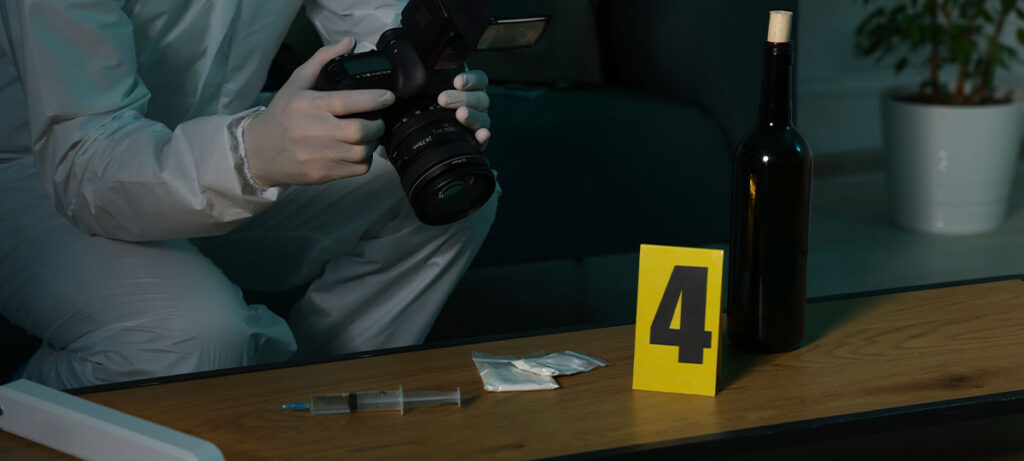
Charged With a Drug Crime in Bloomington, IL? Where police say they found drugs is only the beginning. The harder questions involve knowledge, control, and what the evidence actually proves.
Some cases begin with a substance allegedly recovered directly from a person. Others start in a crowded car, a shared apartment, a borrowed bag, or a package several people could have accessed. If officers also find cash, small containers, a scale, or selected phone messages, they may try to turn a possession accusation into possession with intent to deliver.
The charge may grow more serious before a laboratory has identified the material, before an accurate weight exists, and before investigators have established who knew about it. What appears in the police report is the government’s starting position, not a finished account of the case.
Combs Waterkotte represents clients in Bloomington, IL and across Illinois in state and federal drug cases, including possession, intent to deliver, manufacture, trafficking, conspiracy, prescription medication, methamphetamine, cannabis, and paraphernalia allegations. The defense begins by asking practical questions: Why did police focus on this person? Who could reach the location? Was the search lawful? What did the lab confirm? Does the evidence support the charge that was filed?
Cases Handled
Over 10,000
Jail Days Saved
Over 1 Million
Google Reviews
500+ Perfect
Legal Experience
100+ Years
Discuss the charge privately with Combs Waterkotte. Call (314) 900-HELP or request a free case review online.
The sections that follow address:
- which Illinois drug accusations Combs Waterkotte handles for clients in Bloomington, IL;
- how actual possession differs from constructive possession and what the State must establish in either type of case;
- why the identity and tested weight of a substance, together with the conduct alleged, can change the classification and sentencing exposure; and
- how unlawful police conduct, gaps in proof, disputed access, and scientific problems can affect the strategy.
Legal Videos
What Are Drug Schedules in Illinois?
What Are Drug Schedules in Illinois? Facing criminal drug charges in the state of Illinois? Attorneys Joshua Boardman and Andrew Russek from Combs Waterkotte discuss everything you need to know …
What Are the Most Common Drug Crimes in Illinois?
What Are the Most Common Drug Crimes in Illinois? Facing drug charges in the state of Illinois? Attorney Joshua Boardman from Combs Waterkotte discusses the most common drug charges in …
What’s the Difference Between Possession and Possession With Intent to Deliver?
What's the Difference Between Possession and Possession With Intent to Deliver? Facing criminal drug charges in the state of Illinois? Combs Waterkotte attorney Joshua Boardman discusses the …
Can I Be Charged if the Drugs Weren’t Mine in Illinois?
Can I Be Charged if the Drugs Weren't Mine in Illinois? Facing drug charges in the state of Illinois? Attorney Joshua Boardman from Combs Waterkotte discusses whether you can be charged in Illinois …
What Are Drug Schedules in Illinois?
What Are Drug Schedules in Illinois? Facing criminal drug charges in the state of Illinois? Attorneys Joshua Boardman and Andrew Russek from Combs Waterkotte discuss everything you need to know …
What Are the Most Common Drug Crimes in Illinois?
What Are the Most Common Drug Crimes in Illinois? Facing drug charges in the state of Illinois? Attorney Joshua Boardman from Combs Waterkotte discusses the most common drug charges in …
What’s the Difference Between Possession and Possession With Intent to Deliver?
What's the Difference Between Possession and Possession With Intent to Deliver? Facing criminal drug charges in the state of Illinois? Combs Waterkotte attorney Joshua Boardman discusses the …
Can I Be Charged if the Drugs Weren’t Mine in Illinois?
Can I Be Charged if the Drugs Weren't Mine in Illinois? Facing drug charges in the state of Illinois? Attorney Joshua Boardman from Combs Waterkotte discusses whether you can be charged in Illinois …
Drug Cases Combs Waterkotte Defends in Bloomington, IL
Two people arrested during similar searches can face very different cases. One may be accused of simple possession, while another faces delivery or trafficking allegations based on weight, packaging, location, or communications. Our Bloomington, IL drug defense practice includes:
- Possession of a controlled substance: Allegations involving cocaine, heroin, fentanyl, LSD, MDMA, ketamine, unauthorized prescription medication, and other controlled substances.
- Intent-to-deliver charges: Cases where no completed sale may be alleged, but prosecutors claim the amount of drugs or other evidence shows they were intended for another person.
- Manufacture or delivery: The charge may focus on an alleged sale or handoff. It can also arise from claims that a person produced, mixed, packaged, or otherwise prepared the controlled substance.
- Controlled substance trafficking: Cases centered on the alleged movement of drugs into Illinois, coupled with a claim that they were meant to be manufactured or delivered.
- Drug conspiracy: Prosecutions claiming that two or more people agreed to commit a drug offense, commonly supported by texts, calls, surveillance, informant statements, or cooperating-witness testimony.
- Methamphetamine charges: Illinois handles methamphetamine under a separate statute. Cases may involve drugs allegedly possessed or delivered, or chemicals and equipment police connect to production.
- Prescription drug charges: Accusations can begin with a missing label, an invalid prescription, pharmacy records, multiple prescribers, a suspected forgery, or an alleged delivery of medication.
- Drug paraphernalia: Possession, sale, or delivery allegations involving items the State claims were intended for unlawful drug use, preparation, packaging, or concealment.
- Illinois cannabis offenses: Cases that fall outside lawful possession and use, including excess amounts, unlicensed distribution, cultivation violations, and trafficking allegations.
- Federal drug charges: The trigger may be the investigating agency, interstate activity, a package seizure, drug quantity, or an alleged network. These prosecutions often combine distribution and conspiracy theories and can involve firearms.
Drug cases often arrive in clusters: multiple substances, an intent allegation, paraphernalia, and sometimes a firearm count. The number of charges can make the case look overwhelming, but every count has distinct elements and every exhibit can be challenged on its own terms.
What Must the State Prove in a Drug Possession Case in Bloomington, IL?
The central Illinois possession statute is 720 ILCS 570/402. It prohibits unauthorized possession only when that possession is knowing. That requirement matters whenever drugs are hidden, the space is shared, or the accused denies knowing the substance was present.
A possession conviction generally requires proof of three connected facts: the material was a prohibited controlled substance, the accused knew about it, and the accused possessed it. Break any link and the State’s theory can fail. The lab identification may be disputed, knowledge may be missing, or several people may have had equal access to the location.
Drugs Allegedly Found on the Person
Finding an item in a pocket or bag creates a more direct possession theory, but not an automatic conviction. In an actual possession case, the defense may still contest the search, ownership, knowledge, lab result, or reported weight.
When Drugs Are Found Somewhere Else
A constructive possession theory asks the court to infer possession from access to a room, vehicle, container, or other area. Because the drugs were found elsewhere, the case usually turns on whether the accused knew they were there and had the ability to control them. Typical locations include:
- a center console or under a seat in a car with several occupants;
- a residence where several tenants, relatives, guests, or roommates could reach the place searched;
- a suitcase, package, storage unit, or borrowed vehicle;
- a hotel room or short-term rental used by more than one person; or
- a workplace, locker, or other space accessible to multiple people.
Someone can face a possession charge even when police suspect the drugs belonged to another person. The defense then looks for facts that separate access from control, including the hiding place, ownership of nearby belongings, keys, fingerprints, DNA, body-camera statements, and the number of people who could enter the area.
Possession With Intent to Deliver Charges in Bloomington, IL
A completed sale is not required for a charge under 720 ILCS 570/401. Prosecutors may allege that a person knowingly possessed drugs with the future purpose of manufacturing or delivering them.
The State often builds an intent case from several ordinary-looking facts placed side by side: the weight of the substance, separate containers, cash, a scale, phone activity, surveillance, or statements to police. Each fact must be tested. What belongs to whom? Is the message complete? Was a sale actually observed? Does the amount fit the conclusion prosecutors are drawing?
How Illinois Classifies and Punishes Drug Charges
The first sentencing question is not simply, “How much was found?” It is, “Which law applies?” A case may proceed under the Illinois Controlled Substances Act, the Methamphetamine Control and Community Protection Act, the Cannabis Control Act, the Drug Paraphernalia Control Act, or federal drug law. Each uses its own framework.
Controlled substances are divided into Schedules I through V. The identity and tested weight of the substance can move a charge into a different classification or a special sentencing range. Delivery, manufacturing, trafficking, and protected-location allegations can increase exposure further.
| Drug Allegation | General Illinois Treatment |
|---|---|
| Lower-amount possession under Section 402(c) | This category is commonly a Class 4 felony unless another statutory provision controls. Class 4 sentencing can include one to three years in prison, although incarceration is not the only possible outcome in every case. |
| Possession involving a greater statutory weight | Section 402 assigns Class 1 felony treatment and special prison ranges to specified substances and amounts. The exact tested weight can change the sentencing range sharply. |
| Section 401 manufacture and delivery allegations | Section 401 uses the identity and amount of the drug to set the applicable felony class or special sentencing range for manufacture, delivery, and intent-to-deliver charges. |
| Controlled substance trafficking | Trafficking sentencing starts with the underlying manufacture or delivery offense. 720 ILCS 570/401.1 can then increase that exposure to twice the otherwise authorized term. |
| Drug paraphernalia possession | Section 3.5 of the Illinois Drug Paraphernalia Control Act generally treats knowing possession with intent to use as a Class A misdemeanor and requires a minimum $750 fine. |
| Methamphetamine possession | For methamphetamine, the tested quantity is evaluated under 720 ILCS 646/60, a separate weight-based statute. |
Defense Strategies in Bloomington, IL Drug Cases
A defense should come from the evidence, not from a stock checklist. Combs Waterkotte starts with the police reports, recordings, warrant application, lab file, witness accounts, digital material, and the client’s timeline, then identifies the issues that fit the facts of that particular case.
The State Cannot Prove Knowing Possession
A shared vehicle, hotel room, home, or container creates an attribution problem: which person knew, and which person exercised control? The defense can compare the State’s assumption with physical evidence, access history, ownership records, communications, and what officers captured on video. Charging every person present does not answer those questions.
The Stop, Search, or Warrant Was Unlawful
The search is not automatically lawful because an officer wrote that consent was given or a judge signed a warrant. The defense can test the stop, the asserted probable cause, the truthfulness and completeness of the affidavit, the scope of the warrant, and the circumstances under which police obtained permission. An illegal stop can undermine everything that followed.
The Facts Support Possession, Not Delivery
Because intent exists in the mind, prosecutors often try to prove it indirectly through packaging, money, scales, device records, or quantity. The defense can show a different explanation for those facts and point to what is missing: no customers, no observed exchange, no marked bills, no useful surveillance, and no credible witness to a sale.
The Laboratory Evidence Cannot Be Trusted
A roadside color test does not settle what the material is or how much controlled substance it contains. The laboratory file should show how the sample was collected, packaged, moved, opened, weighed, tested, and recorded. The defense can also examine whether containers were counted, samples were combined, or the analyst’s methods support the reported conclusion.
The State Cannot Account for the Evidence
Chain of custody is the paper trail connecting the scene to the laboratory and the courtroom. When that trail contains missing entries, inconsistent item numbers, damaged packaging, unexplained changes in weight, or uncertain handling, the defense can question the identity and integrity of the evidence.
A Cooperating Witness Cannot Be Trusted
When a search or conspiracy case rests on a cooperating witness, credibility becomes evidence. The defense should know what the witness received, what charges were pending, how the story changed, what was recorded, what surveillance contradicts, and whether the witness could actually see or hear what was claimed.
The State Cannot Reliably Attribute or Interpret the Communications
Stress can turn a roadside answer into a sentence that sounds more certain on paper than it was in person. Digital evidence creates different problems: slang, missing messages, shared devices, multiple account users, and uncertain authorship. The defense can challenge both the lawfulness of the collection and the accuracy of the State’s interpretation.
The Possession Was Legally Authorized
Lawful authorization can defeat the premise of a possession charge, but it must be documented. The relevant proof may include a prescription history, pharmacy fill records, medical files, caregiver information, and evidence explaining why the medication was stored or carried in the manner police observed.
Read How to Beat a Drug Charge in Illinois for a deeper explanation of searches, possession theories, laboratory evidence, and other common challenges.
McLean County Resources
Below are quick links to important websites that may assist you with your legal matters in McLean County and Illinois.
- Illinois Criminal Defense Resources
- Illinois Criminal Defense Practice Areas
- Illinois Compiled Statutes
- Illinois Courts
- Illinois Supreme Court Rules
- Illinois Secretary of State
- Illinois State Police
- Illinois Department of Corrections
- McLean County Website
- McLean County Court
- McLean County Jail
- McLean County Sheriff’s Office
- Christopher Combs
- Steven Waterkotte
What Happens After a Drug Arrest in Bloomington, IL?
No two counties handle every hearing in precisely the same way, and the charge can change the path. Even so, most drug cases in Bloomington, IL include versions of the following stages:
- Arrest, booking, or notice to appear: The case may begin with an immediate arrest, a warrant, a summons, or instructions to surrender after an investigation.
- First court appearance and release: The judge reviews the filed accusation, confirms counsel, and decides whether the person remains in custody or is released with conditions such as testing, monitoring, or travel restrictions.
- Complaint, information, or indictment: The prosecutor selects the formal charges. Those charges are not always identical to what police said at the roadside or during booking.
- Discovery: The defense receives and reviews reports, body-camera video, dash-camera footage, warrant materials, laboratory records, photographs, statements, phone extractions, and other evidence.
- Motions and hearings: The defense may seek to suppress evidence or statements, challenge discovery failures, limit improper evidence, or force the State to address weaknesses in its theory.
- Choosing an outcome: After the evidence and motions are evaluated, the defense may pursue dismissal, an amendment, diversion, treatment, another negotiated result, or trial. The right path depends on both case strength and the client’s goals.
A drug case starts developing before the first formal hearing. Statements, consent, preservation of messages, and compliance with release conditions can all matter later. For practical steps after an arrest, read What to Do After Being Caught With Drugs in Illinois.
Steps to Take After a Drug Accusation
The government may still be missing proof of knowledge, ownership, access, or intent when questioning begins. An anxious explanation can fill that gap. Careful decisions after the accusation are therefore part of the defense, not merely damage control.
- Do not try to talk your way out of the charge. Questions about possession and intent are designed to build proof. State that you are exercising your right to remain silent and that you want counsel.
- Withhold consent. You can decline a request to search your property or digital accounts. Do not hand over a device code or authorize access to a car, room, bag, phone, or account without legal advice.
- Leave digital and paper evidence alone. A full message thread, receipt, prescription, photograph, or location record may help explain the case. Destroying or altering it can remove that proof and make the situation worse.
- Do not post, comment, or message about the accusation. Privacy settings do not make online conversations invisible to law enforcement, witnesses, or prosecutors.
- Create a private timeline for your lawyer. Note when police arrived, who was present, what was requested, where officers searched, what they said they found, and which witnesses or cameras may exist.
- Follow every release condition. A violation can jeopardize release and make the pending case harder to resolve.
- Speak with a drug defense lawyer in Bloomington, IL immediately. Early counsel can preserve video, contact witnesses, manage police communication, and start identifying legal issues before the prosecution’s version hardens.
Why Hire Combs Waterkotte for a Drug Case in Bloomington, IL?
Drug prosecutions often appear strongest when viewed only through the government’s chronology. The defense gains ground by finding the seam: a search that began unlawfully, access shared by several people, a lab result that needs testing, or an inference treated as fact.
- Decades of combined criminal defense experience: Combs Waterkotte has more than 100 years of combined experience handling high-stakes accusations in state and federal court.
- Experience from more than 10,000 cases: Repeated exposure to searches, warrants, possession theories, informants, laboratory evidence, and charging decisions helps our lawyers recognize where a case may be vulnerable.
- Former prosecutors working for the defense: Our team understands how the government evaluates a file, selects charges, presents circumstantial evidence, and responds when its theory is challenged.
- Independent investigation led by a dedicated investigator: We do not accept the police report as the only account. The defense can develop witnesses, scene evidence, records, and chronology of its own.
- A trial-ready approach: Motions, witness preparation, laboratory challenges, and courtroom strategy begin early. That preparation creates options whether the case ultimately resolves through dismissal, negotiation, or trial.
- Direct, client-centered communication: We treat you like a person, not a case number. You will have the personal cellphone number of the person working on your case.
No two clients define a successful outcome in exactly the same way. Combs Waterkotte’s Bloomington, IL criminal defense lawyers shape the strategy around the evidence and the client’s priorities, whether that means intervening before filing, seeking suppression or dismissal, reducing exposure, protecting employment or a professional license, avoiding incarceration, or taking the case to trial.
Our Bloomington, IL criminal defense practice also includes:
Talk to a Drug Charges and Possession Lawyer in Bloomington, IL Today
Combs Waterkotte represents people accused of drug possession, possession with intent to deliver, manufacture, delivery, trafficking, conspiracy, prescription drug crimes, paraphernalia offenses, methamphetamine charges, cannabis offenses, and federal drug crimes in Bloomington, IL and throughout Illinois.
To discuss the accusation privately, call (314) 900-HELP or request a free case review online.

