
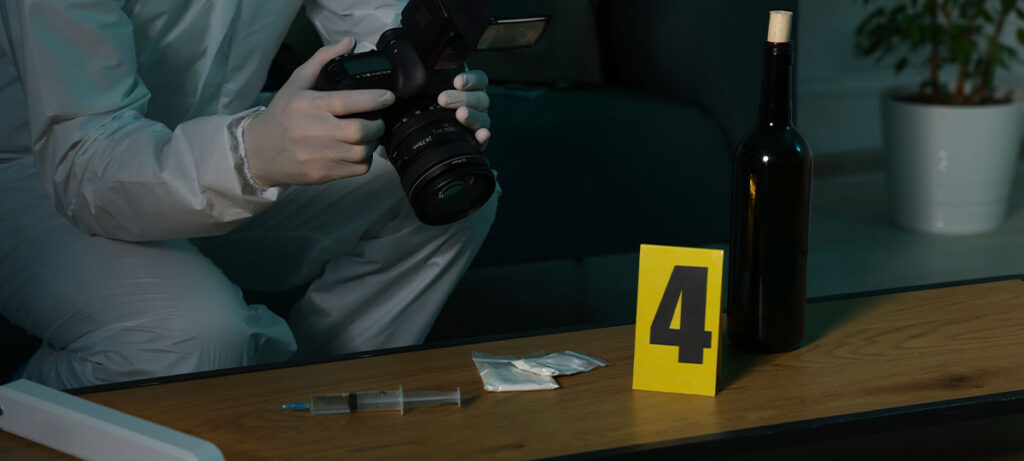
Vandalia, IL Drug Possession and Drug Charges Lawyer. A possession allegation can look straightforward on a charging document while the evidence behind it is anything but straightforward.
A pocket case is not a shared-house case, and a shared-house case is not a package-interception case. Each setting raises its own questions about ownership and control. The accusation can escalate again when police characterize everyday objects or isolated communications as evidence of an intent to distribute drugs.
Officers can make an intent allegation early, sometimes while basic facts remain unresolved. The lab result, tested weight, access to the location, and knowledge of the substance may all still be open questions. A report records what police claim happened; it does not decide guilt.
A drug prosecution can involve street-level possession, an alleged delivery network, a prescription dispute, a methamphetamine investigation, a cannabis charge, or a federal conspiracy case. Combs Waterkotte defends each of those matters in Vandalia, IL and throughout Illinois by examining the investigation, the search, access to the evidence, laboratory conclusions, and the State’s ability to prove the case element by element.
Cases Handled
Over 10,000
Jail Days Saved
Over 1 Million
Google Reviews
500+ Perfect
Legal Experience
100+ Years
Call (314) 900-HELP or contact Combs Waterkotte online for a free, confidential case review.
The sections that follow address:
- which Illinois drug accusations Combs Waterkotte handles for clients in Vandalia, IL;
- what prosecutors must prove in actual and constructive possession cases;
- how the substance, weight, and alleged intent can affect the charge and potential penalties; and
- how unlawful police conduct, gaps in proof, disputed access, and scientific problems can affect the strategy.
Legal Videos
What Are Drug Schedules in Illinois?
What Are Drug Schedules in Illinois? Facing criminal drug charges in the state of Illinois? Attorneys Joshua Boardman and Andrew Russek from Combs Waterkotte discuss everything you need to know …
What Are the Most Common Drug Crimes in Illinois?
What Are the Most Common Drug Crimes in Illinois? Facing drug charges in the state of Illinois? Attorney Joshua Boardman from Combs Waterkotte discusses the most common drug charges in …
What’s the Difference Between Possession and Possession With Intent to Deliver?
What's the Difference Between Possession and Possession With Intent to Deliver? Facing criminal drug charges in the state of Illinois? Combs Waterkotte attorney Joshua Boardman discusses the …
Can I Be Charged if the Drugs Weren’t Mine in Illinois?
Can I Be Charged if the Drugs Weren't Mine in Illinois? Facing drug charges in the state of Illinois? Attorney Joshua Boardman from Combs Waterkotte discusses whether you can be charged in Illinois …
What Are Drug Schedules in Illinois?
What Are Drug Schedules in Illinois? Facing criminal drug charges in the state of Illinois? Attorneys Joshua Boardman and Andrew Russek from Combs Waterkotte discuss everything you need to know …
What Are the Most Common Drug Crimes in Illinois?
What Are the Most Common Drug Crimes in Illinois? Facing drug charges in the state of Illinois? Attorney Joshua Boardman from Combs Waterkotte discusses the most common drug charges in …
What’s the Difference Between Possession and Possession With Intent to Deliver?
What's the Difference Between Possession and Possession With Intent to Deliver? Facing criminal drug charges in the state of Illinois? Combs Waterkotte attorney Joshua Boardman discusses the …
Can I Be Charged if the Drugs Weren’t Mine in Illinois?
Can I Be Charged if the Drugs Weren't Mine in Illinois? Facing drug charges in the state of Illinois? Attorney Joshua Boardman from Combs Waterkotte discusses whether you can be charged in Illinois …
Types of Drug Charges Filed in Vandalia, IL
A drug arrest does not point to one standard offense. The statute, substance, laboratory weight, location, and alleged purpose of the drugs can produce very different charges. In Vandalia, IL, Combs Waterkotte defends cases involving:
- Simple drug possession: Cases involving an alleged personal-use amount of cocaine, heroin, fentanyl, hallucinogens, unauthorized medication, or another substance regulated by Illinois law.
- Possession with intent to deliver: Cases in which prosecutors use quantity, packaging, cash, scales, communications, or other circumstances to argue that drugs were meant for someone else.
- Delivery or manufacture of drugs: Prosecutors do not describe the same conduct in every case. One file may center on a transfer to another person, while another centers on the process used to create or prepare the substance.
- Controlled substance trafficking: Cases centered on the alleged movement of drugs into Illinois, coupled with a claim that they were meant to be manufactured or delivered.
- Drug conspiracy: Prosecutions claiming that two or more people agreed to commit a drug offense, commonly supported by texts, calls, surveillance, informant statements, or cooperating-witness testimony.
- Methamphetamine offenses: The accusation may begin with the finished substance, an alleged sale, or a collection of precursor materials. Each is prosecuted under the Methamphetamine Control and Community Protection Act rather than the ordinary controlled-substance framework.
- Prescription medication offenses: Cases involving medication possessed without authorization, alleged doctor shopping, forged or fraudulent prescriptions, or the transfer of prescribed drugs.
- Drug paraphernalia: Charges based on an object’s alleged intended use, including consumption, preparation, measuring, packaging, storage, concealment, sale, or delivery.
- Cannabis charges: Allegations involving prohibited quantities, unlicensed sales or delivery, unlawful cultivation, trafficking, or activity outside the limits of Illinois cannabis law.
- Federal drug cases: A matter may enter federal court after agents intercept a shipment, trace alleged conduct across state lines, investigate a distribution organization, or connect drugs to firearms. Conspiracy charges often widen the number of people and acts included.
A case may include several counts at once. Police might allege possession of one substance, intent to deliver another, paraphernalia, and a weapons offense from the same search. Each count has its own elements. Each piece of evidence has to be tested rather than accepted as one large, intimidating bundle.
What Prosecutors Must Establish in a Vandalia, IL Possession Case
The central Illinois possession statute is 720 ILCS 570/402. It prohibits unauthorized possession only when that possession is knowing. That requirement matters whenever drugs are hidden, the space is shared, or the accused denies knowing the substance was present.
The government must move from “drugs were found” to “this person knowingly possessed those drugs.” That path can be challenged at several points, including the identity of the material, the accused person’s awareness, and the evidence of possession or control.
Actual Possession
Finding an item in a pocket or bag creates a more direct possession theory, but not an automatic conviction. In an actual possession case, the defense may still contest the search, ownership, knowledge, lab result, or reported weight.
Constructive Possession
A constructive possession theory asks the court to infer possession from access to a room, vehicle, container, or other area. Because the drugs were found elsewhere, the case usually turns on whether the accused knew they were there and had the ability to control them. Typical locations include:
- a hidden or common area of a car used by more than one passenger or driver;
- a common room, bedroom, garage, basement, or cabinet inside a home shared with others;
- a container or location tied to the accused only indirectly, such as a suitcase, parcel, storage unit, or borrowed vehicle;
- temporary lodging where more than one guest had access to the room and its contents; or
- a workplace, locker, or other space accessible to multiple people.
Ownership of a car, lease, or house does not create knowledge of every object inside it. Constructive possession cases depend on details police sometimes flatten or ignore: how well the drugs were hidden, who used the space, whose property was nearby, who held keys, whether forensic evidence exists, and whether officers arrested everyone rather than identifying the person actually connected to the item.
How a Vandalia, IL Possession Case Becomes an Intent-to-Deliver Case
Under 720 ILCS 570/401, Illinois can prosecute the knowing manufacture or delivery of a controlled substance, as well as possession with intent to manufacture or deliver it.
Intent is usually inferred rather than observed. Prosecutors may assemble a theory from quantity, packaging, money, scales, contacts, messages, surveillance, a controlled buy, or an interview statement. The defense has to restore context. Paychecks produce cash. Scales have lawful uses. Devices are shared. A single screenshot may omit the part of the conversation that changes its meaning.
How Illinois Classifies and Punishes Drug Charges
There is no single Illinois sentencing grid that answers every drug case. The governing law may be the Illinois Controlled Substances Act, the Methamphetamine Control and Community Protection Act, the Cannabis Control Act, the Drug Paraphernalia Control Act, or federal drug law. After identifying the statute, the analysis turns to the substance, quantity, and conduct alleged.
Illinois divides controlled substances among Schedules I through V, but schedule is only part of the calculation. Laboratory identity and weight may change the felony level or trigger a special sentencing range, while alleged delivery, manufacture, trafficking, or protected-location conduct can add further exposure.
| Allegation | Typical Illinois Classification Framework |
|---|---|
| Lower-amount possession under Section 402(c) | When Section 402 does not assign a different penalty, lower-quantity possession is generally charged as a Class 4 felony. The standard prison range is one to three years, but the available result may include probation or another disposition depending on the case. |
| Possession involving a greater statutory weight | For listed substances and weight thresholds, Section 402 can impose Class 1 felony treatment or a substance-specific prison range. A small difference in the laboratory weight may place the case in a different sentencing bracket. |
| Manufacture, delivery, or possession with intent | The sentencing framework under Section 401 changes with the substance and tested weight. Depending on those facts, the case may carry a standard felony classification or a separate statutory prison range. |
| Controlled substance trafficking | The penalty is not calculated in isolation. Under 720 ILCS 570/401.1, the court looks to the related manufacture or delivery sentence, which may be doubled for trafficking. |
| Possessing an item alleged to be drug paraphernalia | Section 3.5 of the Illinois Drug Paraphernalia Control Act generally treats knowing possession with intent to use as a Class A misdemeanor and requires a minimum $750 fine. |
| Methamphetamine possession under Illinois’ separate act | Methamphetamine does not use the same possession table as other controlled substances. 720 ILCS 646/60 classifies the offense by the amount involved. |
Possible Defenses to Vandalia, IL Drug Charges
A defense should come from the evidence, not from a stock checklist. Combs Waterkotte starts with the police reports, recordings, warrant application, lab file, witness accounts, digital material, and the client’s timeline, then identifies the issues that fit the facts of that particular case.
The Evidence Does Not Connect the Accused to the Drugs
When several people can reach the place where drugs are found, discovery of the substance does not identify a possessor. Access logs, property records, fingerprints, DNA, messages, witness accounts, body-camera footage, and the hiding place itself may show why the State’s knowledge-and-control theory is too broad. Owning the car or standing in the room is not the end of the analysis.
The Stop, Search, or Warrant Was Unlawful
An illegal stop can taint the search that followed it. A warrant can be challenged when the supporting affidavit lacked probable cause, relied on unreliable information, omitted critical facts, or did not describe the place and items with sufficient particularity. Consent can also be disputed. Saying nothing, stepping aside under police pressure, or failing to physically resist is not necessarily the same as freely authorizing a search.
The Facts Support Possession, Not Delivery
Because intent exists in the mind, prosecutors often try to prove it indirectly through packaging, money, scales, device records, or quantity. The defense can show a different explanation for those facts and point to what is missing: no customers, no observed exchange, no marked bills, no useful surveillance, and no credible witness to a sale.
The Drug Identification or Weight Is Disputed
A roadside color test does not settle what the material is or how much controlled substance it contains. The laboratory file should show how the sample was collected, packaged, moved, opened, weighed, tested, and recorded. The defense can also examine whether containers were counted, samples were combined, or the analyst’s methods support the reported conclusion.
Handling Records Raise Questions About the Seized Material
Seized material does not teleport from the roadside to the lab. People collect it, package it, store it, move it, open it, test it, and reseal it. The defense can compare every step against the records and challenge any break that makes the sample difficult to authenticate.
The Government’s Informant Has Reasons to Lie
When a search or conspiracy case rests on a cooperating witness, credibility becomes evidence. The defense should know what the witness received, what charges were pending, how the story changed, what was recorded, what surveillance contradicts, and whether the witness could actually see or hear what was claimed.
Statements or Digital Evidence Were Taken Out of Context
Stress can turn a roadside answer into a sentence that sounds more certain on paper than it was in person. Digital evidence creates different problems: slang, missing messages, shared devices, multiple account users, and uncertain authorship. The defense can challenge both the lawfulness of the collection and the accuracy of the State’s interpretation.
A Valid Prescription or Other Authorization Applies
Some cases involve a valid prescription, a prescription bottle separated from its label, a caretaker relationship, or another form of lawful authorization. The exact medication, prescription history, quantity, and circumstances still matter. Medical records and pharmacy documentation can be critical, so they should be preserved rather than left for police to interpret.
Several of these defense issues are discussed in more detail in How to Beat a Drug Charge in Illinois.
Fayette County Resources
Below are quick links to important websites that may assist you with your legal matters in Fayette County and Illinois.
- Illinois Criminal Defense Resources
- Illinois Criminal Defense Practice Areas
- Illinois Compiled Statutes
- Illinois Courts
- Illinois Supreme Court Rules
- Illinois Secretary of State
- Illinois State Police
- Illinois Department of Corrections
- Fayette County Website
- Fayette County Court
- Fayette County Jail
- Fayette County Sheriff’s Office
- Christopher Combs
- Steven Waterkotte
The Criminal Court Process After a Vandalia, IL Drug Arrest
The order and timing depend on the court, the accusation, and whether the person was arrested immediately or charged later. A typical Vandalia, IL drug case may involve:
- Arrest or notice: Some people are taken into custody immediately. Others first learn of the case through a warrant, summons, notice to appear, or request to surrender.
- Pretrial release hearing: Early in the case, the court may decide detention or release and set conditions that can affect work, travel, communication, substance testing, or electronic monitoring.
- Formal charging: Prosecutors may file a complaint, information, or indictment. The filed charges can differ from what the arresting officer initially described.
- Evidence review: Through discovery, the defense obtains police reports, body-camera and dash-camera footage, search-warrant records, laboratory files, photographs, statements, device extractions, and other material the State may use.
- Motions and hearings: The defense may seek to suppress evidence or statements, challenge discovery failures, limit improper evidence, or force the State to address weaknesses in its theory.
- Negotiation, diversion, or trial: Depending on the evidence and the client’s goals, the case may resolve through dismissal, an amended charge, an agreed outcome, an eligible diversion or treatment option, or trial.
The earliest decisions can echo through the entire case. An interview answer, permission to search, deleted message, or release violation may become evidence or change how the court treats the accused. What to Do After Being Caught With Drugs in Illinois offers more immediate guidance.
Steps to Take After a Drug Accusation
A person facing an unexpected search or arrest may talk because silence feels suspicious, because officers promise the conversation will help, or because someone else needs protection. Those explanations rarely remain informal. They can become the sentence prosecutors quote throughout the case.
- Stop the interview. You do not need to explain who owned the drugs, whether you knew about them, or what anyone intended. Clearly invoke your right to remain silent and ask for a lawyer.
- Do not consent to another search. Do not volunteer a passcode or permission to search a phone, vehicle, room, bag, or account without legal advice.
- Do not delete anything. Preserve messages, photographs, call logs, location data, receipts, prescriptions, and account records. Deletion can destroy useful context and create a new problem.
- Do not discuss the case on social media. Private posts, direct messages, and group chats can be obtained and misunderstood.
- Capture the details before they fade. Write down the officers’ names, sequence of events, search and consent requests, statements, witnesses, occupants, locations searched, and the precise place where police claimed to recover each item.
- Comply carefully with pretrial conditions. A separate violation can put your release at risk and distract from the issues in the drug case itself.
- Get counsel involved before the case gathers momentum. A drug defense attorney in Vandalia, IL can protect evidence, manage investigator contact, document the scene, and identify search or possession issues before the prosecution’s narrative becomes the only organized version of events.
Why Clients Choose Combs Waterkotte for Vandalia, IL Drug Charges
The value of experience is knowing where to look when the accusation appears airtight on paper but the evidence has seams.
- More than 100 years of combined legal experience: Our attorneys have handled high-stakes criminal matters across state and federal courts.
- More than 10,000 cases handled: That volume creates practical pattern recognition. We know which details tend to expose a weak search, a shaky possession theory, or an overreaching intent allegation.
- Former prosecutors working for the defense: Our team understands how the government evaluates a file, selects charges, presents circumstantial evidence, and responds when its theory is challenged.
- A dedicated investigator: Defense work should not begin and end with the police report. Our team can locate witnesses, examine scenes, preserve records, and test the prosecution’s timeline.
- Trial preparation from the beginning: A prosecutor negotiates differently when the defense is prepared to file motions, challenge witnesses, question laboratory evidence, and try the case.
- Direct, client-centered communication: We treat you like a person, not a case number. You will have the personal cellphone number of the person working on your case.
The evidence determines which options are realistic, and the client’s life determines which options matter most. Our Vandalia, IL criminal defense lawyers may pursue pre-charge intervention, suppression, dismissal, a reduced allegation, an outcome without incarceration, protection of professional consequences, or trial preparation.
Other cases we take on in Vandalia, IL include:
Get a Vandalia, IL Drug Defense Team Involved Now
From a disputed possession allegation to a state or federal trafficking case, Combs Waterkotte defends clients in Vandalia, IL and throughout Illinois. Our practice includes intent-to-deliver, manufacture, delivery, conspiracy, prescription medication, paraphernalia, methamphetamine, cannabis, and federal drug charges.
Call (314) 900-HELP for a free and confidential consultation, or send Combs Waterkotte a message online.

