
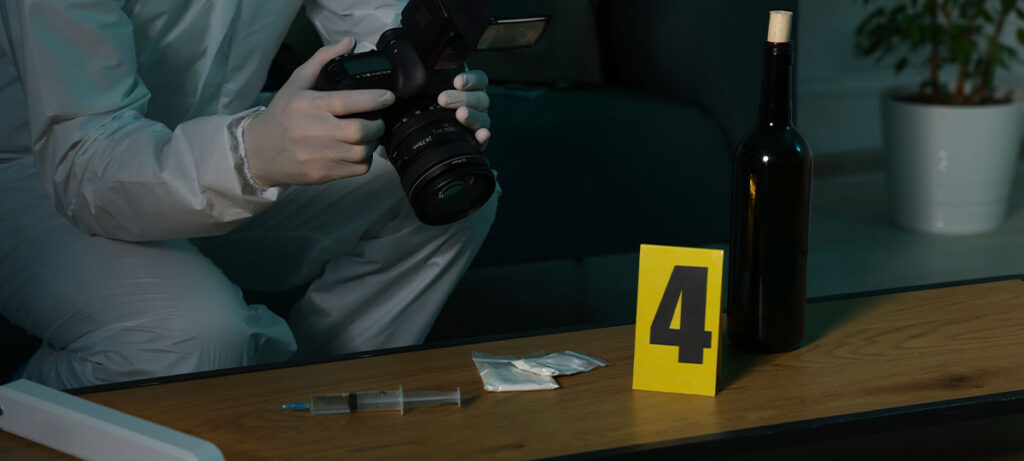
Charged With a Drug Crime in East Peoria, IL? A possession allegation can look straightforward on a charging document while the evidence behind it is anything but straightforward.
Picture four people in a vehicle and drugs hidden beneath one seat. The location alone does not establish who put them there, who knew about them, or whether anyone planned to sell them. Police may nevertheless use baggies, cash, a scale, or fragments of a text conversation to support a more serious delivery theory.
Serious conclusions are often written down first and tested later. Until the substance, weight, search, access, and alleged knowledge have been examined, the prosecution’s version remains an allegation rather than the last word.
People in East Peoria, IL turn to Combs Waterkotte when they face allegations ranging from controlled substance possession and prescription drug offenses to delivery, trafficking, conspiracy, methamphetamine, cannabis, paraphernalia, and federal drug charges. Our attorneys retrace the investigation from the first police contact through the search, seizure, laboratory work, and charging decision, then test whether every required element can actually be proved.
Cases Handled
Over 10,000
Jail Days Saved
Over 1 Million
Google Reviews
500+ Perfect
Legal Experience
100+ Years
Call (314) 900-HELP or contact Combs Waterkotte online for a free, confidential case review.
The sections that follow address:
- the possession, delivery, trafficking, prescription, and related drug cases our attorneys defend in East Peoria, IL and across Illinois;
- what prosecutors must prove in actual and constructive possession cases;
- why the identity and tested weight of a substance, together with the conduct alleged, can change the classification and sentencing exposure; and
- where a defense may emerge from the search, the possession theory, the laboratory process, witness credibility, or missing context.
Legal Videos
What Are Drug Schedules in Illinois?
What Are Drug Schedules in Illinois? Facing criminal drug charges in the state of Illinois? Attorneys Joshua Boardman and Andrew Russek from Combs Waterkotte discuss everything you need to know …
What Are the Most Common Drug Crimes in Illinois?
What Are the Most Common Drug Crimes in Illinois? Facing drug charges in the state of Illinois? Attorney Joshua Boardman from Combs Waterkotte discusses the most common drug charges in …
What’s the Difference Between Possession and Possession With Intent to Deliver?
What's the Difference Between Possession and Possession With Intent to Deliver? Facing criminal drug charges in the state of Illinois? Combs Waterkotte attorney Joshua Boardman discusses the …
Can I Be Charged if the Drugs Weren’t Mine in Illinois?
Can I Be Charged if the Drugs Weren't Mine in Illinois? Facing drug charges in the state of Illinois? Attorney Joshua Boardman from Combs Waterkotte discusses whether you can be charged in Illinois …
What Are Drug Schedules in Illinois?
What Are Drug Schedules in Illinois? Facing criminal drug charges in the state of Illinois? Attorneys Joshua Boardman and Andrew Russek from Combs Waterkotte discuss everything you need to know …
What Are the Most Common Drug Crimes in Illinois?
What Are the Most Common Drug Crimes in Illinois? Facing drug charges in the state of Illinois? Attorney Joshua Boardman from Combs Waterkotte discusses the most common drug charges in …
What’s the Difference Between Possession and Possession With Intent to Deliver?
What's the Difference Between Possession and Possession With Intent to Deliver? Facing criminal drug charges in the state of Illinois? Combs Waterkotte attorney Joshua Boardman discusses the …
Can I Be Charged if the Drugs Weren’t Mine in Illinois?
Can I Be Charged if the Drugs Weren't Mine in Illinois? Facing drug charges in the state of Illinois? Attorney Joshua Boardman from Combs Waterkotte discusses whether you can be charged in Illinois …
Drug Charges Our East Peoria, IL Defense Lawyers Handle
Two people arrested during similar searches can face very different cases. One may be accused of simple possession, while another faces delivery or trafficking allegations based on weight, packaging, location, or communications. Our East Peoria, IL drug defense practice includes:
- Possession of a controlled substance: Allegations involving cocaine, heroin, fentanyl, LSD, MDMA, ketamine, unauthorized prescription medication, and other controlled substances.
- Intent-to-deliver charges: Cases where no completed sale may be alleged, but prosecutors claim the amount of drugs or other evidence shows they were intended for another person.
- Delivery or manufacture of drugs: Prosecutors do not describe the same conduct in every case. One file may center on a transfer to another person, while another centers on the process used to create or prepare the substance.
- Drug trafficking: Charges accusing a person of knowingly bringing controlled substances into Illinois for an intended manufacture or delivery offense.
- Drug conspiracy: Cases in which the alleged agreement is the centerpiece, even when prosecutors rely heavily on interpreted communications, surveillance, and witnesses seeking favorable treatment.
- Methamphetamine charges: Illinois handles methamphetamine under a separate statute. Cases may involve drugs allegedly possessed or delivered, or chemicals and equipment police connect to production.
- Prescription medication offenses: Cases involving medication possessed without authorization, alleged doctor shopping, forged or fraudulent prescriptions, or the transfer of prescribed drugs.
- Drug paraphernalia: Charges based on an object’s alleged intended use, including consumption, preparation, measuring, packaging, storage, concealment, sale, or delivery.
- Illinois cannabis offenses: Cases that fall outside lawful possession and use, including excess amounts, unlicensed distribution, cultivation violations, and trafficking allegations.
- Federal drug charges: Investigations and prosecutions involving federal agencies, interstate activity, alleged distribution networks, mail or package interceptions, firearms, or conspiracy allegations.
A case may include several counts at once. Police might allege possession of one substance, intent to deliver another, paraphernalia, and a weapons offense from the same search. Each count has its own elements. Each piece of evidence has to be tested rather than accepted as one large, intimidating bundle.
What Must the State Prove in a Drug Possession Case in East Peoria, IL?
Under 720 ILCS 570/402, the State must do more than show that drugs existed somewhere nearby. The statute applies to the knowing and unauthorized possession of a controlled substance, counterfeit substance, or controlled substance analog. Knowledge is often the fault line in the case.
A possession conviction generally requires proof of three connected facts: the material was a prohibited controlled substance, the accused knew about it, and the accused possessed it. Break any link and the State’s theory can fail. The lab identification may be disputed, knowledge may be missing, or several people may have had equal access to the location.
Drugs Allegedly Found on the Person
Actual possession usually means the substance was allegedly found directly on the person, such as in a hand, pocket, purse, backpack, or another item being carried. These cases can still involve disputes over an unlawful search, mistaken identification, knowledge, laboratory testing, drug weight, or whether the item belonged to someone else who placed it there.
Constructive Possession and Shared Spaces
With constructive possession, police do not claim the substance came from the accused person’s hand or pocket. Instead, prosecutors try to prove knowledge and control through the place where the drugs were located. Those allegations often arise when police recover drugs from:
- the console, floorboard, trunk, or space beneath a seat in a vehicle occupied by several people;
- a common room, bedroom, garage, basement, or cabinet inside a home shared with others;
- luggage, a mailed package, a rented storage space, or a car borrowed from another person;
- a hotel, motel, or short-term rental occupied or visited by several people; or
- a locker, desk, work area, or another place that coworkers or members of the public could enter.
Ownership of a car, lease, or house does not create knowledge of every object inside it. Constructive possession cases depend on details police sometimes flatten or ignore: how well the drugs were hidden, who used the space, whose property was nearby, who held keys, whether forensic evidence exists, and whether officers arrested everyone rather than identifying the person actually connected to the item.
How a East Peoria, IL Possession Case Becomes an Intent-to-Deliver Case
A completed sale is not required for a charge under 720 ILCS 570/401. Prosecutors may allege that a person knowingly possessed drugs with the future purpose of manufacturing or delivering them.
The State often builds an intent case from several ordinary-looking facts placed side by side: the weight of the substance, separate containers, cash, a scale, phone activity, surveillance, or statements to police. Each fact must be tested. What belongs to whom? Is the message complete? Was a sale actually observed? Does the amount fit the conclusion prosecutors are drawing?
How Illinois Classifies and Punishes Drug Charges
There is no single Illinois sentencing grid that answers every drug case. The governing law may be the Illinois Controlled Substances Act, the Methamphetamine Control and Community Protection Act, the Cannabis Control Act, the Drug Paraphernalia Control Act, or federal drug law. After identifying the statute, the analysis turns to the substance, quantity, and conduct alleged.
Controlled substances are divided into Schedules I through V. The identity and tested weight of the substance can move a charge into a different classification or a special sentencing range. Delivery, manufacturing, trafficking, and protected-location allegations can increase exposure further.
| Allegation | General Illinois Treatment |
|---|---|
| Lower-quantity controlled substance possession under 720 ILCS 570/402(c) | This category is commonly a Class 4 felony unless another statutory provision controls. Class 4 sentencing can include one to three years in prison, although incarceration is not the only possible outcome in every case. |
| Possession involving a greater statutory weight | Once the tested amount crosses a statutory threshold, Section 402 may replace the ordinary classification with Class 1 treatment or a special prison range. Accurate identification and weighing therefore become central defense issues. |
| Section 401 manufacture and delivery allegations | Section 401 uses the identity and amount of the drug to set the applicable felony class or special sentencing range for manufacture, delivery, and intent-to-deliver charges. |
| Illinois controlled substance trafficking | Trafficking sentencing starts with the underlying manufacture or delivery offense. 720 ILCS 570/401.1 can then increase that exposure to twice the otherwise authorized term. |
| Drug paraphernalia possession | A paraphernalia charge turns on knowing possession and the alleged intent to use the item. Under Section 3.5 of the Illinois Drug Paraphernalia Control Act, the offense is generally a Class A misdemeanor and carries at least a $750 fine. |
| Methamphetamine possession | Methamphetamine does not use the same possession table as other controlled substances. 720 ILCS 646/60 classifies the offense by the amount involved. |
Possible Defenses to East Peoria, IL Drug Charges
Two possession cases may carry the same statutory label and require completely different defenses. The useful questions emerge only after the search records, video, laboratory documentation, witness statements, device evidence, and the client’s account have been placed in chronological order. Those questions may include the following.
Knowledge or Control Cannot Be Established
Drugs found in a shared vehicle, residence, hotel room, or container do not explain who knew about them. The defense may use access records, ownership documents, fingerprints, DNA, messages, witness testimony, body-camera footage, and the physical location of the evidence to challenge the State’s theory of control. Sometimes police made an assumption because a person owned the car. Sometimes they charged everyone in the room. Neither approach settles the legal question.
The Fourth Amendment Bars the Search or Seizure
The search is not automatically lawful because an officer wrote that consent was given or a judge signed a warrant. The defense can test the stop, the asserted probable cause, the truthfulness and completeness of the affidavit, the scope of the warrant, and the circumstances under which police obtained permission. An illegal stop can undermine everything that followed.
The State Has Not Established an Intent to Distribute
Because intent exists in the mind, prosecutors often try to prove it indirectly through packaging, money, scales, device records, or quantity. The defense can show a different explanation for those facts and point to what is missing: no customers, no observed exchange, no marked bills, no useful surveillance, and no credible witness to a sale.
The Laboratory Evidence Cannot Be Trusted
The difference between one statutory range and another may rest on a laboratory measurement. That makes the details important: what arrived at the lab, whether seals were intact, how the material was separated from packaging, which tests were performed, and whether another analyst could reproduce the result.
The Chain of Custody Has Gaps
Chain of custody is the paper trail connecting the scene to the laboratory and the courtroom. When that trail contains missing entries, inconsistent item numbers, damaged packaging, unexplained changes in weight, or uncertain handling, the defense can question the identity and integrity of the evidence.
The Government’s Informant Has Reasons to Lie
A confidential source may be receiving money, avoiding prosecution, seeking a sentence reduction, or acting from personal hostility. Those incentives matter when the person’s account helped obtain a warrant or build a conspiracy theory. Recordings, surveillance, earlier statements, promised benefits, and the witness’s opportunity to observe can expose weaknesses in the story.
The State Cannot Reliably Attribute or Interpret the Communications
Stress can turn a roadside answer into a sentence that sounds more certain on paper than it was in person. Digital evidence creates different problems: slang, missing messages, shared devices, multiple account users, and uncertain authorship. The defense can challenge both the lawfulness of the collection and the accuracy of the State’s interpretation.
A Valid Prescription or Other Authorization Applies
Lawful authorization can defeat the premise of a possession charge, but it must be documented. The relevant proof may include a prescription history, pharmacy fill records, medical files, caregiver information, and evidence explaining why the medication was stored or carried in the manner police observed.
For a closer look at several of these issues, read How to Beat a Drug Charge in Illinois.
Tazewell County Resources
Below are quick links to important websites that may assist you with your legal matters in Tazewell County and Illinois.
- Illinois Criminal Defense Resources
- Illinois Criminal Defense Practice Areas
- Illinois Compiled Statutes
- Illinois Courts
- Illinois Supreme Court Rules
- Illinois Secretary of State
- Illinois State Police
- Illinois Department of Corrections
- Tazewell County Website
- Tazewell County Court
- Tazewell County Jail
- Tazewell County Sheriff’s Office
- Christopher Combs
- Steven Waterkotte
The Criminal Court Process After a East Peoria, IL Drug Arrest
The process varies by county and charge, but most East Peoria, IL drug cases move through several recognizable stages:
- How the case begins: Police may arrest the accused at the scene, execute a later warrant, issue a summons, or direct the person to surrender after investigators complete additional work.
- Initial appearance and pretrial decision: The court addresses the allegations, counsel, and whether the accused will be released or detained. Release can include travel limits, drug testing, electronic monitoring, or other conditions.
- The charging decision: A prosecutor may proceed by complaint, information, or indictment, and the final filed counts may be more serious, less serious, or simply different from the labels used during the arrest.
- Discovery and investigation: The prosecution turns over its evidence while the defense reviews video, reports, lab work, warrants, photographs, statements, digital records, and any missing material that should be requested or preserved.
- Pretrial litigation: Motions may challenge the stop, search, warrant, interrogation, discovery compliance, or admissibility of particular evidence. Hearings can require officers and other witnesses to defend the steps they took.
- Resolution or trial: The evidence and the client’s priorities may support dismissal, a reduced count, a negotiated disposition, an available treatment or diversion program, or preparation for a contested trial.
What someone says in the first hour can follow the case for months. So can a deleted message, a consent form, or a missed release condition. Read What to Do After Being Caught With Drugs in Illinois for more immediate guidance.
What to Do After Being Accused of a Drug Crime
The instinct to explain is powerful. It is also dangerous. A person who is scared, surprised, or trying to protect someone else can hand investigators the missing piece of their case without realizing it.
- Do not try to talk your way out of the charge. Questions about possession and intent are designed to build proof. State that you are exercising your right to remain silent and that you want counsel.
- Do not consent to another search. Do not volunteer a passcode or permission to search a phone, vehicle, room, bag, or account without legal advice.
- Leave digital and paper evidence alone. A full message thread, receipt, prescription, photograph, or location record may help explain the case. Destroying or altering it can remove that proof and make the situation worse.
- Do not discuss the case on social media. Private posts, direct messages, and group chats can be obtained and misunderstood.
- Write down what happened. Record the timeline, officer names, search requests, statements, witnesses, vehicle occupants, and where items were found while your memory is fresh.
- Follow every release condition. A violation can jeopardize release and make the pending case harder to resolve.
- Contact a East Peoria, IL drug defense lawyer as early as possible. Counsel can take over communication, request video before it disappears, locate witnesses, preserve records, and begin challenging the government’s account while the facts are still fresh.
Why Clients Choose Combs Waterkotte for East Peoria, IL Drug Charges
A police report can make a drug case look complete because it leaves little room for uncertainty. Experienced defense work looks for what the report compresses, assumes, omits, or never investigated.
- More than 100 years of combined legal experience: The defense team brings decades of work in serious Illinois and federal criminal cases to the strategy, motions, negotiations, and trial preparation.
- More than 10,000 cases handled: That volume creates practical pattern recognition. We know which details tend to expose a weak search, a shaky possession theory, or an overreaching intent allegation.
- Former prosecutors on the defense team: We understand how charging decisions are made and how the State is likely to frame the evidence.
- A dedicated investigator: The government’s file is not the full universe of evidence. Our team can revisit locations, identify witnesses, preserve video and records, and compare the physical facts with the official timeline.
- A trial-ready approach: Motions, witness preparation, laboratory challenges, and courtroom strategy begin early. That preparation creates options whether the case ultimately resolves through dismissal, negotiation, or trial.
- Direct, client-centered communication: We treat you like a person, not a case number. You will have the personal cellphone number of the person working on your case.
The evidence determines which options are realistic, and the client’s life determines which options matter most. Our East Peoria, IL criminal defense lawyers may pursue pre-charge intervention, suppression, dismissal, a reduced allegation, an outcome without incarceration, protection of professional consequences, or trial preparation.
Our East Peoria, IL criminal defense practice also includes:
Contact a East Peoria, IL Drug Charges and Possession Lawyer
A drug case may involve one substance in a shared car or a broad investigation involving packages, phones, alleged deliveries, and several defendants. Combs Waterkotte represents people in East Peoria, IL and across Illinois at every point on that spectrum, including state and federal prosecutions.
To discuss the accusation privately, call (314) 900-HELP or request a free case review online.

