



Additional Links
- First-Time DUI in Illinois: What You Need to Know
- How to Beat a DUI Charge in Chicago
- The Illinois DUI Laws Chicago Drivers Need to Know
- Legal Video | What Should I Do if Pulled Over for a DUI in Illinois?
- Legal Video | What Are the Penalties for a DUI in Illinois?
- Legal Video | How Long Does a DUI Stay on Your Record in Illinois?
- Legal Video | How Does a DUI Affect Your Driver’s License in Illinois?
- Legal Video | Is Hiring a DUI Lawyer Worth it in Illinois?
Juvenile DUI Lawyer in Chicago, Illinois Serving All of Cook County
A juvenile DUI accusation can put an entire family under pressure. Your child may be worried about losing the ability to drive to school, work, practices, or other activities, while you may be trying to understand two different issues at once: the DUI case itself and what the Illinois Secretary of State may do to your child’s license. Waiting to address either side of the case can make an already difficult situation harder.
Combs Waterkotte handles serious criminal cases throughout Chicago and Cook County, including DUI allegations and juvenile charges. We take the time to determine what actually happened rather than assuming an arrest proves wrongdoing. That means reviewing the claimed reason for the traffic stop, police reports, body-camera or squad-car footage, field sobriety testing, chemical-test records, witness information, and your child’s statements.
“I was charged with my second DWI and was very scared as to what might happen. [Combs Waterkotte] was able to get my charge reduced and my license was not suspended for one day. I would strongly recommend [them] to anyone charged with a DWI.”
-Joe | Combs Waterkotte Client
Our lawyers also understand that parents need clear answers. Through our client-centered approach, we explain the allegations, possible license consequences, upcoming court proceedings, and the evidence that may matter. If police made constitutional or testing errors, we can investigate whether the affected evidence should be challenged.
No defense lawyer can promise a particular result, but early preparation gives your family more opportunity to preserve evidence and identify legal issues. If your child has been accused of juvenile DUI anywhere in Chicago or Cook County, call (314) 900-HELP or contact Combs Waterkotte online for a confidential consultation.
What Is a Juvenile DUI in Chicago, Illinois?
A juvenile DUI is a DUI allegation involving a driver who is under 18. It is narrower than an underage DUI which generally refers to drivers under 21.
Illinois’s DUI law prohibits driving or being in actual physical control of a vehicle in several circumstances. These include:
- Having a blood alcohol concentration of at least 0.08%
- Being under the influence of alcohol
- Being impaired by drugs or intoxicating compounds to the point of being unable to drive safely
- Meeting other drug-related statutory conditions
That means a juvenile DUI does not necessarily have to involve alcohol. A teenager may also face a DUI allegation involving cannabis, controlled substances, prescription medication, or a combination of substances depending on the evidence and circumstances.
The prosecution still has to prove the elements of the charged DUI. An arrest, failed roadside exercise, or police officer’s opinion does not automatically establish guilt.
Juvenile DUI vs. Illinois Zero Tolerance: What Parents Need to Know
One of the most important distinctions in a juvenile DUI case is the difference between a criminal DUI charge and Illinois’s Zero Tolerance Law for drivers under 21.
Every juvenile driver is also under 21, so Illinois’s zero-tolerance provisions apply. Under 625 ILCS 5/11-501.8, a driver under 21 who tests above 0.00% alcohol concentration after the statutory requirements are met may face an administrative driver’s-license suspension. Refusing the qualifying chemical test can also trigger a suspension.
But a trace amount of alcohol does not automatically mean a teenager has been proven guilty of criminal DUI. The Illinois Secretary of State expressly distinguishes zero-tolerance consequences from DUI and states that an officer may pursue a zero-tolerance action, a DUI charge, or both depending on the circumstances.
That difference can be critical in a defense. For example, a low alcohol reading may create a zero-tolerance license issue even when the prosecution has difficulty proving impairment under the criminal DUI statute.
Illinois law also recognizes narrow zero-tolerance exceptions when the alcohol resulted from participation in a religious service or ceremony or from taking the prescribed or recommended dose of medication containing alcohol. Those exceptions address the zero-tolerance suspension, but they do not authorize impaired driving.
Penalties and Driver’s License Consequences for Juvenile DUI in Chicago
A juvenile DUI case may create both court consequences and driver’s-license consequences, and the two should be evaluated separately. Under Illinois’s zero-tolerance rules for drivers under 21, the Secretary of State currently identifies these potential sanctions:
- First alcohol test above 0.00%: 3-month suspension
- Second alcohol test above 0.00%: 1-year suspension
- First test refusal: 6-month suspension
- Second test refusal: 2-year suspension
A criminal DUI conviction carries separate consequences. A standard first DUI under 625 ILCS 5/11-501 is generally a Class A misdemeanor (although aggravating circumstances can elevate certain DUI cases to felonies). Illinois law permits a Class A misdemeanor sentence of less than one year of incarceration and a fine of up to $2,500, depending on the circumstances and sentence imposed.
For drivers under 21, the Illinois Secretary of State states that a first DUI conviction brings a minimum two-year revocation of driving privileges, while a second brings a minimum five-year revocation. A revocation is different from a temporary suspension and can require additional steps before full driving privileges are restored.
The effects may extend beyond the courtroom, too. A teenager may also have to deal with transportation problems, increased family insurance costs, school discipline under an applicable student code, or questions involving future employment and educational programs. These consequences vary, so families should not assume every institution will treat a DUI allegation or conviction the same way.
What Happens After a Juvenile DUI Arrest in Chicago?
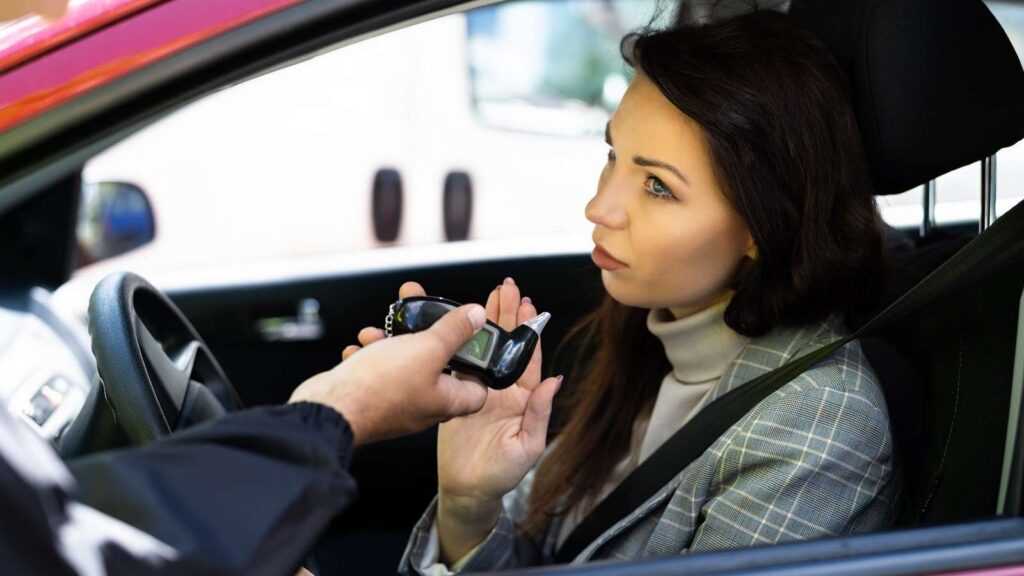
A juvenile DUI investigation commonly begins with a traffic stop, accident response, or other police encounter. Officers may document their observations, ask questions, request field sobriety tests, and seek breath, blood, urine, or other testing depending on the circumstances.
If police pursue Illinois’s under-21 zero-tolerance process, a qualifying test above 0.00% or a test refusal can lead to a sworn report to the Secretary of State. The statute provides that the suspension becomes effective on the 46th day after notice. It also specifically allows reports involving a driver under 18 who holds an instruction permit or graduated driver’s license to be made available to the driver’s parent or guardian.
At the same time, a criminal DUI allegation can proceed through court. Illinois law contains an important rule for minors: 705 ILCS 405/5-125 expressly defines a violation of the DUI statute as a “traffic violation” for purposes of concurrent jurisdiction. That means a minor accused of DUI may be prosecuted and punished under the applicable traffic statute without using the ordinary juvenile delinquency procedures (although detention must comply with the Juvenile Court Act).
Parents should encourage their child not to discuss DUI allegations with friends, classmates, or on social media. Preserve paperwork from the stop, receipts, location information, photographs, messages, and anything else that may help reconstruct the timeline. Most importantly, do not assume that because the accused is a teenager the case will simply disappear or be handled informally.
Criminal Defense Strategies Against Chicago Juvenile DUI Charges
The correct defense against a Juvenile DUI charge in Chicago depends directly on the evidence. Combs Waterkotte can use applicable criminal defense strategies to investigate both the DUI allegation and any related license proceedings.
Challenging the Legality of the Traffic Stop
Police generally need a lawful reason to stop a vehicle. A defense lawyer can review video, dispatch information, the officer’s report, and the alleged traffic violation to determine whether the stop was constitutionally justified. If evidence was obtained through an unlawful stop, a lawyer may be able to get it suppressed.
Challenging Driving or Actual Physical Control
Illinois DUI law requires the state to prove driving or actual physical control of a vehicle. This can become disputed when police encounter a teenager in a parked vehicle rather than observing the vehicle in motion. Key facts may include where the teenager was seated, where the keys were located, whether the engine was running, and whether the vehicle was operable.
Challenging Breath, Blood, or Other Chemical Testing
Chemical results are evidence, but their reliability can be examined. A lawyer may review testing procedures, device certifications, operator qualifications, blood-draw documentation, sample handling, laboratory records, contamination concerns, and the chain of custody of the evidence. Illinois’s zero-tolerance statute itself requires qualifying chemical analyses to comply with Illinois State Police standards.
Challenging Field Sobriety Evidence
A teenager’s performance on roadside exercises can be affected by nervousness, fatigue, physical limitations, confusing instructions, poor lighting, weather, or uneven pavement. Body-camera footage may reveal whether the officer administered the tests properly and whether the video supports the observations written in the report.
Separating a Low Alcohol Reading From Criminal Impairment
A result above 0.00% may create a zero-tolerance license issue for a juvenile without automatically proving every element of criminal DUI. The defense should identify exactly what statutory theory the prosecution is using rather than treating the administrative suspension and criminal allegation as if they are the same case.
Applying a Zero-Tolerance Religious or Medication Exception
If a positive low-level alcohol result came solely from a qualifying religious ceremony or the prescribed or recommended dose of medicine containing alcohol, 625 ILCS 5/11-501.8(e) provides specific grounds to contest the zero-tolerance suspension. These are narrow administrative exceptions and do not excuse actual impairment.