






Additional Links
- What Happens After an Arrest in Chicago?
- What Are the Different Felony Classes in Illinois?
- What Are the Long-Term Consequences of a Felony Conviction in Illinois?
- How Much Prison Time Do You Face for a Felony in Illinois?
- Can a Felony Be Reduced to a Misdemeanor in Illinois?
- What to Look for in a Chicago Criminal Defense Lawyer
- Legal Video | What Should I Do if I’m Charged With a Crime in Illinois?
- Legal Video | What Are My Rights if I’m Arrested in Illinois?
- Legal Video | How Can Criminal Charges in Illinois Be Reduced or Dismissed?
- Legal Video | Do I Need a Lawyer if I’m Innocent in Illinois?
Obstruction of Justice Lawyer in Chicago, Illinois Serving All of Cook County
An obstruction of justice charge in Chicago is not something you should try to handle on your own. Prosecutors often rely on witness statements, electronic communications, and circumstantial evidence to argue that someone intentionally interfered with a criminal investigation or legal proceeding. Successfully defending against the allegations requires an experienced criminal defense team that knows how to dismantle the prosecution’s case.
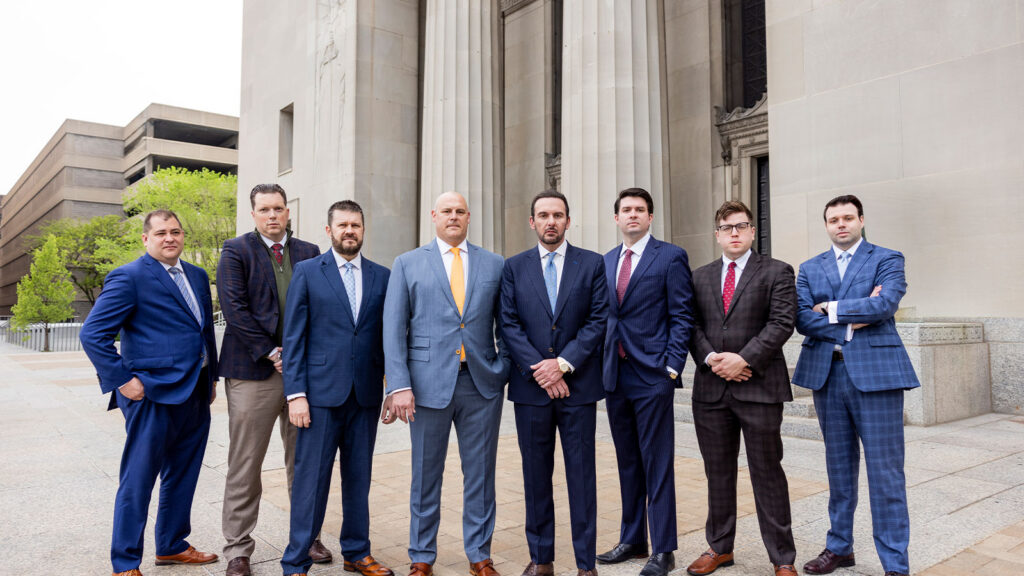
At Combs Waterkotte, our attorneys bring more than 100 years of combined criminal defense experience to clients throughout Chicago and Cook County. We start every case with a free, confidential consultation so we can hear your side of the story, evaluate the evidence, and develop a defense strategy built around your specific circumstances. Our legal team thoroughly reviews police reports, interviews, digital evidence, and every aspect of the prosecution’s case in search of inconsistencies, constitutional violations, and other issues that can lead to reduced or dismissed charges.
“Combs Waterkotte provided an extremely professional and descriptive consultation that sold me in short order. [They’re] well-presented and competent to tackle even the most complex of cases. [They’ll provide] detailed and understandable descriptions of what [they] will be doing to advocate for you, I would recommend [the] firm's services to any and all.”
-Brian D. | Combs Waterkotte Client
From the moment we take your case, our goal is to protect your rights, your reputation, and your future. We’ll aggressively negotiate with prosecutors whenever it serves your best interests, but we’re always ready to take your case to trial if that’s what’s necessary to pursue the best possible outcome.
If you’ve been arrested or charged with obstruction of justice in Chicago or anywhere in Cook County, don’t wait to get experienced legal representation. Contact Combs Waterkotte online or call (314) 900-HELP today to schedule a consultation.
Obstruction of Justice Definition Under Illinois Law
Under Illinois law, obstruction of justice is considered to be an offense that interferes with public officers. The statute itself is defined in 720 ILCS 5/31-4, which explains that obstruction of justice occurs when someone intentionally prevents the apprehension of a suspect or obstructs a criminal prosecution or defense by:
- Destroying, altering, concealing, or disguising physical evidence or planting false evidence
- Inducing a witness with material knowledge of a criminal charge to flee the state or go into hiding
- Leaving the state or going into hiding while possessing knowledge material to a criminal charge
- Being a parent of a child, reporting false information to any of the following when a child under 13 years old dies or goes missing:
- A law enforcement agency
- A medical examiner
- A coroner
- The State’s Attorney (or another government agency)
Essentially, the offense boils down to interfering with a criminal investigation by lying or withholding or misrepresenting information and making it harder for police or prosecutors to do their jobs. In Chicago and Cook County, obstruction of justice can take several forms.
Obstruction of Justice Examples
There’s not one single offense that necessarily constitutes obstruction of justice under Illinois law. The statute is intentionally written vaguely to cover several forms of conduct related to interfering with a criminal investigation.
So, what counts are obstructing justice? There are several tangible examples that fit the definition, including (but not limited to):
- Deleting text messages after learning you’re under investigation
- Hiding or disposing of a firearm used in a crime
- Throwing away drugs before police can recover them
- Concealing surveillance footage of a crime
- Providing investigators with false identifying information about another suspect
- Planting evidence to shift blame
- Encouraging a witness to disappear or avoid jury service
Every case is different, but they all have one thing in common: Since they directly interfere with the ability of police, investigators, and prosecutors to do their jobs, obstruction of justice charges are pursued very aggressively. That’s bad news for anyone facing the charges, because their penalties are substantial.
Obstruction of Justice Sentence in Chicago, Illinois
Obstruction of justice is always charged as a felony offense in Chicago and Cook County, Illinois. The felony charge one faces depends on the extent of the conduct committed and whether or not it plays a role in a large criminal enterprise.
The standard charge for an obstruction of justice offense under Illinois law is a Class 4 felony. Among other consequences, a conviction for a Class 4 felony can result in:
- A 1 to 3 year prison sentence
- A 3 to 6 year extended prison sentence
- Up to 30 months of probation
- A fine up to $25,000
- One year of parole or mandatory supervision after release
An obstruction of justice charge can be elevated to a Class 3 felony if it is committed in the furtherance of gang crimes or any other organized criminal activity. The possible penalties for a Class 3 felony conviction in Illinois include:
- A 2 to 5 year prison sentence
- A 5 to 10 year extended prison sentence
- Up to 30 months of probation
- A fine up to $25,000
- One year of parole or mandatory supervision after release
Criminal Defense Strategies Against Obstruction of Justice Charges
Though obstruction of justice charges are very serious, an attorney can be key in organizing a defense against them. At Combs Waterkotte, we use the following criminal defense strategies to defend our Chicago area clients against obstruction of justice charges.
Challenge the State’s Proof of Intent
Unlike many criminal offenses under Illinois law, an obstruction conviction requires more than proof that a defendant acted knowingly. In these cases, prosecutors must establish that a defendant specifically intended to prevent an arrest or to obstruct criminal proceedings. A lawyer may be able to use text messages, recordings, witness testimony, and the timing of the events to show an innocent purpose, panic, confusion, or concern unrelated to an investigation. Without evidence connecting the alleged conduct to the required obstructive object, the state can’t prove every element of the charge beyond a reasonable doubt.
Show That Justice Was Not Materially Impeded
When an allegation involves false information, prosecutors have to prove that a statement materially impeded the administration of justice. A defense lawyer may be able to show that officers immediately recognized a statement as false, already had the correct information, or experienced no meaningful investigative delay. In People v. Casler, the Illinois Supreme Court confirmed that an actual material impediment must be present for an obstruction of justice conviction. A technically false statement alone does not automatically support an obstruction conviction.
Dispute Whether a Statement Was Actually False
A defense lawyer may examine the precise question asked, the defendant’s exact response, and the surrounding conversation. Police reports sometimes paraphrase statements, omit qualifications, or present an uncertain answer as a deliberate lie. Body camera footage, dispatch recordings, identification records, and witness testimony may establish that a statement was true, substantially accurate, misunderstood, or too ambiguous to be proven false. The prosecution must establish falsity and knowledge, not merely show that a police officer received incomplete or confusing information during an interrogation or interview.
Argue That Evidence Was Never Legally Concealed
Moving, dropping, or discarding an item doesn’t necessarily constitute concealment under Illinois law. A defense lawyer can argue that police continuously observed the object, recovered it immediately, or found it in plain view without any meaningful interference. In People v. Comage, the Illinois Supreme Court explained that the obstruction of justice statute is meant to target conduct that actually interferes with justice and reversed where officers saw and promptly retrieved the discarded evidence. The surrounding location, visibility, distance, and recovery time can become central to obstruction cases.
Contest Knowledge of the Evidence or Investigation
A person can’t knowingly destroy, alter, or conceal physical evidence without recognizing the object’s nature and its connection to a potential case. A defense lawyer may argue that a defendant didn’t know what a certain item contained, did not know police were investigating, or reasonably believed the property was ordinary trash or personal belongings. Fingerprints, DNA, ownership records, surveillance footage, and testimony from other occupants may also show that someone else handled the evidence or controlled the location where police found it.
Challenge Claims That a Witness Was Induced to Hide
When prosecutors allege that the defendant caused a material witness to go into hiding, the defense team can attack inducement, materiality, and intent. The witness may have acted independently, left for personal reasons, or never possessed information material to the investigation. Messages presented as threats or instructions may have an innocent meaning when read in context. In People v. Moriconi, the state’s failure to prove that a defendant induced another person to hide led to a dismissal of the defendant’s obstruction charge.
Argue That the Conduct Falls Outside the Statute
A defense lawyer may contend that the charged behavior does not match any act specifically prohibited by the obstruction statute. Refusing to cooperate, remaining silent, or making an investigation inconvenient does not automatically count as destroying evidence, furnishing false information, or concealing evidence. In People v. Hutt, for example, the Illinois Supreme Court held that refusing to comply with efforts to obtain blood or urine did not constitute concealing physical evidence. When a defense lawyer carefully examines the language of the statute, they can expose an attempt to stretch an obstruction charge beyond its lawful boundaries.
Attack an Overcharged or Legally Defective Prosecution
A defense lawyer should compare the indictment, trial evidence, and jury instructions to every element of the obstruction statute. A charge may omit the required material impediment allegation, rely on conduct fitting only obstructing identification, or improperly combine several factual theories. The defense can seek dismissal, a directed finding, proper jury instructions, or reduction to a more appropriate offense. In People v. Prince, the Illinois Supreme Court left a reversal intact in which prosecutors failed to prove material impediment. This case highlights the importance of challenging both the charging theory and the sufficiency of evidence in an obstruction case.