






Additional Links
- Legal Video | Can I Seal or Expunge My Criminal Record in Illinois?
- Legal Video | How Can Criminal Charges in Illinois Be Reduced or Dismissed?
- Legal Video | Will a Conviction Stay on My Criminal Record in Illinois?
- Legal Video | Everything You Need to Know About Criminal Charges in the State of Illinois
- How Much Prison Time Do You Face for a Felony in Illinois?
- Can Criminal Charges be Dropped in Illinois?
- Can a Felony Be Reduced to a Misdemeanor in Illinois?
- What Happens After an Arrest in Chicago?
Juvenile Gun Crimes Lawyer in Chicago, Illinois Serving All of Cook County

When your child is facing juvenile gun crime charges in Chicago or anywhere in Cook County, you need a defense team that knows how to navigate Illinois’s juvenile justice system. At Combs Waterkotte, we understand that juvenile cases require a different approach than adult criminal cases. Our attorneys work quickly to investigate the allegations, challenge the prosecution’s evidence, and identify every available opportunity to protect your child’s interests.
“I retained [Combs Waterkotte] to represent my son on a robbery charge. I was at ease throughout the situation even with my son’s life in their hands. They worked and worked and worked and we ended up winning at the preliminary hearing. Saved my son’s life. Couldn’t thank them enough. Excellent law firm”
-R.M. | Combs Waterkotte Client
From the moment you hire us, we’ll conduct a thorough review of the facts, interview witnesses, examine police procedures, and determine whether your child’s constitutional rights were violated during the investigation or their arrest. Whenever possible, we’ll pursue reduced charges, alternative resolutions, or dismissal. If taking the case to trial is the best path forward, we’ll be fully prepared to fight for your son or daughter in court.
With more than 100 years of combined criminal defense experience, Combs Waterkotte has helped clients facing some of Illinois’s most serious criminal charges. If your child has been arrested for a juvenile gun offense in Chicago or anywhere in Cook County, call us today at (314) 900-HELP or reach out to us online to schedule a free, confidential consultation. The sooner you involve an attorney, the more options your family has.
Common Juvenile Gun Charges in Chicago, Illinois
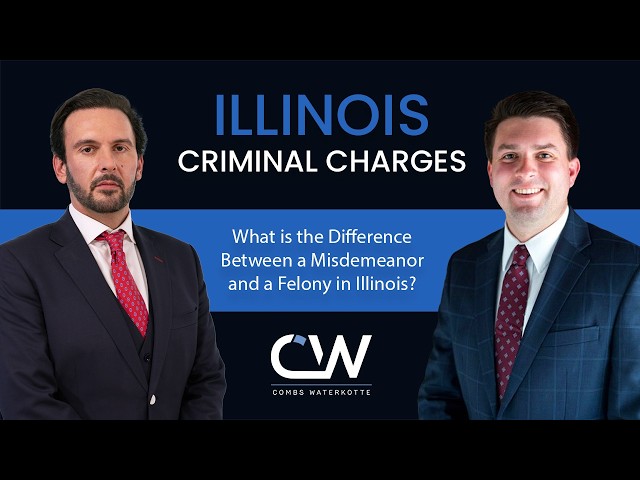
Under Illinois law, there are no gun crimes that are necessarily specific to children (aside from a few charge enhancements for minors under 21 years old). Instead, the list of firearm offenses in the Illinois Criminal Code apply to juveniles as well. The only difference is the list of potential penalties involved.
With this in mind, here are some of the most common gun crimes our defense lawyers see prosecuted against juveniles in Chicago and Cook County:
- Unlawful possession of a firearm — This offense penalizes juveniles who carry legal and illegal firearms or ammunition in protected places or with the intent to injure someone or commit a crime.
- Aggravated unlawful possession of a firearm — This offense applies to individuals under 21 years old who are in possession of a handgun or have immediate access to a loaded handgun while using illegal drugs or committing a violent misdemeanor.
- Possession of a stolen firearm — This offense applies when a child is knowingly in possession of a stolen gun or a gun with the serial number filed off (and the penalties increase for higher quantities of weapons).
- Reckless or aggravated discharge of a firearm — These offenses occur when a juvenile shoots a gun in a way that puts someone else’s safety at risk or when they fire toward an occupied building or car.
- Gun charges on school property — These offenses apply for handling, transferring, or shooting guns on school grounds, which are protected areas under Illinois law.
The arrest for a gun offense is only the beginning. There’s an entire post-arrest process that can be complicated, overwhelming, and frustrating to handle.
What Happens After a Juvenile Gun Crime Arrest in Chicago?
After a juvenile gun crime arrest in Chicago, the legal process moves quickly. While every case is unique, most families can expect to go through the following stages. Understanding what happens next can help you make informed decisions and ensure your child has experienced representation every step of the way.
- The juvenile is arrested and taken to a processing center — After an arrest, law enforcement transports the minor to a juvenile processing facility for booking, identification, and questioning. Here, officers also determine the alleged offense, gather evidence, and begin the former intake process.
- A parent or legal guardian is notified — Illinois law generally requires law enforcement to notify a parent or guardian as soon as reasonably possible after a minor is taken into custody. Parents should respond quickly and avoid discussing the case with investigators.
- The child is either detained or released — Depending on the allegations, the child’s record, and other circumstances, authorities may release the child to a parent or guardian and hold them in secure detention until the court determines the next steps.
- A detention hearing takes place — If the child remains in custody, the court holds a detention hearing to determine whether continued detention is necessary while the case goes on. The judge considers factors like public safety, flight risk, and the child’s best interests.
- The juvenile court case begins — Formal juvenile court proceedings follow, including the filing of petitions, pretrial appearances, and discussion between the parties. During this stage, your attorney investigates the allegations and develops the strongest possible defense strategy.
- An adjudicatory hearing is held — Similar to a trial in adult court, the adjudicatory hearing allows both sides to present evidence and witness testimony. The judge determines whether the prosecution has proven the allegations beyond a reasonable doubt.
- A dispositional hearing determines the outcome — If the court finds the allegations proven, a dispositional hearing follows to determine the appropriate consequences. The judge may consider probation, counseling, treatment programs, community service, or, in some cases, juvenile detention.
- Some cases may be transferred to adult court — Certain serious gun offenses or cases involving older juveniles may qualify for transfer to adult criminal court. Adult prosecution can expose a minor to significantly harsher penalties.
Although these are the typical stages of a juvenile gun crime case, no two situations are exactly alike. An experienced juvenile defense attorney can protect your child’s rights from the very beginning, explain each step of the process, and advocate for the best possible outcome.
Penalties for Juvenile Gun Crimes in Chicago, Illinois
The penalties for a juvenile gun crime in Chicago depend on several factors, including:
- The child’s age
- The specific offense
- Whether the case stays in juvenile court or gets transferred to adult court
- The minor’s prior history
Illinois law gives judges a range of sentencing options that emphasize rehabilitation in juvenile court while allowing much harsher consequences when certain offenses are prosecuted in the adult criminal justice system. In some cases, the court may also use an extended-jurisdiction juvenile sentence, which combines elements of both systems.
Sentencing in Juvenile Court
If your child’s case remains in juvenile court, the judge has several sentencing options under 705 ILCS 405/5-710. Rather than relying solely on incarceration, juvenile courts try to promote rehabilitation while still holding minors accountable.
Depending on the circumstances of the case, the court may impose one of more of the following:
- Probation or conditional discharge
- Release to a parent, guardian, or legal custodian
- Placement outside the home
- Substance abuse assessment and treatment (when appropriate)
- Up to 30 days in a juvenile detention home
- Electronic monitoring or home detention
- Community service
- Commitment to the Illinois Department of Juvenile Justice (IDJJ) for certain felonies
Judges have broad discretion when determining which combination of these penalties is appropriate based on the facts of the case and your child’s specific circumstances.
Sentencing When a Minor is Prosecuted as an Adult
Some juvenile gun crime cases are transferred to adult criminal court. Here, the penalties are substantially more severe. Even so, Illinois law recognizes that children are different from adults and requires judges to consider several mitigating factors before imposing a sentence under 730 ILCS 5/5-4.5-105. These factors include:
- The child’s age, maturity, and ability to understand risks and consequences
- Peer pressure, family pressure, or other negative influences
- The child’s home life, educational background, and history of childhood trauma
- Cognitive or developmental disabilities
- The defendant’s role and level or participation in the alleged offense
- Prior juvenile or criminal history
- The extent to which the child is involved in their community
- Potential for rehabilitation
An experienced defense attorney can present evidence supporting these mitigating factors to argue for a more lenient sentence and demonstrate why the child deserves a second chance.
Extended-Jurisdiction Juvenile (Blended) Sentencing
In certain serious cases, Illinois courts may use extended-jurisdiction juvenile (EJJ) sentencing under 705 ILCS 405/5-810. Often referred to as "blended sentencing,” this approach combines a juvenile sentence with an adult criminal sentence that remains suspended unless the minor violates the court’s conditions.
If the court enters an extended-jurisdictional juvenile sentence, it will impose:
- One of more juvenile dispositions
- An adult criminal sentence
However, the adult sentence does not immediately take effect. Instead, the process usually works as follows:
- The adult sentence is stayed while the child completes the court-ordered juvenile disposition.
- If the juvenile successfully completes the juvenile sentence, the court vacates the adult sentence.
- If the juvenile commits a new criminal offense, the court must hold a hearing and order the adult sentence into effect.
- If the juvenile violates another condition of the juvenile sentence, the judge may either activate the adult sentence or continue and modify the juvenile disposition instead.
Because an EJJ sentence leaves an adult prison sentence hanging over a minor’s head, it is one of the most significant sentencing options available in the Illinois juvenile justice system.
Criminal Defense Strategies Against Chicago Juvenile Gun Crimes
Challenging an Illegal Search and Seizure
Police can’t search your child, their backpack, their car, or your home without legal justification. A defense lawyer can examine whether officers had consent, probable cause, a valid warrant, or another lawful basis to initiate the search. If the search violated the Fourth Amendment, the court may suppress the firearm and other evidence.
Challenging an Illegal Traffic Stop
Many juvenile firearm arrests begin during traffic stops. Officers have to have a lawful reason to stop a vehicle before conducting an investigation. A lawyer can review any available dashcam footage, police reports, bodycam footage, and officer testimony to determine whether the stop was justified. An unlawful stop may make evidence found afterwards inadmissible in court.
Arguing That Your Child Did Not Possess the Firearm
The prosecution must prove that your child actually or legally possessed the gun. Simply being near a gun isn’t necessarily enough to be charged. A defense attorney can challenge whether your child exercised control over the weapon, who had access to it, or was aware of its presence when police discovered it.
Defending Against Constructive Possession Allegations
Constructive possession allows prosecutors to argue that a child possessed a gun without physically holding it. They generally must show knowledge and control over the location where the gun was found. A lawyer can challenge weak connections involving shared bedrooms, vehicles, backpacks, apartments, or other spaces accessible to multiple people.
Showing That the Firearm Belonged to Someone Else
A gun may belong to a friend, sibling, parent, passenger, or another person at the scene. Ownership alone doesn’t always decide possession, but it can create reasonable doubt. A defense lawyer can investigate fingerprints, DNA, statements, registration records, and witness accounts to show that the weapon wasn’t your child’s.
Proving Your Child Did Not Know About the Gun
Many gun charges require proof that the accused knowingly possessed the weapon. Your child may not have known the gun was inside a vehicle, bag, bedroom, or shared space. An attorney can challenge the prosecution’s evidence of knowledge and expose assumptions that aren’t supported by direct proof.
Challenging Insufficient Evidence in a Juvenile Gun Case
Prosecutors must prove every element of a firearm charge beyond a reasonable doubt. A lawyer can identify gaps in the evidence, conflicting reports, missing forensic testing, unclear video, or unreliable statements. When the state can’t establish possession, knowledge, intent, or another required element, dismissal or acquittal may be possible.
Identifying Constitutional Violations During the Investigation
Children have constitutional rights during police encounters, questioning, searches, and court proceedings. A lawyer can investigate whether officers ignored your child’s right to remain silent, denied access to a lawyer, used coercive interrogation tactics, or obtained statements unlawfully. Constitutional violations may lead to suppressed evidence or significantly weaken the prosecution’s case.
Challenging Police and Witness Credibility
Juvenile gun cases often depend heavily on statements from police officers, vehicle passengers, classmates, and other witnesses. A defense attorney can compare testimony with bodycam footage, prior statements, physical evidence, and forensic results. Inconsistencies, biases, poor visibility, or motives to shift blame can undermine a witness’s reliability.
Seeking Diversion, Reduced Charges, or a Rehabilitative Outcome
In many cases, a juvenile gun charge isn’t decided in court. A lawyer may negotiate for diversion, probation, treatment, community service, reduced charges, or another rehabilitative resolution. Early legal intervention, good performance in school, counseling, family support, and lack of a prior criminal history may strengthen arguments for leniency.