






Additional Links
- Legal Video | What Happens if I’m Caught With Drugs in Illinois?
- Legal Video | What’s the Difference Between a Misdemeanor and Felony Drug Charge in Illinois?
- Legal Video | Can I Be Charged if the Drugs Weren’t Mine in Illinois?
- Legal Video | What Are Drug Schedules in Illinois?
- What to Do After Being Caught With Drugs in Illinois
- How to Beat a Drug Charge in Illinois
- What Are the Penalties for Drug Possession in Illinois?
- What Happens After an Arrest in Chicago?
- What to Look for in a Chicago Criminal Defense Lawyer
Drug Possession Lawyers in Chicago, Illinois Serving All of Cook County
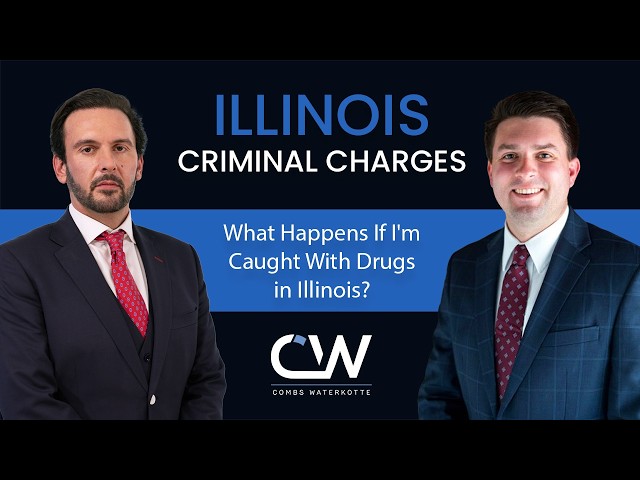
Every drug possession case has its own story. Sometimes, the charges stem from an unlawful traffic stop or search. In other instances, the drugs don’t belong to the accused, or law enforcement rushed to conclusions before getting all the facts. Whatever led to your arrest, you deserve a criminal defense team that will thoroughly investigate your case and build you a solid defense.
“[Combs Waterkotte] helped me avoid 2 years probation, as well as helping me get into a program that I can complete in much less time. I was able to give [them] a call or text when I needed, and [they were] very responsive. Very professional, extremely helpful.”
-Eric L. | Combs Waterkotte Client
At Combs Waterkotte, our Chicago drug possession lawyers represent clients throughout Cook County with a strategic, trial-ready approach. We carefully examine police reports, body camera footage, search procedures, laboratory drug testing, and every other aspect of the prosecution’s evidence to identify weaknesses that could lead to reduced charges or even a complete dismissal. If negotiating for a favorable resolution isn’t the best route, we’re fully prepared to defend you in court.
When your future is on the line, don’t leave your defense to chance. Contact Combs Waterkotte online or call us today at (314) 900-HELP to schedule your free, confidential consultation with an experienced drug possession lawyer serving Chicago and all of Cook County.
Drug Possession Charges: A Comprehensive Look at Illinois’s Controlled Substance Laws
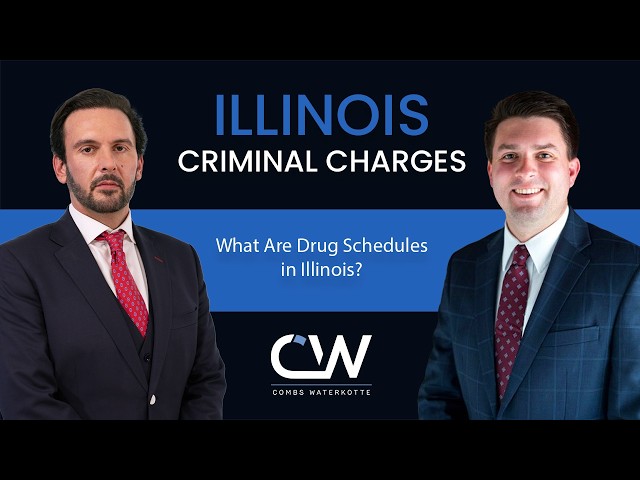
Illinois law outlaws several substances, and even having certain amounts of these substances on or near your person can result in high-level felony charges. The Illinois Controlled Substances Act covers these substances in detail under 720 ILCS 570/402: Illinois’s drug possession law.
The baseline criminal charge for possession of certain substances is a Class 1 felony, and penalties only increase from there depending on the type and weight of the substance in question. The following table outlines the penalties for heroin possession by weight:
| Crime | Weight | Penalty | Prison Sentence |
|---|---|---|---|
| Heroin Possession | 15 to 99 grams | Class 1 felony | 4 to 15 years |
| Heroin Possession | 100 to 399 grams | Class 1 felony | 6 to 30 years |
| Heroin Possession | 400 to 899 grams | Class 1 felony | 8 to 40 years |
| Heroin Possession | ≥ 900 grams | Class 1 felony | 10 to 50 years |
The penalties for cocaine and crack are substantially similar as those for heroin, as shown in the table below:
| Crime | Weight | Penalty | Prison Sentence |
|---|---|---|---|
| Cocaine Possession | 15 to 99 grams | Class 1 felony | 4 to 15 years |
| Cocaine Possession | 100 to 399 grams | Class 1 felony | 6 to 30 years |
| Cocaine Possession | 400 to 899 grams | Class 1 felony | 8 to 40 years |
| Cocaine Possession | ≥ 900 grams | Class 1 felony | 10 to 50 years |
Possession of morphine carries similar penalties as well; the only difference is the minimum term for illegal possession in the amount of 400 to 900 grams:
| Crime | Weight | Penalty | Prison Sentence |
|---|---|---|---|
| Morphine Possession | 15 to 99 grams | Class 1 felony | 4 to 15 years |
| Morphine Possession | 100 to 399 grams | Class 1 felony | 6 to 30 years |
| Morphine Possession | 400 to 899 grams | Class 1 felony | 6 to 40 years |
| Morphine Possession | ≥ 900 grams | Class 1 felony | 10 to 50 years |
Illinois’s drug possession law also outlines penalties for specific amounts of LSD, or lysergic acid diethylamide, based either on weight or possession of “tabs” or “hits” of acid:
| Crime | Weight | Penalty | Prison Sentence |
|---|---|---|---|
| LSD Possession | 15 to 99 grams or 15 to 199 tabs | Class 1 felony | 4 to 15 years |
| LSD Possession | 100 to 399 grams or 200 to 599 tabs | Class 1 felony | 6 to 30 years |
| LSD Possession | 400 to 899 grams or 600 to 1,499 tabs | Class 1 felony | 8 to 40 years |
| LSD Possession | ≥ 900 grams or ≥ 1,500 tabs | Class 1 felony | 10 to 50 years |
The statute also establishes specific sentencing guidelines for certain weight thresholds of certain Schedule I controlled substances, including:
- Ecstasy (3,4-methylenedioxyamphetamine or 3,4-methylenedioxymethamphetamine)
- MDA (3,4-methylenedioxy-N-ethylamphetamine)
- BZP (N-Benzylpiperazine)
- MMDA (3-methoxy-4,5-methylenedioxyamphetamine or 5-methoxy-3,4-methylenedioxy-amphetamine)
- N-hydroxy-MDA (N-hydroxy-3,4-methylenedioxyamphetamine)
- DMA-4 or DOH (2,5-dimethoxyamphetamine)
- DOB (4-bromo-2,5-dimethoxyamphetamine)
- 2C-B (4-Bromo-2,5 dimethoxyphenethylamine)
- PMA (4-methoxyamphetamine)
- DOET (2,5-dimethoxy-4-ethylamphetamine)
The penalties for the possession in weight or in individual tablets of these Schedule I substances are outlined in the table below:
| Weight | Penalty | Prison Sentence |
|---|---|---|
| 15 to 99 grams or 15 to 199 tablets/pills | Class 1 felony | 4 to 15 years |
| 100 to 399 grams or 200 to 599 tablets/pills | Class 1 felony | 6 to 30 years |
| 400 to 899 grams or 600 to 1,499 tablets/pills | Class 1 felony | 8 to 40 years |
| ≥ 900 grams or ≥ 1,500 tablets/pills | Class 1 felony | 10 to 50 years |
Illinois’s drug possession laws also call for Class 1 felony charges for the possession of:
- 200 grams or more of peyote
- 200 grams or more of barbituric acid
- 200 grams or more of amphetamine
- 30 grams or more of methaqualone
- 30 grams or more of PCP (phencyclidine)
- 30 grams or more of ketamine
As a catch-all, the law also calls for Class 1 felony sentencing for any amount of any Schedule I or Schedule II controlled substance not specifically addressed in the statute.
Possession of any amount of any other substances not included in the statute (including Schedule III, Schedule IV, and Schedule V controlled substances) is charged as a Class 4 felony.
Illinois’s drug possession statute also specifically mentions that any offenses involving the possession of 100 grams or more of a controlled substance can result in a fine up to $200,000.
Finally, the statute also addresses possession of anabolic steroids:
- A first offense for possession of an anabolic steroid is a Class C misdemeanor
- A second and subsequent offense for possession of an anabolic steroid is a Class B misdemeanor (if it occurs within 2 years of the first offense)
Possession of Marijuana in Chicago, Illinois
On January 1, 2020, the Cannabis Regulation and Tax Act officially made recreational possession and use of marijuana legal in the state of Illinois. Under that law:
- Illinois residents may legally possess:
- Up to 30 grams of cannabis flower
- Up to 5 grams of cannabis concentrate
- Up to 500 mg of THC in infused products
- Non-Illinois residents in the state may legally possess:
- Up to 15 grams of cannabis flower
- Up to 2.5 grams of THC concentrate
- Up to 250 mg of THC in infused products
Many residents are surprised to learn, though, that despite these laws, possession of certain amounts of marijuana can result in criminal charges in Chicago and Cook County. Though felony charges are reserved for relatively large amounts of weed, it’s still essential to know and understand these thresholds.
Under Illinois’s Cannabis Control Act, individuals can still be charged with criminal possession of marijuana for having the following amounts of cannabis:
| Crime | Weight | Penalty | Prison Sentence |
|---|---|---|---|
| Marijuana Possession | 15 to 30 grams (minors/non-residents) | Class B misdemeanor | Up to 6 months |
| Marijuana Possession | 31 to 100 grams | Class A misdemeanor | Up to 364 days |
| Marijuana Possession | 101 to 500 grams | Class 4 felony | 1 to 3 years |
| Marijuana Possession | 501 to 2,000 grams | Class 3 felony | 2 to 5 years |
| Marijuana Possession | 2,001 to 5,000 grams | Class 2 felony | 3 to 7 years |
| Marijuana Possession | > 5,000 grams | Class 1 felony | 4 to 15 years |
Possession of Methamphetamine in Chicago, Illinois
The state of Illinois takes meth-related crimes very seriously. In fact, Illinois has legislation that regulates meth separately from the Illinois Controlled Substances Act; meth offenses are handled instead under the Methamphetamine Control and Community Protection Act.
Under this law, even possessing very small amounts of methamphetamine can result in felony-level sentencing. The table below covers the weight penalty thresholds for methamphetamine possession in Chicago and Cook County:
| Crime | Weight | Penalty | Prison Sentence | Fine |
|---|---|---|---|---|
| Meth Possession | < 5 grams | Class 3 felony | 2 to 5 years | n/a |
| Meth Possession | 5 to 14 grams | Class 2 felony | 3 to 7 years | n/a |
| Meth Possession | 15 to 99 grams | Class 1 felony | 4 to 15 years | n/a |
| Meth Possession | 100 to 399 grams | Class X felony | 6 to 30 years | $100,000 |
| Meth Possession | 400 to 899 grams | Class X felony | 8 to 40 years | $200,000 |
| Meth Possession | ≥ 900 grams | Class X felony | 10 to 50 years | $300,000 |
Collateral Consequences of a Drug Possession Conviction in Chicago
Being convicted of drug possession in Chicago can result in lengthy prison sentences. Beyond that, though, there are other circumstances surrounding a drug possession conviction that can have a ripple effect throughout someone’s entire life.
The collateral consequences around a Chicago area drug conviction can be just as serious and punitive as a prison sentence. Some of the most common consequences that can have a lasting impact on someone’s life include:
- Housing issues — A felony drug conviction can make it much harder to secure housing in Chicago. Many landlords conduct criminal background checks, and they may deny rental applications based on a drug-related offense. A conviction can make it much harder to find a safe, stable place to live.
- Employment barriers — Many employers perform background checks before hiring new employees. A felony drug conviction may disqualify you from certain positions. Reduced job opportunities can make it more challenging to build and maintain your career.
- Professional licensing impacts — Certain professional licenses may be denied, suspended, or even revoked following a drug conviction. A guilty verdict can especially affect careers in healthcare, education, law, real estate, and other licensed professions.
- Driver’s license suspensions — If you’re found guilty of driving under the influence of drugs, your driver’s license may be suspended or revoked. Losing your license can make commuting to work or getting to school significantly more difficult.
- Firearms rights — A felony drug conviction can permanently affect your ability to possess or buy guns in Chicago under Illinois and federal law. These restrictions can remain in place long after you’ve completed your sentence and any other court-ordered obligations.
- Child custody issues — A felony drug conviction can quickly become a factor in child custody or visitation proceedings. Family courts consider a parent’s criminal history when evaluating the best interest of a child. A drug conviction can have a large impact on parenting time or custody arrangements.
Criminal Defense Strategies: How a Lawyer Can Help You Beat a Chicago Drug Charge
Despite the seriousness of a drug possession charge in Chicago, Illinois, a good criminal defense lawyer can help mitigate the impact of the charges on your life. At Combs Waterkotte, we help our clients in Cook County fight drug possession charges with the following criminal defense strategies.
Challenging an Illegal Search or Seizure
Police officers must follow the Fourth Amendment when searching your person, car, home, or belongings for drugs. If law enforcement lacked probable cause, exceeded the scope of a search warrant, pulled you over illegally, or searched without valid consent, a lawyer can move to suppress any drugs the police find. When key evidence is thrown out, prosecutors may have no choice but to reduce or dismiss the charges.
Proving the Drugs Weren’t Yours
Possession cases usually depend on where drugs were found, not who actually owned them. A lawyer can argue that the drugs belonged to someone else, especially if they were found in a shared apartment, a borrowed vehicle, a hotel room, or a common area. Prosecutors have to prove knowledge and control in drug cases, and proximity by itself isn’t always enough to get a conviction.
Attacking Constructive Possession
You don’t have to be holding drugs to be charged with possession in Chicago. Prosecutors may try to claim constructive possession if they believe you had control over the area where the drugs were found, but a defense lawyer can challenge this theory. An attorney can show that you lacked access, ownership, control, or knowledge about the drugs, weakening the prosecution’s ability to connect you to the alleged controlled substances.
Challenging a Traffic Stop
Several Chicago area drug arrests start with a traffic stop. If the police pull you over without reasonable suspicion, if they unlawfully prolong your traffic stop, or if they use a minor traffic violation as an excuse to look for drugs, any evidence they find can be challenged. Your lawyer can review bodycam footage, squad car video, police reports, and dispatch records to determine whether the stop violated your constitutional rights.
Challenging Statements Made to Police
The Fifth Amendment protects you from being forced to incriminate yourself. If the police question you without properly advising you of your Miranda rights or pressure you into making a statement, a lawyer can seek to keep any statements you make out of court. Suppressing an alleged confession can seriously weaken the prosecution’s case, especially if physical evidence is limited.
Arguing Lack of Knowledge or Intent
Chicago drug possession charges usually require proof that you knowingly possessed the substance. A lawyer can try to argue that you didn’t know drugs were present, didn’t know what the substance in question was, or had no intent to exercise any control over it. This defense strategy can be especially important in cases involving shared spaces, unfamiliar bags, borrowed cars, or prescription medications.
Arguing Entrapment or Police Misconduct
Entrapment can apply when the police pressure or manipulate someone into committing a crime they otherwise wouldn’t have committed. While an entrapment defense isn’t available in every drug charge case, it can be effective when undercover officers, informants, or aggressive police tactics drive the charges. A lawyer can investigate whether officers crossed the line from merely providing an opportunity for a crime to improperly manufacturing a crime.
Seeking Dismissal, Reduction, or Diversion
Beating a drug charge doesn’t always mean winning at trial. A lawyer may be able to negotiate a dismissal, reduced charge, deferred prosecution, probation, a treatment-based resolution, or a diversion program. For eligible defendants, this can help to reduce jail exposure and protect long-term career and professional licensing opportunities. The right defense strategy depends on the charge, the defendant’s criminal history, the substance in question, the weight of the substance, and the strength of the evidence.
What to Do If You’re Arrested for Drug Possession in Chicago, Illinois
While a drug possession arrest can be scary and overwhelming, it’s important to stay calm and remember that you have rights. Exercising these rights can help shape the way your case plays out. The criminal defense lawyers at Combs Waterkotte suggest the following steps for anyone arrested for drug possession allegation in Chicago or Cook County:
- Exercise your right to remain silent — You are not required to answer questions about drugs if you’re arrested. Politely tell the arresting officer that you wish to remain silent and want to speak to a lawyer before answering questions.
- Hire a Chicago drug defense lawyer immediately — Drug possession cases can involve constitutional issues, forensic evidence, and complex laws. The sooner you hire an attorney, the sooner you can help protect your rights and work toward a favorable outcome.
- Remain calm and do not resist arrest — Even if you think you’re being arrested unfairly, resisting or arguing with police can lead to additional charges. Try to stay calm, comply with lawful instructions, and let your attorney challenge the arrest later.
- Do not consent to additional searches — If police ask to search your car, phone, backpack, or home, you generally have the right to refuse if they don’t have a warrant. State that you do not consent, and let your lawyer fight the police later if they ignore your refusal.
- Document everything you remember — As soon as you can, write down the details of your arrest, including where it occurred, what the police said, whether a search was carried out, and whether witnesses were present. These details can help greatly with your case.
- Appear at every required court date — Missing a court date in Cook County can result in an arrest warrant and additional legal issues. Be sure to attend every hearing unless your lawyer tells you your appearance has been excused.