
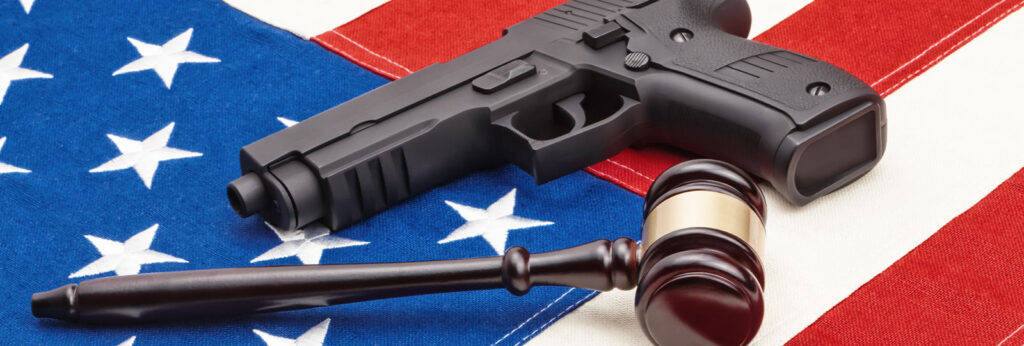
A federal firearm case in Utah rarely stays confined to the gun itself. One allegation can trigger mandatory prison terms, add time to another sentence, put your firearms at risk of forfeiture, and affect your rights long after the case ends. ATF agents and the U.S. Attorney’s Office frequently pursue these charges as part of broader investigations involving drug trafficking, federal conspiracy, robbery, or violent crimes.
The government does not necessarily need evidence that you used a gun. Possessing a firearm, having access to one, buying one for someone else, providing false information during a purchase, or possessing certain unregistered weapons may be enough to support federal charges. A firearm allegation in Utah can also add years or decades to the sentence imposed for another offense.
Cases Handled
Over 10,000
Jail Days Saved
Over 1 Million
Google Reviews
500+ Perfect
Legal Experience
100+ Years
Combs Waterkotte represents clients in Utah when a federal firearm investigation puts their freedom and future on the line. Our federal criminal defense attorneys serving Utah dig into the government’s theory from every angle, including where the gun was found, who allegedly controlled it, how officers obtained the evidence, and whether the weapon had any real connection to another offense.
If you have been arrested, received a target letter, learned that ATF agents are investigating you, or believe federal charges may be coming, contact us online or call (314) 900-HELP immediately. What happens before an indictment can shape the entire case.
Free book
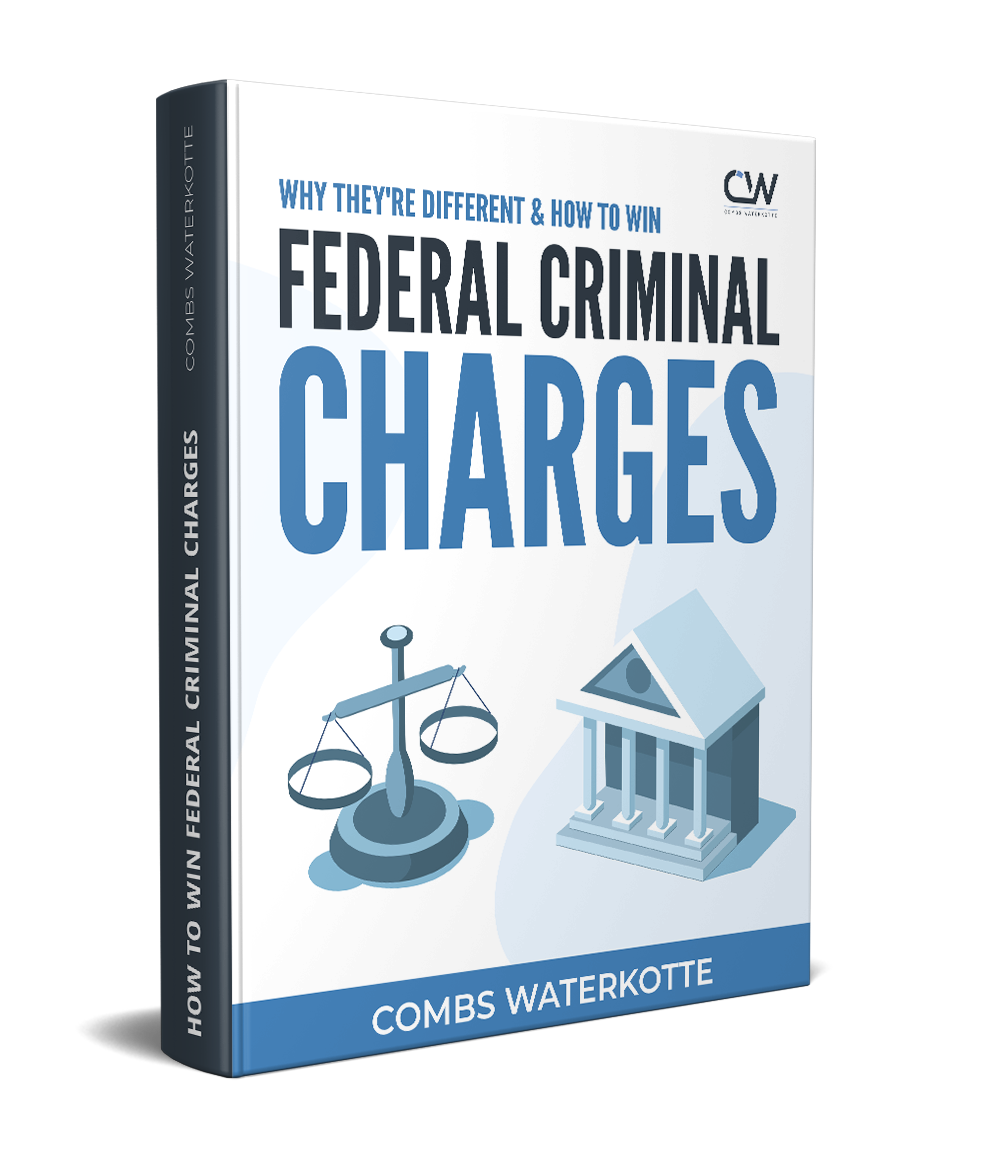
Facing Federal Criminal Charges? Why They’re Different and How to Win
Combs Waterkotte, a leading federal criminal defense law firm, has handled over 10,000 cases successfully. This ebook guides you through the federal criminal defense process, how federal charges are different, and how to win.
This page covers:
- What gives the federal government authority over a firearm case
- What not to do when you learn you are under investigation
- Which federal gun charges prosecutors commonly file
- How consecutive sentences and enhancements can increase prison exposure
- Why the Armed Career Criminal Act can change the entire case
- How a federal gun charges lawyer can intervene
Legal Videos
Can Federal Charges Be Reduced Or Dismissed?
Can Federal Charges Be Reduced Or Dismissed? Chris Combs and Andrew Russek, lawyers with Combs Waterkotte, a leading federal criminal defense firm, talk about proffers, probation, and federal …
Should I Hire A Lawyer Experienced In Federal Defense?
Should I Hire A Lawyer Experienced In Federal Defense? Chris Combs and Andrew Russek from the leading federal criminal defense firm Combs Waterkotte discuss the importance of hiring a lawyer with …
What Penalties Apply To Federal Sex Crime Convictions?
What Penalties Apply To Federal Sex Crime Convictions? Andrew Russek and Chris Combs from Combs Waterkotte federal criminal defense firm discuss potential penalties related to federal sex crime …
Do Federal Sex Crimes Require Sex Offender Registration?
Do Federal Sex Crimes Require Sex Offender Registration? Andrew Russek, a lawyer with leading federal criminal defense firm Combs Waterkotte, discusses the sex offender registry and federal sex …
What Makes A Sex Crime Federal Rather Than State?
What Makes A Sex Crime Federal Rather Than State? Andrew Russek and Chris Combs of Combs Waterkotte discuss factors that play into a sex crime being classified as federal, rather than …
What Are Federal Sex Crime Charges?
What Are Federal Sex Crime Charges? Chris Combs and Andrew Russek of Combs Waterkotte discuss the most common federal sex crime charges. Interview Transcript Scott Michael Dunn: Well, let's …
Can Federal Charges Be Reduced Or Dismissed?
Can Federal Charges Be Reduced Or Dismissed? Chris Combs and Andrew Russek, lawyers with Combs Waterkotte, a leading federal criminal defense firm, talk about proffers, probation, and federal …
Should I Hire A Lawyer Experienced In Federal Defense?
Should I Hire A Lawyer Experienced In Federal Defense? Chris Combs and Andrew Russek from the leading federal criminal defense firm Combs Waterkotte discuss the importance of hiring a lawyer with …
What Penalties Apply To Federal Sex Crime Convictions?
What Penalties Apply To Federal Sex Crime Convictions? Andrew Russek and Chris Combs from Combs Waterkotte federal criminal defense firm discuss potential penalties related to federal sex crime …
Do Federal Sex Crimes Require Sex Offender Registration?
Do Federal Sex Crimes Require Sex Offender Registration? Andrew Russek, a lawyer with leading federal criminal defense firm Combs Waterkotte, discusses the sex offender registry and federal sex …
What Makes A Sex Crime Federal Rather Than State?
What Makes A Sex Crime Federal Rather Than State? Andrew Russek and Chris Combs of Combs Waterkotte discuss factors that play into a sex crime being classified as federal, rather than …
What Are Federal Sex Crime Charges?
What Are Federal Sex Crime Charges? Chris Combs and Andrew Russek of Combs Waterkotte discuss the most common federal sex crime charges. Interview Transcript Scott Michael Dunn: Well, let's …
What Makes a Gun Charge Federal?
The line between a state gun case and a federal prosecution is not always obvious. A case may cross that line because of the weapon involved, the accused person’s legal status, the location of the alleged conduct, or a claimed connection to interstate commerce. Violations of the Gun Control Act, the National Firearms Act, or another federal statute may give the U.S. government authority to prosecute. Local agencies can also refer cases upward when they want federal prosecutors to pursue harsher consequences.
Federal jurisdiction may arise when:
- A firearm traveled through interstate or foreign commerce
- The accused is legally prohibited from possessing firearms or ammunition
- A firearm was allegedly used during a drug trafficking crime or crime of violence
- The case involves firearm trafficking, smuggling, straw purchasing, or unlicensed dealing
- The weapon is a machine gun, silencer, short-barreled rifle, short-barreled shotgun, or destructive device
- The firearm had an altered or removed serial number
- The alleged conduct occurred on federal property or involved a federal investigation
- Federal agents believe the firearm is connected to organized criminal activity
By the time a person learns about the investigation, agents may already have collected surveillance footage, phone records, social media posts, witness statements, firearm traces, and forensic evidence.
What to Do During a Federal Firearms Investigation in Utah
Federal investigations usually develop quietly. If agents have reached out, searched your property, questioned someone close to you, or asked you to “clear a few things up,” assume the case is already moving. You should treat every conversation and decision as part of the defense.
Protect yourself by doing the following:
- Stop talking and call a federal firearms lawyer in Utah. You are not required to answer questions simply because an agent sounds friendly or says the conversation is informal. Your right to remain silent exists before an arrest, not just after one.
- Do not expand the search for them. If agents present a warrant, remain calm and do not obstruct them. However, you do not have to volunteer access to additional rooms, devices, vehicles, accounts, or property that the warrant does not cover.
- Save everything. Preserve purchase paperwork, receipts, messages, photographs, transfer records, emails, and anything else that may provide context. Deleting material can create a separate problem and may be portrayed as obstruction.
- Keep the case off the group chat. Do not post online, compare stories with witnesses, or discuss details over calls and text messages. The government may later obtain those communications.
- Bring in counsel early. A federal criminal defense attorney in Utah can deal directly with investigators, assess your exposure, and help prevent avoidable damage before charges are filed.
Federal Firearm Offenses Charged in Utah
Possession of a Firearm by a Prohibited Person
A person may face a federal gun charge based on their legal status rather than how the firearm was allegedly used. Under 18 U.S.C. § 922(g), firearm and ammunition possession is prohibited for several categories of restricted persons.
A person may be legally barred from possessing a gun or ammunition because of:
- A prior conviction carrying a possible sentence of more than one year
- Fugitive status
- Unlawful use of controlled substances
- A qualifying domestic violence restraining order
- A conviction for certain domestic violence offenses
- Dishonorable discharge or certain immigration statuses
The prosecution must generally connect two pieces of the puzzle: the accused knowingly possessed the gun or ammunition, and they knew about the legal status that made that possession prohibited.
Possession may be:
- Direct or actual possession: Agents or officers claim the weapon was in the person’s hand, pocket, waistband, bag, or immediate physical custody.
- Constructive possession: Prosecutors claim the person was not holding the gun but knew it was present and could control what happened to it.
Shared spaces create room for reasonable doubt. If the firearm was found in a jointly occupied apartment, another person’s car, a motel room, or an area open to multiple people, prosecutors still must tie the accused personally to the weapon.
Possessing a Firearm During a Drug Trafficking Crime or Crime of Violence
Under 18 U.S.C. § 924(c), the government may pursue an additional charge when a firearm was allegedly used or carried in relation to a drug trafficking crime or crime of violence, or possessed in furtherance of one.
Because these penalties are typically consecutive, the firearm count can add the following time after the sentence for the underlying crime:
- At least five years for possessing, using, or carrying a firearm
- At least seven years if the firearm was brandished
- At least 10 years if the firearm was discharged
- Higher minimums when machine guns, silencers, or destructive devices are involved
The prosecution may describe a firearm as a tool of the alleged offense even when it stayed hidden or untouched. That argument commonly relies on its location near:
- Illegal drugs
- Cash
- Packaging materials
- Distribution records
- Other alleged evidence of trafficking
The defense may challenge whether the accused knew about the firearm, could access it, or possessed it for any reason connected to the alleged offense.
False Actual-Buyer Allegations
A lawful-looking retail purchase can become a federal case when agents believe the named buyer was only standing in for another person. These straw purchase investigations often center on what the buyer intended and what they reported on Form 4473. Prosecutors may also rely on 18 U.S.C. § 932.
The government and defense may focus on:
- Whether another person supplied the purchase money
- Who directed the buyer toward a particular firearm
- Any agreement to transfer the gun after the sale
- The difference between a lawful gift and a purchase made as someone else’s agent
- What the buyer knew about the recipient’s background and intentions
Potential evidence may include text messages, payment records, store surveillance, purchase forms, and statements made to investigators.
Transporting or Transferring Firearms Unlawfully
18 U.S.C. § 933 prohibits certain transfers, transportation, or receipt of firearms when the accused knows or has reasonable cause to believe the firearm will be used, possessed, or transferred unlawfully.
Conduct that may lead to a federal trafficking charge includes firearms being:
- Supplying guns to prohibited recipients
- Moving firearms across state lines as part of a broader operation
- Providing weapons for alleged drug trafficking or violent conduct
- Using several purchasers to avoid detection
- Operating what prosecutors view as an unlicensed resale business
- Sending firearms outside the United States unlawfully
Selling Guns Without a Federal Firearms License
An individual may lawfully make some private firearm sales without becoming a licensed dealer. Problems arise when federal agents believe the person crossed from disposing of personal property into running a gun business without the required federal firearms license.
Prosecutors may examine:
- The volume and regularity of transactions
- How long the accused kept each firearm before selling it
- Whether buyers were solicited through websites, forums, or personal networks
- Cash, electronic payments, and customer conversations
- Whether the sales produced or were intended to produce profit
- Evidence of inventory, repeat customers, or ongoing operations
Federal Charges for False Firearm Purchase Statements
Under 18 U.S.C. § 922(a)(6), it is illegal to knowingly make a false statement to a federally licensed firearms dealer when that statement is material to the legality of the sale.
Federal investigators may focus on statements about:
- Whether the person completing the form was the real buyer
- The existence or nature of a prior conviction
- Illegal drug use or controlled-substance status
- A qualifying domestic violence case or protection order
- Citizenship, immigration, or residency status
- The buyer’s address, identity, or supporting documents
The defense may challenge whether the answer was actually false, whether the accused knowingly provided incorrect information, and whether the statement affected the legality of the transaction.
Possession of a Firearm With an Altered or Obliterated Serial Number
Federal law restricts the knowing possession, receipt, or transportation of certain firearms whose serial numbers have been changed, removed, or made unreadable. The relevant regulation appears at 27 CFR § 478.34.
Defense counsel may examine:
- Whether the accused knew the serial number had been altered
- Whether the markings meet the statutory definition
- Whether forensic testing can recover the original number
- Whether the government can connect the accused to the firearm
The alleged alteration can affect more than guilt or innocence. It may also support an enhancement when the sentencing guidelines are calculated.
Privately Made Firearms and “Ghost Guns”
A privately made firearm is not automatically illegal simply because an individual assembled it. Criminal exposure may arise depending on:
The government may try to build its case around:
- Possession by a prohibited person
- The number and type of firearms produced
- Messages or payments showing planned sales
- Whether the accused acted as an unlicensed manufacturer or dealer
- The absence of markings required under federal law
- The use or presence of the firearm during another alleged offense
Unserialized firearms may bring an additional sentencing problem, particularly when the federal guidelines call for an enhancement.
NFA Weapons and Registration Offenses
The National Firearms Act imposes registration, taxation, manufacturing, and transfer requirements on certain weapons and devices.
Weapons and devices commonly regulated by the NFA include:
- Machine guns
- Short-barreled rifles
- Short-barreled shotguns
- Silencers and suppressors
- Destructive devices
- Certain weapons classified as “any other weapon”
An NFA prosecution may be based on alleged possession of an unregistered weapon, unlawful manufacture or transfer, or missing required identifying information. Depending on the charge, a conviction may expose the accused to as much as 10 years in federal prison, financial penalties, and firearm forfeiture.
Federal Firearm Sentences in Utah
Two people charged with firearm offenses may face very different outcomes. Federal sentencing depends on what prosecutors can prove, which statute applies, whether the law requires consecutive time, the accused’s criminal history, and how the court calculates the advisory guideline range.
| Federal Firearm Charge | Potential Prison Exposure |
|---|---|
| Unlawful firearm possession by a prohibited person under § 922(g) | Generally up to 15 years in federal prison; qualifying Armed Career Criminal Act cases carry a mandatory minimum of 15 years |
| Possessing, carrying, or using a firearm during a drug trafficking crime or crime of violence under § 924(c) | At least five years, increased to seven for brandishing or 10 for discharge; the sentence usually runs after the underlying sentence |
| Federal straw purchase allegations | A maximum of 15 years in ordinary cases, potentially rising to 25 years when the weapon is believed destined for certain serious offenses |
| Federal gun trafficking under § 933 | As many as 15 years behind bars |
| Operating as an unlicensed firearms dealer | Generally a five-year maximum term of imprisonment |
| False statements on firearm purchase paperwork | Potential imprisonment for up to 10 years |
| Possessing a firearm with an altered or obliterated serial number under § 922(k) | Up to five years in many cases, with further sentencing exposure through an enhancement |
| Illegal possession, manufacture, or transfer of an NFA-regulated firearm | Potentially a decade in federal custody, plus monetary penalties and seizure of the firearm |
| Possessing or transferring a prohibited automatic weapon | Often up to 10 years, with substantially greater exposure when connected to a drug trafficking crime or crime of violence |
These are general statutory penalties. The actual sentencing range may depend on the specific charge, the type and number of firearms involved, the defendant’s criminal history, applicable mandatory minimums, and the United States Sentencing Guidelines.
Federal sentences may also include:
- Fines and court-ordered financial obligations
- Post-release supervision with strict federal conditions
- Forfeiture of the firearm and other property allegedly connected to the offense
- The loss of federal firearm rights
- Difficulty finding employment, securing housing, or keeping a professional license
- Serious immigration consequences, including possible deportation exposure
The number announced in court matters. Federal prisoners do not have access to conventional parole, and good-time reductions are limited, so the sentence served is usually close to the sentence ordered.
How the Armed Career Criminal Act Can Increase a Gun Sentence
The Armed Career Criminal Act can turn an already serious prohibited-person case into one with a 15-year mandatory minimum. The law is often referred to by its initials, ACCA.
A § 922(g) defendant may face the enhancement when their record includes three prior offenses that satisfy ACCA’s federal definitions and were not all part of the same criminal occasion.
ACCA litigation can become highly technical. The court may compare the wording of the prior state statute to the federal definition, review charging papers or plea records, and determine which version of the law controls. A state-law label is not necessarily the final word.
An experienced Utah federal gun charges lawyer may challenge:
- Whether the prior offense meets the federal definition
- Whether the conviction records establish the required elements
- Whether multiple offenses occurred on different occasions
- Whether a conviction was vacated, expunged, or otherwise invalid
- Whether the accused’s civil rights had been restored
The math is unforgiving: the government needs three qualifying predicates. A successful challenge to even one of them may be the difference between an ordinary § 922(g) sentence and at least 15 years in federal prison.
Federal Firearm Sentencing Guideline Enhancements
The sentence in a federal firearm case is influenced by more than the statute itself. Even when the law does not require a mandatory minimum prison term, guideline enhancements may substantially increase the advisory sentencing range.
Possible enhancements include allegations involving:
- The quantity of firearms involved
- Whether any firearm was stolen
- Defaced or missing identifying markings
- Transfers to prohibited persons or alleged trafficking schemes
- Possession of specially regulated NFA firearms or devices
- A connection between the firearm and separate felony conduct
- Reckless behavior during an attempted escape
- An alleged leadership or supervisory role
- Conduct the government claims obstructed the investigation or prosecution
The advisory guideline range is only one part of the sentencing decision, but it carries significant weight. Defense counsel may dispute factual allegations, challenge the legal basis for enhancements, present mitigating information, and advocate for a sentence below the recommended range.
When to Call a Federal Gun Defense Attorney
Federal investigations often begin long before anyone is arrested. Speaking with a federal defense lawyer as soon as you suspect you are involved may help protect your rights from the very beginning.
Common signs that federal authorities may be building a case include:
- ATF, FBI, DEA, or task force agents attempt to question you
- Agents execute a search warrant at your home or business
- Someone close to you receives a subpoena
- Law enforcement seizes firearms, phones, computers, or records
- You receive a federal target letter
- A codefendant or alleged associate is arrested
- A state firearm case is dismissed or delayed without explanation
- You learn that federal prosecutors are reviewing your case
The earlier a defense attorney becomes involved, the more options may exist. Depending on the circumstances, counsel can handle communications with investigators, help avoid unnecessary interviews, identify constitutional issues, preserve evidence, assess the strength of the government’s case, and present mitigating information before prosecutors decide whether to seek an indictment.
Get Help With Federal Firearm Charges in Utah
When federal agents and prosecutors are building a gun case, you need counsel familiar with the system from both sides. Combs Waterkotte represents Utah clients nationwide, and our attorneys include former prosecutors with firsthand knowledge of how federal cases are developed and litigated.
We do not wait until the courthouse doors open to prepare for trial. Our attorneys investigate the facts, review search warrants and seizure procedures, examine witness credibility, and challenge unsupported allegations that could increase federal sentencing exposure.
When negotiations make sense, we negotiate from a position of strength. When they don’t, we are prepared to take your case to court.
With decades of combined criminal defense experience, a dedicated investigator on staff, and a record of defending clients against some of the most serious state and federal charges, our team has the resources and experience to handle high-stakes firearm cases from investigation through trial and appeal.
A federal gun investigation can gain momentum long before an indictment is returned. Reach out to our firm online or call (314) 900-HELP today to discuss your options with a Utah federal firearm defense lawyer.

