
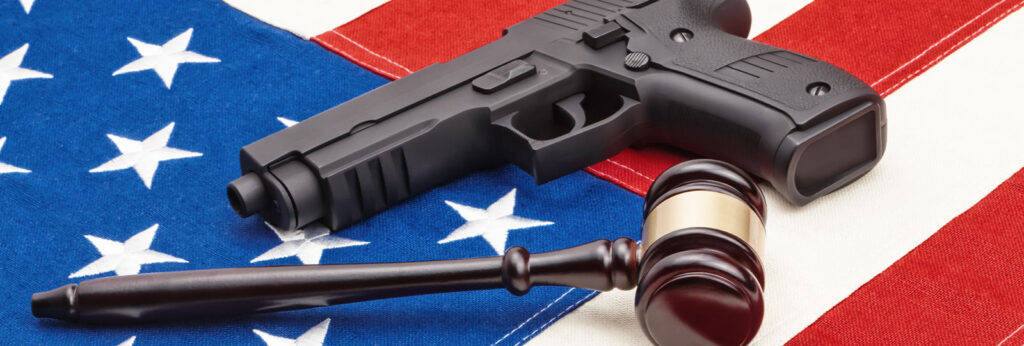
Federal gun charges in Massachusetts can turn an already serious criminal case into one carrying mandatory prison time, consecutive sentences, firearm forfeiture, and lasting restrictions on your rights. These cases are commonly investigated by the Bureau of Alcohol, Tobacco, Firearms and Explosives (ATF) and prosecuted by the U.S. Attorney’s Office, often alongside federal drug trafficking, conspiracy, robbery, or violent crime allegations.
Federal prosecutors do not always need to prove that a weapon was fired, brandished, or even carried. A case may rest on alleged possession, access to a firearm, a purchase made for another person, inaccurate information on federal paperwork, or the ownership of a regulated weapon. In Massachusetts, those allegations can substantially increase the punishment tied to a separate federal offense.
Cases Handled
Over 10,000
Jail Days Saved
Over 1 Million
Google Reviews
500+ Perfect
Legal Experience
100+ Years
When federal agents and prosecutors set their sights on someone in Massachusetts, Combs Waterkotte is prepared to push back. Our federal criminal defense team serving Massachusetts looks beyond the fact that a gun was found and asks the questions that can change a case: Who knew it was there? Who could control it? Was the search lawful? Can the government actually connect it to the alleged crime?
Maybe agents have already searched your property. Maybe someone close to you has been questioned. Maybe a target letter just landed in your hands. Whatever tipped you off, do not ignore it. Reach out to Combs Waterkotte or call (314) 900-HELP before speaking with investigators or making a move that cannot be undone.
Free book
Facing Federal Criminal Charges? Why They’re Different and How to Win
Combs Waterkotte, a leading federal criminal defense law firm, has handled over 10,000 cases successfully. This ebook guides you through the federal criminal defense process, how federal charges are different, and how to win.
This page covers:
- Why some gun cases are prosecuted federally instead of by the state
- How to respond if agents, subpoenas, or a target letter signal an investigation
- Possession, trafficking, straw purchase, NFA, and related firearm offenses
- The penalties that can be added to another federal sentence
- How prior convictions can trigger ACCA exposure
- When to bring in a federal firearm defense attorney
Legal Videos
Can Federal Charges Be Reduced Or Dismissed?
Can Federal Charges Be Reduced Or Dismissed? Chris Combs and Andrew Russek, lawyers with Combs Waterkotte, a leading federal criminal defense firm, talk about proffers, probation, and federal …

Should I Hire A Lawyer Experienced In Federal Defense?
Should I Hire A Lawyer Experienced In Federal Defense? Chris Combs and Andrew Russek from the leading federal criminal defense firm Combs Waterkotte discuss the importance of hiring a lawyer with …
What Penalties Apply To Federal Sex Crime Convictions?
What Penalties Apply To Federal Sex Crime Convictions? Andrew Russek and Chris Combs from Combs Waterkotte federal criminal defense firm discuss potential penalties related to federal sex crime …
Do Federal Sex Crimes Require Sex Offender Registration?
Do Federal Sex Crimes Require Sex Offender Registration? Andrew Russek, a lawyer with leading federal criminal defense firm Combs Waterkotte, discusses the sex offender registry and federal sex …
What Makes A Sex Crime Federal Rather Than State?
What Makes A Sex Crime Federal Rather Than State? Andrew Russek and Chris Combs of Combs Waterkotte discuss factors that play into a sex crime being classified as federal, rather than …
What Are Federal Sex Crime Charges?
What Are Federal Sex Crime Charges? Chris Combs and Andrew Russek of Combs Waterkotte discuss the most common federal sex crime charges. Interview Transcript Scott Michael Dunn: Well, let's …
Can Federal Charges Be Reduced Or Dismissed?
Can Federal Charges Be Reduced Or Dismissed? Chris Combs and Andrew Russek, lawyers with Combs Waterkotte, a leading federal criminal defense firm, talk about proffers, probation, and federal …
Should I Hire A Lawyer Experienced In Federal Defense?
Should I Hire A Lawyer Experienced In Federal Defense? Chris Combs and Andrew Russek from the leading federal criminal defense firm Combs Waterkotte discuss the importance of hiring a lawyer with …
What Penalties Apply To Federal Sex Crime Convictions?
What Penalties Apply To Federal Sex Crime Convictions? Andrew Russek and Chris Combs from Combs Waterkotte federal criminal defense firm discuss potential penalties related to federal sex crime …
Do Federal Sex Crimes Require Sex Offender Registration?
Do Federal Sex Crimes Require Sex Offender Registration? Andrew Russek, a lawyer with leading federal criminal defense firm Combs Waterkotte, discusses the sex offender registry and federal sex …
What Makes A Sex Crime Federal Rather Than State?
What Makes A Sex Crime Federal Rather Than State? Andrew Russek and Chris Combs of Combs Waterkotte discuss factors that play into a sex crime being classified as federal, rather than …
What Are Federal Sex Crime Charges?
What Are Federal Sex Crime Charges? Chris Combs and Andrew Russek of Combs Waterkotte discuss the most common federal sex crime charges. Interview Transcript Scott Michael Dunn: Well, let's …
How Federal Jurisdiction Applies to Gun Cases
Most firearm cases begin under state law. However, a case may enter the federal system when the alleged conduct violates the federal Gun Control Act, the National Firearms Act, or another federal statute. State and local authorities may also refer a case to federal prosecutors when they believe federal penalties will be more severe.
Federal prosecutors may become involved if:
- The firearm crossed state lines or otherwise moved through interstate commerce
- The person accused falls within a federally prohibited category
- The gun was allegedly connected to drug trafficking or a violent offense
- Investigators suspect straw purchases, illegal dealing, smuggling, or trafficking
- The weapon is regulated under federal law, such as a machine gun, suppressor, short-barreled firearm, or destructive device
- The serial number was allegedly altered, removed, or obliterated
- The conduct occurred on federal land or drew the attention of a federal task force
- Agents claim the firearm was tied to a gang, criminal organization, or broader conspiracy
These investigations often run quietly in the background. By the time agents knock, call, or execute a warrant, they may have spent months reviewing phones, social media accounts, purchase records, surveillance, witness statements, and forensic testing.
Under Federal Gun Investigation in Massachusetts? Take These Steps
You do not have to be arrested to need a federal defense attorney. By the time ATF agents contact you, execute a search warrant, or ask to speak with you, they may have already spent weeks or months building their case. What you do next can significantly affect the outcome.
Protect yourself by doing the following:
- Stop talking and call a federal firearms lawyer in Massachusetts. You are not required to answer questions simply because an agent sounds friendly or says the conversation is informal. Your right to remain silent exists before an arrest, not just after one.
- Do not expand the search for them. If agents present a warrant, remain calm and do not obstruct them. However, you do not have to volunteer access to additional rooms, devices, vehicles, accounts, or property that the warrant does not cover.
- Save everything. Preserve purchase paperwork, receipts, messages, photographs, transfer records, emails, and anything else that may provide context. Deleting material can create a separate problem and may be portrayed as obstruction.
- Keep the case off the group chat. Do not post online, compare stories with witnesses, or discuss details over calls and text messages. The government may later obtain those communications.
- Bring in counsel early. A federal criminal defense attorney in Massachusetts can deal directly with investigators, assess your exposure, and help prevent avoidable damage before charges are filed.
Types of Federal Gun Charges in Massachusetts
Federal Prohibited-Person Firearm Charges
The phrase “felon in possession” covers only part of 18 U.S.C. § 922(g). The statute reaches multiple classes of people barred from possessing guns or ammunition, even when the firearm was never fired or displayed.
A person may be legally barred from possessing a gun or ammunition because of:
- A prior conviction carrying a possible sentence of more than one year
- Fugitive status
- Unlawful use of controlled substances
- A qualifying domestic violence restraining order
- A conviction for certain domestic violence offenses
- Dishonorable discharge or certain immigration statuses
The prosecution must generally connect two pieces of the puzzle: the accused knowingly possessed the gun or ammunition, and they knew about the legal status that made that possession prohibited.
Possession may be:
- Direct or actual possession: Agents or officers claim the weapon was in the person’s hand, pocket, waistband, bag, or immediate physical custody.
- Constructive possession: Prosecutors claim the person was not holding the gun but knew it was present and could control what happened to it.
Constructive possession can become the fault line of the case when a firearm is recovered from a place multiple people could access, such as a shared residence, borrowed car, hotel room, or common storage area.
Possessing a Firearm During a Drug Trafficking Crime or Crime of Violence
Under 18 U.S.C. § 924(c), the government may pursue an additional charge when a firearm was allegedly used or carried in relation to a drug trafficking crime or crime of violence, or possessed in furtherance of one.
The mandatory minimum sentence generally must be served consecutively to the sentence for the underlying offense:
- At least five years for possessing, using, or carrying a firearm
- At least seven years if the firearm was brandished
- At least 10 years if the firearm was discharged
- Higher minimums when machine guns, silencers, or destructive devices are involved
The firearm does not have to be fired. Prosecutors may argue that a gun advanced or protected the alleged crime because it was found near:
- Illegal drugs
- Cash
- Packaging materials
- Distribution records
- Other alleged evidence of trafficking
The defense may challenge whether the accused knew about the firearm, could access it, or possessed it for any reason connected to the alleged offense.
False Actual-Buyer Allegations
Federal prosecutors may allege a straw purchase when the person completing the transaction is accused of buying the gun on behalf of someone else. The case may involve the “actual transferee/buyer” question on ATF Form 4473, along with charges under 18 U.S.C. § 932.
A straw purchase investigation often comes down to details such as:
- Whose money funded the transaction
- Who chose the specific gun
- What the purchaser intended when completing the sale
- Whether the weapon was bought as a legitimate gift
- Whether the buyer knew the recipient could not lawfully possess it
The government will often try to reconstruct the transaction from beginning to end. That may involve reviewing texts, reimbursements, store footage, purchase documents, online messages, and statements made after the sale.
Illegal Gun Trafficking
A gun sale does not need to happen in a back alley to draw a federal trafficking charge. Section 933 applies to certain firearm transfers, receipts, and transportation when the accused knew or had reason to believe the weapons would end up in illegal hands.
Conduct that may lead to a federal trafficking charge includes firearms being:
- Purchased using another person’s name or eligibility
- Moved from a state with looser availability into another jurisdiction
- Sold to alleged gang members, traffickers, or violent offenders
- Acquired through coordinated straw purchase schemes
- Bought and flipped without a required dealer’s license
- Concealed or transported for unlawful export
Selling Guns Without a Federal Firearms License
The legal line between a private seller and an unlicensed firearms dealer depends on the surrounding facts. Federal law generally requires an FFL when someone is engaged in firearm sales as a business, but it does not convert every personal transfer into a federal crime.
To argue that someone was acting as a dealer, the government may look at:
- The volume and regularity of transactions
- How long the accused kept each firearm before selling it
- Whether buyers were solicited through websites, forums, or personal networks
- Cash, electronic payments, and customer conversations
- Whether the sales produced or were intended to produce profit
- Evidence of inventory, repeat customers, or ongoing operations
False Statements During a Firearm Purchase
A mistake on firearm paperwork is not necessarily a federal crime. Under 18 U.S.C. § 922(a)(6), the government must generally show that the accused knowingly provided false information about something that mattered to the dealer’s decision.
Federal investigators may focus on statements about:
- Whether the person completing the form was the real buyer
- The existence or nature of a prior conviction
- Illegal drug use or controlled-substance status
- A qualifying domestic violence case or protection order
- Citizenship, immigration, or residency status
- The buyer’s address, identity, or supporting documents
Possible defenses may focus on confusion, an ambiguous question, an honest mistake, or information that was not material to the transaction. The wording of the form and the accused person’s knowledge at the time can matter greatly.
Federal Charges Involving an Altered Firearm Serial Number
Federal law restricts the knowing possession, receipt, or transportation of certain firearms whose serial numbers have been changed, removed, or made unreadable. The relevant regulation appears at 27 CFR § 478.34.
The serial number itself is only part of the case. Other issues include:
- Whether the alteration was visible or known to the accused
- Whether the serial number was legally “removed, obliterated, or altered”
- What laboratory testing reveals about the original markings
- Whether prosecutors can prove knowing possession of that specific gun
An altered serial number may also increase the recommended sentence under the federal sentencing guidelines.
“Ghost Gun” Investigations
Not every homemade firearm violates federal law. The legal trouble often comes from who possessed it, whether it was made or sold as part of a business, whether required markings were present, or whether the gun was tied to separate criminal conduct.
The government may try to build its case around:
- Possession by a prohibited person
- The number and type of firearms produced
- Messages or payments showing planned sales
- Whether the accused acted as an unlicensed manufacturer or dealer
- The absence of markings required under federal law
- The use or presence of the firearm during another alleged offense
A privately made firearm can also affect sentencing if prosecutors claim it lacked markings required by federal law.
Federal National Firearms Act Charges
The NFA creates a separate federal framework for weapons lawmakers placed under heightened regulation. Compliance may involve registration, tax payments, transfer approval, and manufacturing rules.
Weapons and devices commonly regulated by the NFA include:
- Machine guns
- Shortened rifles
- Shortened shotguns
- Suppressors, including devices commonly called silencers
- Certain bombs, explosives, and destructive devices
- Unusual or concealed weapons classified as “any other weapon”
Charges may involve possessing an unregistered weapon, illegally manufacturing or transferring one, or possessing a firearm with required identifying information removed. A conviction can carry up to 10 years in federal prison, fines, and forfeiture.
Penalties for Federal Gun Charges in Massachusetts
The statute provides only part of the sentencing picture. A person’s record, the characteristics of the weapon, the presence of drugs or violence, mandatory minimum laws, and the United States Sentencing Guidelines can all move the potential punishment higher or lower.
| Federal Gun Offense | Maximum or Mandatory Penalty |
|---|---|
| Felon in possession or another prohibited-person offense | Generally up to 15 years in federal prison; qualifying Armed Career Criminal Act cases carry a mandatory minimum of 15 years |
| A § 924(c) firearm charge tied to drug trafficking or a qualifying violent offense | At least five years, increased to seven for brandishing or 10 for discharge; the sentence usually runs after the underlying sentence |
| Straw purchasing under 18 U.S.C. § 932 | A maximum of 15 years in ordinary cases, potentially rising to 25 years when the weapon is believed destined for certain serious offenses |
| Trafficking firearms to prohibited or unlawful recipients | Up to 15 years in federal prison |
| Selling guns as a business without an FFL | A possible federal sentence of as much as five years |
| False statements on firearm purchase paperwork | A maximum sentence of 10 years |
| Receiving, transporting, or possessing a firearm with defaced identifying marks | A possible five-year sentence plus additional guideline consequences |
| National Firearms Act violations | A possible 10-year prison term, financial penalties, and loss of the weapon |
| Illegal machine gun possession or transfer | A possible 10-year sentence on the machine gun charge alone, with more severe consequences if § 924(c) or another enhancement applies |
A statutory maximum does not tell you exactly what sentence the court will impose. Federal judges also consider the offense conduct, firearm characteristics, criminal history, mandatory sentencing laws, and the advisory range produced by the United States Sentencing Guidelines.
Prison is only one possible consequence of a federal firearm conviction. A sentence may also involve:
- Thousands of dollars or more in fines
- Years of supervised release after leaving prison
- Government forfeiture claims against firearms, ammunition, money, vehicles, and other assets
- A lasting ban on firearm possession
- Collateral damage to career prospects, housing access, and occupational licensing
- Potential immigration and residency consequences for anyone who is not a U.S. citizen
A federal sentence is not typically cut short through parole. Although some prisoners can earn good-conduct credit, federal incarceration generally means serving the great majority of the term imposed.
Federal Gun Charges and the ACCA
The Armed Career Criminal Act can turn an already serious prohibited-person case into one with a 15-year mandatory minimum. The law is often referred to by its initials, ACCA.
The enhancement may apply when a person convicted under 18 U.S.C. § 922(g) has three qualifying prior convictions for violent felonies, serious drug offenses, or both, committed on occasions different from one another.
A conviction that sounds violent in ordinary conversation may still fail to qualify under federal law. These disputes often require a close reading of statutes, old court documents, and changing ACCA precedent.
Potential ACCA challenges include:
- Whether the statute of conviction is broader than ACCA’s federal definition
- Whether the government can prove the specific subsection or elements involved
- The timing, location, and relationship between the alleged prior offenses
- Vacatur, expungement, pardon, or other relief affecting a conviction
- Any restoration of civil and firearm rights
The math is unforgiving: the government needs three qualifying predicates. A successful challenge to even one of them may be the difference between an ordinary § 922(g) sentence and at least 15 years in federal prison.
How Sentencing Enhancements Can Increase a Federal Gun Sentence
A firearm case can carry substantial sentencing exposure even without a mandatory minimum. The United States Sentencing Guidelines may recommend a much higher prison range based on specific offense characteristics.
Possible enhancements include allegations involving:
- The quantity of firearms involved
- Whether any firearm was stolen
- Defaced or missing identifying markings
- Transfers to prohibited persons or alleged trafficking schemes
- Possession of specially regulated NFA firearms or devices
- A connection between the firearm and separate felony conduct
- Reckless behavior during an attempted escape
- An alleged leadership or supervisory role
- Conduct the government claims obstructed the investigation or prosecution
The sentencing guidelines are advisory, but federal judges must calculate and consider them. Defense counsel can challenge enhancements, present mitigating evidence, seek departures or variances, and argue that the recommended range is greater than necessary.
When to Call a Federal Gun Defense Attorney
If ATF agents or federal prosecutors are looking at your case, early legal representation can matter. You do not have to wait until you are arrested, indicted, or standing in court before contacting an attorney.
Possible indicators of a federal investigation include:
- ATF, FBI, DEA, or task force agents attempt to question you
- Agents execute a search warrant at your home or business
- Someone close to you receives a subpoena
- Law enforcement seizes firearms, phones, computers, or records
- You receive a federal target letter
- A codefendant or alleged associate is arrested
- A state firearm case is dismissed or delayed without explanation
- You learn that federal prosecutors are reviewing your case
Getting a lawyer involved early may allow your attorney to deal directly with investigators, advise you before questioning occurs, preserve favorable evidence, evaluate search issues, assess your potential exposure, and advocate with prosecutors before formal charges are filed.

Call Combs Waterkotte About Your Federal Gun Case
When federal agents and prosecutors are building a gun case, you need counsel familiar with the system from both sides. Combs Waterkotte represents Massachusetts clients nationwide, and our attorneys include former prosecutors with firsthand knowledge of how federal cases are developed and litigated.
We approach every case with a trial-ready mindset, thoroughly examining the government’s evidence, challenging unlawful searches and seizures, scrutinizing witness credibility, and fighting unsupported sentencing enhancements.
If a negotiated resolution serves your interests, we pursue it with leverage built through preparation. If the government will not offer a fair outcome, we are ready to litigate the case in court.
Our firm brings decades of combined defense experience, an in-house investigator, and a history of handling severe state and federal allegations. We have the personnel and resources to defend firearm cases at every stage, including investigation, indictment, trial, sentencing, and appeal.
If you are under investigation or have been charged with a federal gun offense, don’t wait to protect your rights. Contact us online or call (314) 900-HELP today to discuss your case with an experienced Massachusetts federal gun charges lawyer.

