
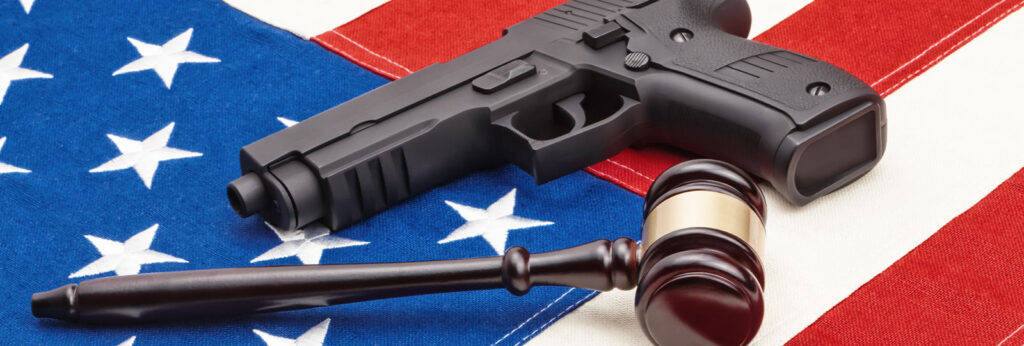
Federal gun charges in Tampa, FL can turn an already serious criminal case into one carrying mandatory prison time, consecutive sentences, firearm forfeiture, and lasting restrictions on your rights. These cases are commonly investigated by the Bureau of Alcohol, Tobacco, Firearms and Explosives (ATF) and prosecuted by the U.S. Attorney’s Office, often alongside federal drug trafficking, conspiracy, robbery, or violent crime allegations.
You can face a federal gun charge without ever pulling a trigger. The government may focus instead on where the firearm was found, who could control it, how it was purchased, whether registration rules were followed, or what was written on a purchase form. Once attached to another case in Tampa, FL, a firearm count can become the part that drives the sentence.
Cases Handled
Over 10,000
Jail Days Saved
Over 1 Million
Google Reviews
500+ Perfect
Legal Experience
100+ Years
Combs Waterkotte represents clients in Tampa, FL when a federal firearm investigation puts their freedom and future on the line. Our federal criminal defense attorneys serving Tampa, FL dig into the government’s theory from every angle, including where the gun was found, who allegedly controlled it, how officers obtained the evidence, and whether the weapon had any real connection to another offense.
Maybe agents have already searched your property. Maybe someone close to you has been questioned. Maybe a target letter just landed in your hands. Whatever tipped you off, do not ignore it. Reach out to Combs Waterkotte or call (314) 900-HELP before speaking with investigators or making a move that cannot be undone.
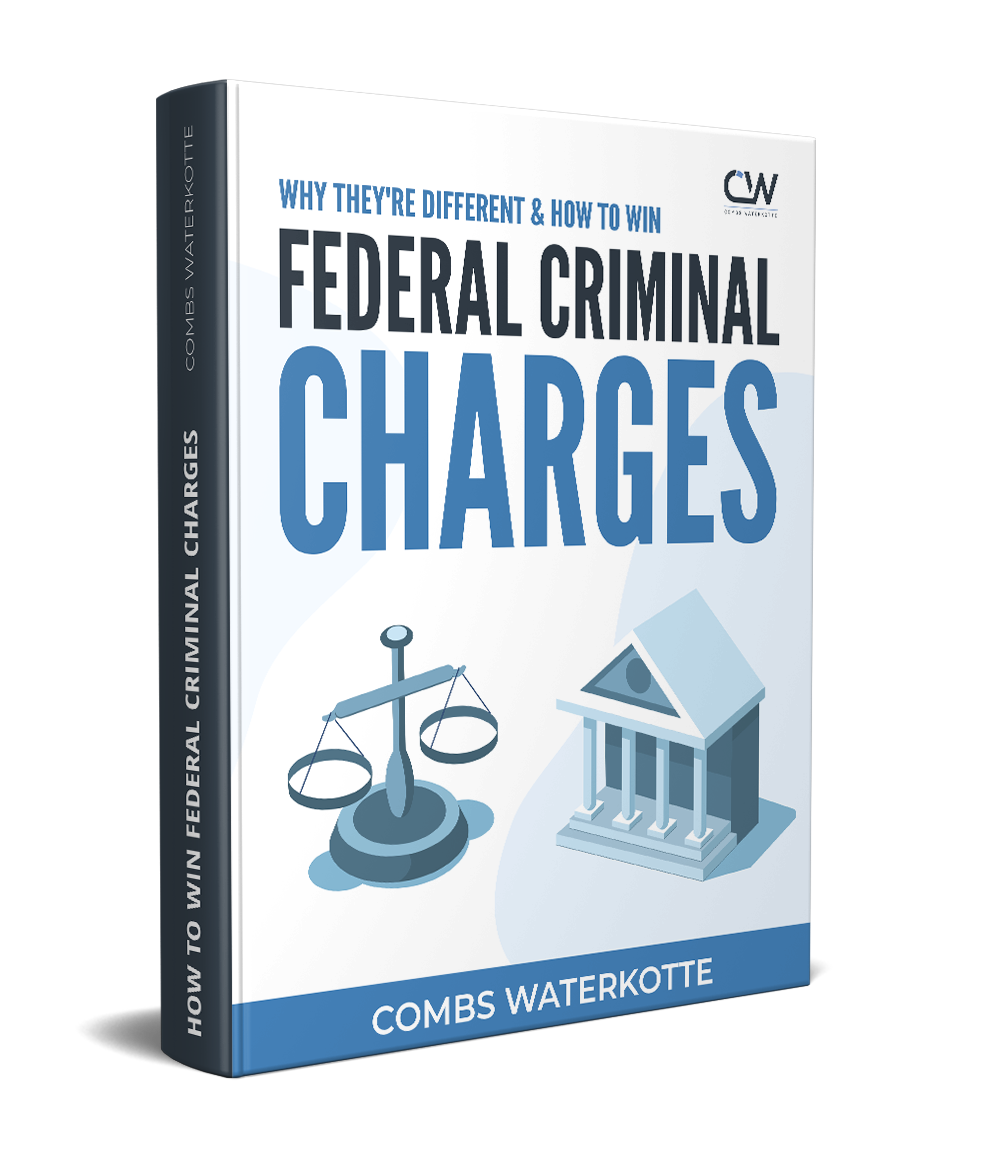
Free book
Facing Federal Criminal Charges? Why They’re Different and How to Win
Combs Waterkotte, a leading federal criminal defense law firm, has handled over 10,000 cases successfully. This ebook guides you through the federal criminal defense process, how federal charges are different, and how to win.
This guide addresses:
- Why some gun cases are prosecuted federally instead of by the state
- How to respond if agents, subpoenas, or a target letter signal an investigation
- Possession, trafficking, straw purchase, NFA, and related firearm offenses
- The penalties that can be added to another federal sentence
- How prior convictions can trigger ACCA exposure
- When to bring in a federal firearm defense attorney
Legal Videos
Can Federal Charges Be Reduced Or Dismissed?
Can Federal Charges Be Reduced Or Dismissed? Chris Combs and Andrew Russek, lawyers with Combs Waterkotte, a leading federal criminal defense firm, talk about proffers, probation, and federal …
Should I Hire A Lawyer Experienced In Federal Defense?
Should I Hire A Lawyer Experienced In Federal Defense? Chris Combs and Andrew Russek from the leading federal criminal defense firm Combs Waterkotte discuss the importance of hiring a lawyer with …
What Penalties Apply To Federal Sex Crime Convictions?
What Penalties Apply To Federal Sex Crime Convictions? Andrew Russek and Chris Combs from Combs Waterkotte federal criminal defense firm discuss potential penalties related to federal sex crime …
Do Federal Sex Crimes Require Sex Offender Registration?
Do Federal Sex Crimes Require Sex Offender Registration? Andrew Russek, a lawyer with leading federal criminal defense firm Combs Waterkotte, discusses the sex offender registry and federal sex …
What Makes A Sex Crime Federal Rather Than State?
What Makes A Sex Crime Federal Rather Than State? Andrew Russek and Chris Combs of Combs Waterkotte discuss factors that play into a sex crime being classified as federal, rather than …
What Are Federal Sex Crime Charges?
What Are Federal Sex Crime Charges? Chris Combs and Andrew Russek of Combs Waterkotte discuss the most common federal sex crime charges. Interview Transcript Scott Michael Dunn: Well, let's …
Can Federal Charges Be Reduced Or Dismissed?
Can Federal Charges Be Reduced Or Dismissed? Chris Combs and Andrew Russek, lawyers with Combs Waterkotte, a leading federal criminal defense firm, talk about proffers, probation, and federal …
Should I Hire A Lawyer Experienced In Federal Defense?
Should I Hire A Lawyer Experienced In Federal Defense? Chris Combs and Andrew Russek from the leading federal criminal defense firm Combs Waterkotte discuss the importance of hiring a lawyer with …
What Penalties Apply To Federal Sex Crime Convictions?
What Penalties Apply To Federal Sex Crime Convictions? Andrew Russek and Chris Combs from Combs Waterkotte federal criminal defense firm discuss potential penalties related to federal sex crime …
Do Federal Sex Crimes Require Sex Offender Registration?
Do Federal Sex Crimes Require Sex Offender Registration? Andrew Russek, a lawyer with leading federal criminal defense firm Combs Waterkotte, discusses the sex offender registry and federal sex …
What Makes A Sex Crime Federal Rather Than State?
What Makes A Sex Crime Federal Rather Than State? Andrew Russek and Chris Combs of Combs Waterkotte discuss factors that play into a sex crime being classified as federal, rather than …
What Are Federal Sex Crime Charges?
What Are Federal Sex Crime Charges? Chris Combs and Andrew Russek of Combs Waterkotte discuss the most common federal sex crime charges. Interview Transcript Scott Michael Dunn: Well, let's …
How Federal Jurisdiction Applies to Gun Cases
Not every federal gun case begins with federal agents at the door. Many start as ordinary state arrests before a task force or U.S. Attorney’s Office steps in. That can happen when the alleged conduct fits a federal offense under the Gun Control Act, the National Firearms Act, or another federal firearms law. Once that happens, the case moves onto a very different playing field.
A gun case may draw federal attention when:
- The government claims the firearm crossed state or national boundaries
- The accused allegedly could not lawfully possess a firearm
- The gun was found during a drug, robbery, conspiracy, or violent crime investigation
- The case involves suspected trafficking, unlicensed sales, straw purchasing, or smuggling
- The weapon is a machine gun, silencer, short-barreled rifle, short-barreled shotgun, or destructive device
- Identifying marks or serial numbers were allegedly removed or changed
- The alleged offense took place within federal jurisdiction
- Federal agents connect the firearm to a larger criminal operation
These investigations often run quietly in the background. By the time agents knock, call, or execute a warrant, they may have spent months reviewing phones, social media accounts, purchase records, surveillance, witness statements, and forensic testing.
What Should You Do If You’re Under Investigation for a Federal Gun Crime in Tampa, FL?
You may need a lawyer long before formal charges appear. Once ATF agents begin asking questions or executing warrants, the investigation may already be well underway. This is not the moment to improvise, explain, or hope the problem disappears on its own.
If federal agents may be building a gun case against you:
- Stop talking and call a federal firearms lawyer in Tampa, FL. You are not required to answer questions simply because an agent sounds friendly or says the conversation is informal. Your right to remain silent exists before an arrest, not just after one.
- Do not expand the search for them. If agents present a warrant, remain calm and do not obstruct them. However, you do not have to volunteer access to additional rooms, devices, vehicles, accounts, or property that the warrant does not cover.
- Save everything. Preserve purchase paperwork, receipts, messages, photographs, transfer records, emails, and anything else that may provide context. Deleting material can create a separate problem and may be portrayed as obstruction.
- Keep the case off the group chat. Do not post online, compare stories with witnesses, or discuss details over calls and text messages. The government may later obtain those communications.
- Bring in counsel early. A federal criminal defense attorney in Tampa, FL can deal directly with investigators, assess your exposure, and help prevent avoidable damage before charges are filed.
Common Federal Gun Charges in Tampa, FL
Possession of a Firearm by a Prohibited Person
A person may face a federal gun charge based on their legal status rather than how the firearm was allegedly used. Under 18 U.S.C. § 922(g), firearm and ammunition possession is prohibited for several categories of restricted persons.
People who may fall under § 922(g) include:
- People convicted of crimes punishable by more than one year in prison
- Fugitives from justice
- Unlawful users of controlled substances
- Certain people subject to domestic violence restraining orders
- People convicted of qualifying domestic violence offenses
- Certain noncitizens and people dishonorably discharged from the military
Prosecutors generally must establish that the accused knowingly possessed the firearm or ammunition and knew of the status that made possession unlawful.
A gun does not necessarily have to be found in someone’s hand or clothing. Prosecutors may allege:
- Physical possession: The firearm was allegedly recovered directly from the accused.
- Constructive possession: The government argues that the accused exercised dominion or control over the firearm even though someone else may have been closer to it.
A gun found under the same roof is not automatically possessed by everyone inside. When several people use the home, vehicle, room, or container where the weapon was recovered, the government’s control-and-knowledge theory may be open to challenge.
Firearm Charges Connected to Drug Trafficking or Violent Crime
18 U.S.C. § 924(c) makes it a separate federal offense to use or carry a firearm during and in relation to a qualifying crime of violence or drug trafficking crime, or to possess one in furtherance of such a crime.
Because these penalties are typically consecutive, the firearm count can add the following time after the sentence for the underlying crime:
- At least five years for possessing, using, or carrying a firearm
- At least seven years if the firearm was brandished
- At least 10 years if the firearm was discharged
- Higher minimums when machine guns, silencers, or destructive devices are involved
The firearm does not have to be fired. Prosecutors may argue that a gun advanced or protected the alleged crime because it was found near:
- Illegal drugs
- Cash
- Packaging materials
- Distribution records
- Other alleged evidence of trafficking
A gun near drugs is not automatically a gun possessed “in furtherance” of trafficking. The defense may dispute knowledge, accessibility, ownership, proximity, and whether the firearm had any meaningful relationship to the alleged crime.
False Actual-Buyer Allegations
The government may call a transaction a straw purchase when it believes the person at the counter was not the firearm’s true purchaser. What looked like a simple favor, gift, or shared shopping trip may be scrutinized through purchase records, ATF Form 4473, and the federal straw purchasing statute.
Questions that may determine whether the transaction was lawful include:
- Whose money funded the transaction
- Who chose the specific gun
- What the purchaser intended when completing the sale
- Whether the weapon was bought as a legitimate gift
- Whether the buyer knew the recipient could not lawfully possess it
Agents may build the case from messages, bank or payment-app records, dealer paperwork, surveillance video, and whatever the purchaser or recipient said during interviews.
Transporting or Transferring Firearms Unlawfully
A gun sale does not need to happen in a back alley to draw a federal trafficking charge. Section 933 applies to certain firearm transfers, receipts, and transportation when the accused knew or had reason to believe the weapons would end up in illegal hands.
Firearms trafficking allegations may involve weapons that were:
- Supplying guns to prohibited recipients
- Moving firearms across state lines as part of a broader operation
- Providing weapons for alleged drug trafficking or violent conduct
- Using several purchasers to avoid detection
- Operating what prosecutors view as an unlicensed resale business
- Sending firearms outside the United States unlawfully
Unlicensed Firearms Dealing
Federal law generally requires a person who is engaged in the business of dealing firearms to obtain a federal firearms license. An occasional private sale does not automatically make someone a firearms dealer.
Prosecutors may examine:
- The volume and regularity of transactions
- How long the accused kept each firearm before selling it
- Whether buyers were solicited through websites, forums, or personal networks
- Cash, electronic payments, and customer conversations
- Whether the sales produced or were intended to produce profit
- Evidence of inventory, repeat customers, or ongoing operations
False Statements During a Firearm Purchase
A mistake on firearm paperwork is not necessarily a federal crime. Under 18 U.S.C. § 922(a)(6), the government must generally show that the accused knowingly provided false information about something that mattered to the dealer’s decision.
Federal investigators may focus on statements about:
- The identity of the actual purchaser
- A prior criminal conviction
- Controlled substance use
- A domestic violence conviction or restraining order
- Immigration or citizenship status
- Residence or identification information
A discrepancy is not the end of the story. Defense counsel may argue that the accused misunderstood the question, relied on incorrect information, did not knowingly lie, or gave an answer that did not affect whether the firearm could be sold.
Possession of a Firearm With an Altered or Obliterated Serial Number
Federal law restricts the knowing possession, receipt, or transportation of certain firearms whose serial numbers have been changed, removed, or made unreadable. The relevant regulation appears at 27 CFR § 478.34.
Defense counsel may examine:
- How obvious the serial number damage was
- Whether the markings remained readable
- Whether forensic specialists can restore or identify the number
- Whose fingerprints, DNA, or other evidence connect the weapon to
An altered serial number may also increase the recommended sentence under the federal sentencing guidelines.
“Ghost Gun” Investigations
Building or assembling a gun for personal use does not, by itself, automatically make the firearm illegal. Federal problems involving a privately made firearm usually depend on the person involved, the weapon’s configuration, and what happened after it was made.
The government may try to build its case around:
- Possession by a prohibited person
- The number and type of firearms produced
- Messages or payments showing planned sales
- Whether the accused acted as an unlicensed manufacturer or dealer
- The absence of markings required under federal law
- The use or presence of the firearm during another alleged offense
Even where the firearm itself is not prohibited, the absence of a required serial number may increase the recommended guideline sentence.
Charges Involving Machine Guns, Silencers, and Short-Barreled Firearms
Certain firearms and devices are subject to stricter federal controls under the National Firearms Act. The law regulates their registration, manufacture, taxation, possession, and transfer.
NFA-regulated firearms include:
- Machine guns
- Short-barreled rifles
- Short-barreled shotguns
- Silencers and suppressors
- Destructive devices
- Certain weapons classified as “any other weapon”
Charges may involve possessing an unregistered weapon, illegally manufacturing or transferring one, or possessing a firearm with required identifying information removed. A conviction can carry up to 10 years in federal prison, fines, and forfeiture.
Potential Punishment for Federal Weapons Offenses in Tampa, FL
Two people charged with firearm offenses may face very different outcomes. Federal sentencing depends on what prosecutors can prove, which statute applies, whether the law requires consecutive time, the accused’s criminal history, and how the court calculates the advisory guideline range.
| Federal Gun Offense | Potential Prison Exposure |
|---|---|
| Unlawful firearm possession by a prohibited person under § 922(g) | Up to 15 years in many cases, with a 15-year mandatory floor when ACCA applies |
| A § 924(c) firearm charge tied to drug trafficking or a qualifying violent offense | Mandatory minimum of five years, seven years if brandished, or 10 years if discharged, generally served consecutively |
| Buying a firearm for another person under § 932 | Up to 15 years, or up to 25 years when the buyer knows or has reason to believe the firearm will be used to commit certain serious crimes |
| Unlawful transportation or transfer of firearms | Federal imprisonment for up to 15 years |
| Engaging in the business of firearm sales without federal licensing | Typically punishable by up to five years |
| False statements on firearm purchase paperwork | Up to 10 years in federal prison |
| Knowing possession of a gun with a removed or changed serial number | Up to five years in many cases, with further sentencing exposure through an enhancement |
| Federal charges involving silencers, short-barreled firearms, machine guns, or other NFA items | As much as 10 years of imprisonment along with fines and forfeiture |
| Unlawful possession, receipt, or transfer of a machine gun | A possible 10-year sentence on the machine gun charge alone, with more severe consequences if § 924(c) or another enhancement applies |
The final sentencing picture is assembled from several moving parts. The charge itself matters, but so do the quantity and characteristics of the firearms, the defendant’s record, any required minimum term, and the guideline calculations used in federal court.
Federal sentences may also include:
- Thousands of dollars or more in fines
- Years of supervised release after leaving prison
- Government forfeiture claims against firearms, ammunition, money, vehicles, and other assets
- A lasting ban on firearm possession
- Collateral damage to career prospects, housing access, and occupational licensing
- Potential immigration and residency consequences for anyone who is not a U.S. citizen
The number announced in court matters. Federal prisoners do not have access to conventional parole, and good-time reductions are limited, so the sentence served is usually close to the sentence ordered.
The Armed Career Criminal Act
The Armed Career Criminal Act, commonly called the ACCA, can transform a felon-in-possession case into one carrying a mandatory minimum sentence of 15 years.
The government generally must identify at least three qualifying prior convictions for violent felonies or serious drug offenses. It must also show that those offenses were committed on occasions separate from one another.
A conviction that sounds violent in ordinary conversation may still fail to qualify under federal law. These disputes often require a close reading of statutes, old court documents, and changing ACCA precedent.
Potential ACCA challenges include:
- Whether the earlier conviction legally qualifies as a violent felony or serious drug offense
- Whether the permitted court records prove the necessary version of the offense
- Whether the prior crimes were truly committed on separate occasions
- Whether any conviction was overturned, set aside, expunged, or invalidated
- Whether firearm rights or other civil rights were restored
Because the ACCA creates a mandatory minimum sentence, resolving even one disputed prior conviction can make an enormous difference.
Federal Guideline Enhancements for Gun Charges
Even when no statutory mandatory minimum applies, the United States Sentencing Guidelines may significantly increase the recommended sentencing range.
Federal prosecutors may seek sentencing increases based on allegations such as:
- Large numbers of firearms
- Stolen weapons
- Altered or obliterated serial numbers
- Trafficking-related conduct
- Machine guns, silencers, destructive devices, or similar regulated weapons
- Firearm possession connected to another felony
- Reckless endangerment while fleeing
- Acting as an organizer or leader
- Obstruction of justice allegations
Although the guidelines are no longer mandatory, federal judges are still required to calculate and consider them before imposing sentence. An experienced defense attorney may contest proposed enhancements, introduce favorable evidence, request departures or variances, and argue that a lower sentence better satisfies federal sentencing law.
When to Call a Federal Gun Defense Attorney
If ATF agents or federal prosecutors are looking at your case, early legal representation can matter. You do not have to wait until you are arrested, indicted, or standing in court before contacting an attorney.
You should take the situation seriously if:
- ATF, FBI, DEA, or task force agents attempt to question you
- Agents execute a search warrant at your home or business
- Someone close to you receives a subpoena
- Law enforcement seizes firearms, phones, computers, or records
- You receive a federal target letter
- A codefendant or alleged associate is arrested
- A state firearm case is dismissed or delayed without explanation
- You learn that federal prosecutors are reviewing your case
The earlier a defense attorney becomes involved, the more options may exist. Depending on the circumstances, counsel can handle communications with investigators, help avoid unnecessary interviews, identify constitutional issues, preserve evidence, assess the strength of the government’s case, and present mitigating information before prosecutors decide whether to seek an indictment.

Get Help With Federal Firearm Charges in Tampa, FL
Federal firearm cases move quickly and carry enormous consequences. Combs Waterkotte represents people in Tampa, FL and nationwide, drawing on the insight of former prosecutors who understand federal investigations, charging decisions, and courtroom strategy.
Every case is prepared with the possibility of trial in mind. We examine the government’s evidence piece by piece, challenge illegal searches, test the reliability of witnesses, and oppose sentencing enhancements that the facts or law do not support.
If a negotiated resolution serves your interests, we pursue it with leverage built through preparation. If the government will not offer a fair outcome, we are ready to litigate the case in court.
From investigating the government’s theory to preparing for appeal, our team is equipped for the full life of a federal firearm case. Clients benefit from decades of combined experience, dedicated investigative support, and a record of defending people facing life-changing criminal accusations.
Do not wait for the government to make the next move. If you are facing a federal firearm investigation or charge, contact us online or call (314) 900-HELP to discuss your case with an experienced Tampa, FL federal gun defense attorney.

