
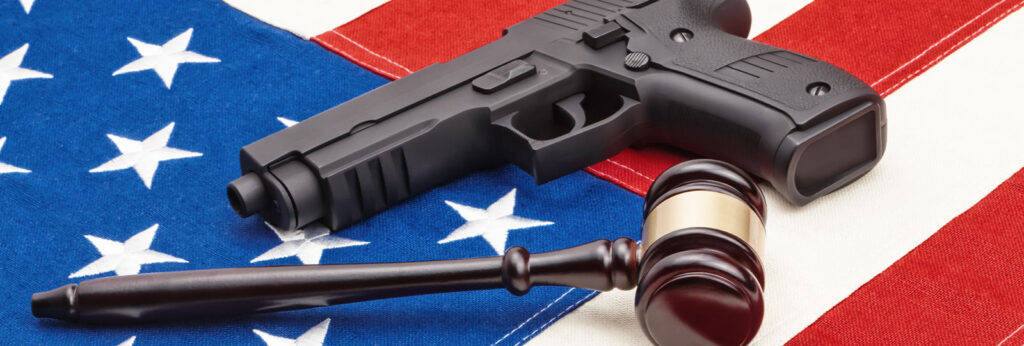
When federal prosecutors add a gun charge in Fresno, CA, the stakes can climb fast. A case that was already serious may suddenly carry mandatory incarceration, consecutive sentencing, property forfeiture, and permanent limits on firearm ownership. These prosecutions are often built by the ATF and the U.S. Attorney’s Office alongside allegations of federal drug crimes, conspiracy, robbery, or violent conduct.
You can face a federal gun charge without ever pulling a trigger. The government may focus instead on where the firearm was found, who could control it, how it was purchased, whether registration rules were followed, or what was written on a purchase form. Once attached to another case in Fresno, CA, a firearm count can become the part that drives the sentence.
Cases Handled
Over 10,000
Jail Days Saved
Over 1 Million
Google Reviews
500+ Perfect
Legal Experience
100+ Years
A federal gun case can be built on assumptions that deserve to be challenged. Combs Waterkotte defends clients in Fresno, CA and across the country, and our Fresno, CA federal defense lawyers investigate the search, the alleged possession, the firearm’s ownership, the surrounding circumstances, and every possible constitutional violation.
Federal cases often take shape quietly, long before charges appear on a docket. If you have been arrested, contacted by ATF, warned that you are under investigation, or received a target letter, call (314) 900-HELP or contact our firm online. The earlier the defense gets involved, the more room there may be to influence what comes next.
Free book
Facing Federal Criminal Charges? Why They’re Different and How to Win
Combs Waterkotte, a leading federal criminal defense law firm, has handled over 10,000 cases successfully. This ebook guides you through the federal criminal defense process, how federal charges are different, and how to win.
On this page, you will learn about:
- What gives the federal government authority over a firearm case
- What not to do when you learn you are under investigation
- Which federal gun charges prosecutors commonly file
- How consecutive sentences and enhancements can increase prison exposure
- Why the Armed Career Criminal Act can change the entire case
- How a federal gun charges lawyer can intervene
Legal Videos
Can Federal Charges Be Reduced Or Dismissed?
Can Federal Charges Be Reduced Or Dismissed? Chris Combs and Andrew Russek, lawyers with Combs Waterkotte, a leading federal criminal defense firm, talk about proffers, probation, and federal …
Should I Hire A Lawyer Experienced In Federal Defense?
Should I Hire A Lawyer Experienced In Federal Defense? Chris Combs and Andrew Russek from the leading federal criminal defense firm Combs Waterkotte discuss the importance of hiring a lawyer with …
What Penalties Apply To Federal Sex Crime Convictions?
What Penalties Apply To Federal Sex Crime Convictions? Andrew Russek and Chris Combs from Combs Waterkotte federal criminal defense firm discuss potential penalties related to federal sex crime …
Do Federal Sex Crimes Require Sex Offender Registration?
Do Federal Sex Crimes Require Sex Offender Registration? Andrew Russek, a lawyer with leading federal criminal defense firm Combs Waterkotte, discusses the sex offender registry and federal sex …
What Makes A Sex Crime Federal Rather Than State?
What Makes A Sex Crime Federal Rather Than State? Andrew Russek and Chris Combs of Combs Waterkotte discuss factors that play into a sex crime being classified as federal, rather than …
What Are Federal Sex Crime Charges?
What Are Federal Sex Crime Charges? Chris Combs and Andrew Russek of Combs Waterkotte discuss the most common federal sex crime charges. Interview Transcript Scott Michael Dunn: Well, let's …
Can Federal Charges Be Reduced Or Dismissed?
Can Federal Charges Be Reduced Or Dismissed? Chris Combs and Andrew Russek, lawyers with Combs Waterkotte, a leading federal criminal defense firm, talk about proffers, probation, and federal …
Should I Hire A Lawyer Experienced In Federal Defense?
Should I Hire A Lawyer Experienced In Federal Defense? Chris Combs and Andrew Russek from the leading federal criminal defense firm Combs Waterkotte discuss the importance of hiring a lawyer with …
What Penalties Apply To Federal Sex Crime Convictions?
What Penalties Apply To Federal Sex Crime Convictions? Andrew Russek and Chris Combs from Combs Waterkotte federal criminal defense firm discuss potential penalties related to federal sex crime …
Do Federal Sex Crimes Require Sex Offender Registration?
Do Federal Sex Crimes Require Sex Offender Registration? Andrew Russek, a lawyer with leading federal criminal defense firm Combs Waterkotte, discusses the sex offender registry and federal sex …
What Makes A Sex Crime Federal Rather Than State?
What Makes A Sex Crime Federal Rather Than State? Andrew Russek and Chris Combs of Combs Waterkotte discuss factors that play into a sex crime being classified as federal, rather than …
What Are Federal Sex Crime Charges?
What Are Federal Sex Crime Charges? Chris Combs and Andrew Russek of Combs Waterkotte discuss the most common federal sex crime charges. Interview Transcript Scott Michael Dunn: Well, let's …
How Federal Jurisdiction Applies to Gun Cases
A firearm arrest may start with local police, but that does not mean it will stay in state court. Federal prosecutors can take over when the allegations fall under the Gun Control Act, the National Firearms Act, or another federal criminal law. In some cases, state authorities hand the matter over because federal charges offer prosecutors a tougher sentencing path.
Federal prosecutors may become involved if:
- A firearm traveled through interstate or foreign commerce
- The accused is legally prohibited from possessing firearms or ammunition
- A firearm was allegedly used during a drug trafficking crime or crime of violence
- The case involves firearm trafficking, smuggling, straw purchasing, or unlicensed dealing
- The weapon is a machine gun, silencer, short-barreled rifle, short-barreled shotgun, or destructive device
- The firearm had an altered or removed serial number
- The alleged conduct occurred on federal property or involved a federal investigation
- Federal agents believe the firearm is connected to organized criminal activity
The first sign of trouble may come late in the investigation. Agents may already have traced the gun, interviewed witnesses, reviewed online activity, pulled phone data, and gathered physical evidence before the accused knows federal prosecutors are involved.
What to Do During a Federal Firearms Investigation in Fresno, CA
An arrest is not the starting line of a federal gun case. ATF agents may already have reviewed records, interviewed witnesses, traced firearms, and gathered digital evidence before they ever contact you. The decisions you make at that point can either protect your position or hand the government more ammunition.
If you believe you are under investigation for a federal firearm offense:
- Stop talking and call a federal firearms lawyer in Fresno, CA. You are not required to answer questions simply because an agent sounds friendly or says the conversation is informal. Your right to remain silent exists before an arrest, not just after one.
- Do not expand the search for them. If agents present a warrant, remain calm and do not obstruct them. However, you do not have to volunteer access to additional rooms, devices, vehicles, accounts, or property that the warrant does not cover.
- Save everything. Preserve purchase paperwork, receipts, messages, photographs, transfer records, emails, and anything else that may provide context. Deleting material can create a separate problem and may be portrayed as obstruction.
- Keep the case off the group chat. Do not post online, compare stories with witnesses, or discuss details over calls and text messages. The government may later obtain those communications.
- Bring in counsel early. A federal criminal defense attorney in Fresno, CA can deal directly with investigators, assess your exposure, and help prevent avoidable damage before charges are filed.
Federal Firearm Offenses Charged in Fresno, CA
Unlawful Firearm Possession Under 18 U.S.C. § 922(g)
Under 18 U.S.C. § 922(g), several categories of people are prohibited from possessing firearms or ammunition.
Prohibited persons may include:
- Individuals with certain felony or felony-level convictions
- People accused of fleeing to avoid prosecution
- People considered unlawful users of illegal drugs or other controlled substances
- Individuals covered by certain domestic protection orders
- People convicted of qualifying misdemeanor domestic violence crimes
- Some noncitizens and former service members who received dishonorable discharges
The prosecution must generally connect two pieces of the puzzle: the accused knowingly possessed the gun or ammunition, and they knew about the legal status that made that possession prohibited.
Federal firearm possession is commonly divided into two categories:
- Actual possession: The accused allegedly carried the firearm or had it physically on their body.
- Constructive possession: The accused allegedly knew where the gun was and had both the power and intent to exercise control over it.
A gun found under the same roof is not automatically possessed by everyone inside. When several people use the home, vehicle, room, or container where the weapon was recovered, the government’s control-and-knowledge theory may be open to challenge.
Using, Carrying, or Possessing a Gun Under 18 U.S.C. § 924(c)
Under 18 U.S.C. § 924(c), the government may pursue an additional charge when a firearm was allegedly used or carried in relation to a drug trafficking crime or crime of violence, or possessed in furtherance of one.
The statute carries mandatory minimum prison terms that generally run back-to-back with the sentence imposed for the related offense:
- At least five years for possessing, using, or carrying a firearm
- At least seven years if the firearm was brandished
- At least 10 years if the firearm was discharged
- Higher minimums when machine guns, silencers, or destructive devices are involved
The prosecution may describe a firearm as a tool of the alleged offense even when it stayed hidden or untouched. That argument commonly relies on its location near:
- Controlled substances
- Large amounts of currency
- Baggies, scales, or packaging supplies
- Ledgers, customer lists, or distribution records
- Other items prosecutors associate with drug sales
The key fight may be over the connection between the person, the firearm, and the underlying offense. Defense counsel can challenge whether the accused knew the gun was there, had the ability to reach or control it, or possessed it to advance any criminal activity.
Straw Purchasing a Firearm
A lawful-looking retail purchase can become a federal case when agents believe the named buyer was only standing in for another person. These straw purchase investigations often center on what the buyer intended and what they reported on Form 4473. Prosecutors may also rely on 18 U.S.C. § 932.
The government and defense may focus on:
- Payment apps, cash withdrawals, or reimbursements
- Who researched, requested, or picked out the firearm
- The buyer’s plan before entering the store
- Whether the gun was genuinely purchased as a gift
- Whether the eventual recipient was prohibited or intended to use the firearm unlawfully
Agents may build the case from messages, bank or payment-app records, dealer paperwork, surveillance video, and whatever the purchaser or recipient said during interviews.
Transporting or Transferring Firearms Unlawfully
18 U.S.C. § 933 prohibits certain transfers, transportation, or receipt of firearms when the accused knows or has reasonable cause to believe the firearm will be used, possessed, or transferred unlawfully.
Conduct that may lead to a federal trafficking charge includes firearms being:
- Purchased using another person’s name or eligibility
- Moved from a state with looser availability into another jurisdiction
- Sold to alleged gang members, traffickers, or violent offenders
- Acquired through coordinated straw purchase schemes
- Bought and flipped without a required dealer’s license
- Concealed or transported for unlawful export
When Private Gun Sales Become Federal Charges
Federal law generally requires a person who is engaged in the business of dealing firearms to obtain a federal firearms license. An occasional private sale does not automatically make someone a firearms dealer.
There is no single fact that settles the issue. Investigators may review:
- How many firearms were sold and how often sales occurred
- Whether guns were purchased and quickly resold
- Online listings, advertisements, or social media offers
- Messages with prospective buyers and records of payment
- Whether the person expected to earn money from the transactions
- Whether firearms were kept on hand for future customers
Lying on a Federal Firearm Purchase Form
Federal prosecutors may charge a person for allegedly lying to a licensed firearms dealer about a fact that could affect the transaction. Section 922(a)(6) generally requires proof that the statement was knowingly false and material to the legality of the purchase.
Examples of information prosecutors may claim was falsified include:
- Whether the person completing the form was the real buyer
- The existence or nature of a prior conviction
- Illegal drug use or controlled-substance status
- A qualifying domestic violence case or protection order
- Citizenship, immigration, or residency status
- The buyer’s address, identity, or supporting documents
The defense may challenge whether the answer was actually false, whether the accused knowingly provided incorrect information, and whether the statement affected the legality of the transaction.
Defaced or Obliterated Firearm Serial Numbers
Under 27 CFR § 478.34, federal law prohibits knowingly transporting, receiving, or possessing certain firearms with serial numbers that have been removed, altered, or obliterated.
The case may depend on questions such as:
- Whether the alteration was visible or known to the accused
- Whether the serial number was legally “removed, obliterated, or altered”
- What laboratory testing reveals about the original markings
- Whether prosecutors can prove knowing possession of that specific gun
Even when it is not charged as a separate count, a defaced serial number may be used to push the recommended federal sentence higher.
“Ghost Gun” Investigations
Not every homemade firearm violates federal law. The legal trouble often comes from who possessed it, whether it was made or sold as part of a business, whether required markings were present, or whether the gun was tied to separate criminal conduct.
A privately made firearm case may turn on:
- The accused person’s legal ability to possess guns
- Whether the firearm was assembled lawfully
- Any later sale, transfer, or distribution
- Evidence of commercial manufacturing or dealing
- Missing, incomplete, or altered identifying marks
- An alleged connection to trafficking, drugs, or violent crime
Sentencing enhancements may also apply in some cases involving firearms without required serial numbers.
Federal National Firearms Act Charges
A firearm that is lawful in one configuration can fall under much stricter rules after certain modifications. The National Firearms Act governs several categories of weapons and devices through registration, taxation, transfer, and manufacturing requirements.
Weapons and devices commonly regulated by the NFA include:
- Machine guns
- Shortened rifles
- Shortened shotguns
- Suppressors, including devices commonly called silencers
- Certain bombs, explosives, and destructive devices
- Unusual or concealed weapons classified as “any other weapon”
The issue may be registration, how the weapon was built, how it changed hands, or whether identifying marks were removed. These are felony-level allegations, and a conviction may carry up to 10 years of imprisonment along with fines and loss of the weapon.
Penalties for Federal Gun Charges in Fresno, CA
There is no universal sentence for a federal gun conviction. Prison exposure can change based on the charge, the firearm involved, prior convictions, any connection to another alleged crime, and the calculation required by the federal sentencing guidelines.
| Type of Federal Firearm Case | Potential Prison Exposure |
|---|---|
| Possession by a prohibited person under 18 U.S.C. § 922(g) | Up to 15 years in many cases, with a 15-year mandatory floor when ACCA applies |
| Using, carrying, or possessing a gun in furtherance of another federal crime | A consecutive mandatory term beginning at five years and increasing based on how the firearm was allegedly used |
| Federal straw purchase allegations | Up to 15 years, or up to 25 years when the buyer knows or has reason to believe the firearm will be used to commit certain serious crimes |
| Firearms trafficking under 18 U.S.C. § 933 | A possible sentence of as much as 15 years |
| Dealing firearms without a required federal license | Generally up to five years in federal prison |
| False statements on firearm purchase paperwork | A maximum sentence of 10 years |
| Possessing a firearm with an altered or obliterated serial number under § 922(k) | Up to five years in many cases, with further sentencing exposure through an enhancement |
| Illegal possession, manufacture, or transfer of an NFA-regulated firearm | A possible 10-year prison term, financial penalties, and loss of the weapon |
| Possessing or transferring a prohibited automatic weapon | Up to a decade in many cases, before accounting for mandatory consecutive time or other charges tied to the weapon |
The final sentencing picture is assembled from several moving parts. The charge itself matters, but so do the quantity and characteristics of the firearms, the defendant’s record, any required minimum term, and the guideline calculations used in federal court.
Prison is only one possible consequence of a federal firearm conviction. A sentence may also involve:
- Thousands of dollars or more in fines
- Years of supervised release after leaving prison
- Government forfeiture claims against firearms, ammunition, money, vehicles, and other assets
- A lasting ban on firearm possession
- Collateral damage to career prospects, housing access, and occupational licensing
- Potential immigration and residency consequences for anyone who is not a U.S. citizen
A federal sentence is not typically cut short through parole. Although some prisoners can earn good-conduct credit, federal incarceration generally means serving the great majority of the term imposed.
How the Armed Career Criminal Act Can Increase a Gun Sentence
The Armed Career Criminal Act, commonly called the ACCA, can transform a felon-in-possession case into one carrying a mandatory minimum sentence of 15 years.
A § 922(g) defendant may face the enhancement when their record includes three prior offenses that satisfy ACCA’s federal definitions and were not all part of the same criminal occasion.
Prior convictions do not count merely because prosecutors call them violent or serious. Courts may need to dissect the elements of the earlier statute, examine a limited set of judicial records, and apply federal appellate and Supreme Court decisions that continue to shape ACCA law.
Potential ACCA challenges include:
- Whether the earlier conviction legally qualifies as a violent felony or serious drug offense
- Whether the permitted court records prove the necessary version of the offense
- Whether the prior crimes were truly committed on separate occasions
- Whether any conviction was overturned, set aside, expunged, or invalidated
- Whether firearm rights or other civil rights were restored
An ACCA case can hinge on a single prior offense. If one conviction does not qualify, the mandatory minimum may no longer apply, potentially removing years from the defendant’s exposure.
Federal Firearm Sentencing Guideline Enhancements
The sentence in a federal firearm case is influenced by more than the statute itself. Even when the law does not require a mandatory minimum prison term, guideline enhancements may substantially increase the advisory sentencing range.
Guideline enhancements may be tied to claims involving:
- The quantity of firearms involved
- Whether any firearm was stolen
- Defaced or missing identifying markings
- Transfers to prohibited persons or alleged trafficking schemes
- Possession of specially regulated NFA firearms or devices
- A connection between the firearm and separate felony conduct
- Reckless behavior during an attempted escape
- An alleged leadership or supervisory role
- Conduct the government claims obstructed the investigation or prosecution
The sentencing guidelines are advisory, but federal judges must calculate and consider them. Defense counsel can challenge enhancements, present mitigating evidence, seek departures or variances, and argue that the recommended range is greater than necessary.
When to Call a Federal Gun Defense Attorney
If ATF agents or federal prosecutors are looking at your case, early legal representation can matter. You do not have to wait until you are arrested, indicted, or standing in court before contacting an attorney.
Warning signs include:
- ATF, FBI, DEA, or another federal agency contacts you
- Agents arrive with a federal search warrant
- A subpoena is issued to someone connected to you
- Firearms, computers, phones, or business records are confiscated
- A federal target letter arrives
- An alleged accomplice or codefendant is taken into custody
- A state prosecution unexpectedly pauses or is dismissed
- You discover federal prosecutors have become involved
Getting a lawyer involved early may allow your attorney to deal directly with investigators, advise you before questioning occurs, preserve favorable evidence, evaluate search issues, assess your potential exposure, and advocate with prosecutors before formal charges are filed.
Get Help With Federal Firearm Charges in Fresno, CA
Combs Waterkotte represents Fresno, CA clients in complex federal criminal cases across the United States. Our attorneys include former prosecutors who understand how federal cases are investigated, charged, and tried.
Our defense begins with a hard look at how the case was built. That may mean attacking an unlawful search, exposing weaknesses in witness testimony, disputing possession, and fighting guideline enhancements that could add years to the sentence.
Some cases should be resolved through negotiation. Others demand a courtroom fight. We prepare for both, so every decision is based on strategy rather than pressure.
From investigating the government’s theory to preparing for appeal, our team is equipped for the full life of a federal firearm case. Clients benefit from decades of combined experience, dedicated investigative support, and a record of defending people facing life-changing criminal accusations.
If federal agents are investigating you or charges have already been filed, now is the time to protect yourself. Contact Combs Waterkotte online or call (314) 900-HELP to speak with an experienced federal gun charges attorney serving Fresno, CA.

