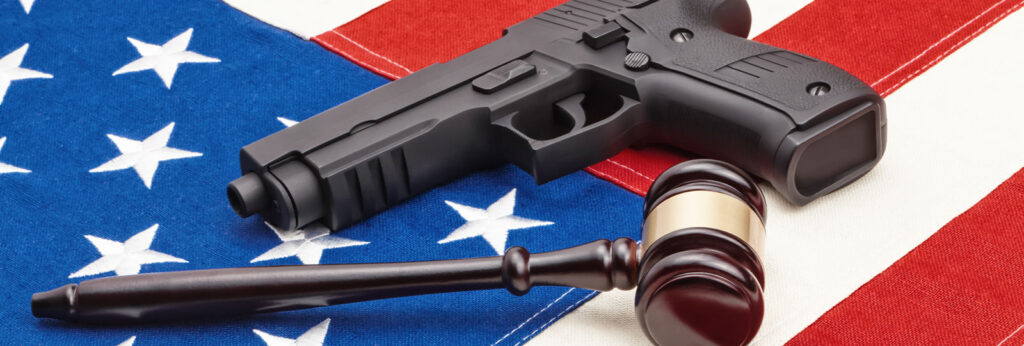
Federal gun prosecutions in Charlotte, NC can bring a second wave of exposure to an existing criminal case. Beyond the underlying accusation, you may face additional prison time, sentences that must run back-to-back, seizure of firearms, and restrictions that follow you for years. The ATF and federal prosecutors often use firearm charges to strengthen cases involving drug trafficking, conspiracy, robbery, and violent offenses.
The government does not necessarily need evidence that you used a gun. Possessing a firearm, having access to one, buying one for someone else, providing false information during a purchase, or possessing certain unregistered weapons may be enough to support federal charges. A firearm allegation in Charlotte, NC can also add years or decades to the sentence imposed for another offense.
Cases Handled
Over 10,000
Jail Days Saved
Over 1 Million
Google Reviews
500+ Perfect
Legal Experience
100+ Years
When federal agents and prosecutors set their sights on someone in Charlotte, NC, Combs Waterkotte is prepared to push back. Our federal criminal defense team serving Charlotte, NC looks beyond the fact that a gun was found and asks the questions that can change a case: Who knew it was there? Who could control it? Was the search lawful? Can the government actually connect it to the alleged crime?
If you have been arrested, received a target letter, learned that ATF agents are investigating you, or believe federal charges may be coming, contact us online or call (314) 900-HELP immediately. What happens before an indictment can shape the entire case.
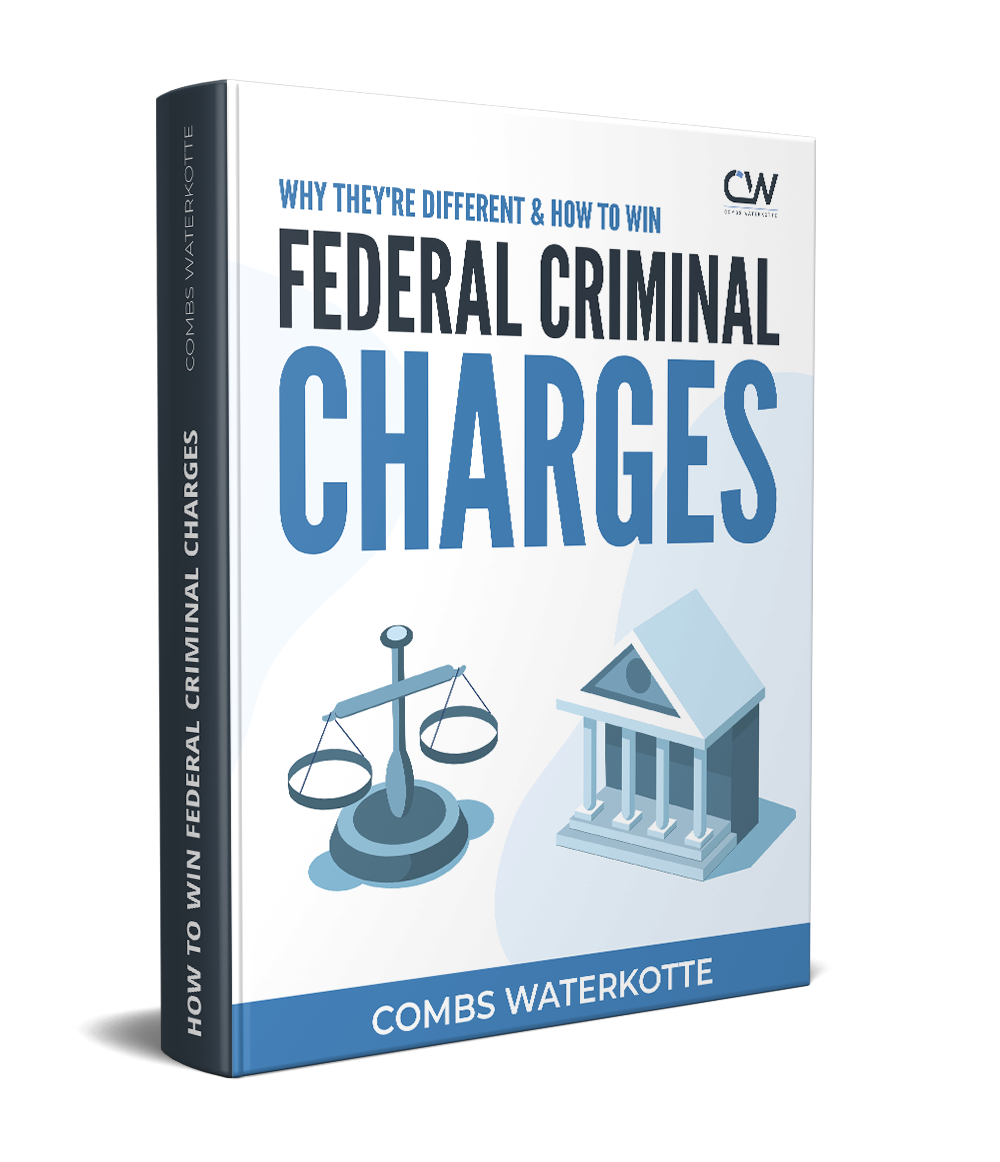
Free book
Facing Federal Criminal Charges? Why They’re Different and How to Win
Combs Waterkotte, a leading federal criminal defense law firm, has handled over 10,000 cases successfully. This ebook guides you through the federal criminal defense process, how federal charges are different, and how to win.
This guide addresses:
- What makes a gun charge a federal offense
- What to do if you’re under federal investigation
- Common federal firearm charges
- Mandatory minimums and sentencing enhancements
- The Armed Career Criminal Act
- When to hire a federal gun charges lawyer
Legal Videos
Can Federal Charges Be Reduced Or Dismissed?
Can Federal Charges Be Reduced Or Dismissed? Chris Combs and Andrew Russek, lawyers with Combs Waterkotte, a leading federal criminal defense firm, talk about proffers, probation, and federal …
Should I Hire A Lawyer Experienced In Federal Defense?
Should I Hire A Lawyer Experienced In Federal Defense? Chris Combs and Andrew Russek from the leading federal criminal defense firm Combs Waterkotte discuss the importance of hiring a lawyer with …
What Penalties Apply To Federal Sex Crime Convictions?
What Penalties Apply To Federal Sex Crime Convictions? Andrew Russek and Chris Combs from Combs Waterkotte federal criminal defense firm discuss potential penalties related to federal sex crime …
Do Federal Sex Crimes Require Sex Offender Registration?
Do Federal Sex Crimes Require Sex Offender Registration? Andrew Russek, a lawyer with leading federal criminal defense firm Combs Waterkotte, discusses the sex offender registry and federal sex …
What Makes A Sex Crime Federal Rather Than State?
What Makes A Sex Crime Federal Rather Than State? Andrew Russek and Chris Combs of Combs Waterkotte discuss factors that play into a sex crime being classified as federal, rather than …
What Are Federal Sex Crime Charges?
What Are Federal Sex Crime Charges? Chris Combs and Andrew Russek of Combs Waterkotte discuss the most common federal sex crime charges. Interview Transcript Scott Michael Dunn: Well, let's …
Can Federal Charges Be Reduced Or Dismissed?
Can Federal Charges Be Reduced Or Dismissed? Chris Combs and Andrew Russek, lawyers with Combs Waterkotte, a leading federal criminal defense firm, talk about proffers, probation, and federal …
Should I Hire A Lawyer Experienced In Federal Defense?
Should I Hire A Lawyer Experienced In Federal Defense? Chris Combs and Andrew Russek from the leading federal criminal defense firm Combs Waterkotte discuss the importance of hiring a lawyer with …
What Penalties Apply To Federal Sex Crime Convictions?
What Penalties Apply To Federal Sex Crime Convictions? Andrew Russek and Chris Combs from Combs Waterkotte federal criminal defense firm discuss potential penalties related to federal sex crime …
Do Federal Sex Crimes Require Sex Offender Registration?
Do Federal Sex Crimes Require Sex Offender Registration? Andrew Russek, a lawyer with leading federal criminal defense firm Combs Waterkotte, discusses the sex offender registry and federal sex …
What Makes A Sex Crime Federal Rather Than State?
What Makes A Sex Crime Federal Rather Than State? Andrew Russek and Chris Combs of Combs Waterkotte discuss factors that play into a sex crime being classified as federal, rather than …
What Are Federal Sex Crime Charges?
What Are Federal Sex Crime Charges? Chris Combs and Andrew Russek of Combs Waterkotte discuss the most common federal sex crime charges. Interview Transcript Scott Michael Dunn: Well, let's …
Why Are Some Gun Charges Prosecuted Federally?
A firearm arrest may start with local police, but that does not mean it will stay in state court. Federal prosecutors can take over when the allegations fall under the Gun Control Act, the National Firearms Act, or another federal criminal law. In some cases, state authorities hand the matter over because federal charges offer prosecutors a tougher sentencing path.
A gun case may draw federal attention when:
- A prohibited person allegedly possessed a gun or ammunition
- The weapon allegedly traveled in or affected interstate or foreign commerce
- The firearm was supposedly used, carried, or kept in connection with another federal crime
- The investigation concerns illegal sales, straw buyers, trafficking networks, or cross-border smuggling
- The gun falls into a specially regulated category under federal law
- Authorities discover a defaced or missing serial number
- The incident happened on federal property or during another federal investigation
- The government believes the weapon played a role in organized criminal activity
The first sign of trouble may come late in the investigation. Agents may already have traced the gun, interviewed witnesses, reviewed online activity, pulled phone data, and gathered physical evidence before the accused knows federal prosecutors are involved.
What to Do During a Federal Firearms Investigation in Charlotte, NC
Federal investigations usually develop quietly. If agents have reached out, searched your property, questioned someone close to you, or asked you to “clear a few things up,” assume the case is already moving. You should treat every conversation and decision as part of the defense.
Take the following steps as soon as you suspect a federal firearms investigation:
- Do not try to talk your way out of it. Federal agents are trained interviewers, and even an accurate answer can be taken out of context or compared against other evidence. Tell them you want a federal gun charges attorney in Charlotte, NC, then stop answering questions.
- Respect the warrant without surrendering extra ground. Never interfere with a lawful search, but do not sign consent forms or casually authorize agents to search beyond what the warrant permits.
- Preserve records that may tell your side of the story. That may include firearm receipts, transfer documents, text messages, emails, photos, location records, and communications with sellers or buyers.
- Do not contact witnesses or codefendants about the investigation. A message meant to “get everyone on the same page” can be interpreted as witness tampering or obstruction.
- Get legal representation before the government makes the next move. Early intervention may give your attorney time to investigate, preserve favorable evidence, communicate with prosecutors, and prepare for a search, arrest, or indictment.
Types of Federal Gun Charges in Charlotte, NC
Unlawful Firearm Possession Under 18 U.S.C. § 922(g)
Federal law does not limit unlawful-possession charges to people with felony convictions. 18 U.S.C. § 922(g) identifies several groups of people who may not legally possess a firearm or ammunition.
People who may fall under § 922(g) include:
- People convicted of crimes punishable by more than one year in prison
- Fugitives from justice
- Unlawful users of controlled substances
- Certain people subject to domestic violence restraining orders
- People convicted of qualifying domestic violence offenses
- Certain noncitizens and people dishonorably discharged from the military
These cases often turn on knowledge. Federal prosecutors generally must show that the defendant knowingly possessed the firearm or ammunition and was aware of the relevant status that placed them under the federal ban.
Federal firearm possession is commonly divided into two categories:
- Direct or actual possession: Agents or officers claim the weapon was in the person’s hand, pocket, waistband, bag, or immediate physical custody.
- Constructive possession: Prosecutors claim the person was not holding the gun but knew it was present and could control what happened to it.
Constructive possession is often disputed when a gun is found in a shared home, borrowed vehicle, hotel room, or another location used by several people.
Federal Gun Enhancements for Drug and Violent Offenses
A firearm allegation can become its own criminal count when it is tied to certain drug or violent offenses. Under 18 U.S.C. § 924(c), prosecutors may charge a person with using or carrying a gun during a qualifying offense or possessing one to advance that offense.
The mandatory minimum sentence generally must be served consecutively to the sentence for the underlying offense:
- Five years or more when a firearm was possessed, used, or carried
- Seven years or more when the weapon was allegedly displayed or brandished
- Ten years or more when the gun was fired
- Substantially greater exposure for specially regulated firearms and devices
A § 924(c) theory may rest entirely on where the gun was found. The government often argues that proximity to the following items shows the firearm was kept to further the alleged crime:
- Controlled substances
- Large amounts of currency
- Baggies, scales, or packaging supplies
- Ledgers, customer lists, or distribution records
- Other items prosecutors associate with drug sales
A gun near drugs is not automatically a gun possessed “in furtherance” of trafficking. The defense may dispute knowledge, accessibility, ownership, proximity, and whether the firearm had any meaningful relationship to the alleged crime.
Straw Purchasing a Firearm
The government may call a transaction a straw purchase when it believes the person at the counter was not the firearm’s true purchaser. What looked like a simple favor, gift, or shared shopping trip may be scrutinized through purchase records, ATF Form 4473, and the federal straw purchasing statute.
The government and defense may focus on:
- Payment apps, cash withdrawals, or reimbursements
- Who researched, requested, or picked out the firearm
- The buyer’s plan before entering the store
- Whether the gun was genuinely purchased as a gift
- Whether the eventual recipient was prohibited or intended to use the firearm unlawfully
The government will often try to reconstruct the transaction from beginning to end. That may involve reviewing texts, reimbursements, store footage, purchase documents, online messages, and statements made after the sale.
Transporting or Transferring Firearms Unlawfully
A gun sale does not need to happen in a back alley to draw a federal trafficking charge. Section 933 applies to certain firearm transfers, receipts, and transportation when the accused knew or had reason to believe the weapons would end up in illegal hands.
Firearms trafficking allegations may involve weapons that were:
- Purchased using another person’s name or eligibility
- Moved from a state with looser availability into another jurisdiction
- Sold to alleged gang members, traffickers, or violent offenders
- Acquired through coordinated straw purchase schemes
- Bought and flipped without a required dealer’s license
- Concealed or transported for unlawful export
When Private Gun Sales Become Federal Charges
The legal line between a private seller and an unlicensed firearms dealer depends on the surrounding facts. Federal law generally requires an FFL when someone is engaged in firearm sales as a business, but it does not convert every personal transfer into a federal crime.
Prosecutors may examine:
- The number and frequency of sales
- How quickly firearms were resold after purchase
- Whether the accused advertised firearms for sale
- Customer communications and payment records
- Whether transactions were intended to produce a profit
- Whether the accused maintained firearm inventory
False Statements During a Firearm Purchase
A knowingly false answer given during a firearm transaction can lead to federal charges under 18 U.S.C. § 922(a)(6) if the information mattered to whether the dealer could lawfully complete the sale.
Alleged false statements may involve:
- The identity of the actual purchaser
- A prior criminal conviction
- Controlled substance use
- A domestic violence conviction or restraining order
- Immigration or citizenship status
- Residence or identification information
The government must do more than point to an inaccurate box on a form. The defense may dispute whether the response was truly false, whether the accused understood it was wrong, or whether it made any legal difference to the sale.
Federal Charges Involving an Altered Firearm Serial Number
When agents recover a firearm with a filed-down, scratched-off, or otherwise changed serial number, they may add another federal charge. Federal regulations prohibit certain conduct involving those firearms when the accused knew of the alteration.
Defense counsel may examine:
- Whether the alteration was visible or known to the accused
- Whether the serial number was legally “removed, obliterated, or altered”
- What laboratory testing reveals about the original markings
- Whether prosecutors can prove knowing possession of that specific gun
The alleged alteration can affect more than guilt or innocence. It may also support an enhancement when the sentencing guidelines are calculated.
Homemade and Privately Assembled Firearms
Not every homemade firearm violates federal law. The legal trouble often comes from who possessed it, whether it was made or sold as part of a business, whether required markings were present, or whether the gun was tied to separate criminal conduct.
Federal agents may look at the entire life of the firearm, including:
- Who assembled and ultimately possessed it
- The parts, process, and configuration used to make it
- Whether it remained for personal use or was transferred to someone else
- Whether multiple weapons were built for sale
- Whether federal marking requirements applied
- Whether the firearm appeared in another criminal investigation
A privately made firearm can also affect sentencing if prosecutors claim it lacked markings required by federal law.
Charges Involving Machine Guns, Silencers, and Short-Barreled Firearms
A firearm that is lawful in one configuration can fall under much stricter rules after certain modifications. The National Firearms Act governs several categories of weapons and devices through registration, taxation, transfer, and manufacturing requirements.
The Act covers categories such as:
- Machine guns
- Short-barreled rifles
- Short-barreled shotguns
- Silencers and suppressors
- Destructive devices
- Certain weapons classified as “any other weapon”
The issue may be registration, how the weapon was built, how it changed hands, or whether identifying marks were removed. These are felony-level allegations, and a conviction may carry up to 10 years of imprisonment along with fines and loss of the weapon.
Penalties for Federal Gun Charges in Charlotte, NC
The statute provides only part of the sentencing picture. A person’s record, the characteristics of the weapon, the presence of drugs or violence, mandatory minimum laws, and the United States Sentencing Guidelines can all move the potential punishment higher or lower.
| Federal Gun Offense | Maximum or Mandatory Penalty |
|---|---|
| Possessing a gun or ammunition while federally prohibited | Generally up to 15 years in federal prison; qualifying Armed Career Criminal Act cases carry a mandatory minimum of 15 years |
| Using, carrying, or possessing a gun in furtherance of another federal crime | At least five years, increased to seven for brandishing or 10 for discharge; the sentence usually runs after the underlying sentence |
| Straw purchasing under 18 U.S.C. § 932 | Up to 15 years, or up to 25 years when the buyer knows or has reason to believe the firearm will be used to commit certain serious crimes |
| Federal gun trafficking under § 933 | Federal imprisonment for up to 15 years |
| Operating as an unlicensed firearms dealer | A possible federal sentence of as much as five years |
| Lying about material information during a federally regulated gun sale | A maximum sentence of 10 years |
| Knowing possession of a gun with a removed or changed serial number | Up to five years in many cases, with further sentencing exposure through an enhancement |
| Illegal possession, manufacture, or transfer of an NFA-regulated firearm | Potentially a decade in federal custody, plus monetary penalties and seizure of the firearm |
| Illegal machine gun possession or transfer | A possible 10-year sentence on the machine gun charge alone, with more severe consequences if § 924(c) or another enhancement applies |
A statutory maximum does not tell you exactly what sentence the court will impose. Federal judges also consider the offense conduct, firearm characteristics, criminal history, mandatory sentencing laws, and the advisory range produced by the United States Sentencing Guidelines.
Prison is only one possible consequence of a federal firearm conviction. A sentence may also involve:
- Thousands of dollars or more in fines
- Years of supervised release after leaving prison
- Government forfeiture claims against firearms, ammunition, money, vehicles, and other assets
- A lasting ban on firearm possession
- Collateral damage to career prospects, housing access, and occupational licensing
- Potential immigration and residency consequences for anyone who is not a U.S. citizen
A federal sentence is not typically cut short through parole. Although some prisoners can earn good-conduct credit, federal incarceration generally means serving the great majority of the term imposed.
How the Armed Career Criminal Act Can Increase a Gun Sentence
The Armed Career Criminal Act can turn an already serious prohibited-person case into one with a 15-year mandatory minimum. The law is often referred to by its initials, ACCA.
The enhancement may apply when a person convicted under 18 U.S.C. § 922(g) has three qualifying prior convictions for violent felonies, serious drug offenses, or both, committed on occasions different from one another.
ACCA litigation can become highly technical. The court may compare the wording of the prior state statute to the federal definition, review charging papers or plea records, and determine which version of the law controls. A state-law label is not necessarily the final word.
Potential ACCA challenges include:
- Whether the statute of conviction is broader than ACCA’s federal definition
- Whether the government can prove the specific subsection or elements involved
- The timing, location, and relationship between the alleged prior offenses
- Vacatur, expungement, pardon, or other relief affecting a conviction
- Any restoration of civil and firearm rights
Because the ACCA creates a mandatory minimum sentence, resolving even one disputed prior conviction can make an enormous difference.
How Sentencing Enhancements Can Increase a Federal Gun Sentence
A firearm case can carry substantial sentencing exposure even without a mandatory minimum. The United States Sentencing Guidelines may recommend a much higher prison range based on specific offense characteristics.
Federal prosecutors may seek sentencing increases based on allegations such as:
- Multiple firearms
- Stolen firearms
- Firearms with altered, obliterated, or missing serial numbers
- Trafficking or transferring firearms to prohibited persons
- Possession of a machine gun, silencer, destructive device, or other NFA weapon
- Possession or use of a firearm in connection with another felony
- Reckless endangerment during flight
- A leadership or organizational role
- Obstruction of justice
The advisory guideline range is only one part of the sentencing decision, but it carries significant weight. Defense counsel may dispute factual allegations, challenge the legal basis for enhancements, present mitigating information, and advocate for a sentence below the recommended range.
Do You Need a Federal Gun Charges Lawyer?
The best time to hire a federal gun charges attorney is usually before formal charges are filed. If you believe federal agents are investigating you, waiting for an indictment may cost valuable opportunities.
Common signs that federal authorities may be building a case include:
- Federal investigators want to speak with you
- Your property is searched or evidence is seized
- Someone close to the investigation receives grand jury process
- Law enforcement takes firearms, records, or digital devices
- You are identified as the recipient of a target letter
- Another person in the alleged investigation is charged or arrested
- Your state case appears to have been put on hold without a clear reason
- You learn federal prosecutors are evaluating potential charges
Getting a lawyer involved early may allow your attorney to deal directly with investigators, advise you before questioning occurs, preserve favorable evidence, evaluate search issues, assess your potential exposure, and advocate with prosecutors before formal charges are filed.
Call Combs Waterkotte About Your Federal Gun Case
Federal firearm cases move quickly and carry enormous consequences. Combs Waterkotte represents people in Charlotte, NC and nationwide, drawing on the insight of former prosecutors who understand federal investigations, charging decisions, and courtroom strategy.
Every case is prepared with the possibility of trial in mind. We examine the government’s evidence piece by piece, challenge illegal searches, test the reliability of witnesses, and oppose sentencing enhancements that the facts or law do not support.
Some cases should be resolved through negotiation. Others demand a courtroom fight. We prepare for both, so every decision is based on strategy rather than pressure.
With decades of combined criminal defense experience, a dedicated investigator on staff, and a record of defending clients against some of the most serious state and federal charges, our team has the resources and experience to handle high-stakes firearm cases from investigation through trial and appeal.
If federal agents are investigating you or charges have already been filed, now is the time to protect yourself. Contact Combs Waterkotte online or call (314) 900-HELP to speak with an experienced federal gun charges attorney serving Charlotte, NC.