
Independence, MO burglary lawyer. A burglary accusation in Independence, MO can change your life in an instant. Before the prosecution defines the narrative, put an experienced burglary defense attorney in your corner who is ready to protect your rights and challenge the charges against you.
Being accused of burglary doesn’t necessarily mean you broke into someone’s property or intended to steal anything. These cases can stem from misunderstandings about who had permission to enter a residence, disputes involving former partners or employees, questionable eyewitness identifications, or assumptions about someone’s intentions. Unfortunately, once law enforcement makes an arrest, those important distinctions can get lost in the allegations. If you’re facing burglary charges in Independence, MO, you deserve a legal team that will examine what actually happened rather than simply accept the police version of events.
At Combs Waterkotte, our Independence, MO burglary defense attorneys understand the difference between what police believe happened and what prosecutors can actually prove. With more than 60 years of combined experience and over 15,000 criminal cases handled, our criminal defense team knows how to investigate allegations, identify weaknesses in the evidence, challenge questionable assumptions, and prepare cases for trial when necessary.
Burglary is a serious offense under Missouri law, and many burglary charges carry felony penalties. A conviction can mean years in prison, substantial fines, and a criminal record that follows you long after your sentence ends. Even more troubling, prosecutors do not necessarily have to prove that you successfully stole anything or completed another crime to pursue a burglary conviction.
You shouldn’t have to face the uncertainty of a burglary prosecution alone. If you’ve been arrested, charged, or contacted by investigators about an alleged burglary in Independence, MO, call (314) 900-HELP or reach out online to connect with a criminal defense attorney at Combs Waterkotte. We’ll explain your rights, assess the evidence, and fight to protect your freedom, reputation, and future.
-
Protect Your Life
![Image]()
Protect Your Life
A felony can have long-term consequences. Act quickly and carefully to protect your future and your livelihood.
Reach Out Now
-
Know Your Next Steps
![Image]()
Know Your Next Steps
Wondering what happens after your felony arrest? The skilled Combs Waterkotte attorneys have the answers.
Stay Informed
-
Title
![Image]()
Ready to Talk to an Expert?
Contact the experienced Combs Waterkotte felony lawyers now at (314) 900-HELP to get started on your defense.
Get Started



Cases Handled
Over 15,000
Jail Days Saved
Over 1 Million
Google Reviews
500+ Perfect
Legal Experience
100+ Years
Legal Videos

The Complete Guide to Criminal Defense in Missouri
The Complete Guide to Criminal Defense in Missouri. Attorneys Christopher Combs, Matthew Brown, and Martell Turner from Combs Waterkotte discuss everything you need to know about Missouri criminal …

Everything You Need to Know About Felony Charges in Illinois
Everything You Need to Know About Felony Charges in the State of Illinois. Attorneys Steve Waterkotte and Joshua Boardman from Combs Waterkotte discuss everything you need to know about Illinois …
Can I Seal or Expunge My Criminal Record in Illinois?
Can I Seal or Expunge My Criminal Record in Illinois? Dealing with a criminal record in the state of Illinois? Combs Waterkotte attorney Joshua Boardman discusses the possibility of expunging your …
Can the Police Legally Search Me or My Property in Illinois?
Can the Police Legally Search Me or My Property in Illinois? Facing criminal charges in the state of Illinois? Combs Waterkotte attorney Joshua Boardman discusses probable cause and when police can …
Do I Need a Lawyer if I’m Innocent in Illinois?
Do I Need a Lawyer if I'm Innocent in Illinois? Facing criminal charges in the state of Illinois? Combs Waterkotte attorney Andrew Russek talks about it being more important to have a lawyer if …
What Penalties Could I Face Under Illinois Law?
What Penalties Could I Face Under Illinois Law? Facing criminal charges in the state of Illinois? Combs Waterkotte attorney Joshua Boardman talks about the possible penalties under Illinois …
The Complete Guide to Criminal Defense in Missouri
The Complete Guide to Criminal Defense in Missouri. Attorneys Christopher Combs, Matthew Brown, and Martell Turner from Combs Waterkotte discuss everything you need to know about Missouri criminal …
Everything You Need to Know About Felony Charges in Illinois
Everything You Need to Know About Felony Charges in the State of Illinois. Attorneys Steve Waterkotte and Joshua Boardman from Combs Waterkotte discuss everything you need to know about Illinois …
Can I Seal or Expunge My Criminal Record in Illinois?
Can I Seal or Expunge My Criminal Record in Illinois? Dealing with a criminal record in the state of Illinois? Combs Waterkotte attorney Joshua Boardman discusses the possibility of expunging your …
Can the Police Legally Search Me or My Property in Illinois?
Can the Police Legally Search Me or My Property in Illinois? Facing criminal charges in the state of Illinois? Combs Waterkotte attorney Joshua Boardman discusses probable cause and when police can …
Do I Need a Lawyer if I’m Innocent in Illinois?
Do I Need a Lawyer if I'm Innocent in Illinois? Facing criminal charges in the state of Illinois? Combs Waterkotte attorney Andrew Russek talks about it being more important to have a lawyer if …
What Penalties Could I Face Under Illinois Law?
What Penalties Could I Face Under Illinois Law? Facing criminal charges in the state of Illinois? Combs Waterkotte attorney Joshua Boardman talks about the possible penalties under Illinois …
What You’ll Learn: Understanding Burglary Charges and Penalties in Independence, MO
Missouri burglary laws distinguish between first- and second-degree offenses based on the circumstances surrounding an alleged unlawful entry. First-degree burglary is a Class B felony that can involve aggravating factors such as a deadly weapon, threatened physical injury, or the presence of another person inside the building. Second-degree burglary typically carries a Class D felony classification, although recent changes to Missouri law establish different penalties for certain motor vehicle burglaries and unauthorized entries into restricted commercial areas.
In this article, we’ll examine how Missouri defines burglary, what separates the two degrees, the potential criminal penalties, and the evidence prosecutors must establish to obtain a conviction. You’ll also learn how burglary differs from robbery, stealing, and trespassing, what legal defenses may apply, and what to expect during criminal proceedings in Independence, MO. Finally, we’ll explain how the experienced attorneys at Combs Waterkotte defend clients accused of burglary and other serious property crimes.

Burglary Investigations in Independence and Eastern Jackson County
Burglary allegations in Independence, MO, can arise from incidents involving historic residences, apartment complexes, retail establishments, industrial facilities, and commercial properties throughout eastern Jackson County. An accusation involving a home near Independence Square, a business along Noland Road, or a commercial building near the Interstate 70 corridor may lead to serious criminal charges depending on the circumstances surrounding the alleged entry. Independence’s combination of established residential neighborhoods, historic properties, shopping districts, and commercial developments creates situations involving homeowners, tenants, employees, contractors, and individuals with varying levels of property access. Some cases involve reported break-ins, while others develop from disputes involving former occupants, family members, employees, or acquaintances. Under Missouri law, RSMo § 569.160 and RSMo § 569.170 establish the requirements for burglary offenses. Depending on the allegations, an investigation may also involve accusations of theft or larceny, property damage, or other criminal conduct.
Independence’s role as a major residential and commercial center in the Kansas City metropolitan area creates different circumstances in which burglary investigations may develop. Allegations may involve a historic home near the Truman neighborhood, an apartment community along 23rd Street, or a commercial property near the Independence Center shopping district. Investigations may involve the Independence Police Department, Jackson County Sheriff’s Office, or other law enforcement agencies depending on the location of the alleged incident. Nearby communities such as Blue Springs, Sugar Creek, Raytown, and Grain Valley are closely connected through employment, transportation, and regional commerce. For Independence residents, a burglary accusation can create immediate concerns about employment, housing, family responsibilities, and personal reputation. Allegations involving former tenants, shared residences, workplace access, or disputed permission to enter a property may present important factual questions that require careful examination.
Felony burglary cases arising in Independence generally proceed through the 16th Judicial Circuit Court, which serves Jackson County. Criminal proceedings involving Independence are generally handled at the Eastern Jackson County Courthouse, located at 308 West Kansas Avenue in Independence, with the specific court assignment determined by the case. At Combs Waterkotte, our Missouri burglary defense attorneys represent individuals accused of serious property crimes throughout Independence, eastern Jackson County, and the greater Kansas City metropolitan area. With more than 60 years of combined experience and over 15,000 criminal cases handled, our legal team understands the importance of protecting your rights, carefully reviewing the allegations, and preparing a defense tailored to the specific circumstances of your case.
What Is Considered Burglary Under Missouri Law?
Burglary is often misunderstood. Many people associate the word with someone breaking a window, forcing open a door, and stealing valuables from a house in the middle of the night. While that scenario may constitute burglary, Missouri law covers a much broader range of conduct.
Under Missouri Revised Statute § 569.160 and RSMo § 569.170, burglary generally concerns unlawful entry or remaining unlawfully with the purpose of committing another offense. The specific elements depend on the degree of burglary and the type of property involved.
To secure a conviction for traditional building burglary, prosecutors must establish more than an unauthorized presence. They must demonstrate that the accused knowingly entered or remained without lawful permission and possessed the criminal purpose required by the statute. Depending on the charge, additional circumstances may also need to be proven.
One of the most important aspects of Missouri burglary law is that the alleged crime inside the property does not have to be completed. A person may face serious criminal charges even when nothing was stolen, no one was injured, and the property suffered no damage. However, the state must still prove the required elements beyond a reasonable doubt.
Consider someone accused of entering a warehouse in the Independence, MO area after business hours intending to steal equipment. If the state can establish the necessary unlawful entry and criminal purpose, the person may face a burglary charge even if nothing was ultimately removed from the building.
Not every suspicious entry or property dispute amounts to burglary. Misunderstandings involving permission, shared residences, former employees, or disputed ownership can raise legitimate questions about whether a person knowingly entered unlawfully or intended to commit a crime. These details may provide grounds to challenge the charge, dispute the prosecution’s interpretation of events, or pursue a lesser offense when appropriate.
Independence, MO First-Degree Burglary Charges
Not every burglary allegation carries the same level of criminal exposure. In Missouri, certain circumstances can elevate a burglary accusation to a first-degree felony offense, dramatically increasing the potential consequences. According to Missouri Revised Statute § 569.160, prosecutors must establish that the defendant knowingly entered or remained unlawfully in a building or inhabitable structure intending to commit a crime, along with at least one legally defined aggravating factor.
Missouri law allows prosecutors to pursue first-degree burglary charges when the accused or another participant in the offense:
- Possesses explosives or a deadly weapon while entering the property, remaining inside, or fleeing immediately afterward.
- Causes or threatens immediate physical injury to someone who is not participating in the offense.
- Unlawfully enters or remains in a building or inhabitable structure while another person who is not participating in the crime is present.
Consider an alleged break-in at a residence in the Independence, MO area while the homeowner or another occupant is inside. Even if the accused never displays a weapon, threatens anyone, or engages in a physical confrontation, prosecutors may pursue first-degree burglary if they can establish the unlawful entry, the required criminal purpose, and the presence of a nonparticipating individual within the structure.
In Missouri, first-degree burglary is classified as a Class B felony, carrying a potential prison sentence of five to 15 years. Additional criminal allegations, prior convictions, and the specific circumstances surrounding the incident may further complicate the case and influence sentencing considerations.
Because the stakes are so high, a first-degree burglary defense in Independence, MO requires careful examination of every statutory element, particularly the alleged unlawful entry, criminal purpose, and aggravating circumstances.
Second-Degree Burglary Charges in Independence, MO
Second-degree burglary may carry less severe penalties than first-degree burglary, but it remains a serious criminal accusation that can jeopardize your freedom and future. According to Missouri Revised Statute § 569.170, a person can face second-degree burglary charges for knowingly entering or remaining unlawfully in a building or inhabitable structure with the purpose of committing an offense inside. Prosecutors do not need to establish that the accused possessed a weapon, threatened anyone, or entered an occupied property.
Recent changes to Missouri law have broadened the scope of second-degree burglary to include certain motor vehicle break-ins and unauthorized entries into restricted commercial areas. Most second-degree burglary offenses are classified as a Class D felony, although qualifying vehicle offenses involving firearms may carry more serious penalties. A first violation involving a restricted commercial area is generally a Class B misdemeanor, with subsequent violations carrying a higher misdemeanor classification.
Burglary Involving a Building or Inhabitable Structure
Entering or remaining inside a building without lawful authorization can result in second-degree burglary charges when prosecutors believe the accused intended to commit a crime on the premises. The law applies to qualifying residential, commercial, and other structures, regardless of whether anyone was present at the time of the alleged offense.
Examples may include allegations involving an unoccupied residence, office, retail store, warehouse, garage, or other qualifying structure. The property does not necessarily have to be occupied, and the alleged intended crime does not have to be completed.
Second-degree burglary involving a building or inhabitable structure is generally a Class D felony punishable by up to seven years in prison. Because prosecutors must prove both the unlawful entry and the intent to commit a crime, the circumstances surrounding the accused person’s presence and actions can be central to the defense.
Second-Degree Burglary of a Motor Vehicle
Missouri’s expanded second-degree burglary statute now includes certain offenses involving unlawful entry into motor vehicles. A person may be charged when they knowingly enter a vehicle, or any portion of it, without authorization and with the purpose of committing a felony or stealing. The law recognizes that entry does not necessarily require someone to climb inside the vehicle; inserting a hand, another body part, or an object connected to the person’s body may satisfy the entry requirement.
This provision is particularly relevant to allegations involving vehicle break-ins in parking garages, commercial parking lots, residential neighborhoods, and other areas throughout Independence, MO.
Motor vehicle burglary is generally prosecuted as a Class D felony. However, the offense may be elevated to a Class C felony when the accused possessed a firearm or stole a firearm from the vehicle under the circumstances specified by Missouri law. This enhanced classification increases the potential prison sentence and makes the precise allegations particularly important.
Burglary Involving Restricted Commercial Areas
Entering a business during normal operating hours does not necessarily mean every part of the property is open to the public. Under Missouri’s updated burglary law, knowingly entering certain restricted commercial areas with the purpose of committing a crime may result in second-degree burglary charges, even when the individual entered the main business premises lawfully. These allegations may involve employee-only rooms, storage areas containing merchandise, locations where business funds are kept, or spaces clearly designated as off-limits to customers. For example, someone accused of entering a restricted stockroom in a Independence, MO retail establishment intending to steal merchandise could face charges under this provision if the statutory requirements are satisfied.
Unlike traditional second-degree burglary involving buildings or vehicles, this particular offense generally carries misdemeanor penalties. A first violation is classified as a Class B misdemeanor, while a subsequent violation under the same statutory provision is a Class A misdemeanor.
The specific circumstances matter. An allegation involving a restricted commercial area is not automatically equivalent to a felony burglary of an entire building. Determining which statutory provision applies, whether the area was legally restricted, and whether the accused possessed the required criminal intent can be critical to protecting someone facing second-degree burglary charges in Independence, MO.
What Are the Penalties for Burglary in Independence, MO?
A burglary conviction in Missouri can result in anything from misdemeanor penalties to a lengthy prison sentence, depending on the circumstances of the alleged offense. The severity of the punishment is determined by several factors, including whether prosecutors pursue first- or second-degree burglary, the specific statutory provision involved, the defendant’s criminal history, and any additional offenses connected to the incident. Understanding these distinctions is essential when evaluating the potential consequences of a burglary charge in Independence, MO.
| Burglary Charge | Offense Level | Potential Penalty |
|---|---|---|
| First-degree burglary | Class B felony | 5–15 years in prison |
| Burglary of a building or inhabitable structure | Class D felony | Up to 7 years in prison |
| Second-degree motor vehicle burglary | Class D felony | Up to 7 years in prison |
| Motor vehicle burglary involving specified firearm scenarios | Class C felony | 3–10 years in prison |
| Restricted commercial-area burglary, first violation | Class B misdemeanor | Up to 6 months in jail |
| Restricted commercial-area burglary, subsequent violation | Class A misdemeanor | Up to 1 year in jail |
Jackson County Resources
Below are quick links to important websites that may assist you with your legal matters in Jackson County and Missouri.
These are general statutory sentencing ranges, not predictions about any individual case. Depending on the offense, additional fines, restitution, probation conditions, and other consequences may apply. Prior and persistent offender provisions or separate criminal charges can also affect sentencing exposure.
Burglary allegations also frequently overlap with other criminal offenses. For example, an incident involving alleged assault, criminal property damage, stealing, or weapons offenses may lead prosecutors to file multiple charges. Consequently, the potential legal exposure may extend beyond the burglary allegation itself, making it important to evaluate the entire criminal case rather than focusing on a single count.
How Is Burglary Different From Robbery and Trespassing in Missouri?
Burglary, robbery, and trespassing are frequently confused, but Missouri law treats them as distinct offenses. Understanding those differences is important because the prosecution must establish the elements of the specific crime charged.
Burglary and Robbery: Two Different Criminal Offenses
Burglary and robbery are often used interchangeably in everyday conversation, but they involve fundamentally different conduct. Burglary generally requires unlawful entry or remaining unlawfully with the purpose of committing a crime. Robbery focuses on taking another person’s property through force or the threat of immediate physical force.
For example, someone accused of entering an unoccupied business after hours intending to steal merchandise may face burglary charges even if nothing is taken. By contrast, a person who allegedly threatens someone on a public sidewalk and takes their wallet may face robbery charges without any unlawful entry.
When prosecutors allege that someone entered a home or business and used force to steal property, the circumstances may support both burglary and robbery charges, depending on the evidence.
Burglary vs. Criminal Trespassing
Under RSMo § 569.140, first-degree trespassing generally involves knowingly entering or remaining unlawfully in a building, inhabitable structure, or qualifying real property.
Traditional building burglary involves an additional element: the purpose of committing a crime inside the premises. If prosecutors can establish that someone entered without permission but cannot prove the required criminal intent, the evidence may support trespassing rather than burglary.
For example, a disagreement about whether someone had permission to enter a former partner’s residence may raise different legal questions than an allegation that the person entered intending to steal property.
How Does Stealing Differ From Burglary?
Burglary and stealing are closely related but legally distinct. Under RSMo § 570.030, stealing generally involves appropriating another person’s property or services without consent, or through deceit or coercion, with the purpose of depriving the owner of that property or service.
Burglary focuses on the unlawful entry or remaining unlawfully with the required criminal purpose. A person may face burglary allegations even when no property was taken, and stealing can occur without burglary.
These differences can become particularly significant when prosecutors use allegedly stolen or missing property as circumstantial evidence of criminal intent. The defense may need to examine whether the evidence establishes an actual theft, an unlawful entry, the required criminal purpose, or some combination of those elements.
| Offense | Elements the State Must Establish | Is Force Required? | Must Entry Be Unlawful? | Common Examples |
|---|---|---|---|---|
| Burglary | For traditional building burglary, knowingly entering or remaining unlawfully in a building or inhabitable structure with the purpose of committing a crime. | No | Yes | Breaking into a home to steal valuables, entering a closed business to commit vandalism, or unlawfully entering a structure with criminal intent. |
| Robbery | Property was taken through force, violence, or the threat of immediate physical harm. | Yes | No | Carjacking, armed store robbery, purse snatching involving force, or taking property through threats of violence. |
| Trespassing | Knowingly entering or remaining unlawfully on property covered by Missouri’s criminal trespassing statutes. | No | Yes | Entering an employee-only area without permission, refusing to leave a property after authorization is withdrawn, or accessing a restricted building. |
Does Burglary Require Breaking and Entering in Missouri?
You don’t have to kick down a door or climb through a broken window to be accused of burglary in Missouri. In fact, some burglary prosecutions involve no damaged property or forced entry whatsoever. The important legal questions are whether the person knowingly entered or remained somewhere unlawfully and whether the prosecution can establish the criminal purpose required for the specific offense.
Missouri’s burglary statutes do not generally require proof of a physical break-in. A person may be accused of burglary after entering through an unlocked door or initially entering lawfully but later knowingly remaining without authorization for the required criminal purpose.
But there is a significant difference between being somewhere without authorization and committing burglary. For traditional building burglary, prosecutors must prove more than an unlawful presence; they must also establish the purpose of committing a criminal offense. If that additional element cannot be proven, a burglary conviction may not be supported by the evidence.
For instance, if someone entered a commercial building believing they had permission to retrieve personal belongings, the person’s understanding of their authority to enter and their purpose may be significant. Similarly, evidence that someone remained in a location after permission was withdrawn does not automatically establish an intent to commit a separate crime.
Determining whether burglary actually occurred often requires looking beyond the arrest report. Communications between the parties, previous permission to enter, employment records, access agreements, property ownership, and witness accounts may help establish what the accused knew and intended. These details can be essential when challenging allegations of unlawful entry and criminal intent.
Common Situations That Lead to Burglary Charges in Independence, MO
Not every burglary case involves a stranger forcing their way into a residence to steal valuables. In Missouri, burglary allegations can arise from a wide variety of circumstances, including disagreements over property access, suspected criminal activity inside commercial buildings, and incidents involving vehicles or restricted business areas. What initially appears to be a straightforward property crime may involve complicated questions about permission, ownership, identity, and criminal intent.
In the Independence, MO area, burglary allegations can involve everything from private homes and apartment buildings to commercial establishments, parking garages, warehouses, and restricted business facilities. While the locations vary, the legal questions often center on whether the accused knowingly entered unlawfully and whether the required criminal purpose can be established.
Examples of circumstances that may result in burglary charges include:
- Residential entry disputes: Allegations involving former partners, roommates, family members, or other individuals who previously had permission to enter a home.
- Break-ins at commercial properties: Allegations involving unlawful entry into retail stores, restaurants, offices, storage facilities, or warehouses with the purpose of committing a criminal offense.
- Vehicle break-ins: Accusations involving unauthorized entry into parked cars, trucks, or other vehicles with the intent to steal or commit a qualifying felony.
- Employee access disputes: A current or former employee is accused of entering an employee-only area, accessing company property, or remaining on the premises after authorization was withdrawn.
- Group-related allegations: Several people are investigated for the same incident, and prosecutors allege that one individual assisted or participated despite questions about their actual involvement or knowledge.
- Burglary accompanied by other charges: An alleged burglary also results in accusations involving property damage, stealing, assault, or weapons, increasing the potential legal consequences.
Every scenario raises different questions about authorization, identity, intent, and the reliability of the evidence. An effective defense begins by examining the actual circumstances rather than accepting the prosecution’s description of the incident.
Our Approach to Defending Burglary Charges in Independence, MO
Building an effective burglary defense requires more than reviewing the police report or disputing the prosecution’s version of events. Many Missouri burglary cases rely heavily on circumstantial evidence, including surveillance recordings, fingerprint analysis, eyewitness identifications, electronic communications, and assumptions about why someone was present at a particular location. Although this evidence may raise suspicion, it does not necessarily establish every element required for a burglary conviction.
For example, surveillance footage placing someone outside a business does not prove they unlawfully entered the premises. Similarly, evidence that an individual entered a building does not, by itself, demonstrate that they intended to commit a crime. These distinctions are critical because prosecutors must establish the specific elements of the charged offense beyond a reasonable doubt.
At Combs Waterkotte, we don’t simply accept the conclusions presented in an arrest report. Our burglary defense attorneys scrutinize the prosecution’s evidence, investigate alternative explanations, and challenge assumptions that may have influenced the decision to file charges. Our objective is to pursue the strongest available outcome, whether that involves dismissal, reduced charges, negotiated terms, or taking the case to trial.
Disputing Claims of Unauthorized Entry or Remaining
A central issue in many burglary prosecutions is whether the defendant knowingly entered or remained on the property without lawful authorization. This question is not always as straightforward as the prosecution suggests, particularly when the accused previously had permission to access the location
Authorization may arise through an explicit invitation, an established arrangement, or circumstances suggesting permission to enter. Disputes involving former employees, shared living arrangements, family relationships, business partnerships, access credentials, or property ownership can create legitimate questions about whether an entry was unlawful.
If the accused reasonably believed they were authorized to enter, the defense may have grounds to challenge whether the prosecution can establish the required knowing unlawful entry.
Challenging the Prosecution’s Claims of Criminal Intent
The prosecution generally cannot establish traditional building burglary simply by showing that someone was present without permission. It must also prove the required purpose of committing a crime.
Prosecutors may attempt to establish criminal intent through assumptions about a person’s actions, statements, or proximity to allegedly stolen property. But an interpretation of someone’s behavior is not the same as proof of their intentions. What appears suspicious to an investigator may have an innocent or otherwise legally significant explanation.
Our attorneys investigate the events leading up to the alleged entry, examine communications between the parties, compare witness accounts, and reconstruct the timeline of the incident. By identifying inconsistencies and presenting evidence that challenges the prosecution’s theory, we work to create reasonable doubt about whether the required criminal purpose existed.
Exposing Weaknesses in Witness and Video Identifications
Witness identification is not always reliable, especially when an incident occurs at night, from a distance, or under stressful conditions.
Surveillance cameras are not infallible either. Grainy footage, poor camera angles, obstructed faces, and similarities in clothing can make it difficult to determine who actually appears in a recording. Yet investigators may treat a tentative identification as stronger evidence than it really is.
We examine how an identification was made, whether the procedures were suggestive, and whether other evidence genuinely connects the accused to the alleged offense.
Evaluating Forensic Evidence and Electronic Records
Physical and digital evidence may play an important role in burglary cases, but its meaning depends on context.
A fingerprint found on a door may establish contact with that surface without proving when it occurred. A phone’s location data may place a device in a general area without necessarily establishing unlawful entry. A message may be interpreted differently when the full conversation is considered.
We review the collection, preservation, testing, and interpretation of evidence and consider whether expert analysis is appropriate.
Reviewing Potential Fourth Amendment Violations
Burglary investigations may involve searches of vehicles, residences, phones, or personal belongings. When law enforcement obtains evidence through a search that violates constitutional protections, the defense may have grounds to seek suppression.
We examine warrants, consent claims, search procedures, and the circumstances surrounding seizures to determine whether evidence was lawfully obtained.
Suppression is not automatic merely because the police made a procedural mistake. The legal issue must support an available remedy under the applicable law.
Testing First-Degree Burglary Enhancements
When prosecutors charge first-degree burglary, the defense must examine not only the underlying entry and intent allegations but also the additional aggravating circumstances.
Our defense attorneys carefully examine the evidence supporting these allegations. Was another person who was not participating in the crime actually present inside the building or inhabitable structure? Does the evidence establish that the accused or another participant was armed with explosives or a deadly weapon? Were allegations of physical injury or threats of immediate injury supported by reliable evidence? Do witness statements, surveillance recordings, and the sequence of events support the prosecution’s version of what occurred?
The difference between first- and second-degree burglary can mean years of additional prison exposure. When the evidence fails to establish the circumstances necessary for first-degree burglary, our attorneys challenge the more serious charge and pursue appropriate opportunities to reduce the defendant’s potential legal consequences.
Developing a Defense Strategy for Negotiations and Trial
A strong criminal defense involves knowing when to negotiate and when to fight the charges in court. Some burglary cases can be resolved through a favorable plea agreement, while others demand a more aggressive response because the evidence is questionable, the charges are excessive, or the proposed resolution does not adequately protect the client’s interests.
Our attorneys prepare to challenge the prosecution’s case in court while evaluating opportunities for favorable resolutions when appropriate. That may involve seeking dismissal, contesting an aggravated charge, negotiating a legally supported lesser offense, or presenting the defense to a jury.
Our responsibility is not to pressure clients into accepting the quickest resolution. It is to explain their options, prepare them for the decisions ahead, and provide determined representation whether the case is resolved through negotiations, pretrial litigation, or a jury verdict. At Combs Waterkotte, we fight to ensure that every burglary allegation is tested against the evidence and the law, rather than simply accepted as fact.
What Evidence Can Be Used Against You in a Independence, MO Burglary Case?
When you’re accused of burglary, prosecutors may point to surveillance footage, witness statements, forensic findings, or electronic records as proof of your involvement. But being connected to a location, an individual, or a piece of property is not the same as proving that you committed burglary. The prosecution must establish the elements of the charged offense beyond a reasonable doubt, and even seemingly persuasive evidence may leave important questions unanswered. That narrative is not always complete or accurate. A camera may capture someone walking through a doorway without showing whether they had permission to be there. A witness may identify a suspect based on a brief or obstructed observation. Cellphone data may place a device near a location without proving its owner entered the premises. Even the recovery of allegedly stolen property does not automatically establish the unlawful entry and criminal purpose required for traditional building burglary.
Common evidence includes surveillance recordings, eyewitness statements, fingerprints, DNA, photographs of damaged doors or windows, recovered property, phone records, location information, communications, and statements allegedly made by the accused.
Our job is to examine what the evidence proves, what it doesn’t prove, and what may be missing altogether. At Combs Waterkotte, we scrutinize the prosecution’s timeline, compare witness accounts, evaluate the reliability of physical and digital evidence, and investigate alternative explanations. We also look for favorable evidence that may contradict the allegations or raise reasonable doubt about our client’s involvement.
At Combs Waterkotte, our Independence, MO burglary defense attorneys examine the reliability, context, and legal significance of the prosecution’s evidence. We investigate inconsistencies in witness statements, gaps in surveillance footage, disputed forensic findings, and weaknesses in the alleged timeline. We also work to identify evidence favorable to the defense that investigators may have overlooked or failed to adequately consider.
Facing Burglary Charges in Independence, MO? Here’s What Happens Next
Being arrested for burglary in Independence, MO can initiate a complex series of legal proceedings, particularly when felony charges are involved. From the initial arrest and charging decision to court appearances and the exchange of evidence, each stage can influence how the case develops. Understanding the Missouri criminal court process can help defendants recognize what to expect and why obtaining legal representation early is important:
Booking and the Decision to File Charges
Following an arrest, law enforcement may book the accused and submit information to prosecutors for charging consideration. The initial allegations may change as investigators gather additional evidence or prosecutors review the case.
This early stage can be significant because the difference between a misdemeanor, second-degree burglary, and first-degree burglary may dramatically change the potential consequences. Having a defense attorney evaluate the situation promptly can help ensure that important facts and legal issues are considered from the outset.
Your First Court Appearance and Conditions of Release
Following an arrest and the filing of charges, a defendant may be required to appear before a judge for an initial court proceeding. Depending on the procedural stage, the court may address the charges, legal representation, scheduling, and whether the accused may be released while the case remains pending. Missouri courts consider applicable legal standards when establishing release conditions. These may include requirements to attend future hearings, restrictions on contact with certain individuals, travel limitations, or other conditions authorized by law.
In more serious cases, prosecutors may request restrictive conditions based on the allegations and other legally relevant factors.
Preliminary Proceedings and Reviewing the Evidence
In felony burglary cases, the proceedings may include a preliminary hearing to determine whether sufficient probable cause exists for the case to advance, unless prosecution proceeds through another legally authorized charging method, such as an indictment.
At Combs Waterkotte, we use this stage to look beyond the accusations and examine the evidence itself. We identify conflicting accounts, question unsupported assumptions, investigate missing information, and evaluate whether the prosecution can actually prove its case. The findings can help determine whether to challenge the charges through motions, pursue a negotiated resolution, or prepare for trial.
Challenging the Charges, Evaluating Plea Offers, and Preparing for Trial
Once the evidence has been reviewed, the next phase of a burglary case may involve challenging the prosecution’s allegations through pretrial motions and hearings. Our attorneys examine whether police conducted lawful searches, obtained statements properly, followed appropriate identification procedures, and complied with other applicable legal requirements. When violations or evidentiary problems are identified, we pursue appropriate remedies. We also evaluate potential plea negotiations while ensuring our clients understand their rights, the risks of accepting an agreement, and the alternatives available to them.
At trial, the prosecution bears the burden of proving the charged offense beyond a reasonable doubt. The defense can challenge the evidence, cross-examine witnesses, and present legally admissible evidence consistent with the client’s strategy.
At Combs Waterkotte, we provide comprehensive representation for individuals accused of criminal offenses in Independence, MO and neighboring communities. Our attorneys combine thorough case preparation with an understanding of local court procedures and prosecutorial practices, allowing us to develop defense strategies tailored to the allegations, the evidence, and the jurisdiction handling the case.

Beyond Jail Time: The Lasting Impact of a Burglary Conviction
When you’re facing burglary charges in Independence, MO, it’s natural to focus on the possibility of incarceration and the outcome of your next court appearance. But the consequences of a conviction may follow you for years after the case ends. A burglary record can affect where you work, where you live, the professional opportunities available to you, and certain rights you may otherwise take for granted. In some situations, these lasting effects can be just as disruptive as the criminal sentence itself.
Some of the most significant long-term consequences that individuals convicted of burglary may encounter include:
- Challenges finding or keeping a job: Employers may consider a burglary conviction when evaluating applicants for positions involving security, financial responsibility, property access, or other sensitive duties.
- Difficulties securing housing: Rental applications frequently involve criminal background screenings. Depending on applicable housing laws and individual screening policies, a burglary conviction may affect an applicant’s ability to qualify for certain rental properties.
- Professional licensing concerns: Certain occupations require licenses, certifications, or regulatory approval. Depending on the profession and governing rules, a burglary conviction may trigger additional review or affect an individual’s ability to obtain or maintain necessary credentials.
- Loss or restriction of firearm privileges: Individuals convicted of felony burglary may face significant restrictions on firearm possession under state and federal law, potentially affecting personal activities and certain employment opportunities.
- Serious consequences for noncitizens: Noncitizens convicted of burglary may face immigration-related complications, including questions involving admissibility, removal, or eligibility for certain immigration benefits. The consequences depend on the specific offense and individual circumstances.
- Educational and financial obstacles: Some programs, professional pathways, and opportunities may be affected by criminal history.
These consequences are not identical for every defendant, and some depend on the particular conviction and applicable law. Nevertheless, they demonstrate why burglary defense should focus on the client’s long-term future rather than only the immediate court date.
What Should You Do If You’re Accused of Burglary in Independence, MO?
Whether you’ve already been arrested or recently learned that police are investigating you, what you do next matters. Acting impulsively, contacting the wrong person, or making statements without understanding the allegations can complicate your defense and potentially strengthen the prosecution’s case.
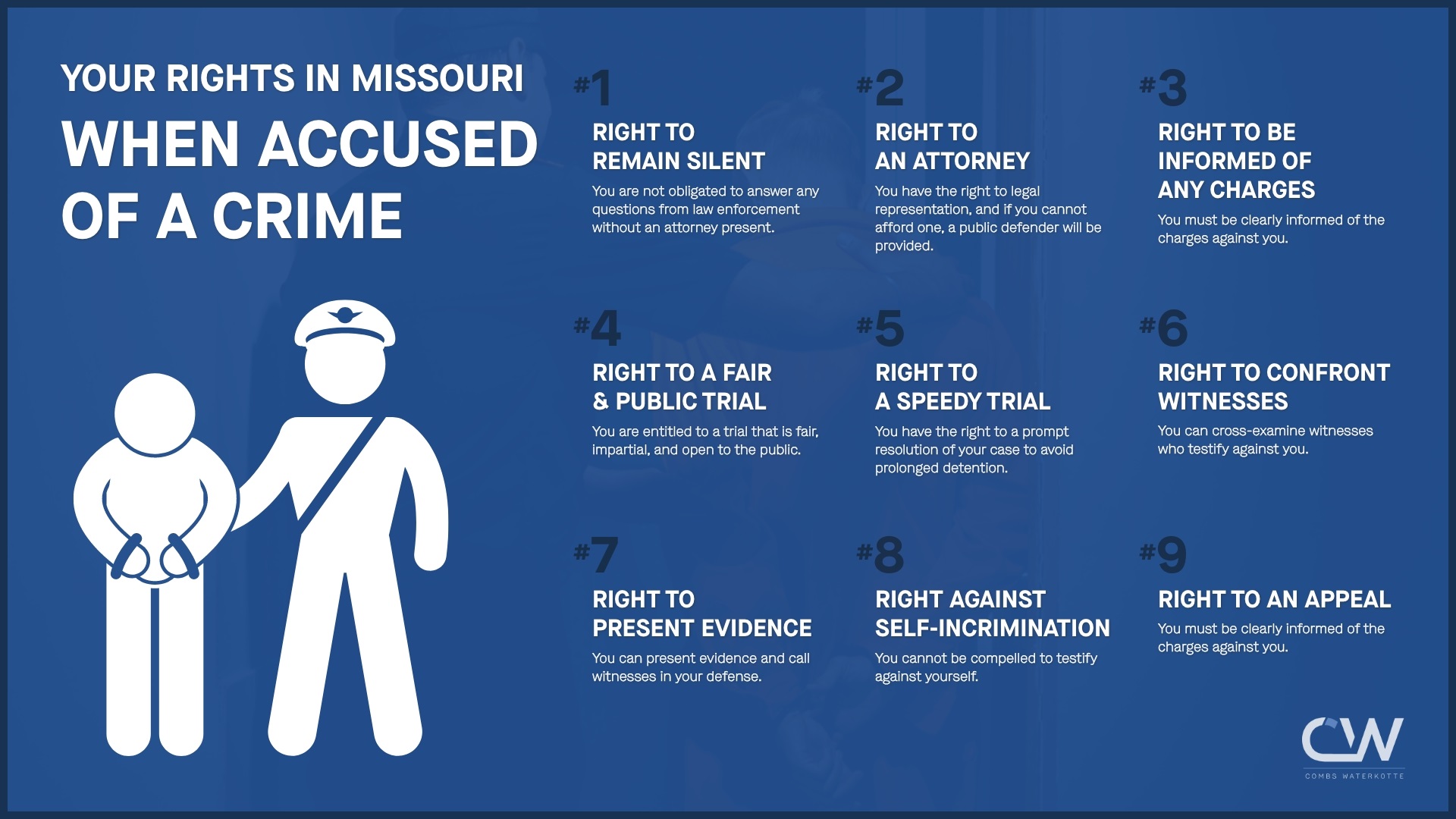
Exercise your constitutional rights before answering questions about the allegations. You have important legal protections, including the right to remain silent and the right to counsel under applicable circumstances. Rather than attempting to resolve the situation through an unrepresented police interview, clearly communicate that you wish to remain silent and speak with an attorney. Even seemingly harmless explanations can be misunderstood, taken out of context, or used to support the prosecution’s interpretation of events.
Do not contact an alleged victim or witness to persuade them to change their account. Avoid discussing the allegations on social media or sharing details with people who may later become witnesses. Preserve potentially relevant messages, photographs, receipts, location records, and other evidence without altering or deleting anything.
If you have been released from custody, carefully comply with all court-imposed conditions. Restrictions involving travel, contact with certain individuals, or access to particular properties must be taken seriously. Violating these requirements can create additional legal problems and potentially affect your pretrial release.
Most importantly, speak with a Independence, MO burglary defense attorney as early as possible. An attorney may be able to communicate with investigators, identify evidence that should be preserved, explain the allegations, and begin developing a defense before the case progresses further.
Charged with burglary in the Independence, MO area? When you select Combs Waterkotte a burglary lawyer in the Independence, MO area, you aren’t only choosing a top-rated burglary defense lawyer in Independence, MO and throughout Missouri – you’re securing your rights, your freedom, and your future. In addition to knowledgeable burglary defense attorneys, our legal team is available 24/7 and provides expertise in the following areas for residents in Independence, MO:
Why Hire Combs Waterkotte for a Burglary Case in Independence, MO?
When your freedom and future are at stake, you need more than an attorney who knows the basic definition of burglary. You need a defense team in Independence, MO that understands how serious criminal cases are investigated, prosecuted, negotiated, and tried. One with:
Extensive Criminal Defense Experience
With more than 60 years of combined legal experience and over 15,000 criminal cases handled, Combs Waterkotte brings substantial experience to every burglary defense. Our attorneys understand the challenges involved in defending felony and misdemeanor allegations, from evaluating the prosecution’s initial evidence to navigating complex legal proceedings. This experience and expertise helps us recognize weaknesses in criminal investigations, anticipate potential prosecutorial strategies, and pursue opportunities that may strengthen our clients’ positions.
Individualized Defense Strategies
Two burglary cases may involve the same statutory charge but completely different facts. One may center on a mistaken identification, another on disputed permission to enter, and another on whether prosecutors can prove criminal intent.
Our attorneys take the time to understand the complete circumstances behind the charges. With access to a broad network of defense resources, we investigate the facts, evaluate the prosecution’s assumptions, and develop an approach tailored to the client’s specific situation. We focus on the details that matter rather than treating burglary cases as interchangeable.
Prepared to Negotiate, Ready to Fight in Court
Not every burglary case should go to trial, but every defendant deserves an attorney who is prepared for that possibility. Prosecutors must know that the defense is willing and able to challenge questionable evidence, litigate important legal issues, and hold the state to its burden of proof.
When the prosecution is unwilling to offer an acceptable resolution, we are prepared to contest disputed evidence, challenge unsupported allegations, and advocate for our clients at trial. Our commitment to courtroom preparation ensures that the possibility of trial remains a meaningful part of the defense strategy.
You’re More Than a Case Number
Facing criminal charges can create uncertainty about court appearances, potential penalties, and the decisions that lie ahead. At Combs Waterkotte, our client-centered approach emphasizes consistent communication, straightforward legal guidance, and meaningful client involvement throughout the defense process.
We take the time to explain developments, discuss available options, and ensure our clients understand the potential implications of important decisions. We recognize that a burglary allegation affects more than a court docket; it can disrupt employment, family responsibilities, financial stability, and personal relationships. Our goal is to provide the attentive representation and determined advocacy our clients deserve during a difficult and consequential time.
Missouri Burglary Laws: Frequently Asked Questions in Independence, MO
Are all burglary offenses classified as felonies in Missouri?
No. First-degree burglary is a Class B felony, and traditional second-degree building burglary is generally a Class D felony. However, Missouri’s updated second-degree burglary statute includes certain restricted commercial-area violations that are classified as misdemeanors. The exact statutory subsection determines the offense classification.
Could I face burglary charges for entering my former partner’s home to retrieve my belongings?
Yes, you could be charged with burglary in Missouri if you enter your ex’s home without permission to retrieve belongings, even if the property you’re trying to recover legally belongs to you. Under RSMo § 569.170, second-degree burglary involving a building generally requires knowingly entering or remaining unlawfully with the purpose of committing a crime inside. However, unauthorized entry alone does not automatically establish burglary. Prosecutors must prove the required criminal intent, and a genuine belief that you have a legal right to retrieve your belongings may be relevant to your defense. If your ex refuses to return your property, consider seeking legal assistance or arranging a lawful property exchange rather than forcing your way inside. A burglary lawyer in Independence, MO can evaluate whether the circumstances support burglary, trespassing, property damage, or another charge.
Does an unlocked door prevent prosecutors from filing burglary charges?
Yes. Missouri burglary law generally does not require forced entry. Entering through an unlocked door can support a burglary charge when the prosecution establishes unlawful entry and the other required statutory elements.
Can burglary charges stand when no property was actually stolen?
Yes. Traditional building burglary requires the purpose of committing a crime inside, not necessarily completion of that crime. However, the prosecution must still establish the required criminal intent and other elements beyond a reasonable doubt.
Why is first-degree burglary more serious than second-degree burglary?
First-degree burglary requires additional aggravating circumstances beyond the underlying burglary elements. These may involve a deadly weapon or explosives, physical injury or threats of immediate injury to someone not participating in the crime, or the presence of another nonparticipant inside the structure. Second-degree burglary covers other qualifying conduct, including certain building, vehicle, and commercial-area offenses. Because the classifications differ, the potential sentences can vary substantially.
Is prison possible for someone with no prior burglary convictions?
Yes. A person may face incarceration even without a previous criminal record. First-degree burglary carries a statutory prison range of five to fifteen years, while traditional second-degree building burglary is generally punishable by up to seven years. The actual sentencing outcome depends on the offense classification, applicable sentencing provisions, and individual circumstances.
Will burglary charges automatically be dismissed if the property owner withdraws the complaint?
The case does not automatically disappear. Prosecutors, not alleged victims, generally control whether criminal charges move forward. A change in the property owner’s position may affect witness cooperation or other aspects of the evidence, but the state may still continue the prosecution.
Is it possible to have a burglary charge reduced to criminal trespassing?
Potentially. When the evidence establishes unlawful entry but does not adequately support the criminal purpose required for traditional building burglary, a lesser trespassing allegation may be considered. Whether a reduction is available depends on the facts, applicable law, prosecutorial discretion, and any required court approval.
Can I be convicted of burglary if I was allowed on the property?
That information may be important to your defense. Having a key, previously living at the property, or maintaining an established access arrangement could support an argument that you did not knowingly enter unlawfully. However, prior access does not always mean permission remains valid. Your attorney can investigate communications, property arrangements, and other evidence to determine whether prosecutors can establish the necessary elements.
Does Missouri consider breaking into a vehicle a burglary offense?
Yes. Missouri’s second-degree burglary statute expressly includes certain unlawful entries into motor vehicles with the intent to commit a felony or stealing. The offense may carry enhanced classification when the statutory firearm circumstances are present.
Don’t Face Burglary Charges in Independence, MO Alone. Fight Back With Combs Waterkotte.
Being charged with burglary does not mean the prosecution has a case it can prove. An arrest may be based on incomplete information, questionable witness statements, disputed evidence, or assumptions about your intentions. What initially appears to be a straightforward criminal allegation may look very different once the facts are thoroughly investigated and the evidence is challenged.
When your freedom, reputation, and future are at risk, waiting to take action can put you at a disadvantage. Important evidence may disappear, witness recollections can change, and opportunities to address weaknesses in the prosecution’s case may become more difficult to pursue. Having experienced legal representation early can help ensure that your rights are protected and your side of the story receives the attention it deserves.
At Combs Waterkotte, our attorneys represent clients facing first-degree burglary, second-degree burglary, and related criminal charges throughout Independence, MO and surrounding Missouri communities. We investigate the allegations, challenge unsupported evidence, and develop aggressive defense strategies tailored to each client’s circumstances.
Call (314) 900-HELP today or contact Combs Waterkotte to discuss your burglary case with a skilled Independence, MO criminal defense attorney. Don’t let the prosecution’s version of events become the only story the court hears.