Assault Lawyer in St. Charles County, MO
Charged or arrested for assault in St. Charles County, Missouri? We’re here to help. Get in touch with Missouri’s leading criminal defense firm today.
TO COMBS WATERKOTTE,YOU ARE WHY WE EXIST.


Assault Attorney
St. Charles County, MO
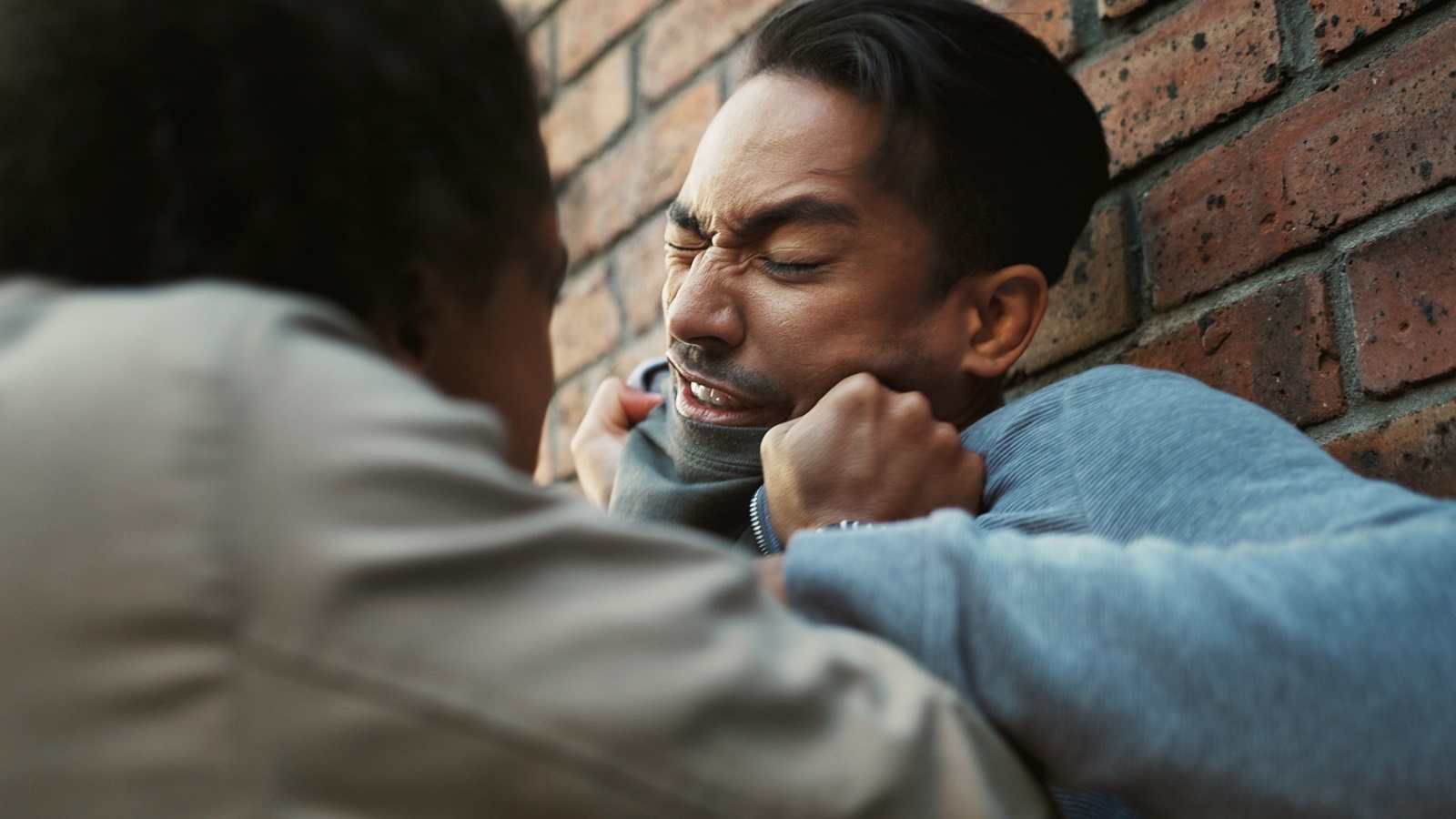
Under Missouri law, assault can involve intentionally causing physical injury, attempting to seriously injure another person, threatening immediate physical harm, or engaging in certain reckless conduct. Depending on the circumstances, assault charges can range from a misdemeanor to a serious felony carrying decades in prison. Even an altercation that results in relatively minor injuries can lead to criminal prosecution.
If you have been accused of assault in St. Charles County, your freedom, reputation, employment, and future may be at risk. Whether the allegations involve a physical confrontation, a weapon, or an argument that escalated unexpectedly, our experienced St. Charles County assault lawyers at Combs Waterkotte are prepared to defend your rights. With over 100 years of combined experience and more than 15,000 criminal cases handled, we understand what is at stake. Call (314) 900-HELP or reach out online today for a free, confidential consultation.

I owe my life to Combs Waterkotte. If not for them, I would be spending the rest of my life behind bars. There is no amount of words that can explain what they did for me and my family. Its the highest recommendation that I can give.
Alexander B.
Felonies
Verify on

If I could give Steve and his team 10 stars I would in a heartbeat. Was facing more then one felony charge and after these guys found the arresting officer violated my 4th Amendment Rights and those charges were dismissed. My family and I can't thank you enough.
Dean J
Felonies
Verify on
I was hands down guilty. ON VIDEO !!! In a smaller town, and a job dealing with the public, this was devastating. I made one phone call and spoke for maybe 15 minutes. I DIDN'T appear in court. I am extremely impressed. QUIETLY relieved of the matter!
Y.I.V.
Theft
Verify on
My fiance had a felony drug charge and Combs Waterkotte got it dismissed! There were no fines, court cost, nothing. Chris is loyal, professional, knowledgeable, and a man of his word. We are forever grateful for you.
Kimberly T.
Drug Crimes
Verify on
If I was found guilty, it would have been over 100 years in prison. They promised me that they would fight like hell and get me out of it. After everything was done, I just felt free. Like this wasn’t gonna end with me rotting away in a prison cell. I felt like I could start my life and have a fresh start.
Caleb
Assault 1st, Armed Criminal Action
Verify on
I was facing, probably 18 years… I actually got 5 years probation and 40 hours of community service. Without Combs Waterkotte’s help, I don’t think my family could have made it without me. It was just a written book to where it's a perfect ending.
Chris
Unlawful Use of a Weapon, Armed Criminal Action
Verify on
I went through what was supposed to be one of the top law firms in St. Louis. They said I wouldn't have no chance. I end up firing the other lawyer and everything and going with Chris. I felt like Combs Waterkotte actually did something for me and wasn't I wasn't just another number on somebody's desk.
Willy
DWI/DUI
Verify onI owe my life to Combs Waterkotte. If not for them, I would be spending the rest of my life behind bars. There is no amount of words that can explain what they did for me and my family. Its the highest recommendation that I can give.
Alexander B.
Felonies
If I could give Steve and his team 10 stars I would in a heartbeat. Was facing more then one felony charge and after these guys found the arresting officer violated my 4th Amendment Rights and those charges were dismissed. My family and I can't thank you enough.
Dean J
Felonies
I was hands down guilty. ON VIDEO !!! In a smaller town, and a job dealing with the public, this was devastating. I made one phone call and spoke for maybe 15 minutes. I DIDN'T appear in court. I am extremely impressed. QUIETLY relieved of the matter!
Y.I.V.
Theft
My fiance had a felony drug charge and Combs Waterkotte got it dismissed! There were no fines, court cost, nothing. Chris is loyal, professional, knowledgeable, and a man of his word. We are forever grateful for you.
Kimberly T.
Drug Crimes
If I was found guilty, it would have been over 100 years in prison. They promised me that they would fight like hell and get me out of it. After everything was done, I just felt free. Like this wasn’t gonna end with me rotting away in a prison cell. I felt like I could start my life and have a fresh start.
Caleb
Assault 1st, Armed Criminal Action
I was facing, probably 18 years… I actually got 5 years probation and 40 hours of community service. Without Combs Waterkotte’s help, I don’t think my family could have made it without me. It was just a written book to where it's a perfect ending.
Chris
Unlawful Use of a Weapon, Armed Criminal Action
I went through what was supposed to be one of the top law firms in St. Louis. They said I wouldn't have no chance. I end up firing the other lawyer and everything and going with Chris. I felt like Combs Waterkotte actually did something for me and wasn't I wasn't just another number on somebody's desk.
Willy
DWI/DUI
Understanding Assault Charges Under Missouri Law
Assault is one of the most frequently misunderstood criminal offenses. Many people associate assault with a serious physical attack, but Missouri law covers a much broader range of conduct. Depending on the applicable statute, a person may face assault charges for causing an injury, attempting to cause harm, making certain threats, or recklessly creating a substantial risk of injury.
Missouri’s assault laws are primarily found in Chapter 565 of the Missouri Revised Statutes. These laws distinguish between different levels of criminal responsibility based on factors such as intent, physical injury, serious physical injury, and whether a deadly weapon was involved.
An assault accusation does not automatically mean the defendant intended to hurt someone. Cases frequently arise from disputes between acquaintances, arguments at bars or social gatherings, neighborhood disagreements, and confrontations where multiple people claim the other person initiated the violence.
Determining what actually happened, rather than relying exclusively on the initial police report, is often essential to building an effective defense.

Call (314) 900-HELP or reach out online today for a free, confidential consultation.
Why Combs Waterkotte is the best Law firm for your case.
Real results for people just like you.

Assault Cases in St. Charles County Courts
Assault charges arising in St. Charles, St. Peters, O’Fallon, Wentzville, Lake Saint Louis, and surrounding communities may proceed through the 11th Judicial Circuit Court, which serves St. Charles County.
Depending on the severity of the allegations, a case may involve bond proceedings, preliminary hearings, arraignment, discovery, pretrial motions, negotiations, and potentially a jury trial.
Felony assault charges are generally prosecuted at the circuit court level, while some misdemeanor cases may initially proceed through associate circuit divisions. The exact process depends on how the charge is filed and whether other offenses are alleged.
Having a St. Charles County assault defense attorney familiar with local court procedures can help ensure that important deadlines are addressed, evidence is preserved, and the defense is prepared for each stage of the proceedings.
Assault Statistics in St. Charles County, Missouri
Assault remains one of the most frequently reported violent offenses in St. Charles County. According to 2025 crime statistics published by St. Charles County Government, law enforcement agencies throughout the county reported 404 aggravated assaults. The largest numbers were reported by St. Charles City Police (108), St. Charles County Police (90), St. Peters Police (83), and O’Fallon Police (63).
St. Charles County Police Chief Kurt Frisz explained that many aggravated assault incidents arise from disputes involving family members, acquaintances, or neighbors rather than random encounters between strangers. These situations can involve conflicting statements, disputed allegations, and questions about who initiated a confrontation. For someone facing assault charges in St. Charles County, understanding the circumstances surrounding the incident can be just as important as examining the injuries or allegations themselves.
Although these statistics specifically measure reported aggravated assaults rather than every misdemeanor or felony assault charge, they illustrate how frequently serious physical confrontations become matters for local law enforcement. Whether prosecutors pursue first-degree assault, second-degree assault, or another assault offense, the state must prove the specific elements of the charge beyond a reasonable doubt.

The Four Degrees of Assault in Missouri
Missouri recognizes four degrees of assault. Understanding the differences is important because each offense carries distinct elements and potential punishments. The degree charged can dramatically affect whether someone faces probation, a relatively short period of incarceration, or a lengthy prison sentence.
First-Degree Assault in St. Charles County, MO
Under Missouri Revised Statute § 565.050, first-degree assault involves attempting to kill another person or knowingly causing or attempting to cause serious physical injury.
First-degree assault is generally a Class B felony, but it becomes a Class A felony when serious physical injury is inflicted or the offense involves a qualifying special victim. These charges often involve allegations of severe violence, potentially life-threatening injuries, or conduct prosecutors believe demonstrates an intent to cause substantial harm.
Because of the seriousness of these allegations, prosecutors may rely heavily on medical records, witness statements, forensic evidence, and the defendant’s alleged actions before and during the incident.
Learn more about the elements, penalties, and potential defenses on our First-Degree Assault Lawyer in St. Charles County, MO page.
Second-Degree Assault in St. Charles County
Second-degree assault under RSMo §565.052 addresses several types of conduct, including knowingly causing or attempting to cause physical injury with a deadly weapon or dangerous instrument, recklessly causing serious physical injury, and certain injuries caused by the discharge of a firearm.
The statute also addresses attempts to kill or knowingly cause serious physical injury under the influence of sudden passion arising from adequate cause.
Second-degree assault is ordinarily a Class D felony, although it may become a Class B felony when the alleged victim qualifies as a special victim under Missouri law.
These cases frequently involve disputes about the use of an object as a weapon, whether the defendant acted recklessly or knowingly, and whether the evidence establishes the required injury.
For a closer examination of this offense, visit our Second-Degree Assault Lawyer in St. Charles County, MO page.
Third-Degree Assault
Under RSMo §565.054, third-degree assault occurs when someone knowingly causes physical injury to another person. Unlike first-degree assault, the prosecution does not need to prove an attempt to kill or cause serious physical injury.
Third-degree assault is generally a Class E felony, but it may be elevated to a Class D felony when the alleged victim is a qualifying special victim. Although the potential penalties are lower than those associated with first-degree assault, a felony conviction can still create significant obstacles involving employment, housing, and firearm possession.
Fourth-Degree Assault
Fourth-degree assault under RSMo §565.056 covers several forms of conduct, including certain attempts to cause physical injury, reckless conduct creating a substantial risk of serious harm, and specific threats or offensive physical contact.
Most fourth-degree assault offenses are Class A misdemeanors, although certain forms of threatening or offensive contact are classified as Class C misdemeanors unless special-victim provisions apply.
Despite being a misdemeanor in many circumstances, fourth-degree assault should never be dismissed as insignificant. A conviction can create a criminal record, affect professional opportunities, and become relevant in future criminal proceedings.


Read More:
Penalties for Assault Convictions in St. Charles County
Missouri’s assault penalties vary considerably depending on the degree of the offense and whether aggravating circumstances apply. The following table summarizes the general sentencing ranges:
| Assault Classification | Offense Level | Potential Penalty |
|---|---|---|
| First-Degree Assault | Class A or B Felony | 5–15 years for Class B; 10–30 years or life for Class A |
| Second-Degree Assault | Class B or D Felony | Up to 7 years for Class D; 5–15 years for Class B |
| Third-Degree Assault | Class D or E Felony | Up to 4 years for Class E; up to 7 years for Class D |
| Fourth-Degree Assault | Generally Class A or C Misdemeanor | Up to 1 year for Class A; up to 15 days for Class C |
These are general sentencing ranges. Prior convictions, special-victim allegations, and other statutory provisions can affect the available punishment. Missouri’s felony sentencing provisions are addressed in RSMo § 558.011.
Common Situations That Lead to Assault Charges
Assault accusations arise in many circumstances, and the initial description of an incident does not always reflect the full story. St. Charles County law enforcement may investigate allegations involving:
- Physical altercations at bars, restaurants, concerts, or social gatherings
- Arguments between neighbors, friends, coworkers, or acquaintances
- Disputes involving vehicles, parking spaces, or alleged road rage
- Confrontations involving firearms, knives, or other potentially dangerous objects
- Incidents where multiple participants claim they acted in self-defense
- Arguments that escalate into pushing, punching, or other physical contact
Some cases involve significant injuries. Others begin with a relatively minor disagreement that escalates before police arrive. In either situation, statements made during the initial investigation can heavily influence charging decisions.
Evidence Prosecutors Use in Missouri Assault Cases
Assault prosecutions often depend on competing accounts of what happened. Police may collect statements from the alleged victim, defendant, and witnesses, but those accounts can differ considerably.
Evidence commonly includes photographs of injuries, medical records, surveillance footage, body-camera recordings, text messages, social media communications, and forensic findings.
Medical documentation may help establish that an injury occurred, but it does not necessarily establish who initiated the confrontation or whether the defendant acted unlawfully. Similarly, eyewitness testimony may be affected by poor visibility, stress, alcohol consumption, or personal relationships.
Our attorneys examine the complete evidentiary record to identify inconsistencies, missing context, and weaknesses in the prosecution’s allegations.
Legal Defenses Against Assault Charges in St. Charles County
A successful assault defense in St. Charles County depends on the specific facts of the case. Combs Waterkotte evaluates the prosecution’s evidence, the circumstances surrounding the incident, and whether the state can establish each required element beyond a reasonable doubt.
Self-Defense and Defense of Others
Missouri recognizes circumstances in which individuals may lawfully use force to protect themselves or another person. Under RSMo § 563.031, the legality of defensive force depends on factors including the nature of the threat, the defendant’s reasonable beliefs, and the amount of force used.
Evidence showing that the defendant was responding to an immediate threat may be critical to determining whether the conduct was legally justified.
False Accusations or Conflicting Statements
Personal disputes, misunderstandings, and conflicting recollections can lead to accusations that do not accurately describe an incident. Witness credibility, prior communications, and independent evidence may help establish what actually occurred.
Lack of the Required Criminal Intent
Different assault offenses require different mental states. Conduct that was accidental or does not satisfy the statute’s required level of intent or recklessness may not support the charge prosecutors have filed.
Insufficient or Unreliable Evidence
The prosecution must prove the charged offense beyond a reasonable doubt. Missing recordings, inconsistent testimony, disputed identification, and uncertainty about the cause of an injury can create significant evidentiary issues.
What to Do After an Assault Arrest in St. Charles County
If you have been arrested or are under investigation for assault, taking the appropriate steps early can help protect your legal position.
Exercise your right to remain silent rather than attempting to explain every detail to investigating officers. Preserve relevant messages, photographs, videos, and witness information, and avoid discussing the allegations on social media.
If a court has imposed bond conditions or restrictions on contacting the alleged victim, comply with those requirements. Even well-intentioned attempts to resolve a disagreement can create additional legal problems when contact is prohibited.
Most importantly, speak with a criminal defense attorney in St. Charles County before making detailed statements or agreeing to any proposed resolution.

Speak With a St. Charles County Assault Lawyer Today
An assault accusation does not automatically mean a conviction. However, the decisions made immediately after an arrest can affect the evidence available, the conditions of your release, and the direction of your case.
If you are facing first-degree assault, second-degree assault, or another assault charge in St. Charles County, Combs Waterkotte is ready to help. Call (314) 900-HELP or contact our criminal defense team online for a free, confidential consultation.
Resources
For more information about violent crimes defense in St. Charles County, Missouri, call our criminal defense lawyers at (314) 900-HELP or contact us online for a confidential consultation.
How Prior Convictions Impact Assault Charges
What to Do if You’re Arrested for Assault
Exploring Different Types of Assault Charges and Their Defenses
Understanding Violent Crime Defense
Choosing the Right Violent Crime Defense Attorney
How a Homicide Lawyer Builds Your Defense Strategy