

Defense Against Federal Fraud Charges in Ohio. Federal fraud cases often begin quietly. A subpoena arrives at a business. Agents ask to “clear up” one payment. A bank freezes funds. A former employee receives a visit. By the time the investigation becomes visible, prosecutors may already have months or years of emails, invoices, applications, claims, contracts, and transfers arranged into a theory of deliberate deception.
Prosecutors control the first draft of the story. They can place selected invoices beside selected messages and make a complicated business history look deliberate. The defense must recover the missing context, including completed work, professional advice, surrounding communications, and the facts that separate a failed venture from a fraudulent plan.
Cases Handled
Over 10,000
Jail Days Saved
Over 1 Million
Google Reviews
500+ Perfect
Legal Experience
100+ Years
Individuals and organizations in Ohio turn to Combs Waterkotte when a federal fraud investigation threatens their freedom, business, or career. We represent executives, professionals, owners, health care providers, and companies nationwide. Our federal criminal defense lawyers can step in before charges are filed, manage contact with the government, compare the accusation with the complete record, and prepare for every stage from pre-indictment advocacy through sentencing.
Call (314) 900-HELP or contact Combs Waterkotte online for a free, confidential case review.
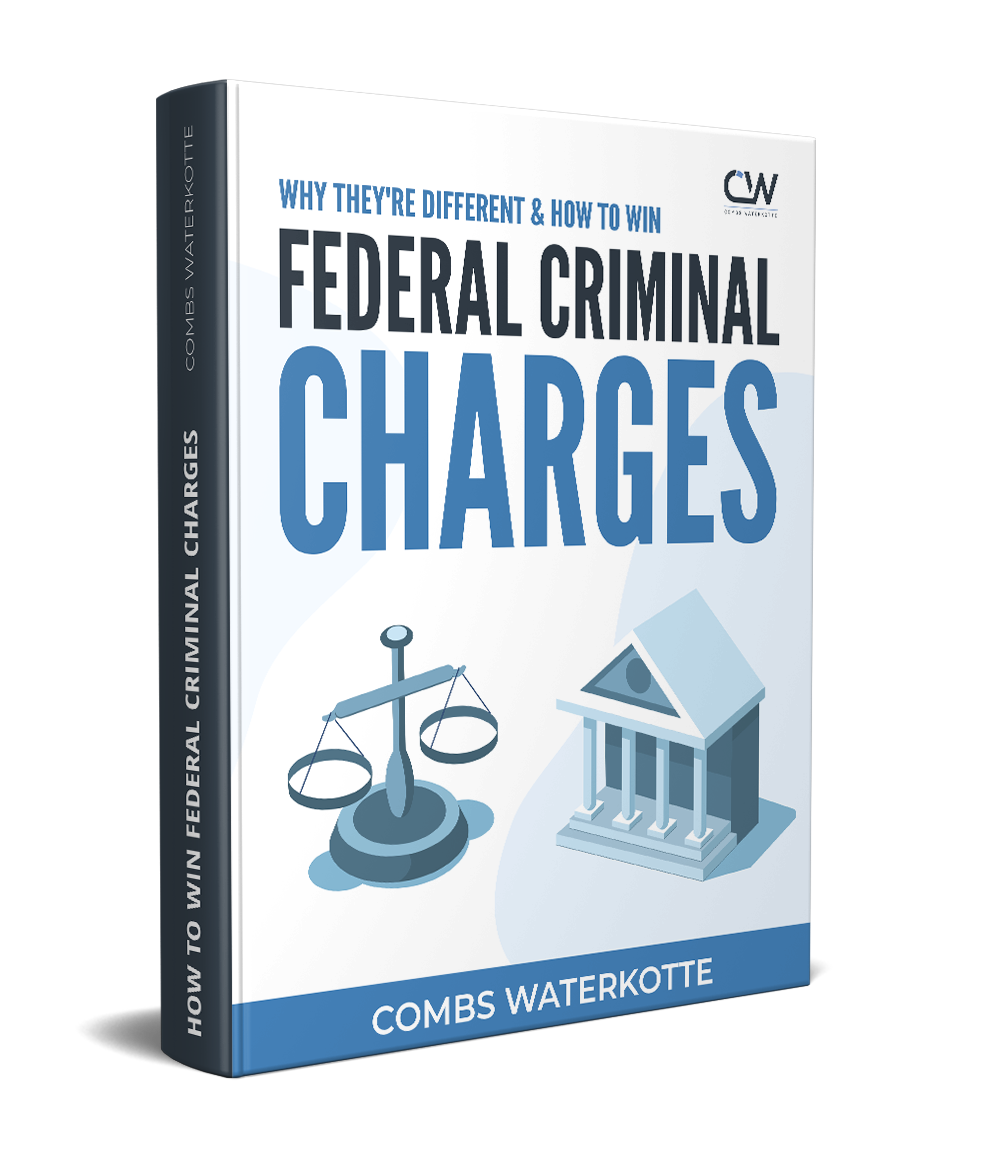
Free book
Facing Federal Criminal Charges? Why They’re Different and How to Win
Combs Waterkotte, a leading federal criminal defense law firm, has handled over 10,000 cases successfully. This ebook guides you through the federal criminal defense process, how federal charges are different, and how to win.
Topics addressed on this page include:
- how an accusation of fraud can trigger federal jurisdiction;
- which federal fraud offenses prosecutors may charge together;
- how federal fraud investigations, indictments, and sentencing work; and
- how the defense may challenge the government’s theory, the collection of evidence, cooperating witnesses, and the loss figure.
Legal Videos
Can Federal Charges Be Reduced Or Dismissed?
Can Federal Charges Be Reduced Or Dismissed? Chris Combs and Andrew Russek, lawyers with Combs Waterkotte, a leading federal criminal defense firm, talk about proffers, probation, and federal …
Should I Hire A Lawyer Experienced In Federal Defense?
Should I Hire A Lawyer Experienced In Federal Defense? Chris Combs and Andrew Russek from the leading federal criminal defense firm Combs Waterkotte discuss the importance of hiring a lawyer with …
What Penalties Apply To Federal Sex Crime Convictions?
What Penalties Apply To Federal Sex Crime Convictions? Andrew Russek and Chris Combs from Combs Waterkotte federal criminal defense firm discuss potential penalties related to federal sex crime …
Do Federal Sex Crimes Require Sex Offender Registration?
Do Federal Sex Crimes Require Sex Offender Registration? Andrew Russek, a lawyer with leading federal criminal defense firm Combs Waterkotte, discusses the sex offender registry and federal sex …
What Makes A Sex Crime Federal Rather Than State?
What Makes A Sex Crime Federal Rather Than State? Andrew Russek and Chris Combs of Combs Waterkotte discuss factors that play into a sex crime being classified as federal, rather than …
What Are Federal Sex Crime Charges?
What Are Federal Sex Crime Charges? Chris Combs and Andrew Russek of Combs Waterkotte discuss the most common federal sex crime charges. Interview Transcript Scott Michael Dunn: Well, let's …
Can Federal Charges Be Reduced Or Dismissed?
Can Federal Charges Be Reduced Or Dismissed? Chris Combs and Andrew Russek, lawyers with Combs Waterkotte, a leading federal criminal defense firm, talk about proffers, probation, and federal …
Should I Hire A Lawyer Experienced In Federal Defense?
Should I Hire A Lawyer Experienced In Federal Defense? Chris Combs and Andrew Russek from the leading federal criminal defense firm Combs Waterkotte discuss the importance of hiring a lawyer with …
What Penalties Apply To Federal Sex Crime Convictions?
What Penalties Apply To Federal Sex Crime Convictions? Andrew Russek and Chris Combs from Combs Waterkotte federal criminal defense firm discuss potential penalties related to federal sex crime …
Do Federal Sex Crimes Require Sex Offender Registration?
Do Federal Sex Crimes Require Sex Offender Registration? Andrew Russek, a lawyer with leading federal criminal defense firm Combs Waterkotte, discusses the sex offender registry and federal sex …
What Makes A Sex Crime Federal Rather Than State?
What Makes A Sex Crime Federal Rather Than State? Andrew Russek and Chris Combs of Combs Waterkotte discuss factors that play into a sex crime being classified as federal, rather than …
What Are Federal Sex Crime Charges?
What Are Federal Sex Crime Charges? Chris Combs and Andrew Russek of Combs Waterkotte discuss the most common federal sex crime charges. Interview Transcript Scott Michael Dunn: Well, let's …
When Can Prosecutors Bring Federal Fraud Charges in Ohio?
“Federal fraud” is an umbrella description, not one standalone offense. To bring a case, prosecutors must identify a statute that reaches the alleged conduct and supplies federal jurisdiction. That link might involve interstate communications, a financial institution, federal funds, a regulated market, or conduct extending beyond one state.
Federal jurisdiction may be alleged when the investigation includes:
- email, text, telephone, online payment, digital platform, or other communications that cross state lines;
- letters, checks, packages, or documents carried by the mail or a private carrier;
- an allegation involving a federally protected bank, lender, or credit union;
- Medicare, Medicaid, federal benefits, disaster funds, grants, contracts, or federally backed loans;
- investor communications or transactions involving securities and commodities;
- false statements or documents submitted to a federal agency; or
- transactions that move through several jurisdictions, companies, bank accounts, or people.
A company operating in Ohio may use interstate systems every day without thinking about federal jurisdiction. One email, card transaction, bank transfer, or shipped package can give prosecutors the connection required by a statute. That connection opens the courthouse door; it does not prove fraudulent intent or any other element of the offense.
Federal Fraud Cases Combs Waterkotte Handles in Ohio
What begins as an allegation of investment, mortgage, billing, or business fraud in Ohio may be prosecuted under several broad federal statutes. The government often charges the communications, payments, and agreements surrounding the alleged conduct. Fraud defense is part of the nationwide federal white-collar practice at Combs Waterkotte.
- Wire fraud under 18 U.S.C. 1343: Allegations that electronic communications or interstate transmissions were used to carry out a scheme to obtain money or property through fraud.
- Mail fraud under 18 U.S.C. 1341: Allegations that letters, checks, packages, applications, contracts, or other materials moved through the mail or a private interstate carrier to advance a fraudulent plan.
- Bank fraud under 18 U.S.C. 1344: Cases accusing someone of using deception to obtain bank property or of carrying out a scheme directed at a covered financial institution.
- Loan and credit application fraud under 18 U.S.C. 1014: Investigations involving statements in loan, credit, refinancing, or related applications that prosecutors claim were material and intentionally false.
- Health care fraud under 18 U.S.C. 1347: Federal investigations of claims, treatments, prescriptions, referral arrangements, or reimbursement practices that the government describes as fraudulent.
- Securities and commodities fraud under 18 U.S.C. 1348: Federal cases involving allegedly deceptive conduct in connection with securities, commodities, investments, market information, or investor funds.
- Government contract, grant, and benefit fraud: Allegations involving procurement documents, certifications, invoices, eligibility information, disaster relief, federally funded programs, or money belonging to the United States.
- Federal tax fraud and tax crimes: Cases involving unreported income, false returns, improper deductions, payroll taxes, offshore assets, or alleged efforts to defeat a federal tax obligation.
- Access device fraud and computer fraud: Federal allegations based on the use of credit cards, account identifiers, digital credentials, devices, or computer access to obtain information, money, or property.
- Honest services fraud under 18 U.S.C. 1346: A narrower fraud theory involving alleged bribery or kickbacks that deprived another person or organization of honest services.
The same investigation may produce dozens of counts. Separate emails, payments, mailings, claims, or transactions can become separate allegations, even when prosecutors describe them as parts of one overall scheme. Defense planning has to address the broad theory and the proof supporting each count.
A federal prosecution does not follow the same path as a state case. Its agencies, prosecutors, courts, discovery practices, and sentencing framework are different. Our guide explains what makes federal criminal cases distinct.
What Does the Government Have to Prove in Federal Fraud Cases in Ohio?
Mail fraud, securities fraud, bank fraud, and health care fraud are distinct offenses. The exact proof required in Ohio depends on the statute charged, but many cases are built around several recurring elements:
- Was there a scheme to obtain money, property, or another interest protected by the statute?
- Did the accused understand the alleged plan and choose to take part in it?
- Was the conduct driven by fraudulent intent, or can it be explained by error, poor judgment, negligence, confusion, or good faith?
- Did an allegedly false statement or omission have material importance to the decision or transaction at issue?
- Did the alleged activity involve the specific federal link identified in the charge, such as interstate communications or a covered institution?
Signs You May Be Under Federal Fraud Investigation in Ohio
Federal investigations often become visible indirectly. Someone else receives a subpoena, an account is frozen, or agents begin asking questions before the person under scrutiny receives formal notice.
- You were served with a grand jury subpoena, received a records request, or learned through a target letter that prosecutors view you as a potential defendant.
- Federal investigators contacted you personally or used another person to arrange a conversation.
- A subpoena was delivered to a bank, accountant, employer, clinic, vendor, customer, or business associate connected to you.
- Agents executed a search warrant or seized phones, computers, files, or business records.
- A financial institution restricted access to an account, or the government identified funds in a seizure or forfeiture notice.
- Questions in an audit began emphasizing personal knowledge, certifications, emails, and the reasons behind particular decisions.
- Employees, coworkers, clients, patients, investors, or relatives were interviewed about you.
- Agents or prosecutors asked you to explain records in what they described as an informal conversation.
Even when the underlying allegation is disputed, an interview in Ohio can create new risk. Agents may compare each answer with documents they have already reviewed. Counsel can help determine whether to speak, what records matter, and how to avoid turning an uncertain recollection into a separate false-statement accusation.
How Combs Waterkotte Challenges Federal Fraud Charges in Ohio
A useful defense for clients in Ohio grows from the charged statute and the actual evidence. It may challenge the government’s entire theory or narrow a case count by count.
The Government Cannot Prove Intent
The record may show honest work rather than a scheme: services were performed, problems were disclosed, corrections were attempted, and decisions were made using information believed to be true. Those facts can support a good-faith defense and weaken proof of fraudulent intent.
Selected Records Distort the Full Story
A single text or ledger entry can look damaging when separated from the records around it. The defense may recover the full conversation, compare drafts with final documents, rebuild the timeline, and speak with people who know why the transaction occurred. Context can turn an apparent red flag into an ordinary business event.
The Statement Was Not Materially False
The government may call a document false when the language was ambiguous, the information was accurate as understood at the time, or another person prepared it. An unsuccessful prediction does not become fraud merely because later events contradicted it. The prosecution may also have to prove that the statement was material.
The Accused Did Not Knowingly Join the Scheme
Working for the same company, processing a payment, or appearing in a message thread does not establish knowing participation. Large investigations can sweep in employees and professionals whose work touched a transaction but who never agreed to defraud anyone.
The Informant’s Account Is Unreliable
A witness may tell the government a story that protects a career, company, or plea agreement. Cross-examination and documentary evidence can reveal what the witness received, what changed over time, and where the account conflicts with the record.
Federal Jurisdiction Is Open to Challenge
The case does not belong in federal court merely because investigators used federal resources. Prosecutors must establish the specific jurisdictional fact required by the offense, whether it is a wire, mailing, bank, benefit program, or other federal interest.
The Government Collected Evidence Through an Unlawful Search
A federal investigation does not eliminate constitutional limits. The defense can examine the warrant affidavit, the places searched, the data seized, and the circumstances of any interview. An unlawful search or statement may lead to suppression. More information is available in our guide to Fourth Amendment defenses.
The Alleged Financial Harm Is Miscalculated
A large number in a charging document is a claim, not a final calculation. Defense review may separate actual harm from intended loss, identify legitimate value and repayments, challenge the number of victims, and dispute transactions outside the accused’s conduct.
The Federal Fraud Case Process
The route can change based on the district, the evidence, and decisions made before indictment. For people and organizations in Ohio, the federal process commonly includes these stages:
- Investigation: Investigators build the file through documents, digital evidence, witness accounts, subpoenas, and searches. Before charges are final, counsel may be able to manage communications and show prosecutors evidence their theory overlooks.
- Grand jury proceedings: The government may continue collecting evidence through grand jury subpoenas and witness testimony. If jurors conclude there is probable cause, formal charges can be returned in an indictment.
- Initial appearance and release decision: Following an arrest or arranged surrender, a judge considers representation and decides whether the accused will be detained or released subject to conditions.
- Arraignment and discovery: At arraignment, the accused responds to the indictment. Discovery then begins to reveal the reports, records, recordings, financial work, and electronic evidence supporting the charges.
- Motions and expert review: Pretrial litigation can address unlawful searches, improperly obtained statements, charging defects, missing discovery, expert opinions, and evidence the government wants to present. Financial or technical experts may also test transactions and loss figures.
- Negotiation or trial preparation: Pretrial discussions can address the indictment, potential pleas, proffers, and sentencing issues. Meanwhile, the defense should be organizing evidence, preparing witnesses, and identifying how the government’s case will be challenged before a jury.
- Trial, sentencing, and appeal: A jury trial tests the witnesses, documents, expert opinions, and legal theory supporting every count. If the result is a conviction or the case resolves by plea, sentencing follows, and appellate issues may remain.
How Federal Courts Sentence Fraud Offenses
Someone facing federal fraud charges in Ohio may see decades of possible imprisonment listed in the statutes. Those maximums define the outer limit, not the sentence that will automatically be imposed. The counts of conviction, criminal history, advisory guidelines, judicial findings, and federal sentencing factors shape the actual result.
| Charge or Companion Offense | General Statutory Exposure |
|---|---|
| Mail fraud, 18 U.S.C. 1341 | Mail fraud is generally punishable by as much as 20 years in prison. Certain financial institution and emergency or disaster benefit cases can raise the maximum to 30 years. |
| Wire fraud, 18 U.S.C. 1343 | Wire fraud is ordinarily punishable by as much as 20 years, with a possible 30-year ceiling under the statute’s specified financial institution or emergency-benefit provisions. |
| Bank fraud, 18 U.S.C. 1344 | The statutory maximum includes 30 years of imprisonment and a fine as high as $1 million. |
| Health care fraud, 18 U.S.C. 1347 | The penalty can reach 10 years for an ordinary offense, 20 years if the conduct results in serious bodily injury, and life imprisonment if it results in death. |
| Securities and commodities fraud, 18 U.S.C. 1348 | The statute provides a maximum of 25 years of imprisonment, while financial penalties, restitution orders, and forfeiture may also apply. |
| False statements, 18 U.S.C. 1001 | Generally up to five years in prison, with different exposure in certain matters identified by the statute. |
| Aggravated identity theft, 18 U.S.C. 1028A | Aggravated identity theft ordinarily adds a mandatory two-year term that runs after, rather than at the same time as, the underlying sentence. |
| Fraud attempt or conspiracy, 18 U.S.C. 1349 | The same penalties prescribed for the fraud offense that was attempted or was the object of the conspiracy. |
The advisory guideline analysis for many Ohio fraud cases begins under Section 2B1.1. Loss is often the largest dispute, but the court may also consider victim count, the defendant’s role, sophisticated means, abuse of trust, obstruction, acceptance, and relevant conduct.
Restitution and forfeiture are separate questions from guideline loss, even when the government uses similar numbers. The figures may differ. The court can also consider personal history, health, family responsibilities, conduct after the offense, and the need for a sentence that is sufficient without being greater than necessary.
Our related guides explain what happens at federal sentencing and whether a federal court can impose probation.
What to Do if Federal Agents Contact You About Fraud in Ohio
People often believe a quick conversation will make an unfounded suspicion disappear. Federal agents may instead use that conversation to compare recollections, lock in details, and identify inconsistencies.
- Do not treat a voluntary interview as a routine conversation. You can respectfully decline the discussion and direct future contact through counsel.
- Avoid both false statements and uncertain speculation. An inaccurate answer can damage credibility, and an intentional falsehood can produce an additional charge even when no fraud occurred.
- Preserve the evidence exactly as it exists. Save electronic communications, financial records, contracts, notices, devices, and business data without changing them.
- Do not contact witnesses to coordinate explanations. Communications about testimony can be misunderstood and may create an issue separate from the fraud investigation.
- Avoid broadcasting your explanation to the organization. A mass email creates new evidence and may reach people cooperating with investigators.
- Preserve all papers and messages received from investigators. Keep copies of every letter, subpoena, warrant, receipt, inventory, agent card, email, and delivery envelope.
- Let counsel examine the demand before records are produced. Counsel can help preserve required materials, negotiate the scope, identify privileged information, and avoid an incomplete or overly broad production.
- Speak with a federal fraud defense attorney in Ohio as early as possible. A lawyer may be able to clarify your status, review government demands, and present information before prosecutors make final charging decisions.
Federal Fraud Defense for Clients in Ohio
Federal fraud defense for clients in Ohio is document work, courtroom work, and human work at the same time. The legal team must understand the transaction, find the records that change its meaning, and stay focused on the person whose freedom and career are attached to the file.
- More than 100 years of combined legal experience: That experience includes complex investigations, negotiations, motions, trials, and sentencing proceedings.
- More than 10,000 cases handled and over one million jail days saved: The team knows how to look past an intimidating charging document and find where the evidence, procedure, or prosecution theory can be challenged.
- More than 500 perfect Google reviews: The reviews reflect the trust clients place in Combs Waterkotte during frightening and consequential criminal matters.
- Early intervention: Early counsel may clarify whether the client is a witness, subject, or target and can begin preserving evidence while charging decisions remain open.
- A full defense team: Federal fraud defense often crosses legal, accounting, technological, and industry questions. Our team can coordinate the internal and outside resources the case requires.
- Trial preparation from the beginning: We examine counts and evidence as though they will be tested in court. That preparation strengthens motions, negotiations, cross-examination, and sentencing advocacy.
- Client-centered communication: Clients need more than periodic updates. Our client-centered approach provides direct communication, useful explanations, and 24/7 availability when events change quickly.
Other federal criminal matters we defend include:
Talk to a Federal Fraud Lawyer Serving Ohio
Whether agents are still gathering evidence in Ohio or prosecutors have already obtained an indictment, the federal case will continue moving. Defense investigation, record preservation, and strategic preparation should begin now.
Speak with the federal defense team by calling (314) 900-HELP or requesting a confidential consultation online.

