

Criminal Defense Lawyer Princeton, IL. When you are under investigation, taken into custody, or formally charged with a crime in Princeton, IL, the seriousness of what you’re facing becomes immediately clear. The potential consequences reach far beyond the courtroom — affecting your liberty, your background, your livelihood, and your standing in the community. That’s why you need an aggressive, trial-ready Princeton, IL criminal defense lawyer on your side as soon as possible.
From the moment charges are filed in Princeton, IL, our team at Combs Waterkotte steps in to protect the accused against aggressive prosecution.We take a straightforward approach:
- We act quickly.
- We treat your case as a priority.
- We build every case like it could go to trial.
Ready to fight back against your criminal charges in Princeton, IL? Contact our criminal defense attorneys at (314) 900-HELP or submit a request through our online form to receive a free, confidential case evaluation.
Cases Handled
Over 10,000
Jail Days Saved
Over 1 Million
Google Reviews
500+ Perfect
Legal Experience
100+ Years
This resource addresses:
- The steps to take right after an arrest or criminal accusation in Princeton, IL
- Why hiring a trial-prepared criminal defense lawyer can directly impact your case
- How a criminal case in Princeton, IL progresses from investigation through final outcome
- The types of criminal charges our firm handles across Illinois
- How Illinois classifies felonies and misdemeanors, including potential sentencing ranges
- Collateral consequences beyond jail time
- Defense approaches frequently used in Princeton, IL criminal courts
- The ways criminal cases are typically resolved, from plea negotiations to trial
Accused of a Crime in Princeton, IL? Take These Immediate Steps
Whether you have been approached by police, asked to speak with detectives, formally arrested, given a court date, or suspect charges are forthcoming, here’s what you should do right away:
- Do not discuss the situation. Not to police, not to friends, not in texts.
- Do not “clear it up” in an interview. What feels like clarification often becomes evidence for the prosecution.
- Preserve what you can. Save screenshots, text messages, call histories, receipts, and related records — and do not erase them.
- Write a timeline while it’s fresh. Even a basic chronology can become an important defense resource.
- Contact a criminal defense lawyer in Princeton, IL right away. Early involvement changes what’s possible.

Why Choose Combs Waterkotte for Princeton, IL Criminal Defense
A lot of firms say they “fight for you.” What matters is how they fight and whether they’re built for the kind of case you’re facing.
Over 60 Years of Collective Courtroom Experience
Seasoned defense work involves identifying vulnerabilities: thin probable cause, careless investigative work, credibility problems, misinterpreted forensic or digital evidence, and procedural missteps prosecutors prefer not to argue in open court.
Built for Trial — Not Just Negotiation
Some lawyers negotiate because they don’t want trial pressure. Prosecutors can sense that. We prepare every case like we are trying to win at trial. That posture creates leverage with prosecutors—often the difference between a bad outcome and a workable one.
Representation Built Around You
You deserve honesty and clarity. You’ll get straight answers, a real plan, and communication that respects you. We do not reduce clients to file numbers. Our non-hourly structure allows you to reach out without watching the clock. You receive the direct cell phone number of your assigned attorney.
A Complete Legal Team Behind Your Defense
A strong defense is never a solo effort. Our attorneys work alongside experienced legal assistants, investigators, and trusted expert witnesses when needed. From reviewing forensic evidence to interviewing witnesses and reconstructing timelines, we use every available resource to build a strong, evidence-based defense tailored to your case.
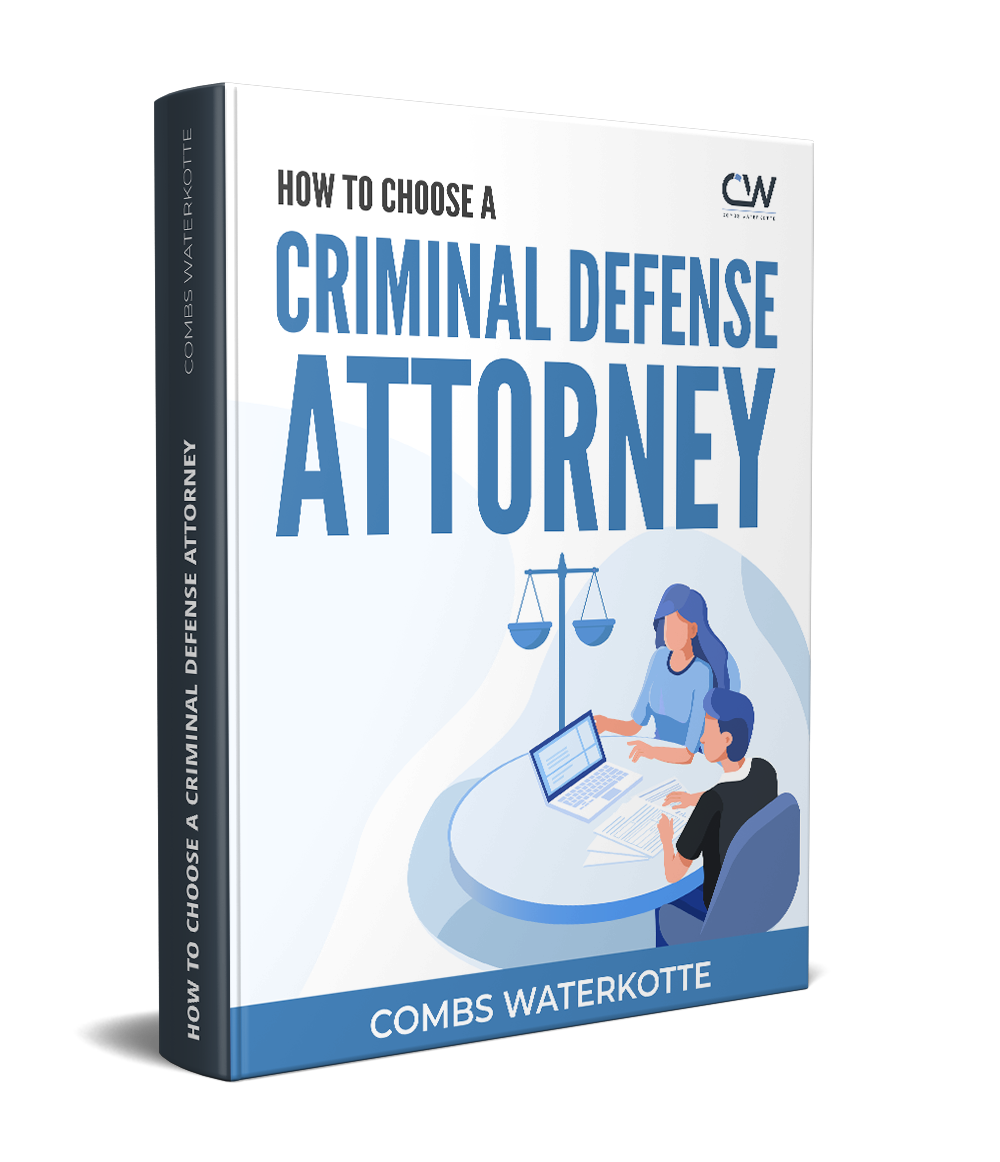
Free book
How to Choose a Criminal Defense Lawyer
Charged with a crime? The lawyer you hire matters. Combs Waterkotte, recognized for top-tier criminal defense in Missouri and Illinois, created this guide to help you find the right attorney. Learn what to look for, key questions to ask, and red flags to avoid.
The Princeton, IL Criminal Case Process
Not knowing what happens next makes everything feel worse. Although every situation has unique facts, criminal cases in Princeton, IL typically follow a structured path:
The Investigation Phase
Many investigations start well before anyone is taken into custody.
Investigators often:
- question individuals connected to the allegation
- collect surveillance video
- obtain phone or digital records
- carry out court-approved search warrants
- collect forensic evidence
- speak with alleged victims or witnesses
Sometimes individuals are unaware an investigation is underway until police reach out directly. In some cases, informal reports surface before charges are formally pursued.
How Charges Officially Begin
Some cases begin with an arrest. Others begin with:
- a court-issued summons
- a warrant authorized by a judge
- a written notice to appear in court
- law enforcement directing you to report yourself for processing
Custody may occur right after an alleged event, or long after investigators believe they have gathered sufficient evidence.
If you are arrested for a crime in Princeton, IL, you will go through booking and processing, after which you may be detained or released based on the circumstances. What you say during and after arrest can significantly impact your case.
Pretrial Release and Bond Conditions
One of the earliest and most important hearings after arrest involves bond and release terms.
The court’s bond ruling establishes:
- if you are permitted to leave custody
- what legal restrictions you must follow
- the rules you are required to obey
If granted release, you may face requirements including:
- orders prohibiting contact with certain individuals
- electronic monitoring
- restrictions on leaving a designated area
- firearm restrictions
- drug/alcohol testing
- curfews
If bond conditions are violated, consequences can include:
- bond revocation
- new criminal allegations
- heightened supervision requirements
A bond hearing is not a routine formality — it determines the structure of your daily life during the case.
Prosecutorial Charging Decision
Prosecutors file formal charges based on what they believe they can prove beyond a reasonable doubt.
The filed charges can:
- mirror the original arrest allegations
- be elevated to more serious counts
- be scaled back
- list several counts within the same case
- add penalty enhancements
Prosecutors occasionally file the most serious plausible charges at the outset to strengthen their position. Sometimes charges evolve as evidence is reviewed.
Required Court Hearings and Active Bond Conditions
With charges in place, scheduled court dates follow.
These may include:
- an arraignment hearing
- scheduled status updates
- litigation-related hearings
- hearings addressing admissibility of evidence
Bond conditions typically stay active throughout this phase. As a result, daily routines and freedoms can remain restricted for months.
Discovery Phase
Here, the substantive legal fight begins.
Prosecutors must provide access to the evidence they intend to rely on, such as:
- law enforcement reports
- officer camera footage
- surveillance video
- documented witness accounts
- forensic testing reports
- phone or digital communication records
- reports prepared by expert witnesses
The foundation of an effective defense is built during this review. Careful analysis often reveals gaps, conflicting narratives, and flawed conclusions.
Many cases that look strong at arrest look different once the evidence is fully reviewed.
Pretrial Motions and Litigation
A significant number of criminal cases are shaped — or resolved — through well-executed pretrial motions.
Through motions, the defense can:
- argue that searches or seizures violated constitutional protections
- suppress statements obtained improperly
- move to bar unreliable identification evidence
- limit prejudicial evidence
- force the prosecution to clarify weak theories
Litigation creates leverage. It requires prosecutors to prove the strength of their case instead of relying on intimidation.
Plea Negotiation Process
The majority of criminal matters conclude without trial, with negotiations occurring at multiple stages.
Negotiated resolutions may:
- adjust the severity of allegations
- narrow possible penalties
- avoid certain sentencing enhancements
- craft resolutions that reduce lasting consequences
- conclude the matter without jury uncertainty
Productive plea discussions require leverage. Prosecutors are more inclined to offer reasonable terms when weaknesses in their case are clearly demonstrated.
Trial
If prosecutors decline to offer a fair resolution, the case may proceed to trial. Early preparation strengthens negotiating power.
Preparing for trial allows the defense to:
- challenge whether the state can prove every required element beyond a reasonable doubt
- expose weaknesses in witness credibility
- identify contradictions within reports and sworn testimony
- challenge the reliability of forensic testing
- introduce competing explanations grounded in documented facts
A credible trial posture alters the state’s risk calculation. A defense team that is prepared to stand in front of a jury creates leverage at every stage of the case, even if the case ultimately resolves before a verdict.
bureau-county-il
How Criminal Charges Are Often Resolved in Princeton, IL
Criminal cases in Princeton, IL typically conclude in one of the following ways:
- No charges filed: in some situations, the strongest outcome occurs before court if prosecutors determine the evidence is insufficient.
- Case Dismissal: dismissal can occur when evidentiary gaps or legal defects undermine the state’s case.
- Charge Reduction: early allegations may be aggressive; strategic litigation can bring the case in line with what the evidence actually supports.
- Plea agreement: in certain cases, a negotiated resolution best safeguards your long-term interests.
- Taking the case to trial: if prosecutors refuse fair terms, preparation for trial becomes critical.
Our job is to help you choose the best path based on evidence and consequences—not fear.
Criminal Cases We Handle in Princeton, IL
If you are accused or formally charged in Princeton, IL, we are prepared to step in. Our defense work includes:
Violent Crimes
Violent offense allegations in Princeton, IL are often aggressively pursued, particularly when claims involve injury, weapons, or prior convictions.
We defend charges involving:
- murder and related allegations
- charges of attempted murder
- serious battery charges
- robbery and armed robbery
- charges of kidnapping / unlawful restraint
- firearm-related charges tied to violent offenses
Our defense focus: careful timeline reconstruction, self-defense claims, credibility analysis, video review, forensic weaknesses, and proof of intent.
Sex Crimes
Sex crime charges in Princeton, IL often carry immediate reputational damage and long-term consequences. They frequently involve contested narratives, digital records, and scrutiny of investigative procedures.
We represent clients facing accusations such as:
- criminal sexual assault
- sexual abuse
- predatory sexual assault allegations
- child-focused sex offense charges
- internet sex crimes
- failure to register / registration-related allegations
Strategic focus: strict evidence review, digital context, motive and bias, inconsistencies in statements, investigative procedures, and keeping the case grounded in proof rather than emotion.
Drug Crimes
Drug-related prosecutions in Princeton, IL commonly hinge on search-and-seizure legality and what the facts and evidence truly establish.
We defend charges involving:
- controlled substance possession
- possession with alleged intent to deliver
- delivery / distribution
- drug trafficking allegations
- manufacturing / cultivation allegations
- drug cases tied to weapons, vehicles, or alleged conspiracies
Strategic defense focus: the legality of the stop, the validity of the search, consent disputes, warrant challenges, chain-of-custody gaps, lab testing procedures, informant credibility, and whether prosecutors are stretching the concept of “intent.”
DUI Defense and Traffic-Related Criminal Allegations
DUI cases in Princeton, IL are not decided solely by whether a BAC number is above or below .08%. The critical issues include the stop itself, the testing process, available video, and whether impairment is supported by evidence instead of assumption.
We defend clients in matters involving:
- DUI defense
- aggravated DUI
- DUI cases with crash or injury claims
- serious traffic-related criminal allegations
Defense focus: traffic stop justification, field test reliability, video evidence conflicts, and procedure errors in testing and documentation.
Domestic Violence Allegations and Related Charges
Domestic violence accusations in Princeton, IL can lead to fast-moving restrictions and fallout — such as orders of protection, no-contact terms, removal from the residence, employment consequences, and complications involving children.
Our defense representation includes:
- domestic battery charges
- battery or assault allegations arising from a domestic dispute
- alleged violations of protection orders
- harassment or stalking allegations arising from domestic situations
Defense focus: context, credibility, motive, medical evidence, third-party witnesses, digital communications, and preventing short-term “quick fixes” from becoming long-term damage.
White Collar and Financial Offenses
Financial crimes may appear nonviolent on paper, yet the potential penalties and reputational damage are significant. These cases require detailed work and tight narrative control.
We handle allegations involving:
- allegations of fraud
- identity theft charges
- embezzlement
- forgery-related charges
- deceptive theft allegations
- other financial and business-related criminal allegations
Our defense focus: documents, intent, timeline, who had access/authority, and whether the state is criminalizing misunderstandings or business disputes.
Weapons Charges
In Princeton, IL, weapons-related prosecutions may include enhanced penalties and prosecutorial assumptions, especially when connected to separate allegations.
We defend:
- alleged unlawful possession
- firearm enhancements connected to underlying offenses
- legal disputes over searches tied to firearm recovery
Defense focus: constitutional search issues, proof of possession, and identifying situations where charges are being stacked to gain negotiating leverage.
Misdemeanor Charges
Not all criminal charges expose someone to lengthy prison terms.
Even so, misdemeanor charges in Princeton, IL may carry jail exposure, probation terms, fines, and a lasting record that surfaces in background screenings. They can also affect professional licenses and employment opportunities.
We handle misdemeanor cases involving:
- battery / assault (non-felony)
- theft / shoplifting
- allegations of criminal property damage
- disorderly conduct
- criminal trespass
- along with related misdemeanor offenses
A misdemeanor is never something to take lightly. Each case should be approached with seriousness and defended with discipline.
Criminal Penalties in Princeton, IL
Criminal penalties in Princeton, IL depend on the offense classification, the specific facts alleged, prior criminal history, and whether any statutory enhancements apply.
Illinois law broadly classifies crimes as either felonies or misdemeanors.
Princeton, IL Felony Classes
Princeton, IL divides felonies into five primary classifications, plus first-degree murder as its own category.
- A sentencing range of 20 to 60 years in the Illinois Department of Corrections
- Natural life imprisonment may apply in qualifying cases
- Release is followed by a mandatory supervised release period
- 6 to 30 years in prison
- No probation available in most cases
- Often applies to serious violent offenses, repeat offenses, and certain drug crimes
- 4 to 15 years in prison
- In some cases, probation remains available
- 3–7 years in the Department of Corrections
- 2–5 years of incarceration
- 1–3 years in prison
In many cases, sentencing ranges can increase through:
- a prior criminal record
- weapons-related enhancements
- extended-term sentencing eligibility
- court-identified aggravating circumstances
Princeton, IL Misdemeanor Classes
Misdemeanors carry lower maximum penalties than felonies, but they still create permanent criminal records and real-life consequences.
- As much as 364 days of incarceration
- Up to $2,500 in fines
- A maximum jail sentence of 6 months
- Up to $1,500 in fines
- Up to 30 days in jail
- A potential fine of up to $1,500
Even when jail is avoided, probation conditions, fines, and collateral consequences can be significant.
Long-Term Consequences of a Conviction
The impact of a conviction in Princeton, IL often extends beyond jail time. Depending on the charge, consequences may include:
- Driving privilege restrictions
- Limitations on firearm possession
- Professional licensing discipline
- Employment limitations
- Immigration-related consequences
- Registration requirements (in certain offenses)
- Lasting reputational harm
Effective criminal defense aims not just to prevent jail, but to reduce the broader consequences of a charge.
Bureau County Resources
Below are quick links to important websites that may assist you with your legal matters in Bureau County and Illinois.
- Illinois Criminal Defense Resources
- Illinois Criminal Defense Practice Areas
- Illinois Compiled Statutes
- Illinois Courts
- Illinois Supreme Court Rules
- Illinois Secretary of State
- Illinois State Police
- Illinois Department of Corrections
- Bureau County Website
- Bureau County Court
- Bureau County Jail
- Bureau County Sheriff’s Office
- Christopher Combs
- Steven Waterkotte
Criminal Defense Strategies Frequently Used in Princeton, IL
Criminal defense is rarely about one argument. It’s about applying the right strategy to the facts of your case. Based on how the evidence develops, we may assert one or more of the following defenses:
Alibi Defense
An alibi defense defense shows that you were somewhere else when the alleged crime occurred. This can be backed by:
- independent witness accounts
- timestamped video
- receipts, telecommunications records, or digital location data
If corroborated, an alibi directly challenges the state’s ability to place you at the scene.
Unlawful Search and Seizure
The Fourth Amendment to the U.S. Constitution protects against unreasonable searches and seizures. When officers:
- initiated a stop without reasonable suspicion
- conducted a search of you, your vehicle, or property without proper consent or probable cause
- executed a warrant based on faulty or misleading information
any evidence recovered during that encounter may be excluded from being used in court.
Lack of Valid Consent
Police sometimes claim individuals “consented” to a search. However, valid consent must be:
- provided without coercion
- clearly expressed
- based on an awareness of the right to decline
When consent is invalid, any evidence obtained may be suppressed.
Disputing Police Statements
Statements made to law enforcement are not automatically reliable or admissible in court. Common problems include statements that are:
- coerced
- taken out of context
- incorrectly characterized
- made without proper Miranda warnings
If the government failed to respect your rights, those statements can be suppressed or disregarded.
Eyewitness Misidentification
Incorrect eyewitness identification contributes significantly to wrongful convictions. Contributing factors include:
- poor lighting
- fear during the incident
- overly suggestive lineup procedures
- exposure to other witness accounts
may result in mistaken identification. Establishing misidentification undermines the prosecution’s case.
Scrutinizing Electronic Evidence
Digital evidence such as screenshots, messages, and social media content can be deceptive when context, authorship, and authenticity are unclear. Common issues include:
- altered or manipulated metadata
- disputes over who controlled the device
- evidence of deleted or edited content
- gaps in chain of custody
We carefully analyze electronic evidence to assess whether it establishes what prosecutors allege.
Absence of Criminal Intent
Numerous offenses require the state to prove intent, not merely that an act occurred. For example:
- intent-to-deliver charges
- fraud
- acts requiring malicious intent
When prosecutors cannot establish your mental state at the relevant time, the charge may be reduced or dismissed.
Claiming Self-Defense
In violent crime or assault cases, asserting self-defense means showing that your actions were a reasonable response to an imminent threat. Evidence can include:
- witness testimony
- injuries that align with your account
- facts indicating you did not initiate the confrontation
When established, self-defense can legally justify the conduct.
Entrapment Defense
Entrapment applies where law enforcement encourages conduct that the person was not otherwise inclined to undertake. To raise this defense, we demonstrate:
- government encouragement
- lack of predisposition to commit the offense
When proven, entrapment can defeat the prosecution’s case entirely.
Asserting Duress
Duress may apply if conduct occurred under an immediate threat of harm and a reasonable person in that position would have acted similarly. Although not a blanket excuse, it can defeat the required element of criminal culpability.
Challenging Expert or Forensic Evidence
Forensic science isn’t infallible. Mistakes in:
- chemical testing procedures
- DNA processing
- ballistics
- fingerprint analysis
can significantly impact the reliability of the evidence if procedures or conclusions are defective. Our firm consults independent experts to evaluate and contest complex forensic findings.
Constitutional Violations Beyond Search and Seizure
Legal challenges may be based on infringements of other constitutional rights, for example:
- unduly suggestive lineup procedures
- coerced confessions
- denial of counsel
- discriminatory practices in prosecution or jury selection
Identifying these violations may restrict the evidence prosecutors are permitted to present.
FAQs: Princeton, IL Criminal Defense
Do I need a lawyer if I’m innocent?
Absolutely. Being innocent does not stop prosecutors from filing charges. A lawyer protects you from preventable mistakes and builds your defense early.
Do criminal charges ever get dropped?
In certain cases, yes — depending on the strength of the evidence and applicable legal challenges. Getting counsel involved early improves the ability to uncover evidentiary problems before positions harden.
Is the first plea offer the best one?
Not without reviewing evidence and consequences. An agreement that seems convenient today may create lasting issues with employment, licensing, or background screenings.
Will my case go to trial?
Although most cases settle before trial, preparation should assume that trial may occur. That posture creates leverage and often improves outcomes.
Does a misdemeanor really matter?
A misdemeanor charge can still carry jail exposure, probation conditions, fines, and permanent record consequences. Minimizing a charge as “just” a misdemeanor can be costly.
What if I haven’t been charged yet, but police want to talk?
That’s often the best time to call. Having representation before charges are filed can stop harmful statements and influence the direction of the case.
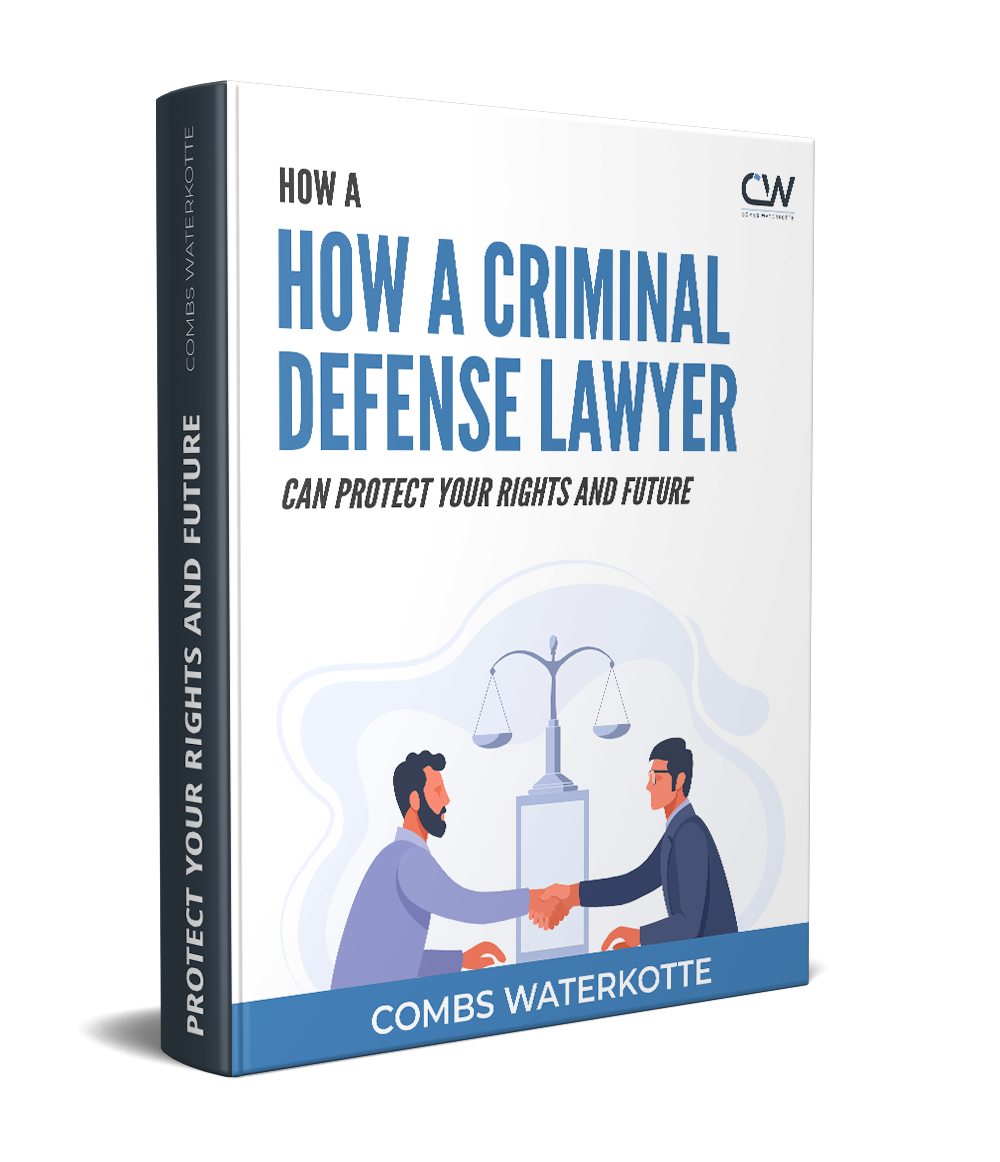
Free book
How a Criminal Defense Attorney Can Protect Your Rights and Future
Combs Waterkotte has over 80 years of experience and over 10,000 cases handled. This ebook helps guide you through the criminal defense process and how an experienced, skilled defense attorney can keep your freedoms intact.
Speak With a Criminal Defense Lawyer in Princeton, IL Today
When you hire Combs Waterkotte’s Princeton, IL criminal defense lawyers, you receive:
- defense preparation built for trial, not just negotiation
- client-centered representation
- 100+ years of combined experience
- Princeton, IL criminal defense for serious cases and misdemeanors
Every moment matters after an arrest or charge. Don’t wait to start building your defense. You can call us at (314) 900-HELP or contact us online to speak to a criminal defense attorney in Princeton, IL today.

