

Criminal Defense Lawyer Peoria Heights, IL. Being investigated, arrested, or accused of a crime in Peoria Heights, IL means you’re dealing with a situation that carries real consequences. Your freedom, your criminal record, your professional future, and your reputation may all be on the line. For that reason, having an aggressive, trial-ready Peoria Heights, IL criminal defense lawyer in your corner right away can make a significant difference.
When prosecutors in Peoria Heights, IL pursue serious charges, Combs Waterkotte is prepared to push back with a disciplined defense strategy.We handle every case with a clear and focused strategy:
- We move fast.
- We take your case personally.
- We approach every case with trial-level preparation from day one.
Is it time to start fighting back against the charges you’re facing in Peoria Heights, IL? Contact our criminal defense attorneys at (314) 900-HELP or submit a request through our online form to receive a free, confidential case evaluation.
Cases Handled
Over 10,000
Jail Days Saved
Over 1 Million
Google Reviews
500+ Perfect
Legal Experience
100+ Years
On this page, you’ll learn:
- What to do immediately after an arrest or criminal charge in Peoria Heights, IL
- Why choosing a trial-ready criminal defense lawyer matters
- The typical path a criminal case in Peoria Heights, IL follows from initial investigation to resolution
- The types of criminal charges our firm handles across Illinois
- Illinois felony and misdemeanor classifications and sentencing ranges
- Collateral consequences beyond jail time
- Strategic defenses commonly applied in Peoria Heights, IL courtrooms
- The ways criminal cases are typically resolved, from plea negotiations to trial
Under Investigation or Charged in Peoria Heights, IL? Act Now
If any of these are true—police contacted you, detectives want an interview, you were arrested, you have a court date, or you think charges are coming—do this:
- Do not discuss the situation. Not to police, not to friends, not in texts.
- Do not “clear it up” in an interview. Many people unintentionally create evidence that prosecutors later use against them.
- Keep all relevant information intact. Maintain copies of communications, digital records, and documentation without deleting or altering anything.
- Write a timeline while it’s fresh. Even a basic chronology can become an important defense resource.
- Call a criminal defense lawyer in Peoria Heights, IL immediately. The earlier a defense attorney steps in, the more options may be available.

Why Clients Trust Combs Waterkotte for Criminal Defense in Peoria Heights, IL
Plenty of attorneys claim they will fight aggressively. The difference is in the strategy behind that fight and whether the firm is equipped for the charges you’re up against.
Decades of Combined Criminal Defense Experience
Experience means knowing where cases break: weak probable cause, sloppy police work, unreliable witnesses, misread digital evidence, and procedural mistakes prosecutors don’t want to litigate.
Built for Trial — Not Just Negotiation
Some lawyers negotiate because they don’t want trial pressure. Prosecutors can sense that. We prepare every case like we are trying to win at trial. That posture creates leverage with prosecutors—often the difference between a bad outcome and a workable one.
Representation Built Around You
You are entitled to straightforward advice and a clear path forward. We deliver practical guidance and consistent communication. You’re not a docket number here. Because we do not bill hourly, you can contact us whenever you need answers — including evenings and weekends. You receive the direct cell phone number of your assigned attorney.
Strategic Resources Beyond a Single Attorney
Your defense is not built by one person. Our team includes experienced support staff, investigators, and specialized experts brought in strategically. From reviewing forensic evidence to interviewing witnesses and reconstructing timelines, we use every available resource to build a strong, evidence-based defense tailored to your case.
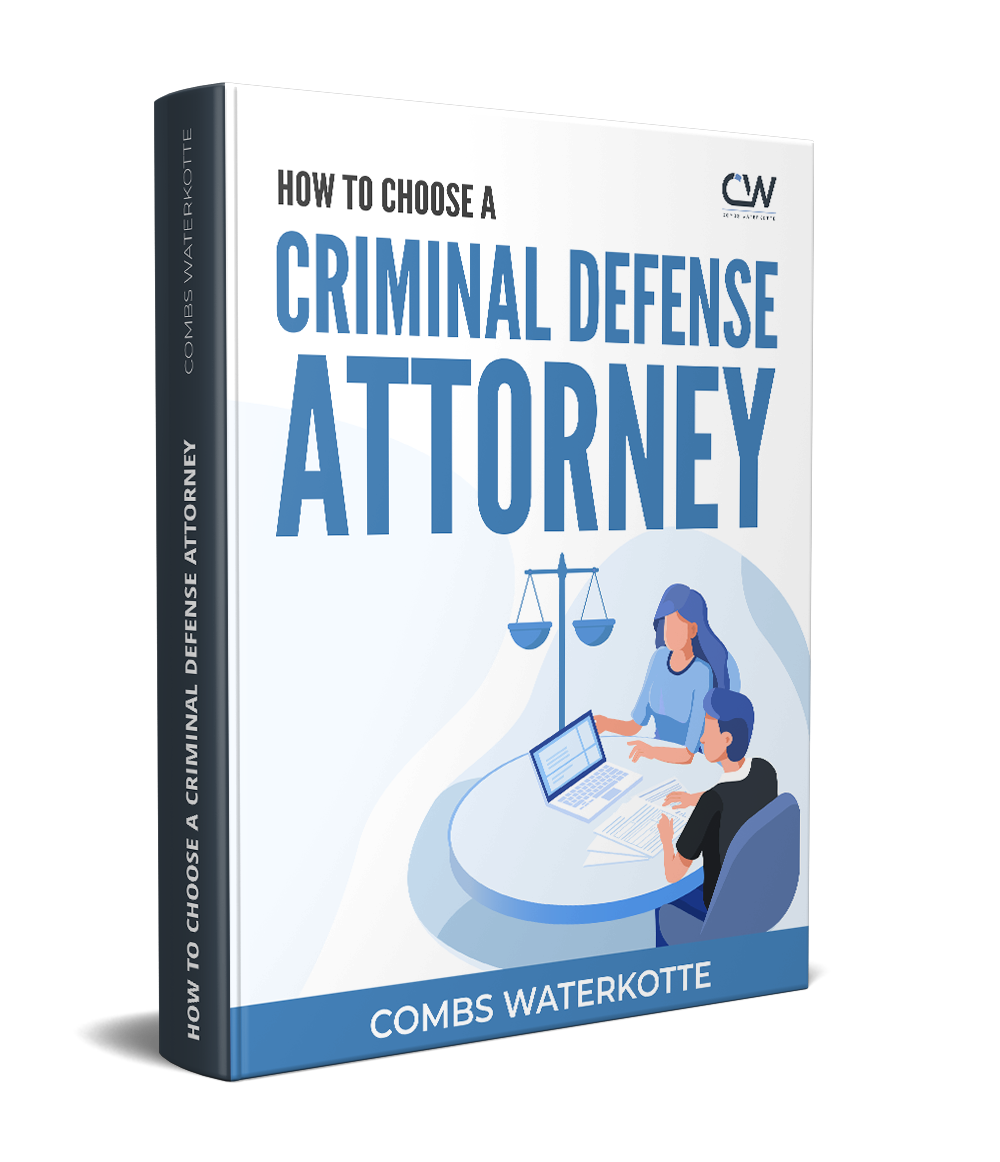
Free book
How to Choose a Criminal Defense Lawyer
Charged with a crime? The lawyer you hire matters. Combs Waterkotte, recognized for top-tier criminal defense in Missouri and Illinois, created this guide to help you find the right attorney. Learn what to look for, key questions to ask, and red flags to avoid.
Understanding the Criminal Case Process in Peoria Heights, IL
Not knowing what happens next makes everything feel worse. While every case is different, most Peoria Heights, IL criminal cases move through a series of predictable stages:
Criminal Investigation Stage
An investigation can begin long before an arrest.
Police may:
- question individuals connected to the allegation
- secure security camera recordings
- seek phone, text, or digital communication records
- execute search warrants
- gather forensic materials
- take statements from complaining witnesses or observers
It is not uncommon for someone to learn of an investigation only when officers make contact. In some cases, informal reports surface before charges are formally pursued.
Arrest, Warrant, or Notice to Appear
Some cases begin with an arrest. In other circumstances, the process starts with:
- a summons
- a warrant
- a written notice to appear in court
- officers requesting that you turn yourself in
An arrest can happen immediately after an alleged incident, or months later after an investigation is completed.
If an arrest occurs in Peoria Heights, IL, law enforcement will complete booking procedures, document the charges, and determine whether you remain in custody or are released pending court. Statements made during or after arrest can directly affect the strength of the prosecution’s case.
Bond Hearings and Pretrial Conditions
After arrest, one of the first major issues is bond and pretrial release conditions.
The court’s bond ruling establishes:
- if you are permitted to leave custody
- which limitations are imposed
- the rules you are required to obey
If granted release, you may face requirements including:
- court-imposed no-contact provisions
- electronic monitoring
- limitations on travel
- prohibitions on possessing firearms
- mandatory drug or alcohol testing
- court-imposed curfews
If bond conditions are violated, consequences can include:
- loss of release status
- separate criminal violations
- heightened supervision requirements
These hearings are significant, as they directly affect your freedom and obligations while charges remain unresolved.
Formal Charges
The state brings official charges grounded in the offenses it believes can be established beyond a reasonable doubt.
Charges may:
- track the offenses listed at arrest
- be increased in severity
- be downgraded
- contain multiple separate allegations
- add penalty enhancements
In some cases, initial charges are aggressive to increase negotiating leverage. In other situations, charges shift as additional evidence is analyzed.
Required Court Hearings and Active Bond Conditions
With charges in place, scheduled court dates follow.
Common appearances include:
- arraignment
- scheduled status updates
- litigation-related hearings
- hearings addressing admissibility of evidence
Bond conditions typically stay active throughout this phase. That means your life may be reshaped for months while the case is pending.
Discovery Phase
This is where the real legal battle begins to play out.
Prosecutors must provide access to the evidence they intend to rely on, such as:
- law enforcement reports
- body cam and dash cam footage
- surveillance video
- witness statements
- forensic testing reports
- phone or digital communication records
- expert reports
This phase is critical for the defense. It is during evidence review that inconsistencies surface, timelines are scrutinized, and unsupported assumptions are challenged.
An arrest narrative can change significantly after a complete evidence analysis.
Motions and Litigation
Effective litigation often produces results before a jury is ever seated.
Strategic filings may:
- contest unlawful stops or searches
- seek suppression of improperly obtained statements
- challenge questionable eyewitness identifications
- prevent unfairly prejudicial evidence from being introduced
- force the prosecution to clarify weak theories
Well-executed motion practice shifts leverage. It forces the prosecution to defend its evidence rather than rely on pressure.
Plea Negotiation Process
In many cases, discussions between the defense and prosecution take place well before trial.
Through negotiation, it may be possible to:
- adjust the severity of allegations
- narrow possible penalties
- avoid certain sentencing enhancements
- craft resolutions that reduce lasting consequences
- settle the case without proceeding to trial
Effective negotiation is built on leverage. When the defense has identified weaknesses in the prosecution’s case, prosecutors are more willing to make reasonable decisions.
Criminal Trial
When the prosecution refuses to be reasonable, trial becomes a real possibility. Early preparation strengthens negotiating power.
Effective trial preparation may:
- challenge whether the state can prove every required element beyond a reasonable doubt
- expose weaknesses in witness credibility
- point out conflicting accounts in documentation and testimony
- scrutinize forensic methodology and conclusions
- present alternative explanations supported by evidence
Being prepared for trial shifts how prosecutors assess their exposure. A team ready for courtroom litigation influences negotiations and strategy long before any verdict is reached.
peoria-county-il
How Criminal Charges Are Often Resolved in Peoria Heights, IL
Most outcomes fall into a few buckets:
- Declined prosecution: in some situations, the strongest outcome occurs before court if prosecutors determine the evidence is insufficient.
- Case Dismissal: cases can be dismissed when proof is weak or legal issues undercut key evidence.
- Charge Reduction: initial charges are sometimes inflated; effective defense work focuses on narrowing the case to what is provable.
- Plea resolution: sometimes negotiation is the smartest move to protect your record and your future.
- Taking the case to trial: if prosecutors refuse fair terms, preparation for trial becomes critical.
Our role is to guide you toward the smartest decision grounded in facts and long-term impact, not panic.
Charges We Defend Against in Peoria Heights, IL
Our firm defends individuals accused of crimes throughout Peoria Heights, IL. We handle matters involving:
Violent Crimes
Charges involving violence in Peoria Heights, IL move fast and get prosecuted hard, especially when prosecutors allege serious injury, weapons, or prior history.
Our defense experience includes cases involving:
- homicide and related offenses
- charges of attempted murder
- aggravated battery
- armed robbery allegations
- kidnapping allegations / related unlawful restraint charges
- firearm-related charges associated with violent allegations
Defense focus: careful timeline reconstruction, self-defense claims, credibility analysis, video review, forensic weaknesses, and proof of intent.
Sex-Related Criminal Allegations
Sex-related criminal accusations in Peoria Heights, IL often carry immediate reputational damage and long-term consequences. Many of these cases hinge on credibility disputes, electronic communications, and the quality of the investigation.
We represent clients facing accusations such as:
- charges of criminal sexual assault
- criminal sexual abuse
- predatory criminal sexual assault
- child-focused sex offense charges
- internet-based sex crime allegations
- sex offender registration-related charges
Defense focus: meticulous evidence analysis, digital communication context, credibility evaluation, procedural scrutiny, and ensuring decisions are based on proof rather than allegation.
Drug Crimes
Drug charge cases in Peoria Heights, IL frequently turn on search-and-seizure questions and whether the evidence actually supports the allegations.
We defend charges involving:
- possession of a controlled substance
- intent-to-deliver allegations
- allegations of delivery or distribution
- drug trafficking allegations
- manufacturing / cultivation allegations
- drug charges involving weapons, vehicles, or conspiracy allegations
Strategic defense focus: traffic stops and initial contact, search legality, consent questions, warrant defects, chain-of-custody issues, lab handling and procedures, informant reliability, and whether “intent” is being overstated.
DUI Defense and Traffic-Related Criminal Allegations
DUI cases in Peoria Heights, IL are not decided solely by whether a BAC number is above or below .08%. They’re about the reason for the stop, procedure, video evidence, and whether impairment is being assumed rather than proven.
We defend clients in matters involving:
- DUI defense
- aggravated DUI charges
- DUI with accident / injury allegations
- traffic-related criminal charges
Defense focus: the legality of the stop, field sobriety testing issues, contradictions on video, and problems with testing procedures.
Domestic-Related Criminal Allegations
Domestic violence accusations in Peoria Heights, IL can trigger immediate consequences: orders of protection, no-contact orders, removal from the home, employment problems, and custody complications.
We handle cases involving:
- domestic battery
- battery or assault allegations arising from a domestic dispute
- violation of orders of protection
- stalking/harassment allegations tied to domestic disputes
Our defense focus: context, credibility, motive, medical evidence, third-party witnesses, digital communications, and preventing short-term “quick fixes” from becoming long-term damage.
White Collar & Financial Crimes
Although these offenses are classified as nonviolent, the legal exposure and professional consequences can be severe. These cases require detailed work and tight narrative control.
We defend:
- fraud allegations
- identity theft charges
- misappropriation claims
- forgery
- theft by deception
- additional business-related criminal accusations
Defense focus: careful review of financial records, intent requirements, chronological detail, control and authorization issues, and determining whether a civil dispute is being treated as criminal conduct.
Firearm and Weapons Allegations
Weapons charges in Peoria Heights, IL can come with enhancements and aggressive assumptions about intent, especially if tied to other allegations.
We represent clients accused of:
- alleged unlawful possession
- weapons enhancements attached to separate allegations
- legal disputes over searches tied to firearm recovery
Defense focus: constitutional search issues, proof of possession, and identifying situations where charges are being stacked to gain negotiating leverage.
Misdemeanor Charges
Some offenses do not involve multi-year sentencing exposure.
But misdemeanor charges in Peoria Heights, IL can still mean jail time, probation, fines, and a record that appears in background checks. They can also affect professional licenses and employment opportunities.
Our firm represents clients facing misdemeanor allegations such as:
- misdemeanor battery and assault
- shoplifting or retail theft
- allegations of criminal property damage
- disorderly conduct allegations
- trespass-related allegations
- along with related misdemeanor offenses
A misdemeanor is never something to take lightly. Any charge needs to be taken seriously and defended vigorously.
Criminal Penalties in Peoria Heights, IL
Sentencing exposure in Peoria Heights, IL varies based on the level of the offense, the underlying allegations, criminal history, and whether enhancement provisions are triggered.
Crimes are generally categorized as felonies or misdemeanors.
Peoria Heights, IL Felony Classes
Peoria Heights, IL divides felonies into five primary classifications, plus first-degree murder as its own category.
- A sentencing range of 20 to 60 years in the Illinois Department of Corrections
- In certain cases, natural life may apply
- Mandatory supervised release follows incarceration
- 6 to 30 years in prison
- In most situations, probation is not an option
- Typically associated with violent conduct, repeat allegations, and specific drug-related offenses
- 4 to 15 years in prison
- In some cases, probation remains available
- 3 to 7 years in prison
- 2–5 years of incarceration
- 1–3 years in prison
In many cases, sentencing ranges can increase through:
- a prior criminal record
- statutory firearm enhancements
- extended-term eligibility
- aggravating factors
Peoria Heights, IL Misdemeanor Classes
Misdemeanors carry lower maximum penalties than felonies, but they still create permanent criminal records and real-life consequences.
- Up to 364 days in jail
- Fines of up to $2,500
- Up to 6 months in jail
- Up to $1,500 in fines
- A maximum of 30 days in jail
- Up to $1,500 in fines
Even when jail is avoided, probation conditions, fines, and collateral consequences can be significant.
Collateral Consequences
Criminal penalties in Peoria Heights, IL are not limited to incarceration. Collateral effects may involve:
- Suspension or revocation of driving privileges
- Limitations on firearm possession
- Licensing board sanctions
- Barriers to employment opportunities
- Potential immigration impacts
- Registration requirements (in certain offenses)
- Lasting reputational harm
Effective criminal defense aims not just to prevent jail, but to reduce the broader consequences of a charge.
Defense Approaches We Apply in Peoria Heights, IL Criminal Cases
A strong criminal defense is rarely built on a single argument. Success depends on aligning the defense approach with the evidence and circumstances. Depending on what the evidence shows, we frequently rely on one or more of the following defenses:
Alibi Defense
An alibi demonstrates that you were in a different location at the time of the alleged offense. An alibi is often supported through:
- statements from credible witnesses
- timestamped video
- receipts, telecommunications records, or digital location data
If corroborated, an alibi directly challenges the state’s ability to place you at the scene.
Fourth Amendment Violations
The Fourth Amendment protects against unreasonable searches and seizures. If police:
- initiated a stop without reasonable suspicion
- searched your belongings or vehicle without lawful justification
- relied on a warrant supported by inaccurate or incomplete information
any evidence recovered during that encounter may be excluded from being used in court.
Lack of Valid Consent
Law enforcement may argue that permission was given for a search. For consent to be legally effective, it must be:
- provided without coercion
- clear
- made with knowledge that refusal was an option
If consent wasn’t legally obtained, evidence seized as a result may be excluded.
Challenging Statements
A statement provided to police does not automatically qualify as valid evidence. Common problems include statements that are:
- coerced
- quoted without full context
- misunderstood
- made without proper Miranda warnings
When constitutional safeguards are ignored, statements may be excluded from evidence.
Eyewitness Misidentification
Eyewitness misidentification is a leading cause of wrongful convictions. Issues such as:
- inadequate lighting conditions
- stress and fear
- improper identification methods
- cross-contamination from other witnesses
can produce unreliable identification evidence. Establishing misidentification undermines the prosecution’s case.
Challenging Digital Evidence
Screenshots, text messages, social media posts, and other digital data can be misleading if context, access, and authenticity are not properly established. Frequent concerns involve:
- metadata manipulation
- uncertain device possession or control
- modified or missing digital files
- gaps in chain of custody
We carefully analyze electronic evidence to assess whether it establishes what prosecutors allege.
Failure to Prove Intent
Many crimes require proof of intent—not just that something happened. For example:
- intent-to-deliver charges
- financial fraud allegations
- acts requiring malicious intent
If the state cannot prove what your intent was at the time of the alleged offense, the case may be subject to dismissal, reduction, or acquittal.
Assertion of Self-Defense
When self-defense is raised, the defense must show that the response was proportionate to an imminent danger. Evidence can include:
- testimony from eyewitnesses
- injuries that align with your account
- evidence showing you were not the aggressor
A valid self-defense claim can excuse what would otherwise be criminal behavior.
Entrapment Defense
Entrapment applies where law enforcement encourages conduct that the person was not otherwise inclined to undertake. Establishing this defense requires showing:
- active government inducement
- lack of predisposition to commit the offense
If successful, entrapment can lead to dismissal.
Asserting Duress
When an alleged act was committed solely due to an immediate threat of harm to you or someone else, and a reasonable person would have responded the same way, duress can serve as a defense. This doesn’t excuse all conduct, but it can negate criminal culpability.
Disputing Forensic or Expert Testimony
Forensic analysis is not flawless. Problems related to:
- toxicology
- DNA handling and interpretation
- ballistics
- latent fingerprint comparison
may weaken the prosecution’s position when methodology, preservation, or interpretation is questionable. We collaborate with qualified specialists to review, question, or clarify technical scientific evidence.
Other Constitutional Violations
Defenses can also be rooted in violations of other constitutional rights—such as:
- unduly suggestive lineup procedures
- coerced confessions
- failure to provide access to counsel
- biased charging decisions or jury selection practices
Identifying these violations may restrict the evidence prosecutors are permitted to present.
Peoria Heights, IL Criminal Defense FAQs
Should I hire a lawyer if I did nothing wrong?
Yes — innocence does not prevent charges. An attorney helps you avoid costly missteps and begins building your defense immediately.
Do criminal charges ever get dropped?
Sometimes, depending on evidence and legal issues. Getting counsel involved early improves the ability to uncover evidentiary problems before positions harden.
Should I take the first plea offer?
Not without reviewing evidence and consequences. Some pleas feel easy now and create long-term problems in employment, licensing, and background checks.
Will my case go to trial?
A significant number of cases conclude without trial, yet preparation must account for that possibility. That posture creates leverage and often improves outcomes.
What if it’s “just” a misdemeanor?
A misdemeanor charge can still carry jail exposure, probation conditions, fines, and permanent record consequences. Minimizing a charge as “just” a misdemeanor can be costly.
What should I do if officers want to question me before charges are filed?
That’s often the best time to call. Early legal involvement can limit risk and help control how the investigation unfolds.
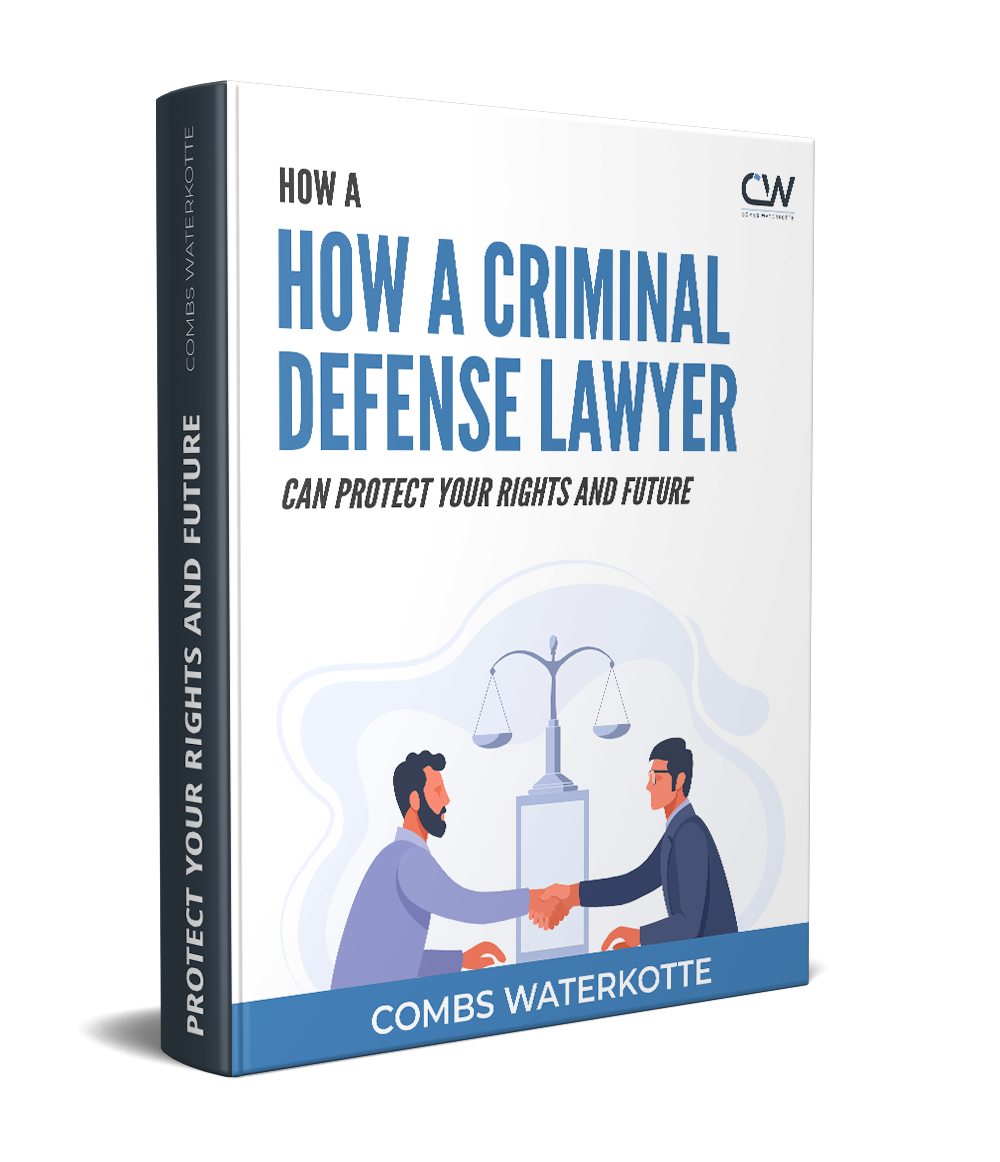
Free book
How a Criminal Defense Attorney Can Protect Your Rights and Future
Combs Waterkotte has over 80 years of experience and over 10,000 cases handled. This ebook helps guide you through the criminal defense process and how an experienced, skilled defense attorney can keep your freedoms intact.
Speak With a Criminal Defense Lawyer in Peoria Heights, IL Today
When you hire Combs Waterkotte’s Peoria Heights, IL criminal defense lawyers, you receive:
- a trial-ready, aggressive defense strategy
- representation built around clear communication and access
- decades of collective courtroom experience
- Peoria Heights, IL criminal defense for serious cases and misdemeanors
Every moment matters after an arrest or charge. Delaying action can limit your options. You can call us at (314) 900-HELP or contact us online to speak to a criminal defense attorney in Peoria Heights, IL today.

