






Traffic Violations Lawyer in Southern Illinois
Most traffic violations are minor infractions that you resolve by paying a fine or challenging the ticket in court—but others carry the risk of imprisonment. At Combs Waterkotte, we understand the many ways these violations can affect your life, from your driver’s license to your insurance status. Our attorneys have over 100 years of combined experience helping people like you take control of their futures in Southern Illinois.
Call our traffic violations defense team in Southern Illinois today at (314) 900-HELP or reach out online for a free, confidential consultation.
Traffic Regulations vs. Other Criminal Laws
Most traffic laws balance traffic flow and safety concerns. For example, eliminating speed limits would allow drivers to reach their destinations sooner. However, this efficiency could come at the cost of more accidents, as well as more injuries and deaths. According to one study, a five-mile-per-hour increase in the speed limit leads to an 8% increase in interstate death rates and a 3% increase in road death rates.
Thus, you can view traffic regulations like DUI laws as preventive. By contrast, many other criminal laws, such as those relating to homicide and assault, are reactive. Assault laws do not prohibit you from arguing with your friends. They only prohibit you from assaulting one of them during the argument.

Statutes Covering Traffic Violations in Southern Illinois
Illinois has hundreds of traffic laws. The easiest way to understand how a traffic violation will affect you is to consider these laws by the offense level as follows:
Petty Offenses and Business Offenses in Southern Illinois
Most states use the term “infraction” to describe minor offenses. Illinois uses two terms in place of “infraction.” Petty and business offenses are legal violations that do not carry the risk of imprisonment. Instead, the person who commits these offenses will generally only face penalties like these:
- Fine
- Restitution
- Probation
- Driver’s license suspension or driving record points
Most traffic offenses in Illinois fall into this category.
Specific traffic violations that typically qualify as petty offenses include:
- Driving without a license or permit
- Disobeying a traffic control signal
- Disobeying a police officer directing traffic
- Exceeding the speed limit by up to 25 miles per hour
- Driving too fast for conditions
- Following too closely
- Failing to report an accident
- Passing improperly
- Driving on the wrong side of the road
- Driving on the shoulder
- Making an illegal U-turn
- Failing to use turn signals
- Failing to yield to a pedestrian
- Running a stop or yield sign
- Parking in a handicap space
- Driving on the sidewalk
- Operating a low-speed vehicle or ATV on streets or highways
- Driving an unsafe vehicle
- Driving a vehicle without the required equipment, such as tail lights
- Driving a vehicle with prohibited equipment, such as windshield tint
Police officers typically handle these violations with a citation describing the fines imposed. The citation may also contain a summons with the court date for challenging your violation. If you pay the fine, the court can cancel your hearing.
Misdemeanor Traffic Violations in Southern Illinois
Misdemeanors are more serious than petty and business offenses. These offenses carry the risk of up to one year of jail time. The following violations are usually charged as misdemeanors in Illinois:
- Driving with a revoked or suspended license
- Possessing a fictitious driver’s license
- Permitting an intoxicated driver to drive
- Allowing an unlicensed driver to operate a commercial motor vehicle
- Failing to show a license and insurance during a traffic stop
- Forging an insurance card
- Fleeing from a police officer
- Filing a false accident report
- Driving under the influence
- Driving recklessly
- Street racing, first offense
- Exceeding the speed limit by more than 25 miles per hour
- Recklessly passing a pedestrian, bicycle, or horse-drawn carriage
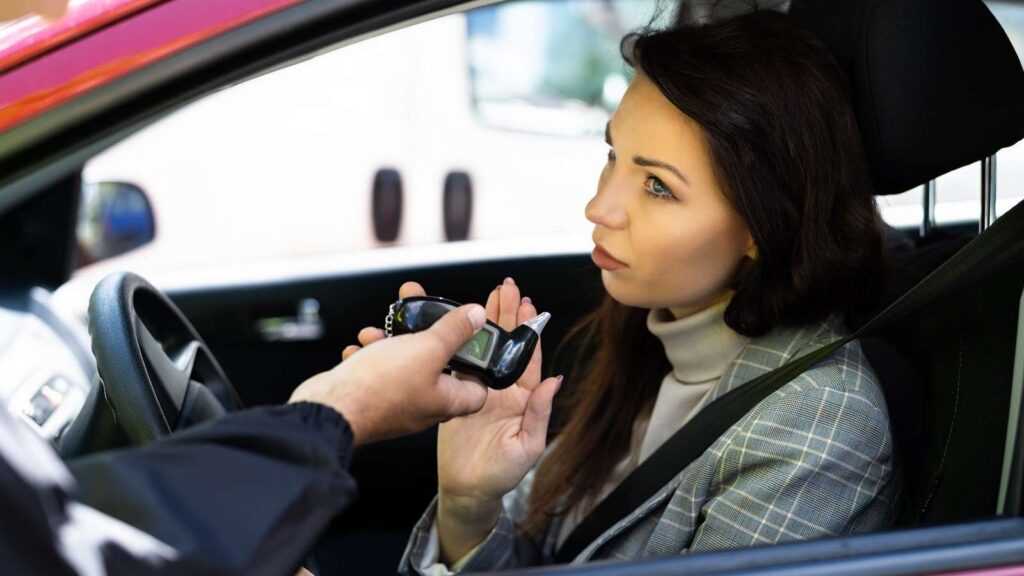
An officer may arrest you after a misdemeanor traffic violation. For example, if the police suspect you of a DUI and you fail a breath test, the officers will likely take you into custody. You may be released on bail after your arraignment.
Alternatively, an officer may issue a summons and allow you to leave. For example, if you were caught driving on a suspended license, an officer may not arrest you. However, you may need to call for a ride since the officer might not allow you to drive away.
Felony Traffic Violations in Southern Illinois
Felony traffic violations are less common. A judge can sentence someone convicted of a felony to a year or longer in prison. Felony traffic offenses can include:
- Producing counterfeit insurance cards
- Leaving the scene of an accident
- Aggravated DUI
- Street racing, repeat offense
- Aggravated street racing
- Vehicular endangerment
- Reckless homicide
- Reckless driving causing great bodily harm or permanent disfigurement
If an officer suspects that you have committed a felony traffic violation, you can face arrest and detention until a judge releases you on bail or recognizance.

Possible Defenses Against Traffic Violations in Southern Illinois
The criminal defense strategies our traffic violation attorneys can use on your behalf will depend on the specific offense. However, some possible defenses that might apply to your case include:
Lack of Intent
Prosecutors do not need to prove intent for many traffic violations. In other words, you can get stopped for speeding even if you were not paying attention and inadvertently exceeded the speed limit.
However, some violations require intent or knowledge. For example, you might defend yourself against DUI charges by showing that someone secretly drugged you. Your lack of knowledge about your impaired state might overcome the charges.
No Violation
We may be able to assert that you did not violate traffic laws. For example, perhaps an officer alleged that you did something that simply did not happen.
Similarly, the officer might have seen a violation but pulled over the wrong car. This error can happen when you drive a common vehicle that the officer confuses with someone else’s vehicle.
Necessity
A necessity defense occurs when you must commit the violation to avoid a greater harm. For example, you might argue that you needed to drive on the sidewalk because you swerved around a child in the street.
Broken Equipment
Your vehicle might have malfunctioned without any prior notice, leading to an inadvertent traffic law violation. For example, your accelerator might get stuck, causing your car to speed. You might escape conviction if we can then shift the blame to your car.
Health Problems
You might have experienced a health problem that led to the violation. Thus, we could argue that you cannot be held criminally responsible for stopping in the middle of the freeway if you passed out.
Penalties for Traffic Violations Under Illinois Law
The penalties you face for a traffic violation depend on the severity of the offense. For instance, an aggravated DUI could result in a lengthy prison sentence since it is a Class 4 felony, and repeat aggravated DUI offenses can be elevated as high as a Class X felony.
Potential penalties for traffic violations in Southern Illinois can include the following:
| Offense Level | Punishment |
|---|---|
| Class X felony, such as a sixth aggravated DUI | Six to 30 years in prison and a fine of up to $25,000 |
| Class 1 felony, such as a fifth aggravated DUI | Four to 15 years in prison and a fine of up to $25,000 |
| Class 2 felony, such as reckless homicide or a third or fourth aggravated DUI | Three to seven years in prison and a fine of up to $25,000 |
| Class 3 felony, such as reckless driving causing great bodily harm to a student or crossing guard | Two to five years in prison and a fine of up to $25,000 |
| Class 4 felony, such as reckless driving causing great bodily harm or an aggravated DUI | One to three years in prison and a fine of up to $25,000 |
| Class A misdemeanor, such as displaying a false insurance card or speeding at least 35 miles per hour above the limit | Up to one year in jail and a fine of up to $2,500 |
| Class B misdemeanor, such as speeding 26 to 34 miles per hour over the limit | Up to six months in jail and a fine of up to $2,500 |
| Class C misdemeanor, such as disobeying a police officer directing traffic | Up to 30 days in jail and a fine of up to $1,500 |
| Petty offense, such as equipment violations or failing to use turn signals | A fine of up to $1,000 |
| Business offense, such as having a video device in a location visible to the driver | The fine specified in the statute |