

Criminal Defense Lawyer Canton, IL. When you are under investigation, taken into custody, or formally charged with a crime in Canton, IL, the seriousness of what you’re facing becomes immediately clear. The potential consequences reach far beyond the courtroom — affecting your liberty, your background, your livelihood, and your standing in the community. That is why securing an aggressive, trial-ready Canton, IL criminal defense lawyer immediately is critical.
When prosecutors in Canton, IL pursue serious charges, Combs Waterkotte is prepared to push back with a disciplined defense strategy.We take a straightforward approach:
- We act quickly.
- We take your case personally.
- We build every case like it could go to trial.
Is it time to start fighting back against the charges you’re facing in Canton, IL? Speak with our criminal defense attorneys today at (314) 900-HELP, or reach out online to schedule your free, confidential case review.
Cases Handled
Over 10,000
Jail Days Saved
Over 1 Million
Google Reviews
500+ Perfect
Legal Experience
100+ Years
Here’s what this guide explains:
- What to do immediately after an arrest or criminal charge in Canton, IL
- Why hiring a trial-prepared criminal defense lawyer can directly impact your case
- How a criminal case in Canton, IL progresses from investigation through final outcome
- Common criminal charges we defend statewide
- Illinois felony and misdemeanor classifications and sentencing ranges
- Collateral consequences beyond jail time
- Strategic defenses commonly applied in Canton, IL courtrooms
- How criminal cases commonly resolve, including negotiation and trial
Under Investigation or Charged in Canton, IL? Act Now
If law enforcement has contacted you, requested an interview, arrested you, scheduled a court appearance, or you believe charges are imminent, take the following steps immediately:
- Stop talking about the case. Do not speak to law enforcement, friends, or anyone else about it — including in messages or online.
- Do not “clear it up” in an interview. That’s how people create evidence against themselves.
- Keep all relevant information intact. Screenshots, messages, call logs, receipts—don’t delete anything.
- Document a timeline as soon as possible. Even a basic chronology can become an important defense resource.
- Call a criminal defense lawyer in Canton, IL immediately. The earlier a defense attorney steps in, the more options may be available.

Why Choose Combs Waterkotte for Canton, IL Criminal Defense
Plenty of attorneys claim they will fight aggressively. The difference is in the strategy behind that fight and whether the firm is equipped for the charges you’re up against.
100+ Years of Combined Experience
Seasoned defense work involves identifying vulnerabilities: thin probable cause, careless investigative work, credibility problems, misinterpreted forensic or digital evidence, and procedural missteps prosecutors prefer not to argue in open court.
Built for Trial — Not Just Negotiation
When a defense lawyer avoids trial risk, prosecutors notice. Our firm prepares each case with the expectation of standing before a judge or jury. That readiness strengthens negotiating power and can directly influence the final result.
Representation Built Around You
You deserve honesty and clarity. You’ll get straight answers, a real plan, and communication that respects you. At our firm, you are not treated like a case file. Because we do not bill hourly, you can contact us whenever you need answers — including evenings and weekends. You will be given direct contact access to the lawyer handling your defense.
Strategic Resources Beyond a Single Attorney
A strong defense is never a solo effort. We collaborate with skilled legal staff, professional investigators, and qualified expert witnesses when the case demands it. From reviewing forensic evidence to interviewing witnesses and reconstructing timelines, we use every available resource to build a strong, evidence-based defense tailored to your case.
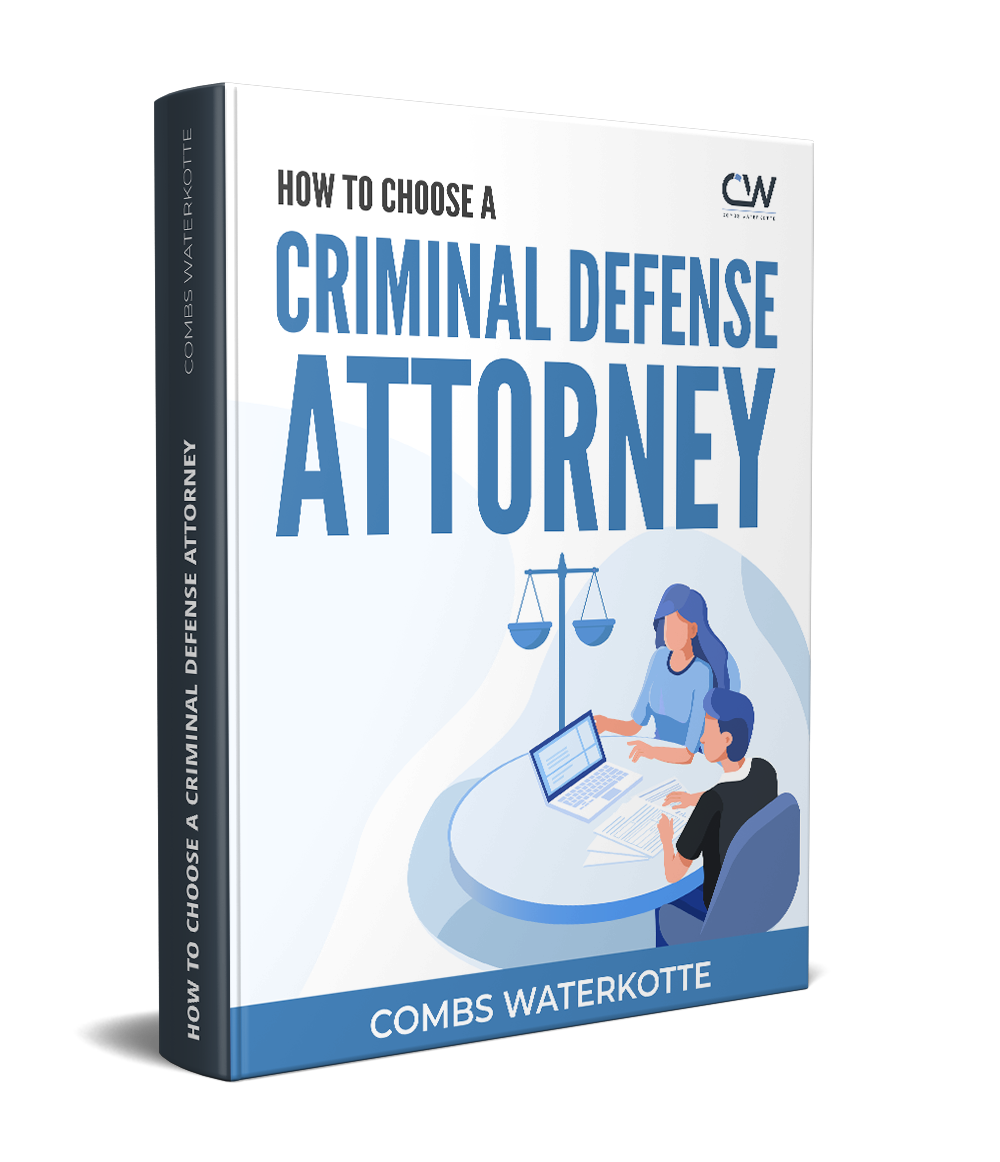
Free book
How to Choose a Criminal Defense Lawyer
Charged with a crime? The lawyer you hire matters. Combs Waterkotte, recognized for top-tier criminal defense in Missouri and Illinois, created this guide to help you find the right attorney. Learn what to look for, key questions to ask, and red flags to avoid.
Understanding the Criminal Case Process in Canton, IL
Uncertainty about what comes next often adds to the stress. Although every situation has unique facts, criminal cases in Canton, IL typically follow a structured path:
Investigation
Many investigations start well before anyone is taken into custody.
During this stage, law enforcement may:
- interview witnesses and involved parties
- gather surveillance footage
- seek phone, text, or digital communication records
- carry out court-approved search warrants
- secure and analyze physical evidence
- take statements from complaining witnesses or observers
In some cases, you don’t even know you’re under investigation until law enforcement contacts you. In other situations, word spreads informally before any official step occurs.
Arrest, Warrant, or Notice to Appear
In some situations, law enforcement makes an arrest at the outset. Others begin with:
- a court-issued summons
- a warrant authorized by a judge
- a citation requiring a court appearance
- a request from officers to surrender voluntarily
An arrest can happen immediately after an alleged incident, or months later after an investigation is completed.
When you are arrested for a criminal offense in Canton, IL, law enforcement will complete booking procedures, document the charges, and determine whether you remain in custody or are released pending court. Statements made during or after arrest can directly affect the strength of the prosecution’s case.
Pretrial Release and Bond Conditions
One of the earliest and most important hearings after arrest involves bond and release terms.
The court’s bond ruling establishes:
- whether you remain detained or are released
- what legal restrictions you must follow
- what conditions you must follow
Pretrial release may include conditions like:
- orders prohibiting contact with certain individuals
- electronic monitoring
- limitations on travel
- limitations on weapon access
- substance testing requirements
- restricted hours of movement
Violating bond conditions can result in:
- revocation of release
- new criminal allegations
- more restrictive conditions
Bond hearings are not minor procedural moments. They shape how you live while the case is pending.
Formal Charges
The state brings official charges grounded in the offenses it believes can be established beyond a reasonable doubt.
Charges may:
- reflect the initial arrest
- be elevated to more serious counts
- be downgraded
- include multiple counts
- attach statutory sentencing enhancements
In some cases, initial charges are aggressive to increase negotiating leverage. In other situations, charges shift as additional evidence is analyzed.
Required Court Hearings and Active Bond Conditions
Once charges are filed, court appearances begin.
Court proceedings often involve:
- arraignment
- scheduled status updates
- hearings on filed motions
- contested evidentiary proceedings
Release conditions remain in effect during this time. As a result, daily routines and freedoms can remain restricted for months.
Discovery and Evidence Review
This stage is where the case starts to take its true shape.
The prosecution must turn over all evidence, often including:
- law enforcement reports
- officer camera footage
- security video recordings
- documented witness accounts
- laboratory forensic results
- phone or digital communication records
- reports prepared by expert witnesses
The foundation of an effective defense is built during this review. This is where inconsistencies appear, timelines are tested, and assumptions are exposed.
An arrest narrative can change significantly after a complete evidence analysis.
Strategic Motion Practice
Many criminal cases are won long before trial through strategic motion practice.
Through motions, the defense can:
- argue that searches or seizures violated constitutional protections
- exclude statements gathered in violation of rights
- exclude unreliable identifications
- restrict damaging but inadmissible material
- compel prosecutors to justify unsupported arguments
Strategic litigation builds negotiating power. It requires prosecutors to prove the strength of their case instead of relying on intimidation.
Plea Negotiation Process
The majority of criminal matters conclude without trial, with negotiations occurring at multiple stages.
Negotiation can:
- adjust the severity of allegations
- narrow possible penalties
- minimize enhancement-related penalties
- craft resolutions that reduce lasting consequences
- conclude the matter without jury uncertainty
Productive plea discussions require leverage. When the defense has identified weaknesses in the prosecution’s case, prosecutors are more willing to make reasonable decisions.
Criminal Trial
When negotiations fail to produce a workable outcome, trial is the next step. Early preparation strengthens negotiating power.
Effective trial preparation may:
- contest whether prosecutors can establish each required element beyond a reasonable doubt
- highlight credibility issues with witnesses
- identify contradictions within reports and sworn testimony
- question forensic reliability
- present alternative explanations supported by evidence
Being prepared for trial shifts how prosecutors assess their exposure. A defense team that is prepared to stand in front of a jury creates leverage at every stage of the case, even if the case ultimately resolves before a verdict.
fulton-county-il
Typical Outcomes in Canton, IL Criminal Cases
In most cases, resolutions tend to fall into several general categories:
- No formal charges: sometimes the best result happens before court when the evidence doesn’t support filing.
- Dropped or Dismissed: dismissal can occur when evidentiary gaps or legal defects undermine the state’s case.
- Charge Reduction: early allegations may be aggressive; strategic litigation can bring the case in line with what the evidence actually supports.
- Plea agreement: in certain cases, a negotiated resolution best safeguards your long-term interests.
- Trial: when negotiation fails, being fully prepared for trial makes the difference.
Our job is to help you choose the best path based on evidence and consequences—not fear.
Criminal Cases We Handle in Canton, IL
We are ready and willing to defend anyone accused of or charged with a crime in Canton, IL. Charges we handle include:
Violent Offenses
Charges involving violence in Canton, IL move fast and get prosecuted hard, especially when prosecutors allege serious injury, weapons, or prior history.
We represent clients accused of:
- homicide and related offenses
- attempted murder
- aggravated battery
- armed robbery allegations
- kidnapping / unlawful detention allegations
- weapons-related offenses connected to alleged violent acts
Strategic focus: careful timeline reconstruction, self-defense claims, credibility analysis, video review, forensic weaknesses, and proof of intent.
Sex-Related Criminal Allegations
Sex offense allegations in Canton, IL often carry immediate reputational damage and long-term consequences. These cases often come down to credibility fights, digital evidence, and investigative shortcuts.
We defend allegations and charges involving:
- allegations of criminal sexual assault
- sexual abuse allegations
- predatory criminal sexual assault
- child exploitation-related allegations
- internet sex crimes
- registration violations or failure to register
Defense focus: careful examination of digital records, motive analysis, statement inconsistencies, investigative methods, and maintaining a fact-based approach instead of emotional reaction.
Drug Crimes
Drug-related prosecutions in Canton, IL are often won or lost on search-and-seizure issues and what the evidence really shows.
We defend charges involving:
- controlled substance possession
- possession with intent to deliver
- delivery / distribution
- trafficking-related charges
- manufacturing or cultivation allegations
- drug allegations connected to firearms, vehicles, or claimed conspiracies
Our defense focus: traffic stops and initial contact, search legality, consent questions, warrant defects, chain-of-custody issues, lab handling and procedures, informant reliability, and whether “intent” is being overstated.
DUI & Serious Traffic-Related Criminal Charges
DUI charges in Canton, IL don’t just come down to whether you were above or below .08% BAC. They’re about the reason for the stop, procedure, video evidence, and whether impairment is being assumed rather than proven.
We handle:
- DUI defense
- aggravated DUI charges
- DUI allegations involving an accident or injury
- traffic-related criminal charges
Strategic defense focus: traffic-stop legality, field-testing issues, video contradictions, testing-procedure problems.
Domestic Violence & Related Charges
Domestic-related allegations in Canton, IL can trigger immediate consequences: orders of protection, no-contact orders, removal from the home, employment problems, and custody complications.
We defend:
- domestic battery
- battery or assault allegations arising from a domestic dispute
- orders-of-protection violation charges
- harassment or stalking allegations arising from domestic situations
Defense focus: the full context, credibility issues, motive and bias, medical documentation, third-party witnesses, digital communications, and avoiding short-term decisions that create long-term consequences.
Financial & Business-Related Criminal Charges
Financial crimes may appear nonviolent on paper, yet the potential penalties and reputational damage are significant. Successful defense requires meticulous review of records and strategic management of how the story is presented.
Our firm represents clients facing:
- allegations of fraud
- identity theft
- misappropriation claims
- forgery
- theft-by-deception charges
- additional business-related criminal accusations
Strategic defense focus: careful review of financial records, intent requirements, chronological detail, control and authorization issues, and determining whether a civil dispute is being treated as criminal conduct.
Firearm and Weapons Allegations
In Canton, IL, weapons-related prosecutions may include enhanced penalties and prosecutorial assumptions, especially when connected to separate allegations.
Our defense work includes:
- unlawful possession allegations
- weapons enhancements attached to separate allegations
- search-and-seizure challenges involving recovered weapons
Our defense focus: the legality of the search, possession issues, and whether prosecutors are stacking allegations to increase leverage.
Defense Against Misdemeanor Allegations
Some offenses do not involve multi-year sentencing exposure.
Even so, misdemeanor charges in Canton, IL may carry jail exposure, probation terms, fines, and a lasting record that surfaces in background screenings. They can also affect professional licenses and employment opportunities.
We defend misdemeanor charges, including:
- misdemeanor battery and assault
- shoplifting or retail theft
- criminal damage to property
- charges of disorderly conduct
- criminal trespass
- and other comparable allegations
There is no such thing as a crime that is “only” a misdemeanor. Every allegation deserves careful attention and a strong defense strategy.
Criminal Penalties in Canton, IL
The penalties for a criminal conviction in Canton, IL are determined by the charge classification, the alleged facts, any prior record, and applicable statutory enhancements.
Offenses are typically divided into felony and misdemeanor categories.
How Felonies Are Classified in Canton, IL
Under Illinois law applicable in Canton, IL, felonies fall into five principal categories, in addition to first-degree murder as a standalone classification.
- A sentencing range of 20 to 60 years in the Illinois Department of Corrections
- In certain cases, natural life may apply
- Mandatory supervised release follows incarceration
- A prison range of 6 to 30 years
- In most situations, probation is not an option
- Typically associated with violent conduct, repeat allegations, and specific drug-related offenses
- A sentencing range of 4 to 15 years
- Probation may be possible depending on the offense
- A range of 3 to 7 years of incarceration
- A sentencing range of 2 to 5 years
- A range of 1 to 3 years of incarceration
In many cases, sentencing ranges can increase through:
- previous felony convictions
- firearm enhancements
- extended-term sentencing eligibility
- statutory aggravating factors
Canton, IL Misdemeanor Classes
Misdemeanors carry lower maximum penalties than felonies, but they still create permanent criminal records and real-life consequences.
- As much as 364 days of incarceration
- Up to $2,500 in fines
- As much as 6 months of incarceration
- A potential fine of $1,500
- As much as 30 days of incarceration
- A potential fine of up to $1,500
Even when jail is avoided, probation conditions, fines, and collateral consequences can be significant.
Additional Consequences Beyond Jail
The impact of a conviction in Canton, IL often extends beyond jail time. Collateral effects may involve:
- Loss of driving privileges
- Restrictions on gun ownership
- Professional licensing discipline
- Employment limitations
- Immigration consequences
- Registration requirements (in certain offenses)
- Long-term damage to reputation
The goal of criminal defense is not only to avoid incarceration, but to limit the effects of your charge as much as possible.
Fulton County Resources
Below are quick links to important websites that may assist you with your legal matters in Fulton County and Illinois.
- Illinois Criminal Defense Resources
- Illinois Criminal Defense Practice Areas
- Illinois Compiled Statutes
- Illinois Courts
- Illinois Supreme Court Rules
- Illinois Secretary of State
- Illinois State Police
- Illinois Department of Corrections
- Fulton County Website
- Fulton County Court
- Fulton County Jail
- Fulton County Sheriff’s Office
- Christopher Combs
- Steven Waterkotte
Criminal Defense Strategies Frequently Used in Canton, IL
A strong criminal defense is rarely built on a single argument. It’s about applying the right strategy to the facts of your case. Depending on what the evidence shows, we frequently rely on one or more of the following defenses:
Establishing an Alibi
An alibi defense demonstrates that you were in a different location at the time of the alleged offense. This can be backed by:
- witness testimony
- video footage with verified timestamps
- receipts, phone records, GPS or location data
When properly supported, an alibi undermines the prosecution’s claim that you were present.
Fourth Amendment Challenges
The Fourth Amendment to the U.S. Constitution limits the government’s ability to conduct unreasonable searches or seizures. If law enforcement:
- stopped you without reasonable suspicion
- searched your person, property, or vehicle without valid consent or probable cause
- relied on a warrant supported by inaccurate or incomplete information
any evidence recovered during that encounter may be excluded from being used in court.
Lack of Valid Consent
Officers frequently assert that a search was conducted with consent. But consent must be:
- provided without coercion
- unequivocal
- based on an awareness of the right to decline
When consent is invalid, any evidence obtained may be suppressed.
Suppressing Improper Statements
A statement provided to police does not automatically qualify as valid evidence. They may be:
- coerced
- selectively presented
- incorrectly characterized
- secured in violation of Miranda requirements
If the government failed to respect your rights, those statements can be suppressed or disregarded.
Challenging Identification
Eyewitness misidentification is a leading cause of wrongful convictions. Contributing factors include:
- poor lighting
- fear during the incident
- overly suggestive lineup procedures
- influence of other witnesses
can produce unreliable identification evidence. Establishing misidentification undermines the prosecution’s case.
Disputing Digital Evidence
Electronic records — including texts and social media posts — may mislead if ownership, access, and authenticity are not firmly established. Common issues include:
- questions surrounding metadata integrity
- disputes over who controlled the device
- modified or missing digital files
- breaks in the chain of custody
Our review of digital material focuses on whether it actually supports the prosecution’s assertions.
Absence of Criminal Intent
Many crimes require proof of intent—not just that something happened. Such as:
- intent-to-deliver charges
- fraud-related offenses
- malicious conduct
If the state cannot prove what your intent was at the time of the alleged offense, the case may be subject to dismissal, reduction, or acquittal.
Assertion of Self-Defense
When self-defense is raised, the defense must show that the response was proportionate to an imminent danger. Supporting evidence may involve:
- testimony from eyewitnesses
- physical injuries consistent with your version
- the absence of aggression on your part
If credible, self-defense justifies or excuses the conduct.
Raising Entrapment
The defense of entrapment occurs when law enforcement induces someone to commit a crime they otherwise would not have committed. Establishing this defense requires showing:
- law enforcement persuasion
- lack of predisposition to commit the offense
A successful entrapment defense may result in dismissal of charges.
Duress or Coercion
If you committed an act only because of immediate threat of harm (to yourself or others), and a reasonable person in the same situation would have acted similarly, duress may be a valid defense. This doesn’t excuse all conduct, but it can negate criminal culpability.
Challenging Expert or Forensic Evidence
Forensic science isn’t infallible. Mistakes in:
- chemical testing procedures
- DNA collection or analysis
- firearms analysis
- latent fingerprint comparison
can all undermine the state’s case if underlying methodology, handling, or interpretation is flawed. Our firm consults independent experts to evaluate and contest complex forensic findings.
Additional Constitutional Challenges
Legal challenges may be based on infringements of other constitutional rights, for example:
- improper lineup procedures
- statements obtained through coercion
- failure to provide access to counsel
- biased charging decisions or jury selection practices
Identifying these violations may restrict the evidence prosecutors are permitted to present.
Canton, IL Criminal Defense FAQs
Should I hire a lawyer if I did nothing wrong?
Absolutely. Being innocent does not stop prosecutors from filing charges. Early legal representation reduces risk and positions your defense before problems compound.
Is it possible to get charges reduced or dismissed?
Sometimes, depending on evidence and legal issues. Getting counsel involved early improves the ability to uncover evidentiary problems before positions harden.
Do I have to accept the initial plea deal?
You should not accept any offer without a thorough review of the case and consequences. An agreement that seems convenient today may create lasting issues with employment, licensing, or background screenings.
Is trial likely in my case?
Many cases resolve before trial, but your defense should be prepared as if trial is possible. Being trial-ready strengthens negotiating leverage and can improve results.
Does a misdemeanor really matter?
Misdemeanors can still mean jail time, probation, fines, and a record that follows you. “Only” is a dangerous word in criminal court.
What if I haven’t been charged yet, but police want to talk?
Pre-charge contact is frequently the ideal time to involve an attorney. Having representation before charges are filed can stop harmful statements and influence the direction of the case.
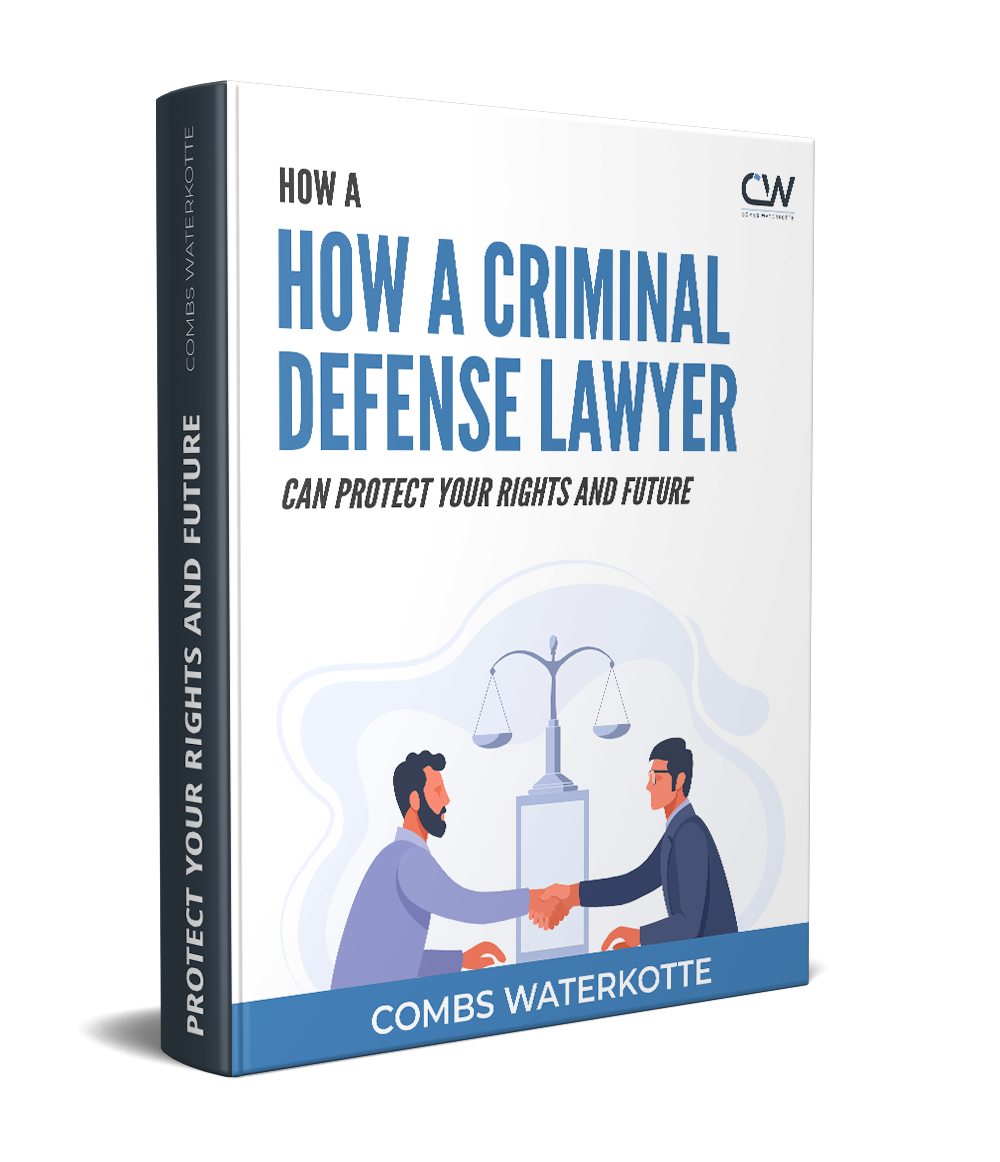
Free book
How a Criminal Defense Attorney Can Protect Your Rights and Future
Combs Waterkotte has over 80 years of experience and over 10,000 cases handled. This ebook helps guide you through the criminal defense process and how an experienced, skilled defense attorney can keep your freedoms intact.
Talk to a Criminal Defense Lawyer in Canton, IL Today
Choosing Combs Waterkotte’s Canton, IL criminal defense lawyers means you have:
- aggressive, trial-ready defense
- a client-focused approach
- decades of collective courtroom experience
- Canton, IL criminal defense for serious cases and misdemeanors
Time matters immediately following an arrest or criminal accusation. Don’t wait to start building your defense. Call (314) 900-HELP or reach out online to speak directly with a criminal defense attorney in Canton, IL.

