

Federal Homicide Lawyer Fremont, CA. Once a homicide investigation is handled in federal court, the consequences often become much more serious. Federal investigators frequently spend significant time developing the case, prosecutors have powerful tools at their disposal, and the penalties can include life imprisonment and, in some cases, the death penalty.
Being arrested in Fremont, CA, receiving a subpoena, or being contacted by federal agents during a death investigation is a clear sign that the situation is serious. At that point, every decision moving forward becomes important. The statements you make, the information you provide, and the timing of legal representation can affect how the case unfolds.
Combs Waterkotte‘s Fremont, CA federal criminal defense lawyers handle serious violent crime allegations, including cases that move into federal court. If you need a federal murder lawyer in Fremont, CA, involving experienced legal counsel as early as possible is usually the safest step. Early involvement allows a defense team to begin reviewing evidence and investigating the case before prosecutors finalize their theory.
To get in touch with a federal homocide lawyer in Fremont, CA, call (314) 900-HELP or submit a request online. Our firm offers confidential case evaluations at no cost and can begin assessing your defense immediately.
Cases Handled
Over 10,000
Jail Days Saved
Over 1 Million
Google Reviews
500+ Perfect
Legal Experience
100+ Years
Legal Videos
Can Federal Charges Be Reduced Or Dismissed?
Can Federal Charges Be Reduced Or Dismissed? Chris Combs and Andrew Russek, lawyers with Combs Waterkotte, a leading federal criminal defense firm, talk about proffers, probation, and federal …
Should I Hire A Lawyer Experienced In Federal Defense?
Should I Hire A Lawyer Experienced In Federal Defense? Chris Combs and Andrew Russek from the leading federal criminal defense firm Combs Waterkotte discuss the importance of hiring a lawyer with …
What Penalties Apply To Federal Sex Crime Convictions?
What Penalties Apply To Federal Sex Crime Convictions? Andrew Russek and Chris Combs from Combs Waterkotte federal criminal defense firm discuss potential penalties related to federal sex crime …
Do Federal Sex Crimes Require Sex Offender Registration?
Do Federal Sex Crimes Require Sex Offender Registration? Andrew Russek, a lawyer with leading federal criminal defense firm Combs Waterkotte, discusses the sex offender registry and federal sex …
What Makes A Sex Crime Federal Rather Than State?
What Makes A Sex Crime Federal Rather Than State? Andrew Russek and Chris Combs of Combs Waterkotte discuss factors that play into a sex crime being classified as federal, rather than …
What Are Federal Sex Crime Charges?
What Are Federal Sex Crime Charges? Chris Combs and Andrew Russek of Combs Waterkotte discuss the most common federal sex crime charges. Interview Transcript Scott Michael Dunn: Well, let's …
Can Federal Charges Be Reduced Or Dismissed?
Can Federal Charges Be Reduced Or Dismissed? Chris Combs and Andrew Russek, lawyers with Combs Waterkotte, a leading federal criminal defense firm, talk about proffers, probation, and federal …
Should I Hire A Lawyer Experienced In Federal Defense?
Should I Hire A Lawyer Experienced In Federal Defense? Chris Combs and Andrew Russek from the leading federal criminal defense firm Combs Waterkotte discuss the importance of hiring a lawyer with …
What Penalties Apply To Federal Sex Crime Convictions?
What Penalties Apply To Federal Sex Crime Convictions? Andrew Russek and Chris Combs from Combs Waterkotte federal criminal defense firm discuss potential penalties related to federal sex crime …
Do Federal Sex Crimes Require Sex Offender Registration?
Do Federal Sex Crimes Require Sex Offender Registration? Andrew Russek, a lawyer with leading federal criminal defense firm Combs Waterkotte, discusses the sex offender registry and federal sex …
What Makes A Sex Crime Federal Rather Than State?
What Makes A Sex Crime Federal Rather Than State? Andrew Russek and Chris Combs of Combs Waterkotte discuss factors that play into a sex crime being classified as federal, rather than …
What Are Federal Sex Crime Charges?
What Are Federal Sex Crime Charges? Chris Combs and Andrew Russek of Combs Waterkotte discuss the most common federal sex crime charges. Interview Transcript Scott Michael Dunn: Well, let's …
This page covers:
- What circumstances turn a homicide into a federal case
- How federal law distinguishes murder from manslaughter
- How felony murder works under federal law
- When prosecutors add hate crime allegations to homicide cases
- The potential punishment for federal homicide convictions
- Steps to consider if federal agents reach out to you
- Common defense strategies in federal homicide cases

When Does a Homicide Become a Federal Case in Fremont, CA?
The majority of homicide cases are prosecuted in state court. That leads many people to wonder why the federal government would step in.
A killing may become a federal homicide case when the circumstances trigger federal jurisdiction.
1) The Incident Happened on Federal Property
Federal courts may handle a homicide when the incident occurs on land or property controlled by federal authorities. People often think only of military bases, but the category can also include federal buildings, certain government facilities, national parks, and other federally managed locations.
2) The Alleged Victim Was a Federal Official, Federal Employee, or Immediate Family Member
Some homicide cases in Fremont, CA fall under federal law because of who the victim is.
- a federal law enforcement officer (such as an FBI agent, DEA agent, or U.S. Marshal)
- a federal judge or court official
- a federal corrections officer or prison employee
- another federal employee performing official duties
Federal statutes may also apply when violence targets an official’s spouse, child, or other immediate family member in order to intimidate, retaliate against, or influence that official.
In practical terms, the law treats attacks on certain family members as a way of targeting the federal official.
3) The Death is Tied to Another Federal Crime
Federal authorities sometimes investigate a death as one piece of a larger criminal matter. Federal prosecutors may argue the death occurred in connection with a larger federal offense, for example:
- kidnapping with an interstate element
- organized criminal activity being investigated federally
- other federal offenses where a death occurred during the conduct
4) The Case Involves Civil Rights or Hate-Crime Allegations
In certain situations, federal prosecutors can bring charges when they claim the violence was motivated by bias against a protected group and the legal requirements of federal law are met. (“hate crimes”). If the incident results in a death, the legal exposure can increase dramatically.
Some Homicide Cases Proceed in Both State and Federal Court
Some investigations result in both state and federal charges. Federal authorities stepping in does not always stop the state case. Instead, it may lead to parallel investigations or separate cases.
The “dual sovereignty doctrine” means state and federal governments are treated as separate sovereigns for prosecution purposes. As a result, a person charged in both systems could defeat one case and still face conviction in the other.
What Federal Charges Apply in Homicide Cases?
In legal terms, “homicide” broadly refers to the killing of one person by another.
The exact federal charge depends largely on what prosecutors claim happened and, more importantly, what they believe they can prove about the defendant’s intent and actions.
Below are the categories that most often appear in federal homicide prosecutions in Fremont, CA.
Federal Murder (First-Degree and Second-Degree)
Federal law defines murder in 18 U.S.C. § 1111 as the unlawful killing of another person carried out with “malice aforethought.” In plain language, this means prosecutors claim the defendant acted with intent to kill or with an extreme disregard for human life.
The statute distinguishes between first-degree murder and second-degree murder.
First-Degree Murder
Under federal law, first-degree murder generally refers to killings that are willful, deliberate, and premeditated. In other words, prosecutors argue the killing was carried out intentionally after some degree of reflection.
In some circumstances, federal law considers a killing first-degree murder even if prosecutors do not rely on premeditation. For example, deaths that occur during certain serious felony crimes may qualify. Such offenses may include:
- arson
- escape from custody
- kidnapping
- robbery
- burglary
- aggravated sexual abuse or sexual abuse
- child exploitation
In these situations, the killing may qualify as first-degree murder even if prosecutors do not claim the death was intentional. This theory is commonly known as felony murder.
Second-Degree Murder
Under federal law, second-degree murder applies to killings involving malice but not premeditation.
In practical terms, prosecutors may pursue second-degree murder when they claim the defendant:
- caused a death intentionally but without advance planning
- acted with extreme recklessness that showed a disregard for human life.
Courts sometimes describe this second situation as “depraved heart” murder, meaning conduct so dangerous it reflects a conscious disregard for life.
Understanding Felony Murder Under Federal Law
Many people misunderstand felony murder because it does not always require proof that someone meant for a death to occur.
In plain language, felony murder is a theory that can allow a murder charge when:
- they were carrying out or attempting to carry out a serious felony, and
- a death happens while that crime is being committed.
In federal court, felony murder is classified as first-degree murder when a death occurs during certain enumerated felonies, including arson, kidnapping, robbery, burglary, or similar offenses listed in the statute.
In felony murder cases, the government typically does not need to prove an intent to kill. The government’s theory is that the intent to commit the underlying felony can be legally imputed to the resulting death.
Felony murder cases often turn on questions such as:
- whether the felony allegation holds up under scrutiny
- whether the death truly happened “during” the felony
- the extent of the accused person’s participation
- whether the government’s timeline matches the evidence
Manslaughter Charges in Federal Court
Unlike murder, federal manslaughter does not involve the same allegation of “malice” that supports a murder charge.
Voluntary Manslaughter
Voluntary manslaughter usually involves an intentional killing that happens in the middle of a sudden, intense confrontation. The law often describes this as acting in the “heat of passion.”
Put simply, prosecutors may claim the killing was intentional but not preplanned.
One example is a sudden confrontation that escalates into violence and leads to a fatal result, which prosecutors may treat as voluntary manslaughter rather than murder.
Involuntary Manslaughter
Involuntary manslaughter can be charged when prosecutors claim a person caused a death through reckless or grossly negligent behavior, not intentional killing.
Put simply, the government argues the death resulted from dangerous conduct rather than an intentional plan to kill.
One example is when highly reckless conduct, such as dangerously impaired driving or similar negligent behavior, causes a fatal incident and prosecutors pursue involuntary manslaughter.
When Prosecutors File Attempted Murder or Manslaughter Charges
In some homicide investigations in Fremont, CA, the alleged victim survives and the case proceeds differently. If the alleged victim survives, prosecutors may pursue attempt charges instead.
In many cases, attempted homicide charges are built using evidence such as:
- statements (in person, by phone, or in jail calls)
- texts, social media messages, and search history
- location data and surveillance footage
- forensic evidence
- witness accounts that may conflict
Even when no one dies, attempt charges can still carry extremely serious penalties.
When Hate Crime Allegations Are Added to Homicide Cases
Federal prosecutors sometimes add hate crime allegations when they claim the violence was motivated by bias against a protected group and the statutory requirements are satisfied. When the case involves a death, the penalties associated with hate crime charges can be substantial.
In some cases, federal prosecutors argue that a victim was targeted because of a protected characteristic such as race, religion, national origin, sexual orientation, gender identity, or disability.
These cases also tend to involve additional complications, including:
- heavy investigative attention
- aggressive charging decisions
- intense media or community pressure
- expanded evidence issues (motive evidence, statements, online activity)
Sentencing Exposure for Federal Homicide Convictions in Fremont, CA
Federal sentencing exposure can be extremely serious. The possible punishment depends largely on the specific offense charged.
Here are common maximum penalties under federal law:
- First-degree murder: life imprisonment or the death penalty
- Second-degree murder: any term of years up to life imprisonment
- Voluntary manslaughter: up to 15 years
- Involuntary manslaughter: up to 8 years
- Attempted murder: up to 20 years
- Attempted manslaughter: up to 7 years
- Hate crime involving death (when charged and proven under the federal hate-crime statute): can allow any term of years up to life imprisonment (and in some cases the government may pursue additional charges that alter exposure)
A few key points are worth noting:
- While maximum penalties show the potential exposure, they do not always represent the final sentence imposed.
- Federal sentencing involves guidelines, criminal history, and fact-specific enhancements that can raise or lower outcomes.
- Early legal strategy can influence the entire case, including charging decisions, admissible evidence, and trial positioning.
Strategies Used to Defend Federal Homicide Charges in Fremont, CA
No two homicide cases are identical, but federal defense strategies frequently focus on jurisdiction, intent, causation, witness credibility, and the reliability of the evidence.
Common defense strategies may include:
-
Arguing the case should not be in federal court
Arguing that the facts do not support federal jurisdiction and the case does not belong in federal court. -
Alibi
Showing that the defendant was in a different location when the incident took place. -
Mistaken identity
Pointing out weaknesses in identification evidence that may have led investigators to accuse the wrong individual. -
Self-defense or defense of others
Showing that the defendant acted to protect themselves or someone else from an immediate and serious threat. -
Lack of intent
Demonstrating that the facts may support a lesser offense rather than murder. -
Accident
Demonstrating that the incident was unintentional and lacked the recklessness required for criminal liability. -
Challenging the cause of death
Arguing that the defendant’s actions were not the legal or medical cause of the death. -
Challenging forensic or medical evidence
Questioning the reliability of forensic conclusions such as autopsy reports, timelines, or reconstruction analyses. -
Questioning witness credibility
Pointing out contradictions, potential motives, or reliability issues in witness statements. -
Challenging digital or physical evidence
Questioning the accuracy or interpretation of digital evidence such as texts, location data, or surveillance footage. -
Excluding illegally obtained evidence
Arguing that certain evidence should be excluded because investigators violated constitutional protections.
A strong Fremont, CA federal defense lawyer rarely relies on just one argument. Effective defense strategies frequently include independent investigation, expert input, and motion practice that challenges the prosecution’s theory.
What to Do If Federal Agents Reach Out About Federal Murder Charges in Fremont, CA
If you are contacted by federal agents in Fremont, CA, whether it’s a phone call, a visit to your door, or a request to “just talk,” or you receive a federal target letter, treat the situation as an investigation.
Practical steps to consider right away:
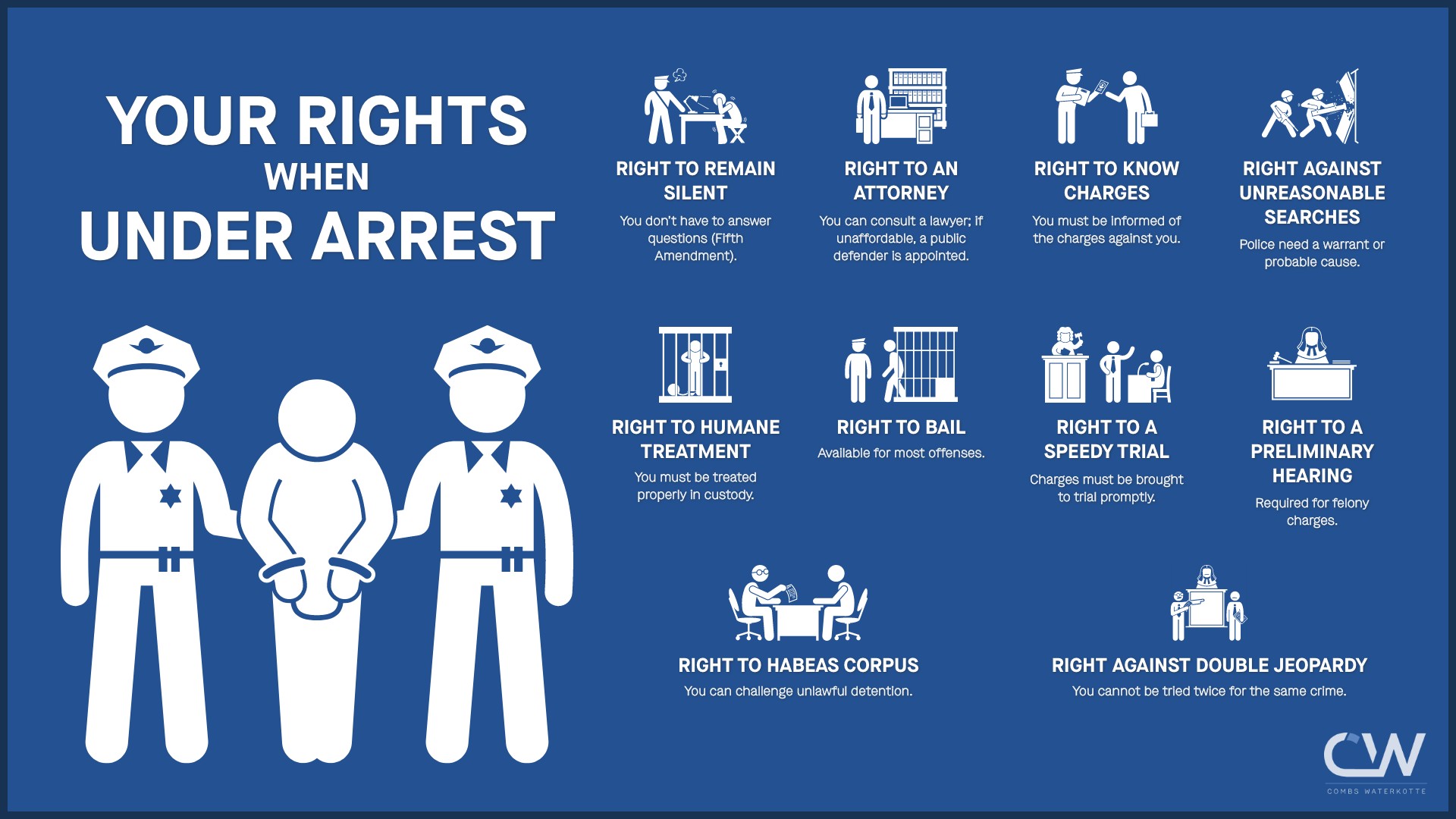
- Do not give statements without legal counsel. Not “a quick chat,” not “just answering a few questions.”
- Get a federal homicide defense lawyer in Fremont, CA involved immediately. Waiting generally helps the government, not you.
- Do not consent to searches. If they have a warrant, that’s different, but consent is optional.
- Do not attempt to “clean up” the situation by contacting witnesses, deleting messages, or moving items. That can lead to additional charges.
- Do not discuss the case on recorded calls (including jail calls) or in messages you believe are private.
General rule: speaking without counsel is more likely to hurt you than help you.
Why Choose Combs Waterkotte for a Federal Homicide Case in Fremont, CA?
When the consequences include life-altering prison time, the your Fremont, CA federal defense lawyers needs to be organized, fast, and thorough. That generally includes:
- immediate collection and review of key evidence
- client-focused representation (we treat you as a person, not a case number)
- independent investigation (not just reviewing the government’s paperwork)
- early identification of expert needs (forensics, pathology, reconstruction, digital)
- aggressive motion practice when constitutional violations or unreliable evidence exist
- a trial-ready approach from day one, even when negotiation is on the table

Answers to Common Questions About Federal Homicide Charges in Fremont, CA
What turns a homicide case into a federal prosecution in Fremont, CA?
In general, a homicide becomes a federal case when the law provides a federal jurisdictional basis, such as federal property, protected federal victims, links to federal criminal activity, or qualifying civil rights or hate-crime claims.
Can a homicide case move forward in both state and federal court?
Sometimes, yes. In some cases, state and federal authorities investigate the same incident at the same time. A defense approach often has to take both systems into account when this situation arises.
Does federal law recognize manslaughter?
Yes, if the case falls under federal jurisdiction. Federal law recognizes voluntary and involuntary manslaughter, each carrying different potential penalties.
What’s the difference between murder and manslaughter?
At its core, the difference typically involves the mental state associated with the killing. Murder charges typically involve malice or extreme disregard for life. Manslaughter cases usually involve a lesser mental state, including heat-of-passion situations or grossly negligent conduct.
What does “felony murder” mean?
The felony murder rule allows prosecutors to treat a death occurring during certain serious felonies as first-degree murder. These prosecutions often depend on whether the alleged felony and timeline fit the felony murder theory.
Should I talk to federal agents in Fremont, CA if I’m “not under arrest”?
No. Being “not under arrest” does not mean you are not being investigated. If federal agents ask to speak with you, consulting a lawyer first is critical.
Free book
Facing Federal Criminal Charges? Why They’re Different and How to Win
Combs Waterkotte, a leading federal criminal defense law firm, has handled over 10,000 cases successfully. This ebook guides you through the federal criminal defense process, how federal charges are different, and how to win.
Contact a Federal Homicide Lawyer in Fremont, CA
If you are under investigation or have been charged in Fremont, CA with federal homicide offenses such as murder, felony murder, manslaughter, attempted homicide, or a hate-crime-related killing, getting legal counsel quickly is critical.
Combs Waterkotte’s Fremont, CA federal homicide defense lawyers are available for free, confidential consultations regarding serious criminal investigations. Call (314) 900-HELP or contact us online to request a free consultation.

