

Unlawful Use of a Weapon Lawyer in Kansas City, MO
Don’t let your Kansas City UUW charge get away from you. Call Combs Waterkotte’s criminal defense attorneys today to start fighting back.
TO COMBS WATERKOTTE,YOU ARE WHY WE EXIST.


Unlawful Use of a Weapon Lawyer
Kansas City, MO
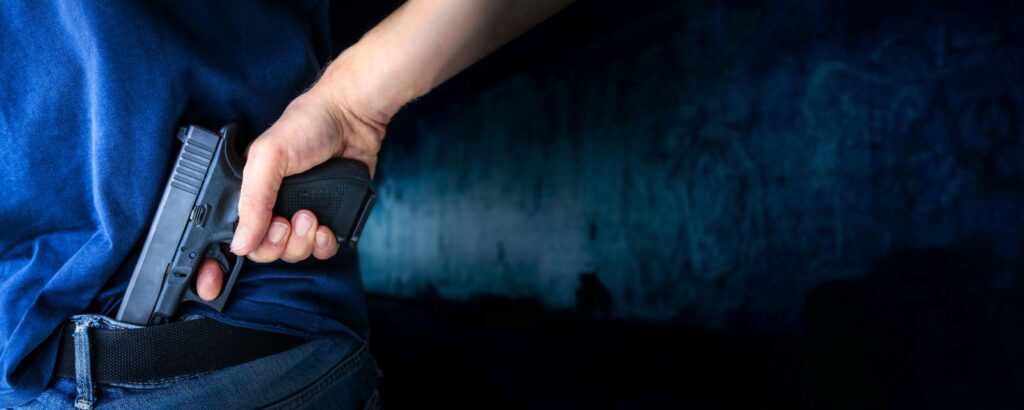
You don’t have to fire a gun to face an unlawful use of a weapon (UUW) charge in Kansas City, Missouri. Carrying a concealed weapon into a restricted place, displaying one in a threatening way, using a gun while intoxicated, bringing a weapon to school, or unlawfully firing a gun can all lead to charges. Depending on the allegation, you could face a misdemeanor or a serious felony.
At Combs Waterkotte, our Kansas City weapons crimes lawyers are ready to defend you. We’ll review exactly what you’re accused of, whether the evidence supports the charge, and which defenses may apply. We also move quickly to preserve video footage, witness accounts, firearm evidence, and records that could help your case. Give us a call at (314) 900-HELP to start building your defense.

I owe my life to Combs Waterkotte. If not for them, I would be spending the rest of my life behind bars. There is no amount of words that can explain what they did for me and my family. Its the highest recommendation that I can give.
Alexander B.
Felonies
Verify on

If I could give Steve and his team 10 stars I would in a heartbeat. Was facing more then one felony charge and after these guys found the arresting officer violated my 4th Amendment Rights and those charges were dismissed. My family and I can't thank you enough.
Dean J
Felonies
Verify on
I was hands down guilty. ON VIDEO !!! In a smaller town, and a job dealing with the public, this was devastating. I made one phone call and spoke for maybe 15 minutes. I DIDN'T appear in court. I am extremely impressed. QUIETLY relieved of the matter!
Y.I.V.
Theft
Verify on
My fiance had a felony drug charge and Combs Waterkotte got it dismissed! There were no fines, court cost, nothing. Chris is loyal, professional, knowledgeable, and a man of his word. We are forever grateful for you.
Kimberly T.
Drug Crimes
Verify on
If I was found guilty, it would have been over 100 years in prison. They promised me that they would fight like hell and get me out of it. After everything was done, I just felt free. Like this wasn’t gonna end with me rotting away in a prison cell. I felt like I could start my life and have a fresh start.
Caleb
Assault 1st, Armed Criminal Action
Verify on
I was facing, probably 18 years… I actually got 5 years probation and 40 hours of community service. Without Combs Waterkotte’s help, I don’t think my family could have made it without me. It was just a written book to where it's a perfect ending.
Chris
Unlawful Use of a Weapon, Armed Criminal Action
Verify on
I went through what was supposed to be one of the top law firms in St. Louis. They said I wouldn't have no chance. I end up firing the other lawyer and everything and going with Chris. I felt like Combs Waterkotte actually did something for me and wasn't I wasn't just another number on somebody's desk.
Willy
DWI/DUI
Verify onI owe my life to Combs Waterkotte. If not for them, I would be spending the rest of my life behind bars. There is no amount of words that can explain what they did for me and my family. Its the highest recommendation that I can give.
Alexander B.
Felonies
If I could give Steve and his team 10 stars I would in a heartbeat. Was facing more then one felony charge and after these guys found the arresting officer violated my 4th Amendment Rights and those charges were dismissed. My family and I can't thank you enough.
Dean J
Felonies
I was hands down guilty. ON VIDEO !!! In a smaller town, and a job dealing with the public, this was devastating. I made one phone call and spoke for maybe 15 minutes. I DIDN'T appear in court. I am extremely impressed. QUIETLY relieved of the matter!
Y.I.V.
Theft
My fiance had a felony drug charge and Combs Waterkotte got it dismissed! There were no fines, court cost, nothing. Chris is loyal, professional, knowledgeable, and a man of his word. We are forever grateful for you.
Kimberly T.
Drug Crimes
If I was found guilty, it would have been over 100 years in prison. They promised me that they would fight like hell and get me out of it. After everything was done, I just felt free. Like this wasn’t gonna end with me rotting away in a prison cell. I felt like I could start my life and have a fresh start.
Caleb
Assault 1st, Armed Criminal Action
I was facing, probably 18 years… I actually got 5 years probation and 40 hours of community service. Without Combs Waterkotte’s help, I don’t think my family could have made it without me. It was just a written book to where it's a perfect ending.
Chris
Unlawful Use of a Weapon, Armed Criminal Action
I went through what was supposed to be one of the top law firms in St. Louis. They said I wouldn't have no chance. I end up firing the other lawyer and everything and going with Chris. I felt like Combs Waterkotte actually did something for me and wasn't I wasn't just another number on somebody's desk.
Willy
DWI/DUI
Kansas City, Missouri’s Unlawful Use of Weapons Statute Explained
RSMo §571.030 defines unlawful use of weapons as knowingly committing one of the several acts it prohibits. Prosecutors generally have to show that you were aware of what you were doing and of the circumstances that made the use of your weapon unlawful. Under the law, here is some of the conduct that qualifies.
Carrying Weapons in Restricted Places
One part of the statute covers carrying weapons readily capable of lethal use (like a concealed knife, firearm, or blackjack) into a location restricted under RSMo §571.107. Those restricted locations include:
Police precincts
- Courthouses
- Polling places
- Correctional facilities
- Secure airport areas
- Schools
- Child-care facilities
- Certain stadiums
- Hospitals
- properly posted private property
RSMo §571.030 also covers carrying weapons in places of worship, government buildings, school buses, and at school-sponsored activities. A lack of permission, posted signs, vehicle storage, permits, and official duty exceptions can all affect whether the law applies.
Displaying, Handling, or Discharging a Weapon
The law also prohibits conduct like:
- Setting a spring gun
- Shooting into:
- A home
- An occupied structure
- A train
- A boat
- An aircraft
- A motor vehicle
- Displaying a lethal weapon in an angry or threatening way
Other prohibited acts include:
- Firing within 100 yards of an occupied schoolhouse, courthouse, or church
- Shooting along or across a public highway
- Shooting random
- Shooting into an outbuilding
If you’re intoxicated and have a firearm on you, you may face a charge for handling or using it negligently or unlawfully. The statute also prohibits having a firearm while knowingly possessing enough of a controlled substance to support a felony drug-possession charge.
Shooting At or From a Motor Vehicle
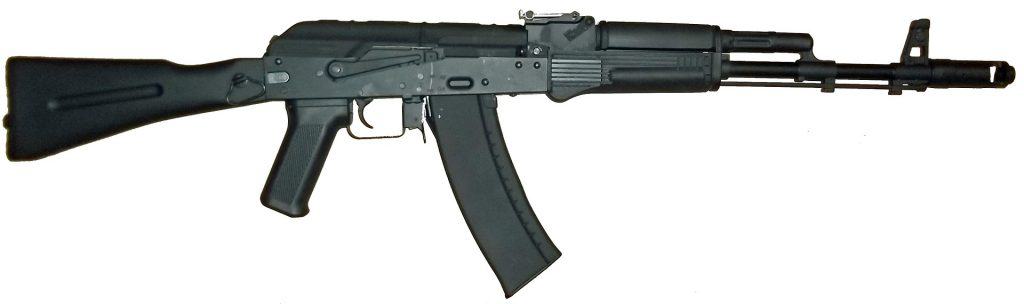
Shooting at or from a car at a person, another vehicle, a building, or a habitable structure carries the harshest penalties under this law. A first offense requires a 15-year sentence (unless an exception or defense applies). If someone is injured or killed, prosecutors may pursue a Class A felony charge.
When a Statutory Exception Applies
The UUW statute includes exceptions for:
- Law enforcement officers and other officials
- Lawful transport of unloaded or inaccessible weapons
- Some vehicle possession
- Concealed-carry permit holders
- School protection officers
- School-sanctioned firearm events
Several parts of the statute also do not apply when someone acts in lawful defense. Your attorney should review each exception that may apply to your situation in order to build the best defense possible.
Why Combs Waterkotte is the best Law firm for your case.
Real results for people just like you.

Unlawful Use of a Weapon Compared to Other Kansas City Weapons Charges
Given that several weapons crimes may be charged together for the same conduct, it’s important to compare unlawful use of a weapon to other Kansas City gun crimes to understand exactly what behavior qualifies for the charge. Here, we’ll compare UUW to unlawful possession of a weapon and armed criminal action (ACA).
Unlawful Use vs. Unlawful Possession
Unlawful possession of a firearm basically covers whether someone is legally allowed to have a gun. It applies to certain people with felony convictions, fugitives, and people a court has found mentally incompetent.
Unlawful use, on the other hand, usually concerns what someone did with a weapon they could otherwise legally possess. Prosecutors may file both charges if they believe the facts support doing so.
Unlawful Use vs. Armed Criminal Action
Armed criminal action is an additional charge for committing a Missouri felony by using a deadly weapon. It must be tied to another felony (like an assault or robbery).
Unlawful use of a weapon can be charged on its own. A threatening display may also prompt police to investigate an assault charge, but prosecutors must prove each charge separately. Missouri also has separate laws addressing certain illegal weapons and sales.
Defense Strategies for Unlawful Use of a Weapon Charges in Kansas City
Defending a weapons charge starts with understanding exactly what police claim happened. Carrying a weapon into a restricted place raises different questions than handling one while intoxicated or firing at a vehicle. Here are some of the defenses Combs Waterkotte may use, depending on the evidence available in your case.
Lack of Intent
You may not have known a weapon was in a shared vehicle or bag, or that you had entered a restricted area while carrying the weapon. The state may also lack sufficient proof that you knowingly handled or displayed the weapon as alleged. We examine what you actually knew, not just what police assumed.
Self Defense
Missouri’s unlawful use of weapons statute recognizes lawful defense in several provisions involving display, discharge, intoxication, schools, and shootings at or from vehicles. Under Missouri’s defense-of-persons statute, force may be justified when someone reasonably believes it’s necessary to stop unlawful force, prevent death, stop a serious physical injury, or combat a forcible felony.
Inability to Prove Possession or Identity
Fingerprints, DNA, video, witness statements, and ownership records may contradict a UUW accusation. We also look at who else could access the location to create reasonable doubt as to who actually committed the weapons-related offense
Lack of an Angry or Threatening Display
Handling a weapon openly or moving it for safety isn’t necessarily a threat. A witness may have misunderstood what happened, assuming that someone was acting threateningly when they actually weren’t. Being able to prove your state of mind at the time of the alleged offense can make or break your case.
Constitutional Issues
Police must follow procedures outlined in the Fourth Amendment when they stop you or your vehicle, enter your home, or seize a firearm as evidence. We can review the warrant, any claimed safety concerns,probable cause, and exceptions police may have relied on. If officers obtained a weapon or other evidence illegally, we may ask the court to exclude it from evidence.
Possible Penalties for Unlawful Use of a Weapon in Missouri
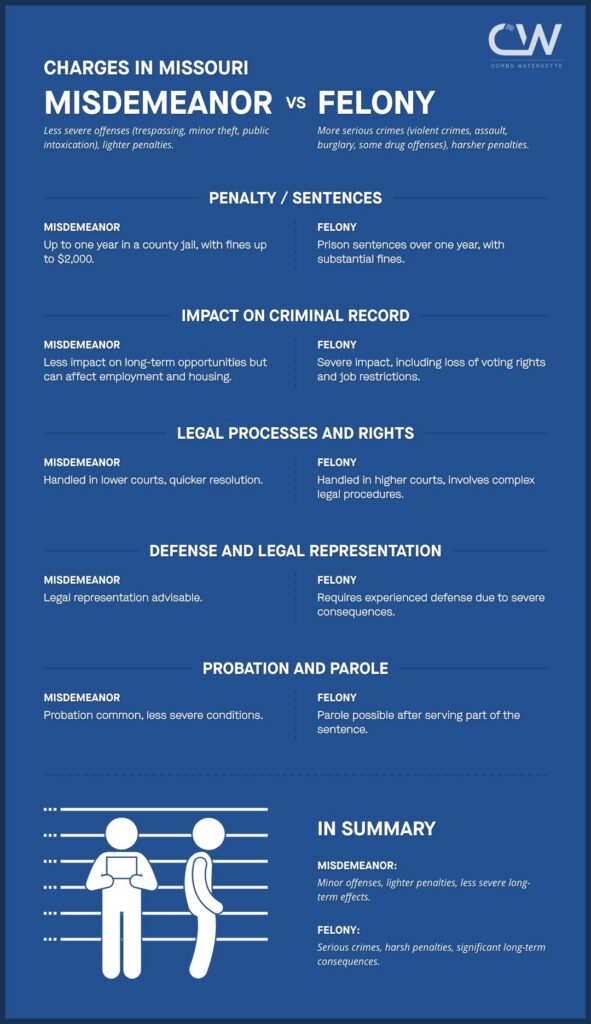
The possible sentence you face for UUW depends on your alleged conduct. The general jail and prison ranges are covered in RSMo §558.011, while the unlawful use of weapons statute itself assigns the misdemeanor or felony classifications based on specific conduct:
- Class B misdemeanor: These offenses include carrying a concealed weapon into a restricted area and certain discharges near occupied public buildings, across highways, or into outbuildings. The maximum sentence is six months in jail.
- Class A misdemeanor: Handling an unloaded gun while intoxicated or carrying one into a school-related location can carry up to one year in jail.
- Class E felony: This category includes setting a spring gun, shooting into certain structures or vehicles, threatening displays, firearm possession with a felony quantity of drugs, and intoxicated handling or school possession involving a loaded firearm. The maximum sentence is four years in prison.
- Class B Felony: This charge is brought when an individual shoots from a motor vehicle. The statute requires a 15-year sentence, even for a first-time violation.
- Class A felony: If you discharge a firearm and cause an injury or death, the offense becomes Class A felony unlawful use of a weapon. The sentencing range is 10 to 30 years or life in prison
Prosecutors may also charge armed criminal action when the alleged weapon use accompanies another felony. A first conviction carries three to 15 years, generally served back to back with the sentence for the underlying felony. In these cases, parole, probation, conditional release, and a suspended sentence aren’t available for the first three years of a sentence. Prior ACA convictions or unlawful firearm possession can lead to longer sentences.
Why Choose Combs Waterkotte for an Unlawful Use of a Weapon Case?

At Combs Waterkotte, we’ve handled more than 15,000 criminal cases, and our attorneys bring more than 100 years of combined criminal defense experience. In a weapons case, a few seconds, a property line, or who was able to reach a firearm may make a significant difference in the outcome. We investigate those details (including whether defensive force was justified) rather than relying on an initial police report.

Read More:
Our trial-ready approach means we preserve evidence, question unreliable witnesses, and develop defenses with the possibility of a trial in mind. The same preparation helps us negotiate with prosecutors. We’ll explain the risks and your choices clearly throughout every step of your case.
How Combs Waterkotte Will Take On Your Weapons Charges
When you hire us to handle your unlawful use of a weapon charge, we focus on the specific charge and the evidence in your case. Our work may include:
- Reviewing the charge and possible penalties: Identifying the exact allegation, applicable version of the law, exceptions, offense classification, and any additional charges or sentencing increases
- Preserving evidence: Securing body camera and surveillance footage, dispatch audio, firearm records, photos, messages, medical and toxicology evidence, and witness statements
- Reconstructing what happened: Mapping the timeline, locations, distances, and each person’s actions, as well as checking what witnesses could see and who had access to the weapon
- Challenging police procedures and evidence: Challenging unlawful searches, unreliable statements, suggestive identifications, gaps in the chain of custody, and expert opinions that the evidence doesn’t support
- Pursuing the right outcome for you: Seeking dismissal or a reduced charge when the evidence supports it, weighing any plea offer, and preparing for trial (if prosecutors won’t offer a fair resolution)

We’ll also explain any applicable bond conditions, weapon surrender requirements, no contact orders, and court dates. You’ll know what you need to do and what statements could hurt your defense. Getting us involved early on gives us more time to find critical evidence before it’s lost.
Contact an Unlawful Use of a Weapon Lawyer in Kansas City Today

An unlawful use of weapons charge in Kansas City, Missouri can bring a slew of legal issues across a broad spectrum of charges. Navigating the situation on your own is a bad idea. You need an experienced attorney who can fight on your behalf.
Call Combs Waterkotte today at (314) 900-HELP or reach out to us online. We’ll offer a thorough, confidential consultation about your unlawful use of a weapon investigation or charge. We’ll review the allegation, explain the immediate risks and your options, and start building a defense to protect your freedom, record, and future.
Resources
For more information on criminal defense in Kansas City or anywhere else in Missouri, call the Combs Waterkotte criminal defense attorneys right away at (314) 900-HELP or contact us online for a confidential consultation.
Why You Should ALWAYS Remain Silent
Steps to Take When You’re Charged with a Felony in Missouri
Free book
How a Criminal Defense Attorney Can Protect Your Rights and Future
Combs Waterkotte has over 80 years of experience and over 10,000 cases handled. This ebook helps guide you through the criminal defense process and how an experienced, skilled defense attorney can keep your freedoms intact.

