What you need to know about carrying a firearm while intoxicated in Missouri. Missouri is a pro–Second Amendment state, and many people legally carry every day. But there’s a line Missouri takes very seriously: mixing firearms and intoxication. If police believe you were intoxicated and handled or used a firearm in a negligent or unlawful way, you can face an Unlawful Use of Weapons charge under Missouri Revised Statute § 571.030.1(5).
And here’s the part that surprises people: this isn’t just about “shooting a gun while drunk.” Depending on what the prosecution alleges, the case can escalate quickly—and the difference between an unloaded firearm and a loaded firearm can change your exposure from a misdemeanor to a felony. This guide breaks down what the law actually says, what prosecutors must prove, the penalties, and the defense strategies that can protect your record and your future.
If you’re facing charges of carrying a firearm or other weapon while intoxicated anywhere in Missouri, call a weapon crime defense lawyer right away at (314) 900-HELP or reach out online to schedule a free, confidential consultation. Our attorneys have over 100 years of combined experience and have successfully handled more than 10,000 cases across Missouri.
Blog Summary
Missouri law draws a firm line when alcohol or drugs are mixed with firearms. While the state strongly protects gun ownership, carrying or handling a firearm while intoxicated can result in serious criminal charges under Missouri’s Unlawful Use of Weapons statute. These cases are not limited to firing a weapon—prosecutors often pursue charges based on alleged intoxication combined with negligent or unlawful handling, even without a shot being fired.
This blog explains how Missouri defines intoxication, what the State must prove, common situations that lead to charges, and how constitutional violations during stops or searches can undermine the prosecution’s case. It also outlines why early legal representation matters and why firearm-related cases require a trial-ready defense, not a quick plea. If you are facing allegations involving firearms and intoxication in Missouri, Combs Waterkotte provides aggressive, strategic defense focused on protecting your record, your rights, and your future.
What Missouri Law Prohibits (The Real Legal Standard)
Under RSMo. § 571.030.1(5), the State generally alleges that a person:
- 1. Had a firearm (or projectile weapon) on their person
- 2. Was “intoxicated”
- 3. Handled, used, or discharged the firearm in a negligent or unlawful manner (unless acting in self-defense)
This matters because the statute isn’t written as a blanket ban on merely being intoxicated while a firearm exists somewhere in the world. The charge is typically built around the combination of intoxication plus handling/using/discharging in a negligent or unlawful way.
What Counts as “Intoxicated” in Missouri Weapons Cases?
In Missouri’s weapons laws, “intoxicated” is defined as a substantially impaired mental or physical capacity resulting from the introduction of any substance into the body.
A few important takeaways:
- It’s not limited to alcohol. It can include drugs or other substances.
- The standard can be argued through officer observations and other evidence—there isn’t always a neat blood-alcohol concentration (BAC) number like DWI cases.
- “Substantially impaired” is the battleground in many defenses.
Penalties: Unloaded vs. Loaded Can Change Everything in Missouri
Missouri law treats § 571.030.1(5) differently depending on whether the firearm was loaded:
- Unloaded firearm: Class A misdemeanor
- Loaded firearm: Class E felony
And Missouri’s general sentencing ranges provide:
- Class A misdemeanor: up to 1 year
- Class E felony: up to 4 years
Even when jail/prison isn’t imposed, a conviction can bring probation conditions, fines, and long-term collateral damage (employment, security work, professional licensing, and more).
“I Didn’t Fire It” — Common Situations That Still Lead to Charges
People often assume they’re safe as long as they don’t fire a weapon. In real life, these cases often come from situations like:
- A traffic stop where police claim you were impaired and had a firearm on you
- A bar/restaurant incident where someone reports “a person with a gun”
- A domestic argument where police show up and see a firearm present
- A public disturbance call where the State alleges “brandishing” or unsafe handling
- A home situation where an accidental discharge is alleged
The prosecution doesn’t need a Hollywood-style shootout to file a serious weapons charge—they need a theory that your intoxication plus your handling/use created criminal risk.
What Prosecutors Must Prove (And Where Our Defense Lawyers Attack)
A strong defense starts by forcing the State to prove each element beyond a reasonable doubt. Common pressure points include:
1. Were you legally “intoxicated” under the weapons statute?
The definition requires substantial impairment.
Our Missouri weapon crime defense team may challenge:
- Weak observations (“odor of alcohol” alone isn’t substantial impairment)
- Conflicting witness accounts
- Lack of testing
- Medical explanations (fatigue, injury, anxiety, medication side effects)
2. Was the firearm actually “on your person” as alleged?
This becomes critical in car cases (console, glove box, bag, jacket, etc.). “Possession” issues can be complex, and the defense can hinge on location, access, ownership, and who had control.
3. Did you “handle or otherwise use” it negligently or unlawfully?
This is where many cases either strengthen or fall apart. The Combs Waterkotte defense often focuses on:
- No evidence of unsafe handling
- No unlawful conduct tied to the firearm
- Exaggerated claims in police reports
4. Was the firearm loaded?
Because a loaded weapon can equal felony exposure, this is a make-or-break fact issue.
5. Was self-defense involved?
Missouri’s § 571.030 includes a self-defense carveout for certain subdivisions, including (5). If the situation involved a legitimate defensive claim, your weapon crime defense lawyer can push that hard—early.
Police Searches, Seizures, and Constitutional Issues
Many firearm-intoxication charges begin with police contact: a traffic stop, a “welfare check,” a disturbance call, or a consent search.
Our skilled Missouri weapon crime defense attorneys frequently examine:
- Was the stop lawful?
- Did officers have legal grounds to extend the detention?
- Was the search legal—or did it rely on improper consent?
- Was there probable cause for arrest?
If law enforcement crossed constitutional lines, evidence can sometimes be suppressed—changing the entire case trajectory.
Why Weapon Charges Need a Trial-Ready Defense (Not a “Plea Mill”)
Weapons cases are not traffic tickets. Prosecutors often treat them as public safety cases—meaning they may push for harsh outcomes, especially if they believe alcohol/drugs plus a firearm created danger.
At Combs Waterkotte, we approach firearm charges like the criminal cases they are:
- We dissect the State’s proof of “intoxicated” under the statute definition
- We challenge whether the firearm was actually “handled/used” negligently or unlawfully
- We fight the loaded/unloaded classification because it drives misdemeanor vs felony exposure
- We scrutinize the stop/search/arrest for constitutional violations
- And we prepare every case with trial leverage—because that’s how dismissals and real reductions happen
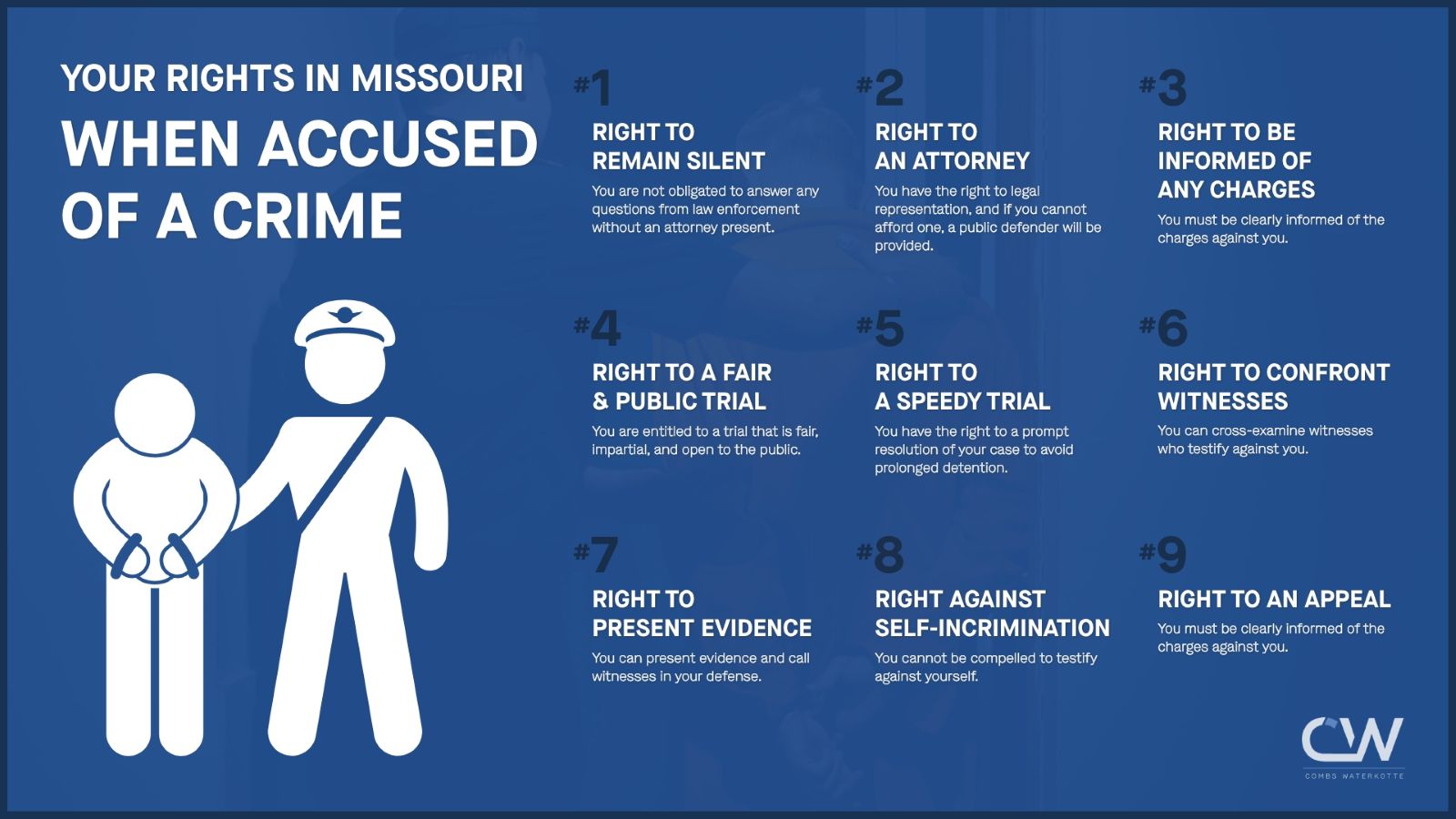
What To Do If You’re Arrested or Under Investigation for a Missouri Weapon Crime
If you’re accused of carrying/handling a firearm while intoxicated, your next moves matter:
- 1. Do not “explain” your way out of it. Statements often become the cornerstone of the State’s case.
- 2. Politely decline consent searches. Your weapon crime defense attorney can challenge the legality later.
- 3. Don’t discuss details on calls/texts. No matter the context, those can be evidence.
- 4. Call a weapon crimes defense lawyer immediately. Early intervention can protect your options, especially before charges are formally filed.
Talk to a Combs Waterkotte Missouri Weapons Crimes Defense Lawyer Right Now
If you’re being investigated—or you’ve already been charged—don’t wait for the case to “work itself out.” A conviction for carrying/handling a firearm while intoxicated can follow you for years, and the line between misdemeanor and felony can come down to details that must be challenged early.
Call Combs Waterkotte as soon as possible at (314) 900-HELP or contact us online to speak with a weapon crimes defense lawyer who understands Missouri’s firearms statutes, knows how prosecutors build these cases, and is prepared to fight for dismissals, reductions, or a not-guilty outcome.