

First Degree Murder Lawyer Kansas City, MO
Hire the leading first degree murder defense law firm in Kansas City, MO to protect your freedom, rights, and future. Whether you have been charged or are under investigation, we can help.
TO COMBS WATERKOTTE,YOU ARE WHY WE EXIST.


First Degree Murder Lawyer Kansas City, MO
A first degree murder charge carries Kansas City, Missouri’s most severe criminal penalties. From the first police interview, every statement, search, forensic conclusion, and charging decision can shape whether the case ends in dismissal, a lesser offense, life imprisonment, or even the death penalty. Needless to say, immediate legal assistance is vital in these cases.
At Combs Waterkotte, our attorneys move quickly to protect you, preserve evidence, and challenge the prosecution’s theory. We’ve achieved not-guilty verdicts in first degree murder cases before, and we’re ready to do the same for you. Just call (314) 900-HELP to get started.

I owe my life to Combs Waterkotte. If not for them, I would be spending the rest of my life behind bars. There is no amount of words that can explain what they did for me and my family. Its the highest recommendation that I can give.
Alexander B.
Felonies
Verify on

If I could give Steve and his team 10 stars I would in a heartbeat. Was facing more then one felony charge and after these guys found the arresting officer violated my 4th Amendment Rights and those charges were dismissed. My family and I can't thank you enough.
Dean J
Felonies
Verify on
I was hands down guilty. ON VIDEO !!! In a smaller town, and a job dealing with the public, this was devastating. I made one phone call and spoke for maybe 15 minutes. I DIDN'T appear in court. I am extremely impressed. QUIETLY relieved of the matter!
Y.I.V.
Theft
Verify on
My fiance had a felony drug charge and Combs Waterkotte got it dismissed! There were no fines, court cost, nothing. Chris is loyal, professional, knowledgeable, and a man of his word. We are forever grateful for you.
Kimberly T.
Drug Crimes
Verify on
If I was found guilty, it would have been over 100 years in prison. They promised me that they would fight like hell and get me out of it. After everything was done, I just felt free. Like this wasn’t gonna end with me rotting away in a prison cell. I felt like I could start my life and have a fresh start.
Caleb
Assault 1st, Armed Criminal Action
Verify on
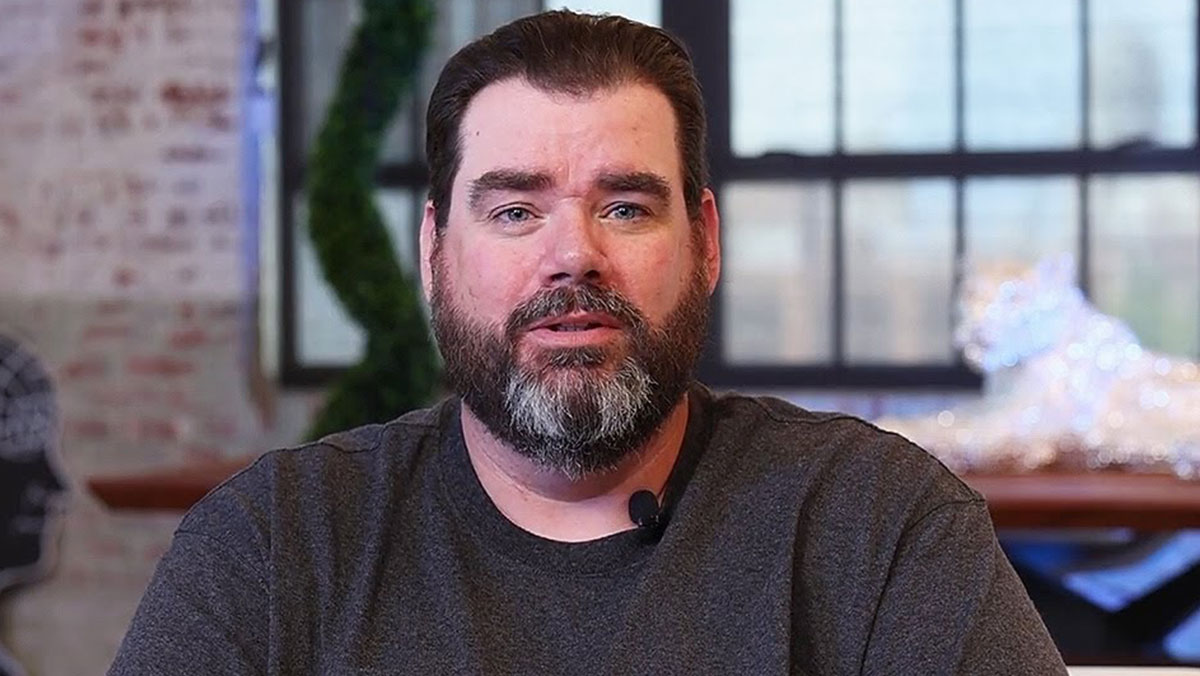
I was facing, probably 18 years… I actually got 5 years probation and 40 hours of community service. Without Combs Waterkotte’s help, I don’t think my family could have made it without me. It was just a written book to where it's a perfect ending.
Chris
Unlawful Use of a Weapon, Armed Criminal Action
Verify on
I went through what was supposed to be one of the top law firms in St. Louis. They said I wouldn't have no chance. I end up firing the other lawyer and everything and going with Chris. I felt like Combs Waterkotte actually did something for me and wasn't I wasn't just another number on somebody's desk.
Willy
DWI/DUI
Verify onI owe my life to Combs Waterkotte. If not for them, I would be spending the rest of my life behind bars. There is no amount of words that can explain what they did for me and my family. Its the highest recommendation that I can give.
Alexander B.
Felonies
If I could give Steve and his team 10 stars I would in a heartbeat. Was facing more then one felony charge and after these guys found the arresting officer violated my 4th Amendment Rights and those charges were dismissed. My family and I can't thank you enough.
Dean J
Felonies
I was hands down guilty. ON VIDEO !!! In a smaller town, and a job dealing with the public, this was devastating. I made one phone call and spoke for maybe 15 minutes. I DIDN'T appear in court. I am extremely impressed. QUIETLY relieved of the matter!
Y.I.V.
Theft
My fiance had a felony drug charge and Combs Waterkotte got it dismissed! There were no fines, court cost, nothing. Chris is loyal, professional, knowledgeable, and a man of his word. We are forever grateful for you.
Kimberly T.
Drug Crimes
If I was found guilty, it would have been over 100 years in prison. They promised me that they would fight like hell and get me out of it. After everything was done, I just felt free. Like this wasn’t gonna end with me rotting away in a prison cell. I felt like I could start my life and have a fresh start.
Caleb
Assault 1st, Armed Criminal Action
I was facing, probably 18 years… I actually got 5 years probation and 40 hours of community service. Without Combs Waterkotte’s help, I don’t think my family could have made it without me. It was just a written book to where it's a perfect ending.
Chris
Unlawful Use of a Weapon, Armed Criminal Action
I went through what was supposed to be one of the top law firms in St. Louis. They said I wouldn't have no chance. I end up firing the other lawyer and everything and going with Chris. I felt like Combs Waterkotte actually did something for me and wasn't I wasn't just another number on somebody's desk.
Willy
DWI/DUI
How First Degree Murder Differs From Other Missouri Homicide Charges
Missouri’s homicide offenses appear in Chapter 565 of the Missouri Revised Statutes. First degree murder stands apart because it requires deliberation—premeditated reflection before a killing. Planning can last days, but legally, Missouri does not require a long interval. A brief period of genuine planning may be enough under the law.

“I recently went to trial with [Combs Waterkotte] and [they] won a ‘not guilty’ verdict for me… When you are sitting in trial all kinds of thoughts enter your mind, and you’re constantly saying to yourself: oh, ask this question, bring up that point, etc. With [Combs Waterkotte], every time one of those thoughts entered my mind [they were] already on top of it and driving the point home better than I ever thought it could be… I simply could have not been more happy with [their] performance. I was amazed.”
-Matt | Combs Waterkotte Client
First Degree Murder Vs. Second Degree Murder
First degree murder requires a person to knowingly cause another person’s death after deliberation. Second degree murder covers knowingly causing death without proof of deliberation, causing death while intending to inflict a serious injury, and felony murder (a death caused during a felony, while attempting a felony, or while fleeing from a felony act). The deliberation element is the key to which charge you face.
Murder Vs. Manslaughter
Voluntary manslaughter can apply when someone causes a death or serious injury in a bout of sudden passion. First degree involuntary manslaughter addresses recklessly causing a death. These offenses involve different mental states and vastly different sentencing ranges than first degree murder.
In homicide cases, prosecutors may file additional counts or ask the court to submit lesser offenses supported by the evidence. A defense lawyer should analyze the evidence offense by offense, because challenging the deliberation element may not be enough to end the case if the state can still prove another homicide theory.
Why Combs Waterkotte is the best Law firm for your case.
Real results for people just like you.

Missouri’s First Degree Murder Statute Explained
RSMo §565.020 states that a person commits first degree murder when he or she knowingly causes another person’s death after deliberate planning. In plain terms, the state must prove:
- The accused caused a death
- They knew their conduct was practically certain to cause death
- They reflected before acting
Knowingly Causing a Death
Missouri’s criminal-code definitions describe “knowledge of a result” as the awareness that someone’s conduct is practically certain to cause a certain result. The prosecution may use a weapon, wounds, statements, conduct before and after the event, or efforts to conceal evidence to argue knowing intent.
The state must also prove causation and identity. A death certificate may establish that someone died, but it does not necessarily establish who caused the death, whether another factor played a part in the death, or what the accused actually knew. Medical, toxicology, ballistics, DNA, digital, and timeline evidence must fit together reliably.
What Deliberation Means
Under Missouri’s current Chapter 565 definitions, “deliberation” means cool reflection for any length of time, however brief. Deliberation requires more than knowledge and more than an impulsive action. Prosecutors often infer it from planning, waiting, buying a weapon, statements, or opportunities an offender had to abandon their plan. The defense can counter by using a timeline to show panic, confusion, sudden escalation, intoxication evidence, or a continuous struggle inconsistent with deliberation.
Accomplice Liability and Circumstantial Proof
A person doesn’t have to inflict the fatal injury personally to face a first degree murder charge. Prosecutors can pursue liability if evidence shows purposeful assistance or encouragement by an accomplice. Mere presence, association, knowledge after the fact, or failure to prevent a crime do establish that liability on their own, though.
The state may attempt to prove both knowledge and deliberation through circumstantial evidence. Jurors may draw reasonable inferences, but they can’t fill evidence gaps simply due to the seriousness of the charge. Motive can support the state’s narrative, but motive is not a substitute for the actual first degree murder statutory elements.
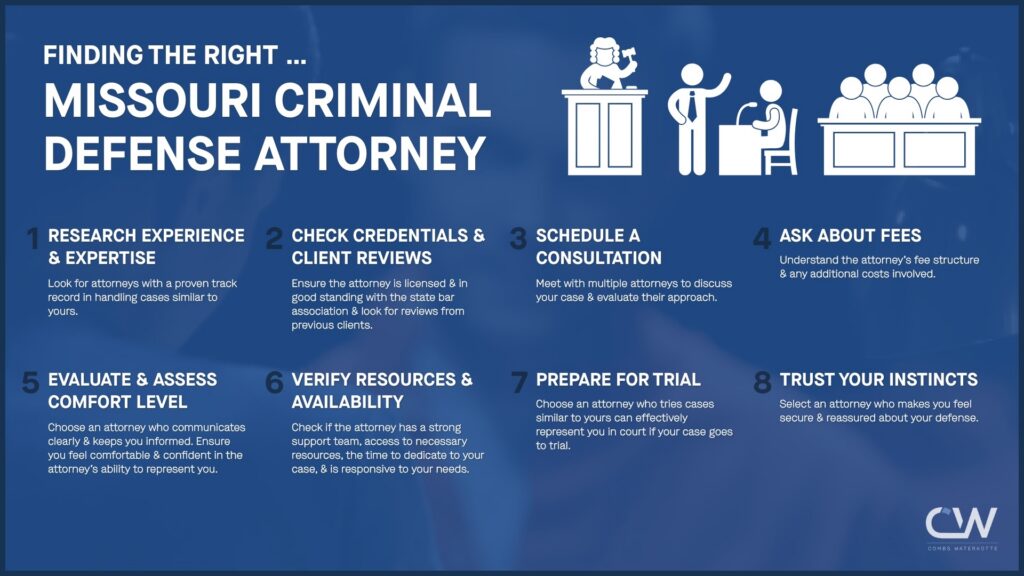
Defense Strategies for First Degree Murder Charges in Kansas City
Given the gravity of a first degree murder charge, the defense must investigate independently and test the case from several angles at once. At Combs Waterkotte, we build first degree murder defense strategies around the discovery, forensic records, witness history, digital evidence, and your lawful defenses.
Challenge Identity and the Reliability of the Investigation
We can examine eyewitness accounts, identification procedures, inconsistent statements, surveillance gaps, location records, DNA markers, fingerprints, firearm ballistics, and how police handled the chain of custody of key evidence. A documented alibi defense can place a defendant elsewhere, while other evidence may identify another viable suspect.
Attack Knowledge, Deliberation, and Accomplice Liability
A lack-of-intent defense may show that the death came as a result of an accident, impulsive action, reckless conduct, or a purpose other than causing death. We reconstruct the seconds and minutes leading up to the event to get the full picture. In cases involving accomplices, we distinguish presence or association from purposeful aid and challenge whether the accused shared the mental state required for a first degree murder charge.
Assert Self-Defense or Defense of Another
Missouri permits force when a person reasonably believes it necessary to stop an imminent threat of grave harm. Given this standard, we investigate threats, weapons, injuries, prior communications, and witness perspectives. A self-defense claim or a reliable claim of defense of another can justify the act and may prove key to an acquittal.
Contest Causation and Forensic Conclusions
We scrutinize autopsy findings, pathology, toxicology, trajectory analysis, gunshot residue, DNA statistics, timestamps, and expert assumptions to undermine the prosecution. Contamination, an incomplete sample, an intervening cause, or facts inconsistent with the prosecution’s timeline can create reasonable doubt.
Suppress Illegal Searches and Unreliable Statements
Police may rely on home or vehicle searches, phone warrants, location data, police interviews, jail calls, or informants. We can challenge unsupported warrants, unlawful seizures, coercive interrogation, Miranda violations, suggestive identifications, and discovery failures to fight first degree murder charges. Suppression can remove the evidence prosecutors use to connect the accused to the death.
Evaluate Mental Health, Lesser Offenses, and Mitigation
A mental disease or defect may affect criminal responsibility if it prevents the accused from knowing or appreciating the wrongfulness of their conduct. Other mental health evidence may have an impact on the deliberation element or sentencing outcomes. We also assess possible charge reductions and develop a mitigation strategy early, especially when the state may seek the death penalty or life without parole.
Possible Penalties for First Degree Murder in Missouri
First degree murder is a Class A felony in Missouri, but RSMo §565.020 outlines sentencing rules specific to first-degree murder. The defendant’s age at the time of the offense and the state’s decision to pursue capital punishment can affect the potential outcomes:
| Defendant and Procedure | Classification | Authorized Sentence |
|---|---|---|
| Age 18 or older, state waives death penalty | Class A felony | Life without probation, parole, or release (except by governor) |
| Age 18 or older, state seeks death penalty | Class A felony | Death or life without probation, parole, or release (except by governor) |
| Under age 18 | Class A felony | 30 to 40 years, life with parole, or life without parole |
When the state does not waive the death penalty, RSMo §565.030 covers separate guilt and punishment stages for first degree murder trials. A death sentence requires at least one statutory aggravating circumstance, like a prior first degree murder conviction or a particularly violent killing. An intellectual disability, failure to prove an aggravating circumstance, mitigating evidence, or the sentencing body’s decision not to impose death will result in life in prison without probation or parole.
A person who was under eighteen when the offense occurred can’t receive the death penalty. Missouri’s juvenile first degree murder sentencing law, outlined in RSMo §565.033, authorizes 30 to 40 years in prison, a life sentence with eventual parole eligibility, or life without parole.
Why Choose Combs Waterkotte for a Kansas City First Degree Murder Case?

A murder defense requires expertise in forensic evidence, constitutional litigation, witness examination, expert strategy, jury persuasion, and sentencing mitigation. At Combs Waterkotte, our firm has handled more than 15,000 criminal cases, including several murder and homicide cases. We bring over 100 years of combined experience to every case we handle.


Our clients receive direct communication, candid advice, and a defense shaped around the evidence particular to their case. We pursue a charge dismissal or reduction when the record supports it, but we also remain trial-ready when prosecutors refuse a favorable resolution.
How Combs Waterkotte Will Take On Your First Degree Murder Charges
When you hire us to fight your first degree murder charges, we start by limiting avoidable harm, preserving tenuous evidence, and identifying critical bond, publicity, and witness issues. We then obtain discovery and begin fighting back by:
- Protecting you immediately: Control communications and address interviews, searches, custody, and court deadlines
- Rebuilding the timeline: Secure videos, calls, messages, location data, scene records, and witnesses
- Scouring the forensic evidence: Review pathology, DNA, firearms, toxicology, digital analysis, and chain of custody issues
- Litigating every single legal issue: Challenge statements, searches, identifications, experts, accomplice theories, and improper evidence
- Preparing defense arguments: Develop reasonable doubt, charge reduction arguments, and trial strategy together


Our preparation starts long before jury selection. By investigating early and organizing the proof around knowledge, deliberation, causation, and credibility, we can create leverage for every hearing, negotiation, and trial decision.
Contact a Kansas City First Degree Murder Lawyer Today
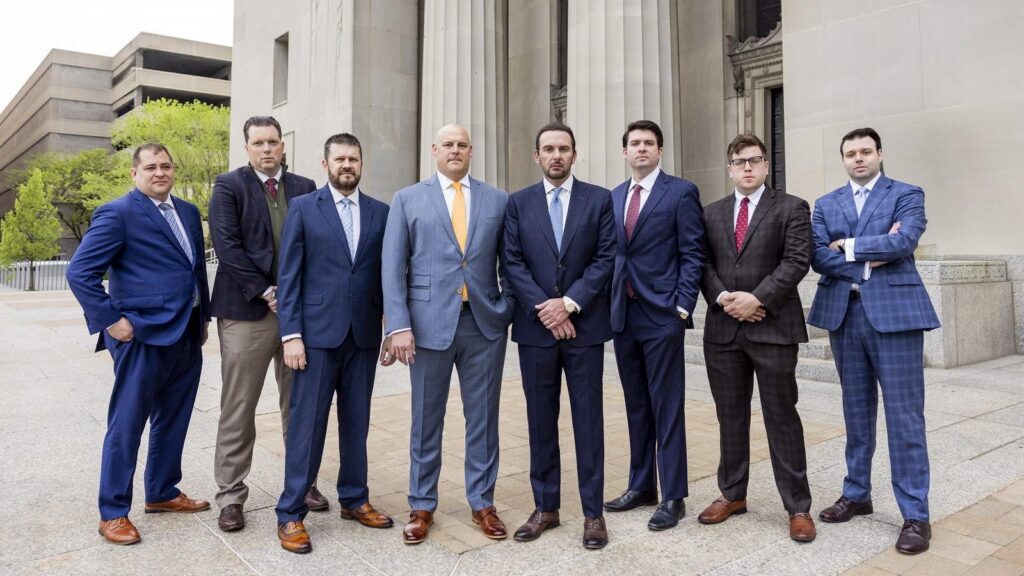
The outcome of your first degree murder charges will no doubt define the course of the rest of your life. That’s not something you should leave to chance. You need a firm like Combs Waterkotte who has taken on and beaten first degree murder charges in Missouri before. If you’re under investigation or you’ve been arrested or charged, call us immediately at (314) 900-HELP or reach out online today. Our team can protect your rights, preserve critical evidence, and begin building a strategic defense to protect your reputation, freedom, and future.
Resources
For more information on criminal defense in Kansas City or anywhere else in Missouri, call the Combs Waterkotte criminal defense attorneys right away at (314) 900-HELP or contact us online for a confidential consultation.
How Much of a Class A Felony Sentence Do You Have to Serve in Missouri?
Can the police legally lie to you?
Can Deleted Text Messages Be Subpoenaed in Court?
What is the Statute of Limitations for Criminal Charges in Missouri?
Free book
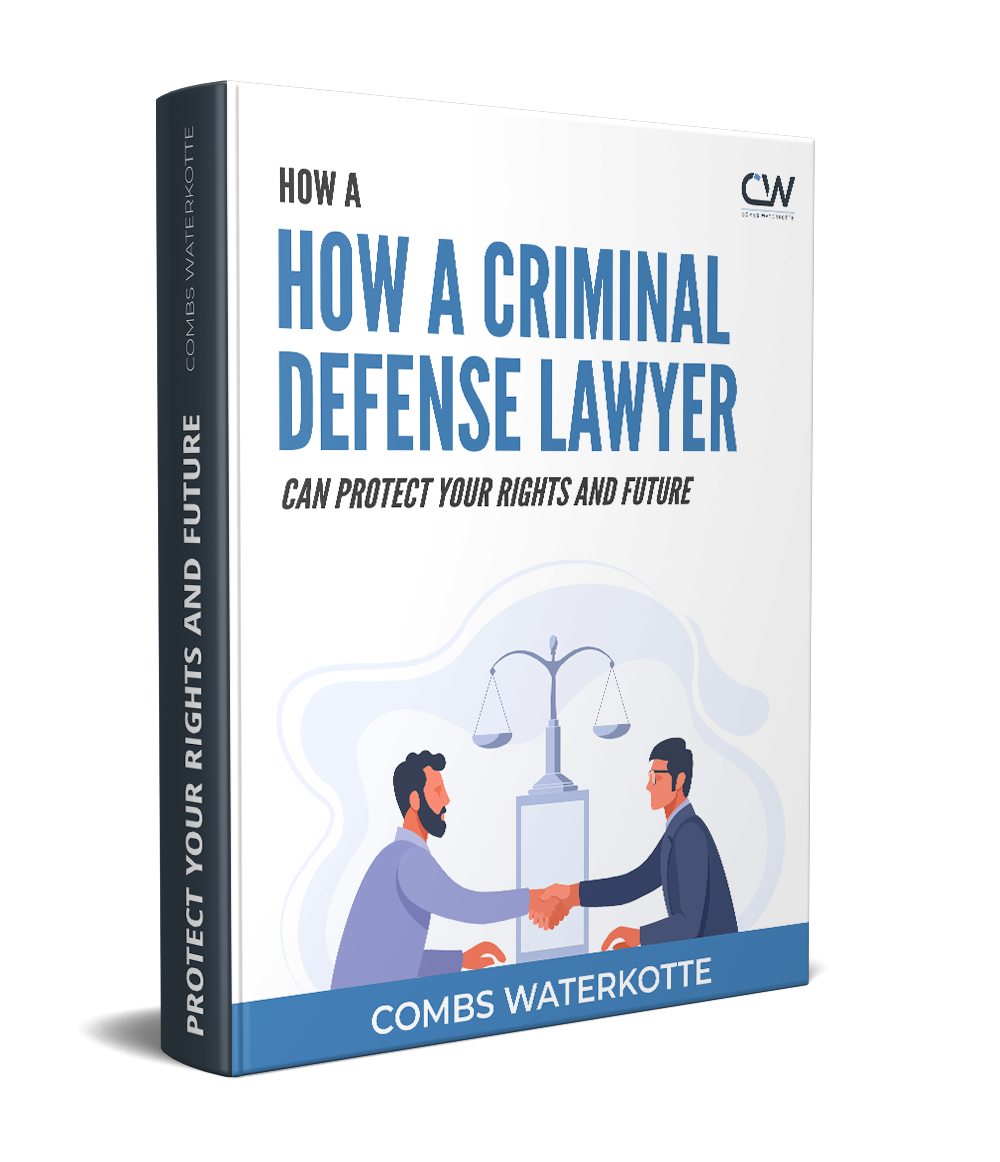
How a Criminal Defense Attorney Can Protect Your Rights and Future
Combs Waterkotte has over 80 years of experience and over 10,000 cases handled. This ebook helps guide you through the criminal defense process and how an experienced, skilled defense attorney can keep your freedoms intact.

