





Additional Links
- What to Look for in a Chicago Criminal Defense Lawyer
- Can a Felony Be Reduced to a Misdemeanor in Illinois?
- Can Criminal Charges be Dropped in Illinois?
- How Much Prison Time Do You Face for a Felony in Illinois?
- What Are the Long-Term Consequences of a Felony Conviction in Illinois?
- What Happens After an Arrest in Chicago?
- Legal Video | What Should I Say to Police if Arrested in Illinois?
- Legal Video | Will a Conviction Stay on My Criminal Record in Illinois?
- Legal Video | What Happens If I Violate Probation in Illinois?
Drive-by Shooting Lawyers in Chicago Serving all of Cook County, Illinois
A drive-by shooting charge in Chicago or anywhere in Cook County is one of the most aggressively prosecuted firearm offenses under Illinois law. With some of the toughest gun regulations in the country, Illinois courts take these allegations extremely seriously, often pursuing the harshest penalties possible. If you’re facing charges, trying to navigate the legal system alone can put your freedom and future at significant risk.
At Combs Waterkotte, we bring more than 100 years of combined criminal defense experience to every case we handle. Our team understands the complexities of Illinois gun laws and how prosecutors build cases around violent firearm allegations. We take a strategic, detail-oriented approach, carefully examining the evidence, identifying weaknesses in the prosecution’s case, and working to suppress any unlawfully obtained evidence.
“I was charged with unlawful use of a weapon and armed criminal action, and I was facing probably 18 years... I actually got 5 years probation and 40 hours of community service... For anybody looking to hire an excellent defense attorney or attorney in general, I’d really contact [Combs Waterkotte]. [They are] about the client, the work, and getting the job done.”
-Chris | Combs Waterkotte Client
When you hire our firm, you get more than just legal representation. You get a dedicated defense team that prioritizes communication and personalized strategy. We take the time to understand your side of the story, keeping you informed at every stage of your case while building a defense tailored to your specific circumstances. Whether negotiating for reduced charges or preparing for trial, our focus is always on protecting your rights and minimizing the impact of your allegations on your life.
If you’re ready to fight back against your drive-by shooting charges in Chicago or anywhere in Cook County, reach out to Combs Waterkotte today. You can contact us online or call (314) 900-HELP to schedule a free, confidential consultation. The sooner you have an experienced defense attorney on your side, the better your chances of securing a favorable outcome.
What Is a Drive-by Shooting In Chicago, Illinois?
While Illinois law does not have a specific drive-by shooting statute on the books or even address shootings from vehicles like other states do, the offense is essentially covered under the aggravated discharge of a firearm statute. 720 ILCS 5/24-1.2 defines this offense as:
- Shooting at or into a building or vehicle someone knows or reasonably suspects to be occupied
While the law does not mention shooting from a vehicle specifically, the law still applies whether the shooting occurs on foot or from a car or other vehicle. The statute includes specific sentencing enhancements depending on who the offender shoots at and whether a victim is injured.
What Are the Penalties for a Drive-by Shooting in Chicago, Illinois?
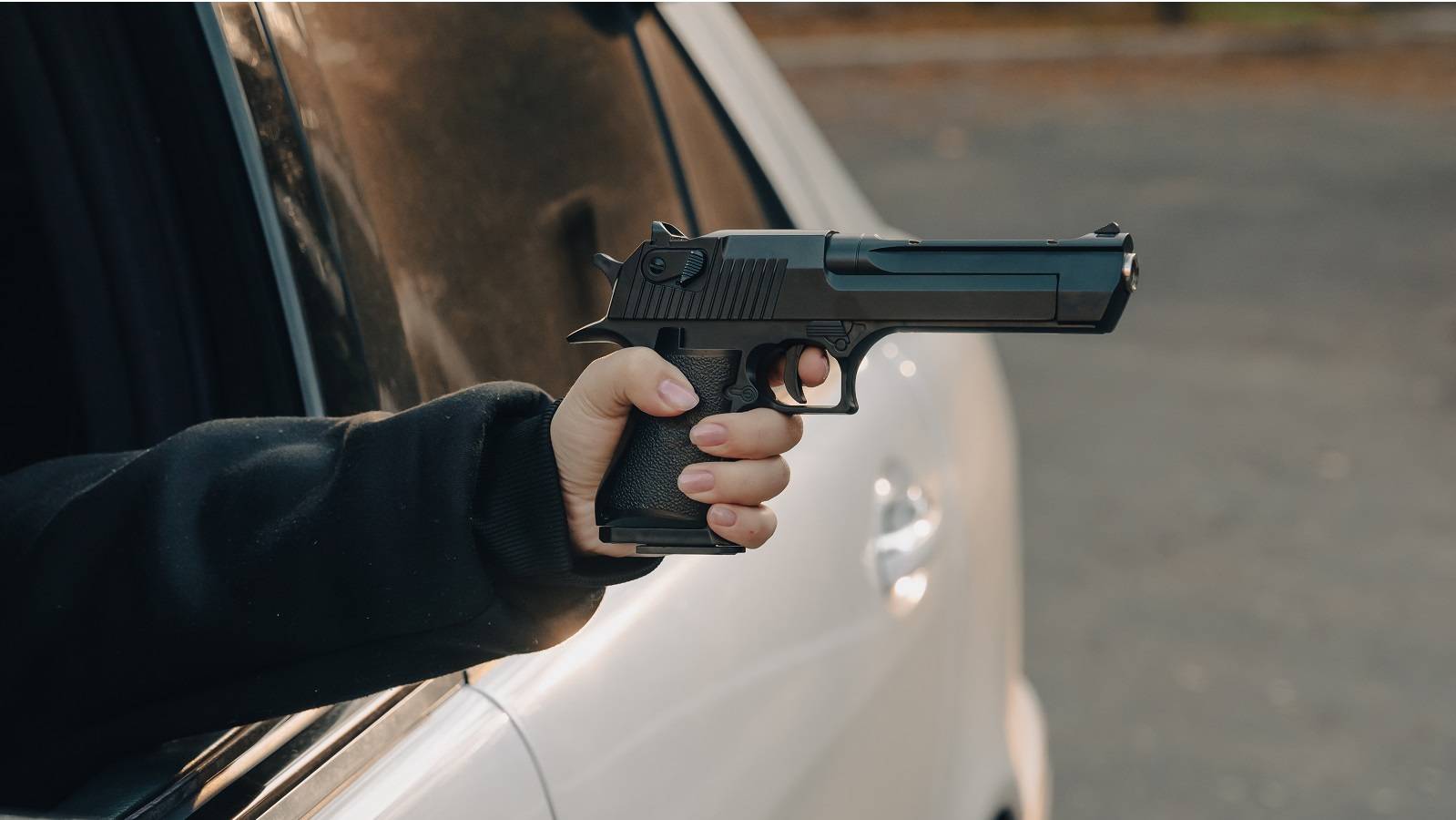
A drive-by shooting in Chicago is essentially always charged as a felony offense. The base-level charge is a Class 1 felony, but that can easily increase if someone shoots at a specific victim group. This includes shooting at vehicles which the offender knows (or reasonably suspects) to contain:
- A police officer
- A firefighter
- An emergency medical service (EMS) worker
- A teacher or public school employee
- An emergency management worker
Shooting at any of these victim groups elevates the charge to a Class X felony and requires a mandatory minimum sentence of 10 years in prison (with up to 45 years possible in severe cases).
In many cases, passengers in the car during a drive-by shooting in Chicago aren’t off the hook. Illinois’s accountability statute says that when two or more people engage in a crime, any act a person takes to further that crime are considered together, and all are equally responsible for the consequences. In other words, a passenger may face the same charges as the shooter themselves.
Finally, Illinois’s truth in sentencing (TIS) statute specifically mentions aggravated discharge of a firearm, the crime that a drive-by shooting is usually charged as. This means, if convicted, an individual will have to serve at least 85% of the prison sentence imposed by the court.
Additional Offenses Charged in Chicago Drive-by Shooting Cases
Because Illinois law doesn’t have a statute specific to drive-by shootings, many other charges besides aggravated discharge of a firearm may apply. If the shooting is gang-related or particularly severe, prosecutors may levy additional charges depending on the circumstances. Here are some of the most common additional charges we see in Chicago drive-by shooting cases.
Unlawful Use of a Weapon (UUW)
A much less severe charge than aggravated discharge of a firearm, Chicago prosecutors usually charge unlawful use of a weapon in drive-by shooting cases when they know they’ll struggle to prove intent or other factors. Unlawful use of a weapon is a relatively lower-level Class A misdemeanor.
Reckless Discharge of a Firearm
In Cook County and Chicago drive-by shooting cases, prosecutors may charge reckless discharge of a firearm when they can’t prove intent to shoot at another individual. The offense is still a Class 4 felony, though, for which you should seek legal representation as soon as possible.
Aggravated Unlawful Use of a Weapon (AUUW)
Aggravated unlawful use of a weapon applies when a Chicago resident is proven to have a loaded, accessible firearm in their vehicle without a valid firearm owner’s ID (FOID) card. Prosecutors may charge this in a drive-by shooting scenario when they can prove an individual had a gun in their car without an FOID card but can’t prove it was used in the shooting in question. AUUW is a Class 2 felony offense with a possible prison sentence up to 14 years.
Unlawful Possession of a Weapon by a Felon (UUWF)
If the drive-by shooting offender is a convicted felon but Cook County prosecutors can’t prove they shot the weapon, they may still face an unlawful possession of a weapon by a felon charge. This offense may be a Class 3, Class 2, Class 1, or Class X felony depending on the individual’s criminal history and the type of weapon they allegedly had in their possession.
Armed Violence
Armed violence is an enhancement charge whose penalty depends on its underlying offense. In drive-by shooting situations, prosecutors will charge individuals with a Class X felony, and a conviction can result in 15 to 30 years in prison without the possibility of probation.
Aggravated Battery with a Firearm
Chicago prosecutors charge aggravated battery with a firearm when victims are injured in a drive-by shooting. The offense is a Class X felony with 15 to 20-year minimum sentences. Truth in sentencing also applies, which means anyone convicted must serve at least 85% of their prison sentence.
Attempted Murder
Attempted murder charges are brought by Cook County prosecutors in the most serious drive-by shooting cases. A Class X felony, attempted murder comes with particularly harsh sentencing enhancements depending on the circumstances of the incident:
- 15 additional years in prison for using a firearm
- 20 additional years in prison for discharging the firearm
- 25 additional years in prison for shooting and injuring someone
These additional years are served on top of any other sentence the court imposes. Truth in sentencing rules apply here, too, meaning anyone convicted must serve at least 85% of their total prison sentence.
Criminal Defense Strategies Against Drive-by Shooting Charges in Chicago, IL
A drive-by shooting charge is incredibly serious, but a good criminal defense attorney can still help in a big way. At Combs Waterkotte, we’ve helped defend Chicago residents from serious gun charge allegations in the past. We’ve found the following criminal defense strategies to be particularly helpful in Chicago area drive-by shooting cases.
Alibi Defense
An alibi defense focuses on showing that the defendant was somewhere else when the alleged drive-by shooting occurred. This can involve surveillance footage, phone location data, witness testimony, or receipts establishing a different location. Because these cases often rely on eyewitness identification, a strong alibi can create reasonable doubt and directly undermine the prosecution’s timeline and theory of events in a Chicago criminal case.
Challenging Intent
Many Illinois firearm offenses, including aggravated discharge of a weapon and attempted murder, require proof of intent. A defense may argue the defendant did not intend to shoot at a person or occupied vehicle. For example, the discharge may have been accidental or not directed at anyone. Undermining intent can reduce or eliminate more serious charges, potentially leading to lesser offenses like reckless discharge or even dismissal.
Self-Defense or Defense of Others
In some cases, the defense may argue that the defendant fired a weapon to protect themselves or protect another person from imminent harm. Illinois law allows reasonable force, including deadly force, under certain circumstances. If the defendant reasonably believed they were in danger, this can justify the conduct. However, these claims are highly fact-specific and often contested, especially in alleged drive-by shooting scenarios.
Duress or Coercion
A duress or coercion defense argues that the defendant was forced to participate in the incident under threat of immediate harm. This can arise in Chicago gang-related situations where individuals are pressured to act. To succeed, the defense must show there was no reasonable opportunity to escape the threat. While difficult to prove, it can be a powerful argument when supported by credible evidence of intimidation or violence.
Fourth Amendment Violations
A critical defense strategy in Chicago drive-by shooting cases is challenging how law enforcement obtained evidence. If police conducted an unlawful traffic stop, vehicle search, or seizure of a firearm, that evidence may be suppressed. Without key evidence (like the weapon itself), the prosecution’s case can weaken significantly. These Fourth Amendment challenges are often central in Chicago gun cases, particularly those involving vehicle stops and alleged drive-by shootings.
Miranda and Fifth Amendment Violations
Statements made during Cook County police questioning can be excluded if officers failed to advise the defendant of their Miranda rights or engaged in coercive interrogation tactics. The Fifth Amendment also protects against self-incrimination. If a confession or incriminating statement is suppressed, it can severely limit the prosecution’s case, especially when other evidence tying the defendant to the shooting is circumstantial or weak.
Challenging Identification and Witness Credibility
Chicago and Cook County drive-by shooting cases often rely heavily on eyewitness testimony, which can be unreliable, especially in fast-moving, high-stress situations. A defense attorney may challenge the accuracy of identifications, highlight inconsistencies in witness statements, or present expert testimony on memory and perception. Creating doubt about whether the defendant was actually involved can be one of the most effective strategies in securing an acquittal.
Plea Bargaining and Charge Reduction
In many Chicago drive-by shooting cases, negotiations focus on reducing the most serious charges. A case may start with an attempted murder or an aggravated battery with a firearm charge, both of which carry the possibility of decades-long prison sentences. Through plea bargaining, charges may be reduced to reckless discharge of a firearm or even weapons possession offenses. Strategic negotiation can significantly lower sentencing exposure and long-term consequences.
What to Do If You’re Arrested for a Drive-by Shooting in Chicago, Illinois
What you do in the hours and days after your arrest for a drive-by shooting in Chicago or Cook County can have an enormous impact on the outcome of your case. The criminal defense lawyers at Combs Waterkotte highly recommend the following steps for anyone arrested or charged with a drive-by shooting in the Chicago area.
Exercise Your Right to Remain Silent
If you are arrested for a drive-by shooting in Chicago, exercise your right to remain silent immediately. Do not answer police questions or attempt to explain your side of the story. Anything you say can be used against you later in court. Even seemingly harmless statements can be misinterpreted or taken out of context, making it critical to wait until your attorney is present.
Request an Attorney Right Away
One of the most important steps after you’re arrested or charged in a drive-by shooting case is to clearly ask for a lawyer as soon as possible. Once you invoke this right, law enforcement must stop questioning you. An experienced Chicago criminal defense attorney can guide you through the process, protect your rights, and begin building a defense strategy. If you’re arrested for a drive-by shooting, call Combs Waterkotte at (314) 900-HELP immediately.
Do Not Consent to Searches
You have the right to refuse consent to searches of your vehicle, home, or personal belongings if law enforcement does not have probable cause or a warrant. Politely but clearly state that you do not consent. Even if officers proceed, your refusal can help your attorney challenge the legality of the search later. Evidence obtained in violation of your constitutional rights may be suppressed, which can weaken or even dismantle the prosecution’s case.
Avoid Discussing Your Case with Anyone
Do not talk about your case with friends, family, or anyone else while the case is pending. This includes phone calls from jail, which are typically recorded. Statements made outside of court can still be used as evidence. Limiting communication about the incident helps prevent misunderstandings and protects your defense strategy from being compromised.
Document Everything You Remember
As soon as possible, write down everything you recall about the incident, your location, and any interactions with law enforcement. Details can fade quickly, and even small facts may become important later. Share this information only with your attorney. Accurate documentation can help identify inconsistencies in the prosecution’s case and support potential defenses such as alibi or mistaken identity.
Comply with Law Enforcement Without Resisting
While you have important rights, it is essential to remain calm and avoid resisting arrest. Resisting can lead to additional charges and complicate your case. Comply physically with lawful orders while asserting your rights verbally, such as requesting an attorney or declining to answer questions. Maintaining composure can prevent the situation from escalating further.