Class E Felonies Lawyer St. Charles County, MO
Arrested for a Class E felony in St. Charles County, Missouri? Our legal team can put our combined 100 years of experience to work on your behalf. Call our office today for personalized legal advice.
TO COMBS WATERKOTTE,YOU ARE WHY WE EXIST.


Class E Felonies Lawyer St. Charles County, Missouri
In Missouri, you can be charged with a Class E felony for offenses such as lower-level property damage or non-violent low tier repeat offenses. While Class E is the lowest felony offense, it will still result in you being classified as a felon, which comes with many collateral consequences.
If you are facing a Class E felony charge, do not delay in speaking with a St. Charles County Class E felonies lawyer at Combs Waterkotte. For a free case evaluation, contact our office at (314) 900-HELP today.

I owe my life to Combs Waterkotte. If not for them, I would be spending the rest of my life behind bars. There is no amount of words that can explain what they did for me and my family. Its the highest recommendation that I can give.
Alexander B.
Felonies
Verify on

If I could give Steve and his team 10 stars I would in a heartbeat. Was facing more then one felony charge and after these guys found the arresting officer violated my 4th Amendment Rights and those charges were dismissed. My family and I can't thank you enough.
Dean J
Felonies
Verify on
I was hands down guilty. ON VIDEO !!! In a smaller town, and a job dealing with the public, this was devastating. I made one phone call and spoke for maybe 15 minutes. I DIDN'T appear in court. I am extremely impressed. QUIETLY relieved of the matter!
Y.I.V.
Theft
Verify on
My fiance had a felony drug charge and Combs Waterkotte got it dismissed! There were no fines, court cost, nothing. Chris is loyal, professional, knowledgeable, and a man of his word. We are forever grateful for you.
Kimberly T.
Drug Crimes
Verify on
If I was found guilty, it would have been over 100 years in prison. They promised me that they would fight like hell and get me out of it. After everything was done, I just felt free. Like this wasn’t gonna end with me rotting away in a prison cell. I felt like I could start my life and have a fresh start.
Caleb
Assault 1st, Armed Criminal Action
Verify on
I was facing, probably 18 years… I actually got 5 years probation and 40 hours of community service. Without Combs Waterkotte’s help, I don’t think my family could have made it without me. It was just a written book to where it's a perfect ending.
Chris
Unlawful Use of a Weapon, Armed Criminal Action
Verify on
I went through what was supposed to be one of the top law firms in St. Louis. They said I wouldn't have no chance. I end up firing the other lawyer and everything and going with Chris. I felt like Combs Waterkotte actually did something for me and wasn't I wasn't just another number on somebody's desk.
Willy
DWI/DUI
Verify onI owe my life to Combs Waterkotte. If not for them, I would be spending the rest of my life behind bars. There is no amount of words that can explain what they did for me and my family. Its the highest recommendation that I can give.
Alexander B.
Felonies
If I could give Steve and his team 10 stars I would in a heartbeat. Was facing more then one felony charge and after these guys found the arresting officer violated my 4th Amendment Rights and those charges were dismissed. My family and I can't thank you enough.
Dean J
Felonies
I was hands down guilty. ON VIDEO !!! In a smaller town, and a job dealing with the public, this was devastating. I made one phone call and spoke for maybe 15 minutes. I DIDN'T appear in court. I am extremely impressed. QUIETLY relieved of the matter!
Y.I.V.
Theft
My fiance had a felony drug charge and Combs Waterkotte got it dismissed! There were no fines, court cost, nothing. Chris is loyal, professional, knowledgeable, and a man of his word. We are forever grateful for you.
Kimberly T.
Drug Crimes
If I was found guilty, it would have been over 100 years in prison. They promised me that they would fight like hell and get me out of it. After everything was done, I just felt free. Like this wasn’t gonna end with me rotting away in a prison cell. I felt like I could start my life and have a fresh start.
Caleb
Assault 1st, Armed Criminal Action
I was facing, probably 18 years… I actually got 5 years probation and 40 hours of community service. Without Combs Waterkotte’s help, I don’t think my family could have made it without me. It was just a written book to where it's a perfect ending.
Chris
Unlawful Use of a Weapon, Armed Criminal Action
I went through what was supposed to be one of the top law firms in St. Louis. They said I wouldn't have no chance. I end up firing the other lawyer and everything and going with Chris. I felt like Combs Waterkotte actually did something for me and wasn't I wasn't just another number on somebody's desk.
Willy
DWI/DUI
What is a Class E Felony in Missouri?
Missouri Revised Statute 557.021 defines a Class E felony as one where “the maximum term of imprisonment is four years or less.”
The least severe felony classification in Missouri, a Class E felony still comes with several hard-hitting penalties, from prison time to the restrictions that come with being a registered felon. At Combs Waterkotte, we have experience representing clients facing a variety of Class E felony charges.
Common Class E Felony Charges in St. Charles County
While Class E felony charges can encompass a wide range of crimes, common offenses include:
- Assault in the 3rd Degree: Knowingly causing physical injury to another person
- Domestic Assault in the 3rd Degree: Knowingly causing physical pain or illness to a domestic victim, or attempting to cause physical injury.
- Resisting or Interfering with Arrest: Fleeing in a vehicle in a way that causes a substantial risk of serious physical injury or death.
- Stalking (1st and 2nd Degree): Engaging in an unwanted course of conduct that causes serious emotional distress or fear.
- Harassment in the 1st Degree: Purposefully alarming or distressing someone through unwanted communication or actions.
- Parental Kidnapping: Violating a custody order by detaining or removing a child unlawfully.
- Involuntary Manslaughter in the 2nd Degree: Recklessly causing the death of another person.
- Fraud and Deceptive Practices: This includes insurance fraud, providing false information, or deceptive business practices.
- Stealing (Certain Circumstances): Taking property or services without consent, by deceit, or through coercion. Commonly charged as a Class E felony when the property is an animal or a catalytic converter, or when the defendant has three qualifying prior stealing-related convictions within the statutory period.
- Invasion of Privacy: Unlawfully recording or distributing private or sexual images without consent.
Why Combs Waterkotte is the best Law firm for your case.
Real results for people just like you.

Common Felonies Committed in St. Charles
In 2025, the 11th Judicial Circuit Court saw more than 8,000 new criminal cases filed.
According to the St. Charles County Prosecuting Attorney’s Office, drug possession and domestic assault are among the most common felony cases prosecuted in St. Charles County.
Other common felony cases in St. Charles include:
- Stealing
- Burglary
- Vehicle-related offenses
In 2025, 404 aggravated assaults were reported in St. Charles County, 248 motor vehicle thefts, 188 theft from vehicles, 69 rapes, 22 robberies and four murders. Not all of these offenses are classified as Class E felonies. Depending on the charge, criminal history and circumstances of the alleged offense, you may face a Class A, B, C, D or E felony. At Combs Waterkotte, we understand how felony cases proceed through the 11th Judicial Circuit and can help you evaluate your charges, explore potential defenses and protect your rights throughout your case.
Class E Felony Penalties in Missouri
Under Missouri Revised Statutes § 558.011, the potential penalties for a Class E felony include:
- Prison Sentence: Up to four years of imprisonment.
- County Jail Sentence: The court may impose a special term of up to one year in county jail or another authorized penal institution.
- Probation: Depending on the offense and the circumstances, the court may impose probation, including through a suspended imposition of sentence or a suspended execution of sentence.
- Fines: A fine may be imposed under Missouri’s applicable sentencing laws, subject to statutory limits and exceptions.
- Restitution: The court may order restitution to compensate victims for qualifying financial losses.
- Additional Consequences: A conviction may affect employment opportunities, professional licenses, housing eligibility, firearm rights, and other civil privileges, depending on the offense and applicable law.
Class E Felony vs. Class D Felony in Missouri
Key differences between Class D and Class E felonies include:
- Maximum prison sentence: A Class D felony carries a maximum sentence of seven years, compared with four years for a Class E felony.
- County jail sentencing: For both classifications, a judge may impose a special term of up to one year in county jail or another authorized penal institution. A prison sentence exceeding one year requires commitment to the Missouri Department of Corrections.
- Parole eligibility: The percentage of a sentence a defendant must serve before becoming eligible for parole depends on the felony classification, the defendant’s criminal history, and the nature of the offense. Eligibility does not guarantee release.
- Probation: Depending on the offense, criminal history, and other applicable legal requirements, a defendant convicted of either classification may be eligible for probation.
- Long-term consequences: Both Class D and Class E felony convictions can have lasting consequences for employment, housing, professional licensing, and certain civil rights.

What Happens Immediately After a Class E Felony Arrest in St. Charles County?
If you are arrested on suspicion of a Class E felony in St. Charles County, Missouri, law enforcement may take you into custody under an arrest warrant or, when legally authorized, without a warrant based on probable cause. Depending on the circumstances, an arrest may follow a traffic stop, an alleged assault, or an investigation into suspected criminal activity.
After your arrest, you may be transported to a local detention facility for booking and processing. Your case will generally proceed through the Missouri 11th Judicial Circuit Court, which handles felony cases in St. Charles County.
If you are arrested without a warrant, Missouri law generally requires that you be released within 24 hours unless you are formally charged with a criminal offense and held under a warrant. The applicable procedures depend on the circumstances of your arrest and detention.
How St. Charles County Courts Handle Class E Felony Cases
If you are arrested on suspicion of a Class E felony in St. Charles County, Missouri, your case may proceed through several stages, depending on how the charges are filed and the circumstances of your arrest:
- Arrest and booking: Following an arrest, you may be transported to the St. Charles County Department of Corrections Adult Detention Facility for booking. Officers will record your identifying information, take your fingerprints and photograph, inventory your personal property, and advise you of the charges and bond amount, if one has been set.
- Initial court appearance and release conditions: You will appear before a judge, who may address the allegations, legal representation, and whether you can be released while your case is pending. The court may impose bond or other release conditions.
- Probable cause review and preliminary hearing: If the prosecution begins with a felony complaint, a preliminary hearing generally determines whether sufficient evidence supports proceeding with the felony case. The defendant may waive this hearing. A preliminary hearing is generally unnecessary when the case proceeds by grand jury indictment.
- Circuit Court arraignment: After the case proceeds to the Circuit Court, the defendant is formally informed of the charges and enters a plea. The court will explain the applicable procedures and address the next steps in the case.
- Further court proceedings: Depending on the case, additional court dates may be scheduled. The case may ultimately be resolved through a plea or proceed to trial if the charges are contested.
- Expungement eligibility: After the case is resolved, you may be able to petition for expungement of eligible criminal records. Eligibility depends on the specific offense, the outcome of the case, applicable waiting periods, and other statutory requirements. Not every Class E felony qualifies for expungement.
A St. Charles County criminal defense lawyer can help you understand the charges, protect your rights, and navigate the procedures that apply to your case.
Can a Class E Felony be Reduced or Dismissed in Missouri?
Yes, a Class E felony may be reduced, dismissed or expunged, depending on the circumstances surrounding your charge.
Options that may be available to you include:
- Plea Bargaining: A prosecutor may agree to reduce a Class E felony down to a Class A or lower misdemeanor.
- Suspended Imposition of Sentence (SIS): You may be able to enter a plea deal for an SIS, where you are placed on probation and your case is not a formal conviction on your public record.
- Diversion Programs: Local alternative or diversion programs may allow you to resolve or dismiss your lower-level felony charges upon completion of specific court-mandated conditions.
- Prosecutorial Dismissal: If the state’s evidence is weak, uncooperative witnesses come forward or constitutional violations occur, a prosecutor or judge may dismiss the charges entirely.
- Expungement: Generally eligible for expungement, under RSMo 610.140, Class E felony convictions require you to wait 3 years after completing your full sentence, probation or parole with no intervening convictions.
Legal Defenses Against Class E Felony Charges
Defenses that may apply to your case include:
- Self-Defense or Defense of Others: If you are charged with an offense such as third-degree assault, you may argue that you reasonably believed force was necessary to protect yourself or another person from the use or imminent use of unlawful force.
- Lack of Required Mental State: If the alleged offense requires proof that you acted knowingly, purposefully, or with criminal negligence, the prosecution must establish the required mental state. If the state cannot prove this element beyond a reasonable doubt, it may be unable to secure a conviction for the charged offense.
- Constitutional Violations: If law enforcement violated your constitutional rights through an unlawful search, an improper seizure, or a traffic stop that lacked the required legal justification, your attorney may be able to file a motion to suppress evidence obtained as a result of the violation.
- Mistaken Identity or False Accusations: If you were wrongly identified as the person who committed the alleged offense, your attorney may challenge eyewitness identifications, surveillance footage, or other evidence linking you to the crime.
- Insufficient Evidence: The prosecution must prove every element of the charged offense beyond a reasonable doubt. If the evidence is unreliable or fails to establish an essential element, the state may be unable to obtain a conviction.
- Alibi: If evidence establishes that you were somewhere else when the alleged crime occurred, it may undermine the prosecution’s case and support your defense.
- Duress or Necessity: In certain circumstances, evidence that you acted because of an imminent threat or to prevent a greater harm may support a defense. Whether either defense is available depends on the facts and applicable Missouri law.
- Consent: For certain offenses, evidence that the other person consented to the conduct may undermine an element of the charge. However, consent is not a defense to every criminal offense.
- Entrapment: If law enforcement improperly induced you to commit an offense under circumstances that satisfy Missouri’s legal requirements for entrapment, this defense may apply.
Can a Class E Felony be Expunged in Missouri?
Under RSMo Section 610.140, certain Class E felonies may be expunged as long as it is not a dangerous felony, such as a sex offense, assault, domestic assault or kidnapping.
Key factors to consider, when it comes to expungement, includes:
- Waiting period: You generally must wait at least three years after completing the authorized disposition imposed for the offense before filing a petition.
- No disqualifying convictions: During the three-year waiting period, you generally cannot be found guilty of another misdemeanor or felony, subject to statutory exceptions for certain traffic violations.
- Payment of financial obligations: You must satisfy all obligations associated with the disposition, including fines and restitution.
- No pending charges: You cannot have pending criminal charges when you file your petition.
- Public safety and the interests of justice: The court may consider whether your conduct demonstrates that you are not a threat to public safety and whether expungement is consistent with the public welfare and the interests of justice.
- Lifetime limits: Under § 610.140, a person generally may receive expungement for no more than two felony offenses and three qualifying misdemeanor offenses or ordinance violations during their lifetime.

Watch More:
How our St. Charles County Class E Felonies Lawyer can Help You

Read More:
Read More:
If you are facing a Class E felony charge in St. Charles County, Missouri, our Class E felonies lawyers can help you by:
- Protecting Your Constitutional Rights: We will evaluate whether law enforcement respected your constitutional rights during searches, seizures, traffic stops, and questioning.
- Investigating the Evidence: We will review police reports, body-camera footage, witness statements, medical records, digital evidence, and other relevant materials to identify inconsistencies or weaknesses in the prosecution’s case.
- Challenging Unlawfully Obtained Evidence: If law enforcement violated your constitutional rights, we can evaluate whether grounds exist to challenge the admissibility of evidence that could be used against you.
- Challenging the Prosecution’s Case: The state must prove every element of the charged Class E felony beyond a reasonable doubt, including any required mental state. We will assess whether the evidence supports the allegations and identify potential defenses.
- Pursuing Favorable Resolutions: Depending on the facts of your case, we may negotiate for reduced charges, explore available diversion or alternative sentencing options, or pursue other resolutions that may limit the consequences of a conviction.
- Preparing for Trial: If your case proceeds to trial, we will develop a defense strategy, evaluate witness credibility, prepare cross-examinations, and present arguments challenging the prosecution’s evidence.
Call our St. Charles County Class E Felonies Lawyer
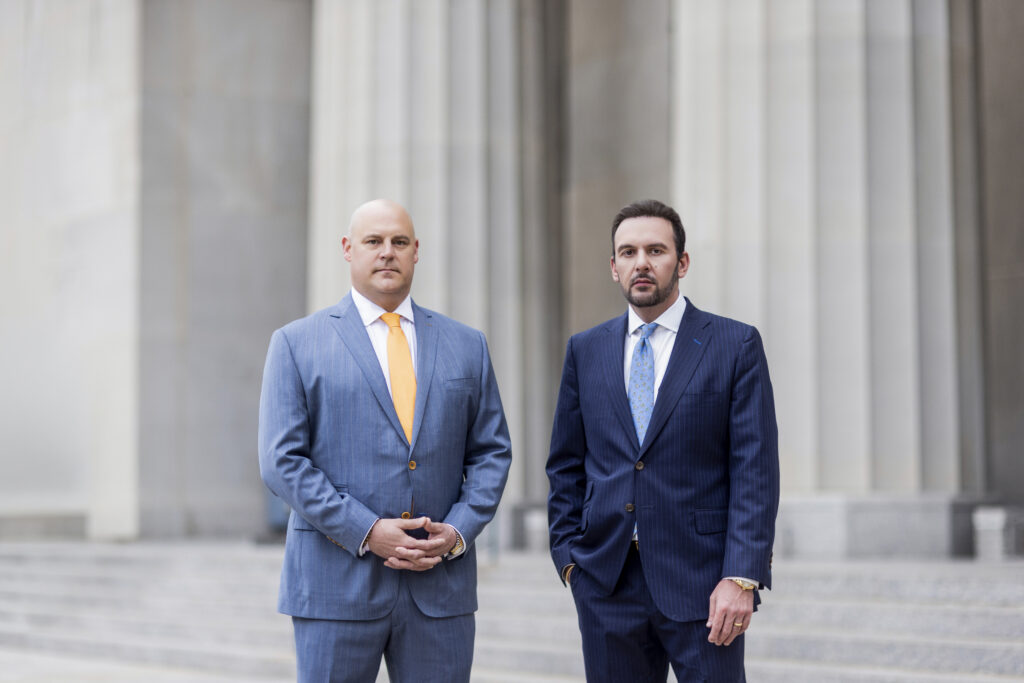
If you were arrested for a Class E felony in St. Charles County, you need to act promptly to protect yourself.
Our felony defense team at Combs Waterkotte will defend your rights at each stage of your case. With more than 100 years of combined legal experience, our lawyers are committed to upholding your freedoms, future and reputation.
For a free consultation with our St. Charles County Class E felonies lawyers, call our office at (314) 900-HELP today.
Resources
For more information on Class E felony defense in St. Charles County or elsewhere in Missouri, call (314) 900-HELP or contact us online for a free consultation.
Felony Defense Lawyers in St. Charles
Missouri Persistent Offender Sentencing
What Rights Do Felons Lose in Missouri
Can a Felony be Reduced to a Misdemeanor in Missouri?
Free book
How a Criminal Defense Attorney Can Protect Your Rights and Future
Combs Waterkotte has over 80 years of experience and over 10,000 cases handled. This ebook helps guide you through the criminal defense process and how an experienced, skilled defense attorney can keep your freedoms intact.