






Additional Links
- First-Time DUI in Illinois: What You Need to Know
- Legal Video | What Should I Do if Pulled Over for a DUI in Illinois?
- Legal Video | What is Considered an Aggravated DUI in Illinois?
- Legal Video | What Are the Penalties for a DUI in Illinois?
- Legal Video | Can a DUI Charge Be Reduced or Dismissed in Illinois?
- Legal Video | What Are the Potential Defenses Against a DUI Charge in Illinois?
- Legal Video | How Long Does a DUI Stay on Your Record in Illinois?
- Legal Video | How Does a DUI Affect Your Driver’s License in Illinois?
- Legal Video | Can I Get a DUI For Marijuana in Illinois?
First DUI Lawyers in Chicago Serving All of Cook County
A first DUI charge in Chicago or anywhere in Cook County can be a very stressful situation. Chicago prosecutors and CPD officers take DUI allegations seriously, even for first-time offenders. A conviction can carry consequences that affect your license, finances, career, and future. Trying to handle these charges without an experienced defense attorney can put you at a major disadvantage.
“[Combs Waterkotte] helped me with DWI charges. Not only [were they] extremely prompt in returning my calls and emails, but [they were] also able to get the best possible outcome for my case... It was my 2nd DWI, but not only did I NOT lose my driving license, but charges were reduced... I would ABSOLUTELY recommend [Combs Waterkotte] to anyone who is looking for a great defense lawyer.”
-T.S. | Combs Waterkotte Client
At Combs Waterkotte, our first DUI offense lawyers serving all of Cook County have decades of combined experience defending clients against drunk driving charges throughout the Chicago area. We understand that good people can find themselves facing DUI accusations after a single mistake, misunderstanding, or questionable traffic stop. That’s why we take the time to thoroughly examine every detail of your case, from the legality of the stop to the accuracy of field sobriety and chemical testing procedures.
When you hire our firm, we’ll build a personalized defense strategy focused on protecting your rights and minimizing the impact a DUI charge has on your life. Whether through negotiating reduced penalties or fighting your case in court, our goal is always to secure the best possible outcome for you.
If you’re ready to fight back against your first DUI charge in Chicago or Cook County, call Combs Waterkotte today at (314) 900-HELP or contact us online to schedule a free, confidential consultation.
What Happens When You Get a DUI for the First Time in Chicago?
Knowing what to expect or how to handle the situation when you’re pulled over for DUI for the first time in Chicago can be tough. The best place to start is understanding what constitutes driving under the influence under Illinois law.
625 ILCS 5/11-501 defines driving while intoxicated under Illinois’s rules of the road. The statue maintains that individuals can be charged if they drive or are in actual physical control of a vehicle while:
- Driving under the influence of alcohol
- Driving under the influence of drugs
- Driving under the combined influence of alcohol and drugs
- Driving with a blood alcohol content (BAC) of .08% or higher
The traffic stop, interactions with Chicago police officers, arrest, and post-arrest criminal and civil issues can be a lot to handle. Here’s how the process usually goes.
How Chicago Police Investigate Suspected DUI
In the vast majority of cases, a Chicago or Cook County DUI investigation begins with a traffic stop. Police officers may pull you over after observing alleged traffic violations, including (but not limited to):
- Speeding
- Drifting between lanes
- Driving without headlights on
- Failing to obey traffic signals
After they pull you over, police begin to check for signs they believe indicate impairment. Some of the things they’re trained to look for during a DUI stop are:
- The odor of alcohol
- Slurred speech
- Bloodshot eyes
- Open containers
- Difficulty providing your license or registration
Field Sobriety and Chemical Testing by Chicago Police
If they believe you’re driving under the influence, the officer may ask you to perform field sobriety tests designed to help them evaluate balance, coordination, attention, and other physical indicators they associate with impairment. Common tests in these cases include:
- The walk-and-turn test
- The one-leg stand
- A Horizontal Gaze Nystagmus (HGN) test
Many Chicago and Cook County residents don’t know this, but field sobriety tests are voluntary and you do not have to submit to them. Combs Waterkotte’s expert Illinois DUI attorneys highly recommend not submitting to field sobriety tests during a traffic stop in Chicago.
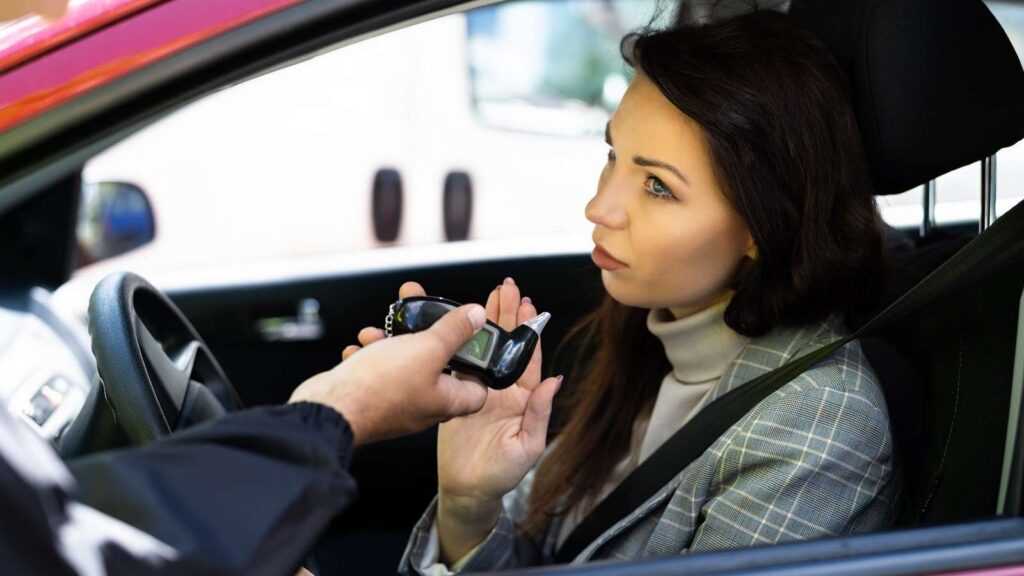
Breath tests, however, are a different story. Illinois’s implied consent law usually requires drivers who are lawfully arrested for DUI to submit their blood, breath, or urine. Refusing the test can trigger driver’s license consequences, even if you’re not convicted.
What Happens After a First DUI Arrest in Chicago
If you fail or refuse a breathalyzer test in Chicago, you may be arrested for DUI. After your arrest, you’ll likely be transferred to a police station or processing facility for booking, during which police may collect fingerprints, photographs, and formal identifying information from you.
In many first DUI cases, the accused individual is released pending a future court appearance. The case will then proceed through the Cook County court system where prosecutors and defense attorneys review police reports, video footage, witness statements, and chemical testing procedures and results.
While the entire situation can be very stressful, and arrest does not automatically mean you’ll be convicted. Your situation’s outcome depends largely on:
- The circumstances surrounding the traffic stop
- Arrest procedures by CPD officers
- Testing methods used during the stop
First DUI Penalties in Chicago, Illinois
Under 625 ILCS 5/11-501(c), a first DUI offense in Chicago is typically charged as a Class A misdemeanor. Maximum penalties for a Class A misdemeanor conviction include:
- Up to 364 days in jail
- Fines up to $2,500
- Court costs
However, most first-time Chicago DUI offenders avoid prison time, especially if:
- No accident occurred
- No injuries were involved
- Your BAC was near the legal limit
- There are no aggravating factors
Illinois law has a unique statutes that allow many DUI defendants to receive court supervision instead of a conviction. This law, which covers conditions of probation and conditional discharge, explains that a person can be released after a first-time DUI instead of going to jail. This means defendants can:
- Avoid a criminal conviction
- Prevent having a DUI on your record
- Avoid long-term consequences for employment and professional licensing
Can a First DUI Be a Felony in Chicago, Illinois?
Yes, in some cases, even a first-time DUI can be charged as a felony in Chicago. This occurs in cases of aggravated DUI, which is a Class 4 felony under Illinois law. A first-time offender may be charged with felony aggravated DUI when:
- They cause serious bodily injury to another driver
- They have a child present in their vehicle
- They lack insurance and cause an injury
- The commit DUI while driving without a driver’s license
Can a First DUI in Chicago Be Reduced?
Yes, in some cases, a first DUI offense in Chicago can be reduced to a lesser offense. A charge reduction depends on the circumstances of the DUI, including factors like:
- The strength (or lack thereof) of the evidence
- Your BAC level
- The legality (or illegality) of the traffic stop
- Testing issues
- Your criminal history
- Whether or not there were any aggravating factors
When DUI offenses are reduced in Chicago courts, offenders are often charged with reckless driving instead. While you may still face some penalties, pleading down to a reckless driving charge can allow you to avoid some of the license-related consequences that come with a DUI conviction. Prosecutors may consider a charge reduction when:
- The evidence in your DUI case is weak
- Your BAC content isn’t too far over the legal limit
- Problems exist with field sobriety and chemical tests
- No accident or injury occurred as a result of the DUI
Is Your License Suspended Immediately After a First DUI in Chicago?
While your driver’s license is not suspended on the spot after a first DUI arrest in chicago, most drivers do face an automatic statutory summary suspension (SSS) shortly after the incident if they fail or refuse chemical testing.
Illinois’s implied consent law means that, just by virtue of driving on public roads, you automatically consent to chemical testing. Under this law, you may lose your license:
- For 6 months for failing a breathalyzer test (BAC .08% or higher)
- For 12 months if you refuse a chemical test
In either case, the Illinois Secretary of State’s office will serve you with a statutory summary suspension. After receiving your SSS, you have 46 days to file a petition to rescind the suspension before it actually takes effect.
Can You Still Drive After a First DUI in Chicago?
Yes, you can still drive after a first DUI arrest in Chicago, but the circumstances differ a bit from case to case. During the first 46 days after you receive your statutory summary suspension, you are still allowed to drive. If you fail to schedule a hearing to overturn your suspension during that 46 days, though, your 6-month or 12-month suspension will eventually take effect.
Even if your license does end up being suspended, you may still apply for a Monitoring Device Driving Permit (MDDP) that allows for limited driving during your suspension period. This often applies in cases where offenders still need to drive to work, school, or doctor’s appointments.
Sometimes, applicants who are granted an MDDP need to install a breath alcohol ignition interlock device (BAIID) on their vehicle. This device prevents your vehicle from starting until you blow into it to prove that your blood alcohol content is below the legal limit.
Criminal Defense Strategies Against Chicago First DUI Charges
A first DUI offense in Chicago or Cook County can wreak havoc on your entire life. That’s why it’s vital to hire a criminal defense lawyer to help you handle both the civil and criminal aspects of your DUI charge.
At Combs Waterkotte, we’ve helped several Illinois clients take on their first-time DUI charges. We’ve found that the criminal defense strategies below are particularly effective at helping clients avoid jail time and secure charge reductions and even dismissals.
Challenging the Legality of the Traffic Stop
One of the most common defense strategies in Chicago first-time DUI cases involves challenging whether police had a lawful reason to stop the driver in the first place. Under the Fourth Amendment, officers generally must have reasonable suspicion that a traffic violation or criminal offense occurred before initiating a stop. If police lacked legal justification for the stop, a defense attorney may seek to suppress evidence gathered afterward, including officer observations, field sobriety tests, and chemical test results.
Arguing Lack of Actual Impairment
Chicago DUI charges are not based solely on whether a person consumed alcohol; prosecutors must still prove impairment or unlawful blood alcohol concentration beyond a reasonable doubt. In some first DUI cases, drivers may appear tired, nervous, or distracted rather than impaired. A defense strategy may focus on demonstrating that the driver’s behavior, speech, coordination, or driving conduct did not actually show that they were intoxicated at the time of the stop.
Challenging the Officer’s Observations
Many first-time DUI arrests rely heavily on subjective observations made by Chicago police officers. Claims involving bloodshot eyes, slurred speech, or the odor of alcohol can sometimes be exaggerated, misunderstood, or explained by non-alcohol-related factors. Defense attorneys may compare officer reports against video evidence, witness testimony, and other records to identify inconsistencies that weaken the prosecution’s case against a first-time DUI defendant in Chicago.
Questioning Field Sobriety Test Accuracy
Field sobriety tests are not always reliable indicators of intoxication. Uneven pavement, poor weather conditions, medical issues, fatigue, anxiety, and physical limitations can all affect a person’s performance during roadside testing. In some cases, officers may also improperly administer the tests or fail to follow standardized procedures. A Chicago DUI defense attorney may attempt to challenge whether the field sobriety exercises actually demonstrated impairment or whether outside factors influenced the results.
Challenging Breathalyzer or Chemical Test Results
Breath and chemical testing play a major role in many Chicago DUI cases, but testing procedures are not ironclad. Calibration problems, maintenance failures, improper administration, contamination, and operator error can all affect alcohol test accuracy. Certain medical conditions may also produce unreliable readings in some circumstances. Defense attorneys often review the testing equipment’s maintenance records, testing procedures, and the police officer’s conduct during the stop to determine whether chemical test evidence can be challenged in court.
Examining Police Procedure and Arrest Conduct
Chicago and Cook County DUI investigations must follow constitutional and procedural requirements. If officers violated the defendant’s rights at all during questioning, arrest, or evidence collection, portions of the prosecution’s case may become vulnerable. This can include issues involving Miranda warnings, unlawful detention, or improperly obtained statements. Reviewing police body camera footage, dash camera recordings, and official reports may reveal inconsistencies or procedural violations that support the defense.