

Voluntary Manslaughter Lawyer Kansas City, MO
Hire the leading voluntary manslaughter law firm in Kansas City, MO to protect your freedom, rights, and future. Whether you have been charged or are under investigation, we can help.
TO COMBS WATERKOTTE,YOU ARE WHY WE EXIST.


Voluntary Manslaughter Lawyer Kansas City, MO
Homicide charges, such as voluntary manslaughter, are the most serious offenses under Missouri law. Without a strong defense, you could face decades in prison upon conviction.
Our law firm has the resources to stand up to the state when you face manslaughter charges. Our attorneys share over 100 years of combined legal experience protecting the rights of the accused.

I owe my life to Combs Waterkotte. If not for them, I would be spending the rest of my life behind bars. There is no amount of words that can explain what they did for me and my family. Its the highest recommendation that I can give.
Alexander B.
Felonies
Verify on

If I could give Steve and his team 10 stars I would in a heartbeat. Was facing more then one felony charge and after these guys found the arresting officer violated my 4th Amendment Rights and those charges were dismissed. My family and I can't thank you enough.
Dean J
Felonies
Verify on
I was hands down guilty. ON VIDEO !!! In a smaller town, and a job dealing with the public, this was devastating. I made one phone call and spoke for maybe 15 minutes. I DIDN'T appear in court. I am extremely impressed. QUIETLY relieved of the matter!
Y.I.V.
Theft
Verify on
My fiance had a felony drug charge and Combs Waterkotte got it dismissed! There were no fines, court cost, nothing. Chris is loyal, professional, knowledgeable, and a man of his word. We are forever grateful for you.
Kimberly T.
Drug Crimes
Verify on
If I was found guilty, it would have been over 100 years in prison. They promised me that they would fight like hell and get me out of it. After everything was done, I just felt free. Like this wasn’t gonna end with me rotting away in a prison cell. I felt like I could start my life and have a fresh start.
Caleb
Assault 1st, Armed Criminal Action
Verify on
I was facing, probably 18 years… I actually got 5 years probation and 40 hours of community service. Without Combs Waterkotte’s help, I don’t think my family could have made it without me. It was just a written book to where it's a perfect ending.
Chris
Unlawful Use of a Weapon, Armed Criminal Action
Verify on
I went through what was supposed to be one of the top law firms in St. Louis. They said I wouldn't have no chance. I end up firing the other lawyer and everything and going with Chris. I felt like Combs Waterkotte actually did something for me and wasn't I wasn't just another number on somebody's desk.
Willy
DWI/DUI
Verify onI owe my life to Combs Waterkotte. If not for them, I would be spending the rest of my life behind bars. There is no amount of words that can explain what they did for me and my family. Its the highest recommendation that I can give.
Alexander B.
Felonies
If I could give Steve and his team 10 stars I would in a heartbeat. Was facing more then one felony charge and after these guys found the arresting officer violated my 4th Amendment Rights and those charges were dismissed. My family and I can't thank you enough.
Dean J
Felonies
I was hands down guilty. ON VIDEO !!! In a smaller town, and a job dealing with the public, this was devastating. I made one phone call and spoke for maybe 15 minutes. I DIDN'T appear in court. I am extremely impressed. QUIETLY relieved of the matter!
Y.I.V.
Theft
My fiance had a felony drug charge and Combs Waterkotte got it dismissed! There were no fines, court cost, nothing. Chris is loyal, professional, knowledgeable, and a man of his word. We are forever grateful for you.
Kimberly T.
Drug Crimes
If I was found guilty, it would have been over 100 years in prison. They promised me that they would fight like hell and get me out of it. After everything was done, I just felt free. Like this wasn’t gonna end with me rotting away in a prison cell. I felt like I could start my life and have a fresh start.
Caleb
Assault 1st, Armed Criminal Action
I was facing, probably 18 years… I actually got 5 years probation and 40 hours of community service. Without Combs Waterkotte’s help, I don’t think my family could have made it without me. It was just a written book to where it's a perfect ending.
Chris
Unlawful Use of a Weapon, Armed Criminal Action
I went through what was supposed to be one of the top law firms in St. Louis. They said I wouldn't have no chance. I end up firing the other lawyer and everything and going with Chris. I felt like Combs Waterkotte actually did something for me and wasn't I wasn't just another number on somebody's desk.
Willy
DWI/DUI
Differences Between Murder and Manslaughter in Missouri
Homicide simply means that someone’s death resulted from another person’s act. Although the word has gruesome connotations, it doesn’t mean that someone will always go to prison, as the state divides homicides into several categories.

If you’ve been charged or arrested with voluntary manslaughter in Kansas City, Missouri, call (314) 900-HELP or reach out to Combs Waterkotte online right away.
Some homicides are non-criminal. For example, most medical errors are treated as regrettable mistakes rather than murder or manslaughter.
However, some unintentional homicides can still result in criminal charges. Fatal drunk driving accidents or deaths that result from careless firearm handling might bring involuntary manslaughter charges against a criminally negligent or reckless person who caused the death.
The most serious homicide charges, murder and voluntary manslaughter, arise from intentional deaths. If the accused party intentionally caused a death or engaged in activities that could foreseeably result in death, they face the harshest punishments possible under Missouri law, including the death penalty or life imprisonment.
Why Combs Waterkotte is the best Law firm for your case.
Real results for people just like you.

Voluntary Manslaughter in the Missouri Revised Statutes
The Missouri Revised Statutes address both voluntary and involuntary manslaughter. An involuntary offense includes two degrees, with the first-degree offense covering reckless conduct and the second-degree offense covering criminally negligent acts.
A voluntary offense, by contrast, is only a single offense. Voluntary manslaughter occurs in the following two circumstances:
Killing Due to Sudden Passion
Prosecutors could file manslaughter charges when the accused party commits an intentional killing that would constitute second-degree murder. The accused party could assert that they acted under the influence of “sudden passion” arising from an “adequate cause.”
Second-degree murder means that the accused person caused the death either knowingly or with the intent to cause serious physical injury. “Knowingly” means that they were aware that their actions were virtually certain to cause death. “Purposely” means that the person’s objective was to cause a serious physical injury.
This means you could face second-degree murder charges if you deliberately swerved toward someone while driving your car at high speed. The prosecution could argue that it’s reasonable to infer that you either intended to seriously injure the other person or knew that hitting them with your car would kill them.
Second-degree murder becomes manslaughter when you assert sudden passion. You have the burden of proving that you acted under sudden passion, which is done by advancing evidence and arguments to the jury. You must persuade the jury by a preponderance of the evidence. This means that a jury can accept your assertion if the evidence makes it more likely than not that you acted with sudden passion.
“Sudden passion” means that you experienced a strong emotional response to provocation by the victim or someone acting with the victim. The passion must arise at the time of the killing. It cannot result from an earlier provocation.
For example, you might claim sudden passion if the victim told you that they molested your child and, in response, you beat them to death. Conversely, sudden passion might not apply if your child told you they were molested, and you killed the molester a week later after buying a gun and stalking them.
“Adequate cause” is an objective standard. It means that the provocation would have reasonably produced powerful emotions in a person of ordinary temperament. Moreover, this passion would be so strong that it would substantially impair an ordinary person’s ability to control their actions.
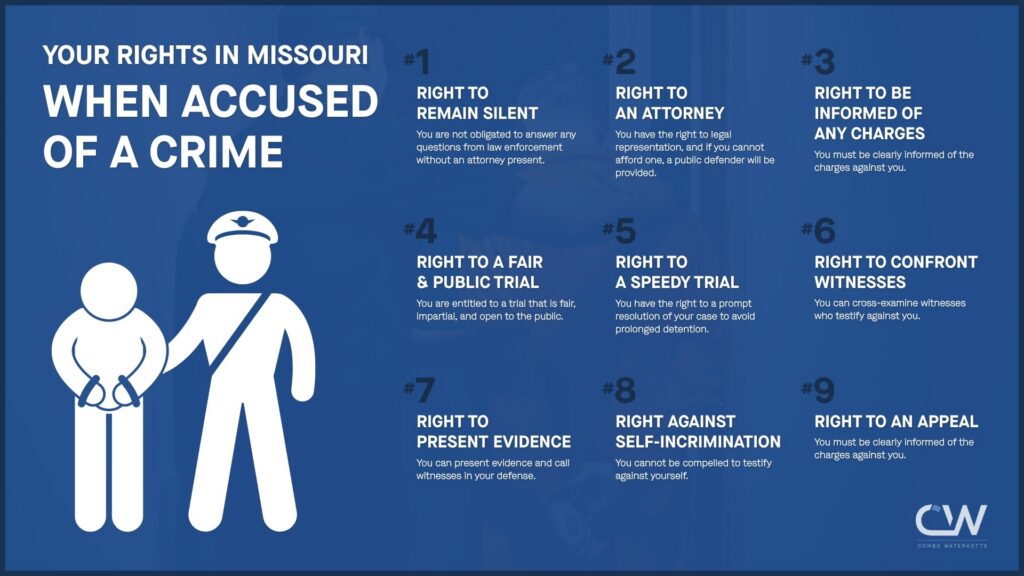
The classic example of “adequate cause” is finding someone in bed with your spouse. Other causes that may be ruled adequate might include someone exposing themselves to your child or spouse.
In Missouri, words alone are usually not considered to be an adequate cause. Thus, insults and taunts would potentially need to be coupled with a physical act to provide adequate cause.
There is one exception, however, which is due to a shocking discovery. This exception applies when the words themselves were not meant to provoke but rather to convey information, such as an admission of adultery or child molestation.
Assisted Suicide
The second form of this offense occurs when someone knowingly assists another in committing suicide. Missouri outlaws all assisted suicides, whether by a physician or a non-physician.
In an assisted suicide case, prosecutors will question what you knew at the time you provided the assistance and how closely your acts related to the death. For example, a doctor may face charges for prescribing opiates to a terminally ill patient who asked for help committing suicide.
However, you can also imagine scenarios in which material assistance would not contribute to the death. Thus, you may not “knowingly” assist if you repaid a loan to the deceased person and, unbeknownst to you, they used the money to buy a gun.
Similarly, you may not be found to “assist” a suicide if you paid for the hotel room where the person died.
Possible Defenses Against Kansas City, MO, Voluntary Manslaughter Charges
Your lawyer can rely on several criminal defense strategies when defending you. Some possible defenses include the following:
Lack of Intent
Manslaughter requires proof of intent. The prosecution must prove one of the following states of mind:
- You knowingly killed
- You killed with the purpose of causing serious physical injury
- You knowingly assisted suicide
These are fairly high standards that exclude accidents caused by reckless or negligent behavior. One possible defense is to prove that the death was unintentional and, thus, you lacked the intent required by the statute.
For example, the defense could present witnesses who report that a defendant did not throw a brick off a bridge but instead accidentally knocked it off, causing the death of someone passing under the bridge.
However, this defense more commonly occurs when the defendant’s attorney points out that the prosecution has no evidence of intent.
Suppose the prosecution’s theory is that you pushed a victim into traffic. However, the prosecution’s case is based solely on the driver’s testimony that they saw the victim fall into the road. Your lawyer could point out that the prosecution’s case was missing evidence that you deliberately pushed the victim.
Defense of Self or Others
Missouri law gives you the right to use force to stop another person’s imminent use of unlawful force against you or others. You can even use deadly force in the following situations:
- You reasonably believed deadly force was needed to prevent a death, a serious physical injury, or a forcible felony, such as rape
- The person unlawfully entered your residence or vehicle while you were inside
- The person unlawfully entered private property you owned or leased
The adequate cause to reduce a charge to manslaughter often overlaps with the justification for self-defense or defense of others.
For example, suppose you were in a bar when someone racially insulted you and tripped you. You punched them, and a fistfight broke out. The other person pulled out a knife. You disarmed and stabbed them.
In this example, the insult and tripping may have been “adequate cause” to trigger “sudden passion.” When the other person pulled the knife, you might have been justified in using deadly force.
Punishment Upon Conviction of Voluntary Manslaughter in Kansas City, MO
Voluntary manslaughter is punished as a Class B felony, subject to a sentence of 5 to 15 years in prison. However, manslaughter is not classified as a “dangerous felony” under Missouri law. Thus, the amount of time the defendant will serve depends on their criminal record as follows:
| Criminal Record | Minimum Amount of Prison Sentence Served |
|---|---|
| No prior felony offenses | One-third of sentence, up to three years |
| One prior felony offense | 40% of sentence, 30% at age 70 |
| Two prior felony offenses | 50% of sentence, 40% at age 70 |
| Three or more prior felony offenses | 80% of sentence, 40% at age 70 |
Why You Should Choose Combs Waterkotte for Your Kansas City Voluntary Manslaughter Case

We start your manslaughter defense early. We represent you during the investigation to ensure that the police observe your constitutional rights. Our attorneys will sit with you during any police interviews. We stand beside you against the full might of the state.
The police and prosecutors often devote all their resources to homicide cases. You could face intense scrutiny during the investigation. The police may search your property and electronic devices. In the end, investigators may pressure you to answer questions.


Our law firm has the resources to represent clients accused of homicide. We use our experience managing high-profile cases to safeguard your right to a fair process.
How We Defend You From Voluntary Manslaughter Charges in Kansas City, MO
We want to hear your side of the story. We use your version of the events to identify possible defenses and the evidence that will support your case. We’ll present your arguments and exculpatory or mitigating evidence to prosecutors to negotiate for a fair outcome.


In some cases, we can secure a dismissal or plea offer. However, if we are unable to resolve your case, we will advocate for your best interests at trial.
Contact Combs Waterkotte to Prepare Your Voluntary Manslaughter Defenses Under Missouri Law

You could lose your freedom for decades after a conviction for manslaughter. Combs Waterkotte has the experience and resources to fight your homicide charges. Contact us online or at (314) 900-HELP to learn about the strategies and resources we will employ to defend you.
Resources
For more information on criminal defense in Kansas City or anywhere else in Missouri, call the Combs Waterkotte criminal defense attorneys right away at (314) 900-HELP or contact us online for a confidential consultation.
Why Early Legal Intervention Matters in Missouri Weapon Cases
Should I Tell My Lawyer if I’m Guilty?
Ultimate Guide To Missouri Arrest Warrants
What is the Statute of Limitations for Criminal Charges in Missouri?
Free book
How a Criminal Defense Attorney Can Protect Your Rights and Future
Combs Waterkotte has over 80 years of experience and over 10,000 cases handled. This ebook helps guide you through the criminal defense process and how an experienced, skilled defense attorney can keep your freedoms intact.

