

second-degree burglary Lawyer in Kansas City, MO
Hire the leading Criminal Defense Law Firm in St. Louis, MO to protect your freedom, rights, and future. Whether you have been charged with a crime or arrested, we can help.
TO COMBS WATERKOTTE,YOU ARE WHY WE EXIST.


second-degree burglary Lawyer Kansas City, MO
A second-degree burglary charge in Kansas City can arise from more situations than breaking into someone’s home to steal property. Missouri law can apply when someone is accused of unlawfully entering or remaining in a building to commit a crime, entering a vehicle intending to steal or commit a felony, or entering certain restricted areas of a business to commit an offense.
The criminal defense lawyers at Combs Waterkotte bring over 100 years of combined experience to serious criminal cases. Our Kansas City defense team can investigate the allegations, challenge the prosecution’s evidence, and build a strategy around the specific facts of your case.

I owe my life to Combs Waterkotte. If not for them, I would be spending the rest of my life behind bars. There is no amount of words that can explain what they did for me and my family. Its the highest recommendation that I can give.
Alexander B.
Felonies
Verify on

If I could give Steve and his team 10 stars I would in a heartbeat. Was facing more then one felony charge and after these guys found the arresting officer violated my 4th Amendment Rights and those charges were dismissed. My family and I can't thank you enough.
Dean J
Felonies
Verify on
I was hands down guilty. ON VIDEO !!! In a smaller town, and a job dealing with the public, this was devastating. I made one phone call and spoke for maybe 15 minutes. I DIDN'T appear in court. I am extremely impressed. QUIETLY relieved of the matter!
Y.I.V.
Theft
Verify on
My fiance had a felony drug charge and Combs Waterkotte got it dismissed! There were no fines, court cost, nothing. Chris is loyal, professional, knowledgeable, and a man of his word. We are forever grateful for you.
Kimberly T.
Drug Crimes
Verify on
If I was found guilty, it would have been over 100 years in prison. They promised me that they would fight like hell and get me out of it. After everything was done, I just felt free. Like this wasn’t gonna end with me rotting away in a prison cell. I felt like I could start my life and have a fresh start.
Caleb
Assault 1st, Armed Criminal Action
Verify on
I was facing, probably 18 years… I actually got 5 years probation and 40 hours of community service. Without Combs Waterkotte’s help, I don’t think my family could have made it without me. It was just a written book to where it's a perfect ending.
Chris
Unlawful Use of a Weapon, Armed Criminal Action
Verify on
I went through what was supposed to be one of the top law firms in St. Louis. They said I wouldn't have no chance. I end up firing the other lawyer and everything and going with Chris. I felt like Combs Waterkotte actually did something for me and wasn't I wasn't just another number on somebody's desk.
Willy
DWI/DUI
Verify onI owe my life to Combs Waterkotte. If not for them, I would be spending the rest of my life behind bars. There is no amount of words that can explain what they did for me and my family. Its the highest recommendation that I can give.
Alexander B.
Felonies
If I could give Steve and his team 10 stars I would in a heartbeat. Was facing more then one felony charge and after these guys found the arresting officer violated my 4th Amendment Rights and those charges were dismissed. My family and I can't thank you enough.
Dean J
Felonies
I was hands down guilty. ON VIDEO !!! In a smaller town, and a job dealing with the public, this was devastating. I made one phone call and spoke for maybe 15 minutes. I DIDN'T appear in court. I am extremely impressed. QUIETLY relieved of the matter!
Y.I.V.
Theft
My fiance had a felony drug charge and Combs Waterkotte got it dismissed! There were no fines, court cost, nothing. Chris is loyal, professional, knowledgeable, and a man of his word. We are forever grateful for you.
Kimberly T.
Drug Crimes
If I was found guilty, it would have been over 100 years in prison. They promised me that they would fight like hell and get me out of it. After everything was done, I just felt free. Like this wasn’t gonna end with me rotting away in a prison cell. I felt like I could start my life and have a fresh start.
Caleb
Assault 1st, Armed Criminal Action
I was facing, probably 18 years… I actually got 5 years probation and 40 hours of community service. Without Combs Waterkotte’s help, I don’t think my family could have made it without me. It was just a written book to where it's a perfect ending.
Chris
Unlawful Use of a Weapon, Armed Criminal Action
I went through what was supposed to be one of the top law firms in St. Louis. They said I wouldn't have no chance. I end up firing the other lawyer and everything and going with Chris. I felt like Combs Waterkotte actually did something for me and wasn't I wasn't just another number on somebody's desk.
Willy
DWI/DUI
What Is Second-Degree Burglary
Under Missouri Law?
Missouri’s second-degree burglary law is broader than the traditional idea of someone breaking into a house in the middle of the night. Under RSMo §569.170, several different types of conduct can support a second-degree burglary charge.
These cases often depend heavily on intent. Prosecutors may have evidence that you entered a building, vehicle, or restricted area, but they must still establish the circumstances required by Missouri’s second-degree burglary statute. Questions involving permission, ownership, mistaken entry, your reason for being there, and what you allegedly intended to do after entering can become critical to your defense.
A person may commit second-degree burglary by knowingly:
- Entering unlawfully or knowingly remaining unlawfully in a building or inhabitable structure for the purpose of committing a crime;
- Unlawfully entering a motor vehicle, or any part of one, intending to commit a felony or stealing; or
- Entering certain restricted areas of a commercial business for the purpose of committing a crime.
The third category applies when the restricted area is commonly reserved for business personnel and used to keep money or other property, or when signs clearly tell the public that entry is forbidden.
That means second-degree burglary can potentially involve an apartment, house, garage, office, warehouse, vehicle, or certain employee-only areas of a business. Whether the statute actually applies depends on exactly where you entered, whether you were authorized to be there, and what prosecutors claim you intended to do.

Facing second-degree burglary charges in Kansas City? Call Combs Waterkotte at (314) 900-HELP or contact us online for a free, confidential consultation about your case.
Why Combs Waterkotte is the best Law firm for your case.
Real results for people just like you.

What Prosecutors Must Prove for Second-Degree Burglary in Kansas City
Simply being somewhere you were not supposed to be does not automatically make you guilty of second-degree burglary. Depending on which part of Missouri’s statute prosecutors use, they must establish specific facts about both the entry and your intent.
In a traditional building or inhabitable-structure case, prosecutors generally must establish that you:
- Knowingly entered unlawfully or knowingly remained unlawfully in the building or inhabitable structure; and
- Did so for the purpose of committing a crime inside.
The second requirement is especially important. Burglary is not merely about unauthorized entry. The state must establish the criminal purpose required by the statute.
Suppose someone enters a building believing they have permission to retrieve personal property. That presents very different issues from someone who breaks into the same building intending to steal valuables.
Similarly, being discovered somewhere you do not have permission to be may support a trespassing allegation, but prosecutors still need evidence of the additional criminal purpose required to establish burglary.

Second-Degree Burglary of a Building or Inhabitable Structure
The most familiar type of second-degree burglary occurs when someone allegedly enters or remains unlawfully in a building or inhabitable structure intending to commit another crime.
The underlying offense does not necessarily have to be theft. Although stealing is common in burglary cases, Missouri’s statute refers more broadly to entering for the purpose of committing a crime.
Depending on the allegations, prosecutors might claim the defendant entered unlawfully intending to commit:
- Stealing or property theft
- Property damage or vandalism
- Assault
- A weapons offense
- A drug offense
- Another criminal act inside the property
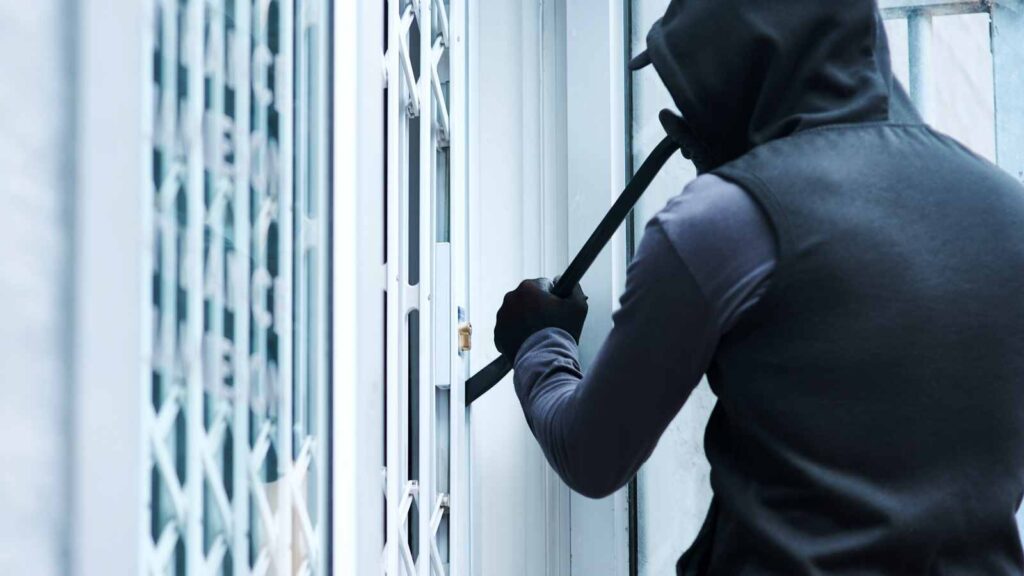
Because intent exists in someone’s mind, prosecutors frequently try to prove it through circumstantial evidence. They might point to the time and manner of entry, possession of tools, statements or messages, property allegedly taken, surveillance footage, or conduct immediately before and after the incident.
Your Kansas City burglary lawyer can challenge whether that evidence actually proves the criminal intent prosecutors attribute to you.
Second-Degree Burglary of a Motor Vehicle in Kansas City
Missouri expanded its second-degree burglary statute to expressly cover certain unlawful entries into motor vehicles. A person can now be charged under § 569.170 for unlawfully entering a motor vehicle, or any part of one, with the intent to commit a felony or stealing. The statute defines entry for this purpose to include intrusion by any part of the person’s body or by a physical object connected with the body.
For example, prosecutors might pursue the charge after alleging that someone reached through an open vehicle window intending to take property, opened a vehicle and climbed inside to steal something, or otherwise unlawfully entered the vehicle intending to commit a qualifying offense.
These allegations can become even more serious when a firearm is involved.
Second-degree burglary involving unlawful entry into a motor vehicle is ordinarily a Class D felony. However, it becomes a Class C felony when the accused possessed a firearm or stole a firearm from the vehicle.
That makes the facts surrounding the firearm particularly important. Prosecutors must establish the circumstances necessary to justify the enhanced felony classification rather than simply relying on the fact that a gun was somehow connected to the case.
Second-Degree Burglary in a Restricted Area of a Kansas City Business
You do not necessarily have to break into a closed business to face a burglary allegation.
Missouri’s current statute also covers entering certain restricted areas of commercial businesses for the purpose of committing a crime. This provision can apply when the area is commonly reserved for business personnel and used to keep money or other property, or when signs clearly prohibit public entry.
For example, someone might lawfully walk into a Kansas City retail store during normal business hours but then allegedly enter an employee-only stockroom, office, cash-handling area, or another qualifying restricted space to commit a crime.
The penalties for this form of second-degree burglary are different from most other violations of RSMo § 569.170. A first offense under the restricted-commercial-area provision is a Class B misdemeanor. A second or subsequent violation is a Class A misdemeanor.
The defense may examine whether the area actually satisfied the statutory definition, whether restrictions were clearly communicated, and whether there is evidence that the accused entered the area for the purpose of committing a crime.

Legal Video:

First-Degree vs. Second-Degree Burglary in Kansas City
The difference between first-degree burglary and second-degree burglary can significantly change the potential consequences of a Kansas City case.
Both offenses can involve unlawfully entering or remaining in a building or inhabitable structure for the purpose of committing a crime. First-degree burglary, however, involves additional aggravating circumstances.
Those circumstances can include allegations involving a deadly weapon or explosives, causing or threatening immediate physical injury to someone who was not participating in the offense, or another non-participant being present in the building or inhabitable structure.
Second-degree burglary generally applies when the requirements of RSMo § 569.170 are present without the aggravating circumstances necessary for first-degree burglary. It also covers the newer motor-vehicle and restricted-commercial-area circumstances described above.
This distinction matters because first-degree burglary is a Class B felony, while most second-degree burglary charges are Class D felonies. A defense attorney should examine whether the facts actually support the level of burglary prosecutors have chosen to charge.
Evidence Used to Prosecute Second-Degree Burglary in Kansas City
Second-degree burglary cases can be built from physical evidence, electronic records, witness statements, or circumstantial evidence surrounding the alleged entry.
Depending on the case, prosecutors may rely on:
- Security and surveillance footage
- Doorbell camera recordings
- Fingerprints or DNA evidence
- Cellphone location information
- Text messages and social media communications
- Property allegedly recovered from the defendant
- Witness identifications
- Vehicle information or license plate readers
- Alleged burglar’s tools
- Damage to doors, windows, or locks
- Statements made during police questioning
- Evidence concerning the alleged underlying crime
None of these forms of evidence should automatically be accepted at face value. Surveillance footage can be unclear. Witness identifications can be mistaken. Location information may establish that a phone was nearby without proving what its owner was doing. Possessing ordinary tools does not necessarily establish a plan to commit burglary.
A defense attorney can examine how the evidence was obtained, what it actually proves, and whether prosecutors are drawing conclusions that go beyond the facts.
Possible Defenses to Second-Degree Burglary Charges in Kansas City, MO
The appropriate defense strategy depends on the type of second-degree burglary alleged and the evidence prosecutors have collected.
You Had Permission to Enter
Burglary generally requires an unlawful entry or unlawful remaining. If the owner, tenant, employee, or another authorized person gave you permission to enter, the state may have difficulty proving this element of the charge.
Consent can become especially important when the parties know one another and disagree about whether permission had previously been given.
You Did Not Intend to Commit a Crime
Being somewhere without permission is not necessarily burglary. For the applicable provisions of Missouri’s second-degree burglary law, prosecutors must prove the criminal purpose or intent required by the statute.
You may have entered because you were confused about ownership, retrieving property you believed belonged to you, looking for another person, or for another reason unrelated to committing a crime.
When the state cannot establish the required intent, your attorney may argue that prosecutors cannot prove second-degree burglary.
You Did Not Know Your Entry Was Unlawful
The circumstances may support a reasonable argument that you believed you were allowed to enter or remain.
For example, disputes involving former residences, shared property, workplaces, storage areas, family members, roommates, or former romantic partners can create complicated questions about authorization.
Evidence supporting a genuine misunderstanding may undermine the prosecution’s attempt to prove you knowingly entered or remained unlawfully.
The State Identified the Wrong Person
Burglary investigations frequently rely on surveillance video, eyewitness accounts, clothing descriptions, vehicles, or other circumstantial evidence to identify a suspect.
When identity is disputed, your attorney can examine the quality of surveillance footage, identification procedures, cellphone records, alibi evidence, physical evidence, and other information that may contradict the state’s allegations.
The Evidence Was Obtained Unlawfully
Police may search a home, vehicle, cellphone, or other property while investigating a burglary. Those searches remain subject to constitutional requirements.
If evidence resulted from an unlawful search or seizure, Combs Waterkotte can examine whether there are grounds to seek suppression of that evidence.
The Evidence Supports a Lesser Offense
In some cases, the central dispute is not whether someone entered property but why they entered it.
If prosecutors can establish an unlawful entry but cannot prove the intent necessary for burglary, the evidence may support a lesser offense such as trespass rather than the felony burglary charge originally filed.
Penalties for Second-Degree Burglary in Kansas City, MO
The potential punishment depends on which provision of Missouri’s second-degree burglary statute applies.
| Second-Degree Burglary Allegation | Classification | Possible Imprisonment |
|---|---|---|
| Unlawful entry or remaining in a building or inhabitable structure to commit a crime | Class D felony | Up to 7 years |
| Unlawful motor-vehicle entry to steal or commit a felony | Class D felony | Up to 7 years |
| Motor-vehicle burglary involving possession or theft of a firearm | Class C felony | 3–10 years |
| First restricted-commercial-area violation | Class B misdemeanor | Up to 6 months |
| Second or subsequent restricted-commercial-area violation | Class A misdemeanor | Up to 1 year |
Missouri law establishes these offense classifications, while the sentencing statute currently in effect provides up to 7 years for a Class D felony and 3 to 10 years for a Class C felony.
A felony conviction can create consequences well beyond incarceration. Your record may affect employment, professional licensing, housing, firearm rights, educational opportunities, child custody or visitation, and other parts of your future.
When another offense allegedly occurred during the burglary, prosecutors may also file additional charges. Someone accused of entering a building to steal property, for example, could potentially face both burglary and stealing charges based on the circumstances.
Why Hire Combs Waterkotte for a Second-Degree Burglary Case in Kansas City?
A burglary case can turn on a handful of facts: whether you had permission to enter, what you knew at the time, why you were there, and whether prosecutors can prove that you intended to commit another crime.
At Combs Waterkotte, we do not build your defense around assumptions in a police report. We investigate the evidence independently and determine what the state can actually prove.
Our Kansas City criminal defense team can:
- Independently investigate how and why you allegedly entered the property
- Review surveillance and doorbell-camera footage
- Examine witness identifications and statements
- Preserve texts, location records, and other electronic evidence
- Investigate whether you had permission to enter
- Challenge the state’s evidence of criminal intent
- Examine fingerprint, DNA, and other physical evidence
- Challenge unlawful searches and seizures
- Determine whether the facts support a lesser charge
- Use investigators and other resources when necessary
- Develop a defense based on your circumstances and priorities
- Prepare your case for trial when a fair resolution cannot be reached
Second-degree burglary is a serious accusation, but the charge itself does not establish that you entered unlawfully or intended to commit another crime. Those are issues the state must prove.

Get a Kansas City Burglary Defense
Team Working on Your Case Right Away.
Call Combs Waterkotte.
A second-degree burglary charge can put your freedom and future at risk, but being accused of unlawfully entering somewhere does not automatically mean prosecutors can prove burglary.
The details matter. Did you have permission to enter? Did you know you were somewhere you were not allowed to be? What crime does the state claim you intended to commit? What evidence supports that allegation? Can prosecutors reliably identify you as the person who entered?
At Combs Waterkotte, we investigate those questions instead of accepting the prosecution’s answers.
Call (314) 900-HELP or contact us online today for a free, confidential consultation with an experienced second-degree burglary lawyer in Kansas City, MO. The sooner we get involved, the sooner we can begin protecting your rights, freedom, and future.
Resources
For more information on burglary defense in Kansas City or anywhere else in Missouri, call the Combs Waterkotte criminal defense attorneys right away at (314) 900-HELP or contact us online for a confidential consultation.
Can I Lose My Job If I’m Charged With a Crime?
What are the Long-Term Impacts of a Criminal Conviction?
Free book
How a Criminal Defense Attorney Can Protect Your Rights and Future
Combs Waterkotte has over 80 years of experience and over 10,000 cases handled. This ebook helps guide you through the criminal defense process and how an experienced, skilled defense attorney can keep your freedoms intact.

