

Many people first realize they are facing a federal internet sex crime investigation in San Jose, CA when agents request an interview, execute a search warrant, or seize a device. By then, investigators may have already built a timeline from messages, login records, IP information, and other digital evidence.
Whether the case begins with an FBI interview, a search warrant, an undercover conversation, or a federal indictment, Combs Waterkotte can step in. Our San Jose, CA nationwide federal criminal defense lawyers handle internet-based sex crime cases across the country, including allegations involving enticement, CSAM, trafficking, obscene material, and sting operations. Call (314) 900-HELP for a confidential consultation.
This page covers:
- How to protect yourself after learning federal agents are investigating online sexual conduct in San Jose, CA
- How interstate communications, travel, and federal criminal statutes can turn online allegations into a federal prosecution
- Which federal offenses may apply to allegations involving minors, sexual content, online communications, or trafficking
- How an online investigation can develop from messages, account data, search warrants, and forensic examinations
- How much prison time federal internet sex crime charges can carry and what may follow a conviction
- Defense strategies involving searches, account attribution, intent, entrapment, and digital forensics
- How our attorneys investigate the government’s case, challenge digital evidence, and prepare federal cases for court
Cases Handled
Over 10,000
Jail Days Saved
Over 1 Million
Google Reviews
500+ Perfect
Legal Experience
100+ Years
Steps to Take If Federal Agents Are Investigating an Internet Sex Crime in San Jose, CA
If federal agents want to question you, assume they already know more than they are telling you. They may be testing your answers against messages, account records, device data, or other evidence they collected earlier. Speak with a lawyer before trying to explain the situation or voluntarily giving investigators more access.
- Have an attorney involved before discussing the allegations with agents. If you are unsure who used an account, when a file appeared, or what was said in a conversation, do not fill in the blanks for investigators. An inaccurate answer can become evidence of its own.
- Do not voluntarily expand the government’s access to your property or data. A valid warrant may allow agents to search specific places, devices, or accounts, but it does not mean you have to approve a broader search. Let counsel examine the warrant and whether investigators stayed within its limits.
- Do not assume you must unlock a phone, computer, or account on demand. Agents may ask for a passcode because obtaining access another way is more difficult. You should not make that decision before understanding your rights.
- Preserve phones, computers, accounts, and messages. Once you know federal agents are investigating, resist the urge to clean up old messages, files, searches, or accounts. Preservation gives your defense the chance to examine the same evidence in context.
- Stop direct communication with anyone at the center of the allegations. An attempt to explain, apologize, coordinate stories, or request deletion may create another problem.
If you suspect you are already under federal investigation, getting counsel involved before an arrest can give your defense more room to work. Our San Jose, CA federal felony lawyers can communicate with investigators on your behalf, preserve favorable records, and determine whether the government considers you a witness, subject, or target.
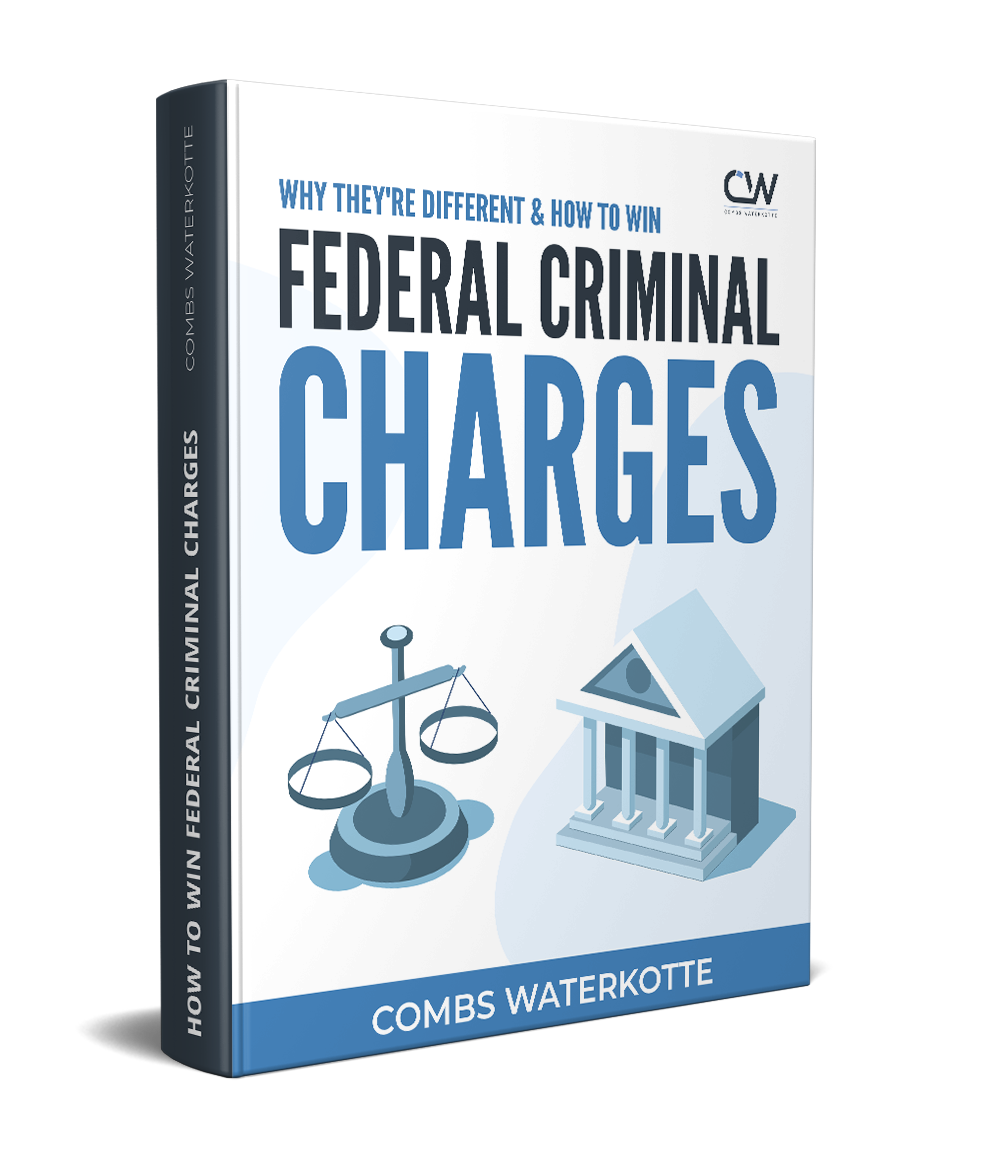
Free book
Facing Federal Criminal Charges? Why They’re Different and How to Win
Combs Waterkotte, a leading federal criminal defense law firm, has handled over 10,000 cases successfully. This ebook guides you through the federal criminal defense process, how federal charges are different, and how to win.
Contacted by federal agents or served with a search warrant in San Jose, CA? Call (314) 900-HELP before making a statement or consenting to anything further.
When Does an Internet Sex Crime in San Jose, CA Become a Federal Case?
An internet sex crime becomes a federal case when the alleged conduct fits a federal criminal statute and the government can establish the required federal connection. Sending a message online does not identify the charge by itself. Prosecutors still must prove every element of a specific offense.
The federal connection may come from interstate communications, online services, the mail, travel across state lines, conduct spanning several jurisdictions, or activity on federal property. Once federal jurisdiction applies, the case moves into a different system with its own agencies, procedures, and sentencing rules, which is part of what separates federal criminal cases from state prosecutions.
San Jose, CA and federal investigators can examine the same conversation, account, or device, and the same alleged conduct may lead to charges in both systems. Federal cases may also involve multiple agencies, specialized investigators, and sentencing rules that do not apply in state court.
Types of Federal Internet Sex Crimes We Defend in San Jose, CA
Federal prosecutors do not charge “internet sex crime” as one catch-all offense. They choose among specific statutes based on the alleged communications, files, conduct, and people involved. Our San Jose, CA federal sex crimes defense attorneys defend the full range of federal sex crime charges that can arise from online conversations, digital content, social media, file transfers, and other internet activity.
Internet Enticement and Attempt Charges
Under 18 U.S.C. Section 2422(b), federal coercion and enticement charges can be based entirely on communications and alleged intent. Prosecutors may claim that someone used the internet, mail, or another interstate communication method to persuade or entice a person under 18 into illegal sexual activity. Because attempts are covered, the alleged encounter does not have to take place.
Many Section 2422(b) cases begin with ordinary-looking online communication. An undercover agent may pose as a minor on an app, social network, game, or messaging service and save the entire exchange. Prosecutors can then bring an attempt charge by arguing that the accused believed the account belonged to a minor and moved far enough toward the alleged crime.
Sending Obscene Material or Information Involving a Minor
Not every federal internet sex crime allegation involves an attempted meeting. Some focus on what was allegedly transmitted online. Under 18 U.S.C. Section 1470, transferring obscene material to a minor can be charged when obscene content is knowingly sent or attempted to be sent to a person under 16 using interstate or foreign commerce.
A different statute targets information used to facilitate alleged sexual activity involving a minor. 18 U.S.C. Section 2425 applies when specified identifying information about someone under 16 is transmitted with an unlawful sexual purpose.
Possession of Child Sexual Abuse Material
A federal CSAM possession case may be based on material stored almost anywhere digital data can live. Under 18 U.S.C. Section 2252A(a)(5)(B), prosecutors can charge knowing possession or knowing access with intent to view. The evidence may come from a phone, laptop, hard drive, cloud account, browser cache, messaging app, or automatically synchronized storage.
The presence of an illegal file on a device does not automatically establish knowing possession. Prosecutors still have to connect the accused to the material and prove the required knowledge or access. Shared devices, automatic downloads, cloud synchronization, deleted files, multiple user accounts, and the way an application stores data can all become important.
Federal CSAM Receipt and Distribution
Receiving or sharing CSAM can lead to separate federal charges. Federal receipt and distribution of child sexual abuse material may be prosecuted under 18 U.S.C. Section 2252, while 18 U.S.C. Section 2252A covers additional receipt, distribution, possession, and access offenses.
These cases may involve messaging apps, peer-to-peer networks, cloud services, email, file-sharing platforms, or direct transfers between users. The government may rely on account records, download history, file-sharing activity, device forensics, or statements to argue that material was knowingly received or distributed.
Creating or Directing Child Sexual Abuse Material
Federal production charges are not limited to a person physically operating a camera. Sexual exploitation of children under 18 U.S.C. Section 2251 can involve allegations that someone persuaded, requested, directed, or otherwise caused a minor to create sexually explicit images or video, including through online communication or livestreaming.
Federal Trafficking and Travel Offenses Involving Online Activity
Online advertisements, messages, payment records, and account activity can all become evidence in federal sex trafficking cases. Prosecutors may use that evidence to argue that someone recruited, advertised, transported, obtained, or otherwise participated in conduct prohibited by 18 U.S.C. Section 1591.
Crossing state lines can create another route to federal prosecution. Under 18 U.S.C. Section 2423, allegations involving transporting a minor or traveling for illicit sexual conduct can lead to serious federal charges when the required elements are present.
What Can Trigger a Federal Internet Sex Crime Investigation in San Jose, CA?
The first visible sign of a federal investigation may come long after the government started building the case. Investigators may already have traced usernames, obtained records from online services, or linked activity to a phone, computer, or internet connection before anyone asks for an interview.
- A federal agent posing online: Agents may enter a chat, app, social platform, or other online space using an assumed identity and record the interaction as it develops.
- A technology platform flags activity: An online service may report suspected illegal material, unusual account behavior, or other activity tied to a user or device.
- A parent, minor, partner, or witness contacts police: A minor, parent, former partner, or other person provides messages, screenshots, or a device to police.
- Another investigation: A person can become part of an investigation because their username, device, payment information, or communication appears in evidence collected from another suspect.
- A search warrant or subpoena: Agents may compel companies to produce account data, subscriber information, stored communications, location records, or other evidence before turning to the person they suspect.
Federal internet sex crime investigations can involve several agencies working together rather than one local detective. The Department of Justice uses specialized prosecutors and child-exploitation enforcement programs, and a single case may involve the FBI, Homeland Security Investigations, postal inspectors, local law enforcement, and federal prosecutors. That coordination can begin well before the suspect knows there is a case.
Legal Videos
Can Federal Charges Be Reduced Or Dismissed?
Can Federal Charges Be Reduced Or Dismissed? Chris Combs and Andrew Russek, lawyers with Combs Waterkotte, a leading federal criminal defense firm, talk about proffers, probation, and federal …
Should I Hire A Lawyer Experienced In Federal Defense?
Should I Hire A Lawyer Experienced In Federal Defense? Chris Combs and Andrew Russek from the leading federal criminal defense firm Combs Waterkotte discuss the importance of hiring a lawyer with …
What Penalties Apply To Federal Sex Crime Convictions?
What Penalties Apply To Federal Sex Crime Convictions? Andrew Russek and Chris Combs from Combs Waterkotte federal criminal defense firm discuss potential penalties related to federal sex crime …
Do Federal Sex Crimes Require Sex Offender Registration?
Do Federal Sex Crimes Require Sex Offender Registration? Andrew Russek, a lawyer with leading federal criminal defense firm Combs Waterkotte, discusses the sex offender registry and federal sex …
What Makes A Sex Crime Federal Rather Than State?
What Makes A Sex Crime Federal Rather Than State? Andrew Russek and Chris Combs of Combs Waterkotte discuss factors that play into a sex crime being classified as federal, rather than …
What Are Federal Sex Crime Charges?
What Are Federal Sex Crime Charges? Chris Combs and Andrew Russek of Combs Waterkotte discuss the most common federal sex crime charges. Interview Transcript Scott Michael Dunn: Well, let's …
Can Federal Charges Be Reduced Or Dismissed?
Can Federal Charges Be Reduced Or Dismissed? Chris Combs and Andrew Russek, lawyers with Combs Waterkotte, a leading federal criminal defense firm, talk about proffers, probation, and federal …
Should I Hire A Lawyer Experienced In Federal Defense?
Should I Hire A Lawyer Experienced In Federal Defense? Chris Combs and Andrew Russek from the leading federal criminal defense firm Combs Waterkotte discuss the importance of hiring a lawyer with …
What Penalties Apply To Federal Sex Crime Convictions?
What Penalties Apply To Federal Sex Crime Convictions? Andrew Russek and Chris Combs from Combs Waterkotte federal criminal defense firm discuss potential penalties related to federal sex crime …
Do Federal Sex Crimes Require Sex Offender Registration?
Do Federal Sex Crimes Require Sex Offender Registration? Andrew Russek, a lawyer with leading federal criminal defense firm Combs Waterkotte, discusses the sex offender registry and federal sex …
What Makes A Sex Crime Federal Rather Than State?
What Makes A Sex Crime Federal Rather Than State? Andrew Russek and Chris Combs of Combs Waterkotte discuss factors that play into a sex crime being classified as federal, rather than …
What Are Federal Sex Crime Charges?
What Are Federal Sex Crime Charges? Chris Combs and Andrew Russek of Combs Waterkotte discuss the most common federal sex crime charges. Interview Transcript Scott Michael Dunn: Well, let's …
Digital Evidence in San Jose, CA Federal Internet Sex Crime Cases
Computers and online services generate records constantly. Those records can help reconstruct what happened, but they can also be misunderstood when viewed without context. In a federal internet sex crime case, the defense should determine what each digital artifact actually proves and where investigators are drawing conclusions that the data itself does not support.
Screenshots Do Not Always Tell the Whole Story
Screenshots freeze isolated moments. Complete account data can show the conversation around them, including earlier representations, changes in tone, deleted or edited material, timestamps, and which participant first moved the discussion toward alleged criminal conduct.
Account Ownership Does Not Necessarily Prove Authorship
An IP address may lead investigators to a home or internet connection. Account records may identify a subscriber. Neither fact necessarily establishes who typed each message. Shared devices, saved passwords, open sessions, multiple users, remote access, and compromised accounts all require investigation.
File Location Does Not End the Analysis
The location of a file can tell investigators something, but not necessarily how or why it got there. Metadata, application behavior, synchronization settings, access records, and user profiles can help distinguish an intentional download from an automated copy, cached artifact, or deleted item recovered during a forensic examination.
A useful defense requires putting the government’s digital evidence back together instead of reviewing each piece separately. Our San Jose, CA federal criminal defense attorneys compare forensic extractions, warrants, online account records, statements, and investigative reports, bringing in independent digital experts when another examination of the devices or data is warranted.
What Are the Penalties for Federal Internet Sex Crimes?
There is no single sentencing range for a federal internet sex crime. The potential punishment changes with the charge, the facts prosecutors prove, a person’s criminal history, and the federal sentencing rules that apply. Some offenses require a minimum term of imprisonment before the judge has any discretion.
| Federal Charge | Statute | Possible Prison Sentence |
|---|---|---|
| Online coercion or enticement of a minor | 18 U.S.C. § 2422(b) | 10 years to life |
| Transfer of obscene material to a minor | 18 U.S.C. § 1470 | Up to 10 years |
| Transmission of identifying information about a minor | 18 U.S.C. § 2425 | Up to 5 years |
| Production of CSAM | 18 U.S.C. § 2251 | Generally 15 to 30 years for a first conviction |
| Receipt or distribution of CSAM | 18 U.S.C. § 2252A | Generally 5 to 20 years |
| Possession of or access with intent to view CSAM | 18 U.S.C. § 2252A | Generally up to 10 years; up to 20 in specified cases |
| Sex trafficking involving a minor | 18 U.S.C. § 1591 | 10 years to life or 15 years to life, depending on age and circumstances |
A sentence in a federal internet sex crime case may include far more than incarceration. Courts can impose fines, restitution, registration requirements, extensive supervised release, and conditions that regulate internet access, devices, employment, travel, and contact with minors. The starting point for many sentencing decisions is the advisory range under the United States Sentencing Guidelines. That range can shift based on criminal history and details of the alleged offense, including computer use, the type and quantity of files, and claimed patterns of conduct. For that reason, understanding how a federal sentence is calculated is essential to understanding the actual stakes.
Building a Defense to Federal Internet Sex Crime Charges in San Jose, CA
The right defense depends on what prosecutors actually charged and how they say the crime occurred. Some cases turn on who used an account, others on what a person knew, whether a search was lawful, or whether an undercover agent pushed the interaction forward. Each theory has to be tested against the evidence rather than treated as a generic internet sex crime case.
Challenge the Search, Warrant, or Statement
The government may have strong-looking digital evidence and still have a problem if it was obtained unlawfully. A Fourth Amendment challenge can focus on whether the warrant had sufficient probable cause, whether it authorized the devices or accounts actually searched, and whether agents stayed within its limits. Statements, passwords, and consent to additional searches should be reviewed separately as well.
Challenge Who Actually Performed the Online Activity
The government must connect the accused to the charged conduct, not merely to an address, subscription, phone number, or device. Login records, user profiles, location data, access times, and other household users may support or undermine attribution.
Contest Knowledge, Intent, and Context
Many federal statutes require proof that a person acted knowingly, intentionally, or for a prohibited sexual purpose. A lack-of-intent defense may focus on the complete conversation, how age was represented, whether files were requested or opened, or whether software automatically downloaded or synchronized material.
Review the Government’s Role in a Sting Operation
An officer posing as a minor does not automatically establish entrapment. The defense examines whether the government induced conduct and whether the accused was predisposed to commit the offense. The full transcript may show who introduced the subject, how agents responded to hesitation, and whether pressure continued after a refusal.
Test the Digital Forensic Conclusions
Digital evidence should be reproducible and explainable. An independent forensic review can test how the government recovered a file, what a timestamp represents, whether data was altered or synchronized automatically, which user profile was involved, and whether the examiner made assumptions that are not supported by the underlying evidence.

What Combs Waterkotte Brings to a Federal Internet Sex Crime Defense in San Jose, CA
These cases demand more than familiarity with federal criminal law. A defense may require examining forensic data, questioning how agents obtained digital evidence, dealing with multiple investigative agencies, and preparing for sentencing exposure measured in years or decades. Combs Waterkotte has more than 100 years of combined experience and has handled more than 10,000 criminal cases.
- Representation wherever the federal case is filed: Our federal practice extends nationwide, allowing us to represent people in San Jose, CA through pre-charge investigations, negotiations with prosecutors, federal sentencing, and trial.
- Insight into the government’s approach: Former prosecutors on our San Jose, CA federal internet sex crime defense team have worked from the other side of criminal cases and understand how prosecutors evaluate evidence, witnesses, charging decisions, and trial strategy.
- Advanced forensic training: One of our attorneys received advanced computer-forensics instruction through the U.S. Secret Service National Computer Forensics Institute, training that is directly relevant when a case depends on phones, computers, account records, or extracted data.
- We do our own investigative work: When the case raises questions about witnesses, devices, online accounts, forensic methods, or missing evidence, our dedicated investigator and outside specialists can conduct work independent of the government’s investigation.
- Trial preparation starts early: Our strategy can include challenging evidence, filing suppression motions, seeking dismissal or charge reductions, negotiating from a position of preparation, and taking the case to trial when necessary.
- A defense built around the client, not just the case file: You should not have to wonder what your own defense team is doing while the government builds a case against you. Our client-centered approach emphasizes direct attorney access, clear communication, and discretion throughout the case.

Other cases we take on in San Jose, CA include:
Get Help From a Federal Internet Sex Crimes Attorney in San Jose, CA
A search warrant, FBI interview request, seized phone, target letter, or grand jury subpoena can be enough reason to involve defense counsel. Combs Waterkotte does not need to wait for prosecutors to file an indictment. Getting involved earlier allows our attorneys to assess the investigation while evidence can still be preserved, communications can be protected, and the government’s assumptions can be challenged.
Speak privately with a federal internet sex crimes lawyer serving San Jose, CA by calling (314) 900-HELP or contacting Combs Waterkotte online. We handle federal cases across the country and develop the defense from the evidence actually in front of us, including account records, communications, seized devices, forensic findings, and the statute prosecutors are relying on.

