

Many people first realize they are facing a federal internet sex crime investigation in Las Vegas, NV when agents request an interview, execute a search warrant, or seize a device. By then, investigators may have already built a timeline from messages, login records, IP information, and other digital evidence.
Federal internet sex crime cases can involve far more than one message or one device. Combs Waterkotte‘s Las Vegas, NV nationwide federal criminal defense lawyers defend cases involving undercover operations, alleged sexual communications with minors, CSAM, trafficking, obscene content, and other digital evidence. We represent clients before and after federal charges are filed. Call (314) 900-HELP for a confidential consultation.
This page covers:
- What your first moves should be after a search, interview request, or other sign of a federal internet sex crime investigation in Las Vegas, NV
- When an online sex crime can become a federal case
- Which federal offenses may apply to allegations involving minors, sexual content, online communications, or trafficking
- How federal agents investigate online activity and collect digital evidence
- The sentencing risks that come with federal sex offenses, including mandatory prison terms in some cases
- How the defense can attack the government’s assumptions about who used an account, what someone intended, and how evidence was obtained
- What Combs Waterkotte brings to a federal internet sex crime defense
Cases Handled
Over 10,000
Jail Days Saved
Over 1 Million
Google Reviews
500+ Perfect
Legal Experience
100+ Years
How to Respond to a Federal Internet Sex Crime Investigation in Las Vegas, NV
Do not try to talk your way out of a federal internet sex crime investigation. Agents prepare for interviews, compare answers against records they already possess, and document statements that may later appear in an affidavit or at trial. Get legal advice before answering questions or giving investigators access they do not already have.
- Treat any request for an interview as a reason to contact counsel first. Do not guess about a username, another person’s age, a file, or what a message meant. A mistaken explanation can be harder to correct than silence.
- Do not consent to a search. If agents have a warrant, do not interfere. You can state that you do not consent and let your attorney review what the warrant authorizes.
- Do not assume you must unlock a phone, computer, or account on demand. Whether you can be required to provide access is something your lawyer should evaluate, not something to decide while agents are standing in front of you.
- Preserve phones, computers, accounts, and messages. Deleting an account, wiping a phone, changing records, or asking another person to remove material can make the situation worse and may create separate legal issues.
- Do not contact the alleged victim or undercover account. Messages asking someone to clarify what happened, change their story, or remove evidence can be interpreted very differently by prosecutors than you intend.
If you suspect you are already under federal investigation, getting counsel involved before an arrest can give your defense more room to work. Our Las Vegas, NV federal felony lawyers can communicate with investigators on your behalf, preserve favorable records, and determine whether the government considers you a witness, subject, or target.
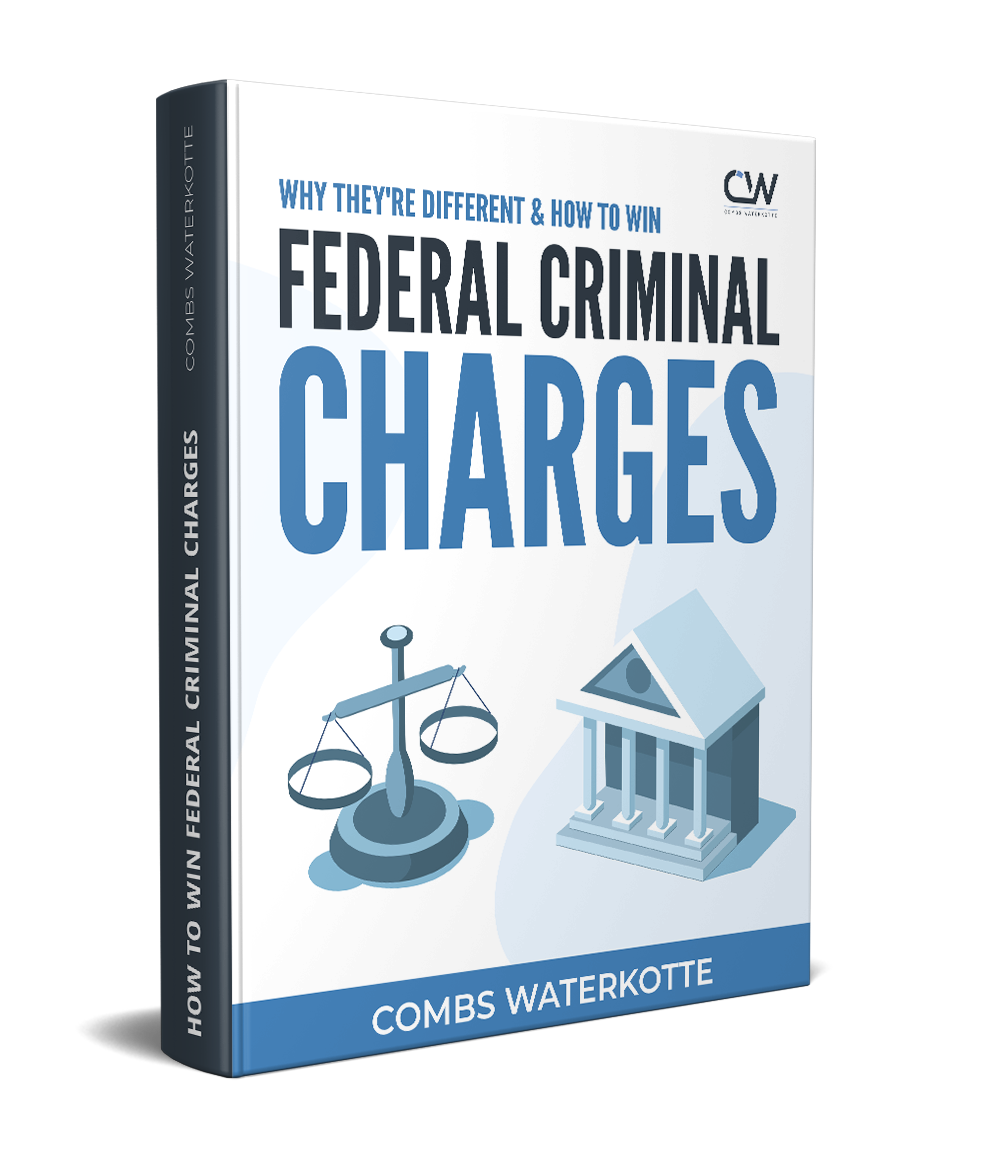
Free book
Facing Federal Criminal Charges? Why They’re Different and How to Win
Combs Waterkotte, a leading federal criminal defense law firm, has handled over 10,000 cases successfully. This ebook guides you through the federal criminal defense process, how federal charges are different, and how to win.
Contacted by federal agents or served with a search warrant in Las Vegas, NV? Call (314) 900-HELP before making a statement or consenting to anything further.
When Can Online Sex Crime Allegations in Las Vegas, NV Lead to Federal Charges?
An internet sex crime becomes a federal case when the alleged conduct fits a federal criminal statute and the government can establish the required federal connection. Sending a message online does not identify the charge by itself. Prosecutors still must prove every element of a specific offense.
Federal jurisdiction can come from several directions. Internet communications may cross state lines, alleged conduct may involve interstate travel, or the offense itself may be one Congress placed under federal authority. Those jurisdictional hooks can move a case into a system where investigation, prosecution, and sentencing work differently than they do in state court.
State and federal authorities are not always working separate cases. A phone, account, message thread, or cloud record examined by investigators in Las Vegas, NV may also become evidence in a federal prosecution, and the same conduct can sometimes support charges in both court systems.
Types of Federal Internet Sex Crimes We Defend in Las Vegas, NV
“Federal internet sex crime” is a broad label rather than a single criminal charge. The specific offense determines what prosecutors must prove, whether a mandatory minimum applies, and which defenses may be available. Our Las Vegas, NV federal sex crimes defense attorneys represent people facing a wide range of federal sex crime charges involving online communications, digital files, social media, messaging platforms, and other internet activity.
Online Coercion and Enticement Charges
Under 18 U.S.C. Section 2422(b), federal coercion and enticement charges can be based entirely on communications and alleged intent. Prosecutors may claim that someone used the internet, mail, or another interstate communication method to persuade or entice a person under 18 into illegal sexual activity. Because attempts are covered, the alleged encounter does not have to take place.
Many Section 2422(b) cases begin with ordinary-looking online communication. An undercover agent may pose as a minor on an app, social network, game, or messaging service and save the entire exchange. Prosecutors can then bring an attempt charge by arguing that the accused believed the account belonged to a minor and moved far enough toward the alleged crime.
Federal Charges for Obscene Content and Minor Information
Federal prosecutors may also focus on the content of a message rather than an alleged plan for physical contact. Transfer of obscene material to a minor under 18 U.S.C. Section 1470 covers knowing transfers and attempted transfers of obscene material to someone under 16 through interstate or foreign commerce.
Federal charges can also arise from sharing information about a minor rather than sending sexual content. 18 U.S.C. Section 2425 addresses transmitting identifying information about someone under 16 when prosecutors allege the purpose was to entice, encourage, offer, or solicit illegal sexual activity.
Possession or Access With Intent to View CSAM
When investigators find suspected CSAM on a device or account, they may pursue a federal possession charge under 18 U.S.C. Section 2252A(a)(5)(B). The statute reaches both knowing possession and knowingly accessing material with intent to view it, and cases can involve local storage, cloud platforms, external media, browser artifacts, or messaging services.
Finding a file is only part of the government’s job. Investigators still need evidence tying the accused to knowing possession or access. If several people used the device, an app saved files automatically, or cloud software created copies without deliberate action, the forensic details can change the meaning of what agents found.
Federal CSAM Receipt and Distribution
Federal law treats receiving or distributing CSAM separately from simple possession. Prosecutors may bring receipt or distribution charges under 18 U.S.C. Section 2252, while Section 2252A reaches additional conduct involving receipt, sharing, possession, and access.
These cases may involve messaging apps, peer-to-peer networks, cloud services, email, file-sharing platforms, or direct transfers between users. The government may rely on account records, download history, file-sharing activity, device forensics, or statements to argue that material was knowingly received or distributed.
Creating or Directing Child Sexual Abuse Material
Allegations that someone created, requested, directed, or helped produce illegal sexual images or videos involving a minor can lead to federal child sexual exploitation charges under 18 U.S.C. Section 2251. The alleged conduct can involve recorded images, video, livestreaming, requests that a minor create sexual content, or instructions about how that material should be made.
Federal Trafficking and Travel Offenses Involving Online Activity
A trafficking investigation may be built from the online trail surrounding the alleged conduct. Prosecutors can point to advertisements, conversations, payment platforms, account access, or other digital records when pursuing federal sex trafficking charges under 18 U.S.C. Section 1591.
An online investigation can expand into a travel case when messages or other records are tied to movement across state or national borders. 18 U.S.C. Section 2423 covers several offenses involving transportation of minors and travel for illicit sexual conduct.
How a Federal Internet Sex Crime Investigation Can Start in Las Vegas, NV
The first visible sign of a federal investigation may come long after the government started building the case. Investigators may already have traced usernames, obtained records from online services, or linked activity to a phone, computer, or internet connection before anyone asks for an interview.
- An undercover online investigation: An agent or task-force officer creates a profile, records messages, and may arrange a meeting.
- A platform or service-provider report: A technology company flags suspected illegal content or activity associated with an account.
- Someone turns over messages or a device: A parent, alleged victim, former partner, or other person may give investigators material that causes them to open a case or expand an existing one.
- A separate federal case leads back to the accused: Federal agents may come across a name, account, message, payment record, or digital file while investigating someone else and follow that lead into a new case.
- A search warrant or subpoena: Agents may compel companies to produce account data, subscriber information, stored communications, location records, or other evidence before turning to the person they suspect.
Federal internet sex crime cases are often built by teams. The Department of Justice supports specialized prosecution and enforcement programs for child-exploitation offenses, which can bring federal agents, local officers, forensic specialists, and prosecutors into the same investigation. An interview request may therefore come after a substantial amount of evidence has already been collected.
Legal Videos
Can Federal Charges Be Reduced Or Dismissed?
Can Federal Charges Be Reduced Or Dismissed? Chris Combs and Andrew Russek, lawyers with Combs Waterkotte, a leading federal criminal defense firm, talk about proffers, probation, and federal …
Should I Hire A Lawyer Experienced In Federal Defense?
Should I Hire A Lawyer Experienced In Federal Defense? Chris Combs and Andrew Russek from the leading federal criminal defense firm Combs Waterkotte discuss the importance of hiring a lawyer with …
What Penalties Apply To Federal Sex Crime Convictions?
What Penalties Apply To Federal Sex Crime Convictions? Andrew Russek and Chris Combs from Combs Waterkotte federal criminal defense firm discuss potential penalties related to federal sex crime …
Do Federal Sex Crimes Require Sex Offender Registration?
Do Federal Sex Crimes Require Sex Offender Registration? Andrew Russek, a lawyer with leading federal criminal defense firm Combs Waterkotte, discusses the sex offender registry and federal sex …
What Makes A Sex Crime Federal Rather Than State?
What Makes A Sex Crime Federal Rather Than State? Andrew Russek and Chris Combs of Combs Waterkotte discuss factors that play into a sex crime being classified as federal, rather than …
What Are Federal Sex Crime Charges?
What Are Federal Sex Crime Charges? Chris Combs and Andrew Russek of Combs Waterkotte discuss the most common federal sex crime charges. Interview Transcript Scott Michael Dunn: Well, let's …
Can Federal Charges Be Reduced Or Dismissed?
Can Federal Charges Be Reduced Or Dismissed? Chris Combs and Andrew Russek, lawyers with Combs Waterkotte, a leading federal criminal defense firm, talk about proffers, probation, and federal …
Should I Hire A Lawyer Experienced In Federal Defense?
Should I Hire A Lawyer Experienced In Federal Defense? Chris Combs and Andrew Russek from the leading federal criminal defense firm Combs Waterkotte discuss the importance of hiring a lawyer with …
What Penalties Apply To Federal Sex Crime Convictions?
What Penalties Apply To Federal Sex Crime Convictions? Andrew Russek and Chris Combs from Combs Waterkotte federal criminal defense firm discuss potential penalties related to federal sex crime …
Do Federal Sex Crimes Require Sex Offender Registration?
Do Federal Sex Crimes Require Sex Offender Registration? Andrew Russek, a lawyer with leading federal criminal defense firm Combs Waterkotte, discusses the sex offender registry and federal sex …
What Makes A Sex Crime Federal Rather Than State?
What Makes A Sex Crime Federal Rather Than State? Andrew Russek and Chris Combs of Combs Waterkotte discuss factors that play into a sex crime being classified as federal, rather than …
What Are Federal Sex Crime Charges?
What Are Federal Sex Crime Charges? Chris Combs and Andrew Russek of Combs Waterkotte discuss the most common federal sex crime charges. Interview Transcript Scott Michael Dunn: Well, let's …
Digital Evidence Federal Prosecutors May Use in Las Vegas, NV Internet Sex Crime Cases
Digital records can establish that an account connected, a file existed, or a message was sent. They do not automatically answer who performed an action, what that person knew, or what a conversation meant. A sound defense separates the underlying data from the government’s interpretation.
Online Conversations Need Their Full Context
Investigators may focus on the messages they believe support a charge, but the surrounding conversation can be just as important. What came before and after a statement may change its meaning entirely, especially when the dispute involves age, intent, an undercover officer’s conduct, or an alleged plan to meet.
An Account or IP Address Is Not the Same as an Author
An IP address may lead investigators to a home or internet connection. Account records may identify a subscriber. Neither fact necessarily establishes who typed each message. Shared devices, saved passwords, open sessions, multiple users, remote access, and compromised accounts all require investigation.
How Did the File Get There?
The location of a file can tell investigators something, but not necessarily how or why it got there. Metadata, application behavior, synchronization settings, access records, and user profiles can help distinguish an intentional download from an automated copy, cached artifact, or deleted item recovered during a forensic examination.
Our Las Vegas, NV federal criminal defense attorneys examine how the digital evidence fits with the rest of the case. That can mean comparing account records against device extractions, testing the scope of a search warrant, reviewing what was said during an interview, and having an independent forensic specialist determine whether the government’s analysis missed or overstated something.
Penalties for Federal Internet Sex Crimes
The charge matters enormously at sentencing. Two federal internet sex crime cases involving similar online activity can carry very different prison exposure because of the statute used, the ages involved, prior convictions, and other facts in the case. Several frequently charged offenses start with mandatory time in federal prison.
| Federal Charge | Statute | Possible Prison Sentence |
|---|---|---|
| Online coercion or enticement of a minor | 18 U.S.C. § 2422(b) | 10 years to life |
| Transfer of obscene material to a minor | 18 U.S.C. § 1470 | Up to 10 years |
| Transmission of identifying information about a minor | 18 U.S.C. § 2425 | Up to 5 years |
| Production of CSAM | 18 U.S.C. § 2251 | Generally 15 to 30 years for a first conviction |
| Receipt or distribution of CSAM | 18 U.S.C. § 2252A | Generally 5 to 20 years |
| Possession of or access with intent to view CSAM | 18 U.S.C. § 2252A | Generally up to 10 years; up to 20 in specified cases |
| Sex trafficking involving a minor | 18 U.S.C. § 1591 | 10 years to life or 15 years to life, depending on age and circumstances |
Prison is only part of the potential punishment. A federal internet sex crime conviction can also lead to restitution, fines, sex offender registration, lengthy supervised release, and restrictions on internet use, electronic devices, travel, work, and contact with minors. The advisory sentence is calculated under the United States Sentencing Guidelines, which can increase the range based on the facts of the offense, criminal history, computer use, the number and nature of files, and other alleged conduct. Those calculations are a major reason federal sentencing can become complicated long before a judge chooses the final sentence.
Defenses to Federal Internet Sex Crime Allegations in Las Vegas, NV
Federal internet sex crime cases can look similar from the outside while requiring completely different defense strategies. A message thread, a seized hard drive, and an undercover sting each create different factual and legal problems. The defense must identify where the government’s proof is strongest, where assumptions are being made, and which elements remain unsupported.
Review How Agents Obtained the Evidence
Search warrants in digital cases can sweep through phones, computers, cloud accounts, and years of stored communications. The defense should examine whether agents had legal authority for each step. A Fourth Amendment defense may seek suppression when a warrant was unsupported, too broad, improperly executed, or followed by consent or questioning that was not lawfully obtained.
Can the Government Prove Who Used the Account?
The government must connect the accused to the charged conduct, not merely to an address, subscription, phone number, or device. Login records, user profiles, location data, access times, and other household users may support or undermine attribution.
Contest Knowledge, Intent, and Context
The government’s evidence may establish that something happened online without proving why. A lack-of-intent defense can become important when prosecutors rely on ambiguous messages, disputed age representations, automatic file storage, or conduct that has an innocent explanation when viewed in context.
Review the Government’s Role in a Sting Operation
An officer posing as a minor does not automatically establish entrapment. The defense examines whether the government induced conduct and whether the accused was predisposed to commit the offense. The full transcript may show who introduced the subject, how agents responded to hesitation, and whether pressure continued after a refusal.
Challenge the Government’s Forensic Analysis
A forensic report is an examiner’s interpretation of technical data, not the final word on what happened. Independent analysis can determine whether timestamps mean what the government claims, whether software created files automatically, whether the extraction was complete, and whether the evidence supports the report’s conclusions.
What Combs Waterkotte Brings to a Federal Internet Sex Crime Defense in Las Vegas, NV
By the time a federal internet sex crime case reaches a lawyer, agents may already have device extractions, account records, undercover communications, and evidence collected by several agencies. Our team brings more than 100 years of combined legal experience and experience from more than 10,000 cases to the defense of clients in Las Vegas, NV.
- Federal defense nationwide: Our federal practice extends nationwide, allowing us to represent people in Las Vegas, NV through pre-charge investigations, negotiations with prosecutors, federal sentencing, and trial.
- Insight into the government’s approach: Our Las Vegas, NV federal internet sex crime defense team includes attorneys who previously prosecuted criminal cases. That experience helps us anticipate how the government may organize the evidence and where its theory may be vulnerable.
- Training in computer forensics: Federal internet sex crime cases often turn on evidence stored inside devices and online accounts. Our team includes an attorney who completed advanced training through the U.S. Secret Service National Computer Forensics Institute.
- Investigative and expert resources: We use our dedicated investigator and qualified outside experts when a case calls for deeper factual or forensic work.
- Built for litigation: Some cases can be resolved through motions or negotiation. Others have to be tried. We build the defense with both possibilities in mind, looking for opportunities to exclude evidence, reduce the government’s case, improve sentencing exposure, or fight the charges in court.
- Confidential, direct communication: You should not have to wonder what your own defense team is doing while the government builds a case against you. Our client-centered approach emphasizes direct attorney access, clear communication, and discretion throughout the case.

Other cases we take on in Las Vegas, NV include:
Talk to a Las Vegas, NV Federal Internet Sex Crimes Lawyer
You do not have to wait for an arrest or indictment to hire counsel. Combs Waterkotte can step in after an FBI contact, undercover operation, search warrant, device seizure, target letter, grand jury subpoena, or federal charge. The earlier we enter the case, the sooner we can protect communication, preserve evidence, and begin testing the government’s theory.
If you believe a federal internet sex crime investigation is focused on you, call (314) 900-HELP or contact Combs Waterkotte online. Our federal internet sex crimes lawyers represent clients in Las Vegas, NV and nationwide, examining the messages, devices, forensic evidence, investigative tactics, and federal charges involved in each individual case.

