

If the FBI contacts you about an alleged federal internet sex crime in Illinois, the investigation probably did not begin with that phone call. Agents may already have obtained records from online platforms, traced account activity, reviewed cloud data, or examined a phone or computer.
Whether the case begins with an FBI interview, a search warrant, an undercover conversation, or a federal indictment, Combs Waterkotte can step in. Our Illinois nationwide federal criminal defense lawyers handle internet-based sex crime cases across the country, including allegations involving enticement, CSAM, trafficking, obscene material, and sting operations. Call (314) 900-HELP for a confidential consultation.
This page covers:
- What your first moves should be after a search, interview request, or other sign of a federal internet sex crime investigation in Illinois
- When an online sex crime can become a federal case
- The types of online conduct that can lead to federal sex crime charges
- How federal agents investigate online activity and collect digital evidence
- How much prison time federal internet sex crime charges can carry and what may follow a conviction
- Defense strategies involving searches, account attribution, intent, entrapment, and digital forensics
- How Combs Waterkotte defends federal internet sex crime cases nationwide
Cases Handled
Over 10,000
Jail Days Saved
Over 1 Million
Google Reviews
500+ Perfect
Legal Experience
Over 80 Years
Steps to Take If Federal Agents Are Investigating an Internet Sex Crime in Illinois
Do not try to talk your way out of a federal internet sex crime investigation. Agents prepare for interviews, compare answers against records they already possess, and document statements that may later appear in an affidavit or at trial. Get legal advice before answering questions or giving investigators access they do not already have.
- Do not sit for an interview without legal counsel. If you are unsure who used an account, when a file appeared, or what was said in a conversation, do not fill in the blanks for investigators. An inaccurate answer can become evidence of its own.
- Do not give permission for additional searches just because agents ask. If agents have a warrant, do not interfere. You can state that you do not consent and let your attorney review what the warrant authorizes.
- Do not assume you must unlock a phone, computer, or account on demand. The law surrounding compelled access can depend on the facts, the device, and the type of credential involved. Let your attorney address that issue before you provide anything voluntarily.
- Leave potentially relevant devices and online records alone. Do not delete chats, clear browser history, reset a device, close an account, or ask someone else to remove anything.
- Stop direct communication with anyone at the center of the allegations. Even a well-intended apology or request for an explanation can become new evidence, especially if investigators are still monitoring the account or communication.
You do not need to wait for handcuffs or an indictment before hiring a lawyer. If there are signs that a federal investigation may already be underway, our Illinois federal felony lawyers can step in early, speak with agents for you, protect useful evidence, and work to learn how prosecutors currently view your role in the case.
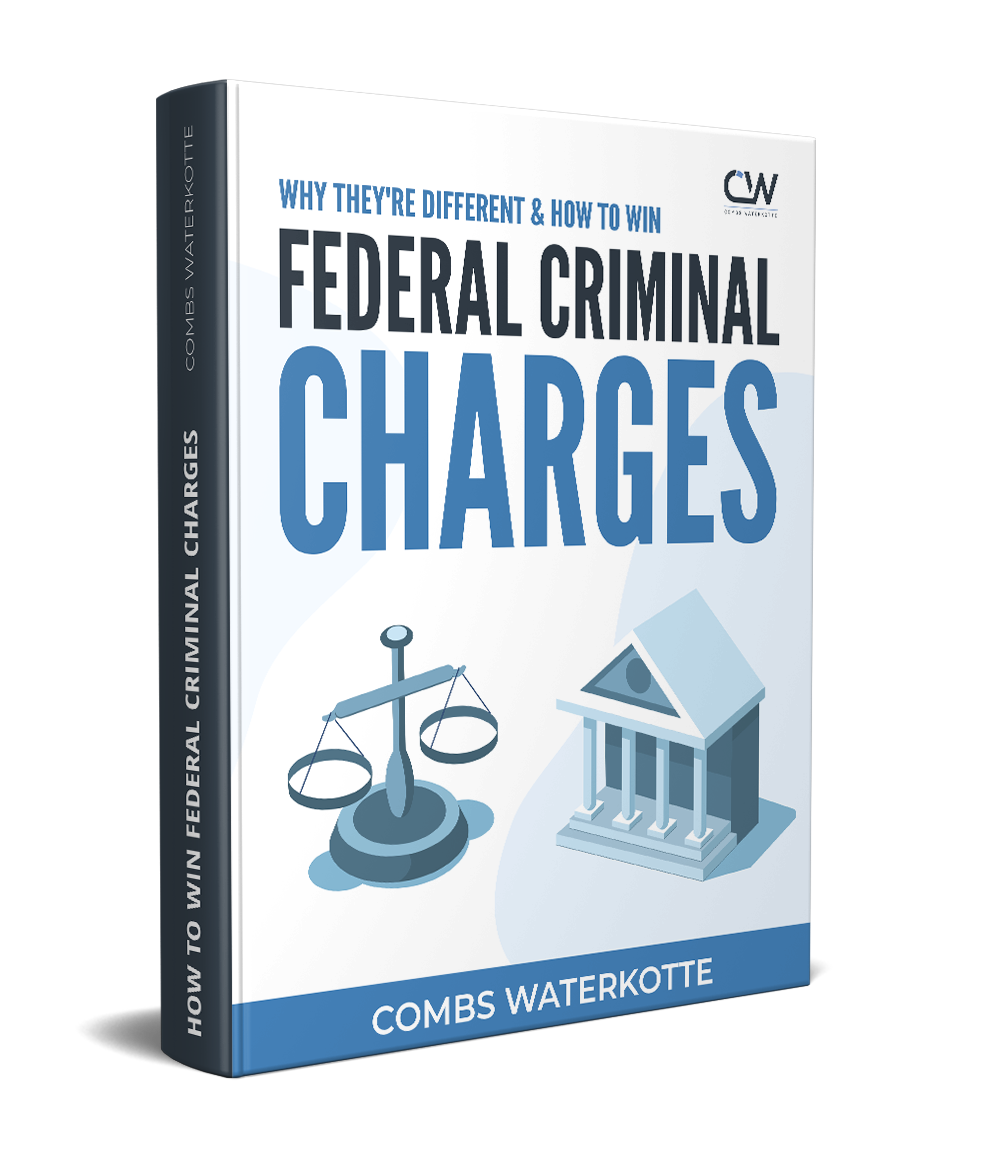
Free book
Facing Federal Criminal Charges? Why They’re Different and How to Win
Combs Waterkotte, a leading federal criminal defense law firm, has handled over 10,000 cases successfully. This ebook guides you through the federal criminal defense process, how federal charges are different, and how to win.
Contacted by federal agents or served with a search warrant in Illinois? Call (314) 900-HELP before making a statement or consenting to anything further.
Why Are Some Internet Sex Crimes in Illinois Prosecuted Federally?
Some internet-based sex crime allegations remain in state court, while others are taken up by federal prosecutors. The difference usually comes down to whether the conduct falls within a federal criminal law and whether the government can prove the federal connection required by that statute.
Federal jurisdiction commonly rests on the use of the internet, mail, or another means of interstate or foreign commerce. It may also arise from interstate travel, activity involving several states, conduct on federal property, or a statute that expressly assigns the offense to federal court. These jurisdictional rules are one reason federal criminal cases differ from state cases in how they are investigated, prosecuted, and sentenced.
Illinois and federal investigators can examine the same conversation, account, or device, and the same alleged conduct may lead to charges in both systems. Federal cases may also involve multiple agencies, specialized investigators, and sentencing rules that do not apply in state court.
Federal Online Sex Crime Cases Our Illinois Defense Lawyers Handle
An accusation involving sexual conduct online can lead to several different federal offenses. The charge may turn on who was involved, what was allegedly sent or requested, whether travel occurred, and how the internet was used. Our Illinois federal sex crimes defense attorneys defend clients against federal sex crime charges ranging from enticement and CSAM offenses to trafficking and other internet-based allegations.
Coercion and Enticement of a Minor
Federal prosecutors can pursue coercion and enticement charges even when an alleged plan never reaches an in-person meeting. 18 U.S.C. Section 2422(b) covers using interstate communications to persuade, induce, entice, or coerce a minor into unlawful sexual activity, as well as attempts to do so.
Texting, social media, dating platforms, gaming chats, and private messaging services are common settings for enticement investigations. In sting cases, the person on the other end may be a federal agent rather than a minor. That does not necessarily prevent an attempt charge if prosecutors believe they can prove the accused’s intent and actions.
Obscene Material and Information About a Minor
Sending sexual material to someone believed to be underage can create a separate federal case from enticement. A charge for transferring obscene material to a minor may be brought under 18 U.S.C. Section 1470 when prosecutors claim a person knowingly sent or attempted to send obscene content to someone under 16 through interstate or foreign commerce.
Another federal offense involves transmitting identifying information about a minor under 18 U.S.C. Section 2425. The law applies when specified information about someone under 16 is transmitted with the intent to entice, encourage, offer, or solicit illegal sexual activity.
Possession of Child Sexual Abuse Material
A federal CSAM possession case may be based on material stored almost anywhere digital data can live. Under 18 U.S.C. Section 2252A(a)(5)(B), prosecutors can charge knowing possession or knowing access with intent to view. The evidence may come from a phone, laptop, hard drive, cloud account, browser cache, messaging app, or automatically synchronized storage.
The presence of an illegal file on a device does not automatically establish knowing possession. Prosecutors still have to connect the accused to the material and prove the required knowledge or access. Shared devices, automatic downloads, cloud synchronization, deleted files, multiple user accounts, and the way an application stores data can all become important.
Receiving or Sharing Child Sexual Abuse Material
A case can become more serious when prosecutors allege that CSAM was received from someone else or made available to another person. Federal receipt and distribution offenses are addressed in 18 U.S.C. Section 2252, with Section 2252A covering related forms of prohibited conduct.
A receipt or distribution case often turns on the digital trail surrounding the file. Agents may examine who sent it, where it was stored, whether sharing software was active, which accounts were logged in, and whether the accused made statements about the material.
Federal CSAM Production
Federal production charges are not limited to a person physically operating a camera. Sexual exploitation of children under 18 U.S.C. Section 2251 can involve allegations that someone persuaded, requested, directed, or otherwise caused a minor to create sexually explicit images or video, including through online communication or livestreaming.
Internet-Facilitated Sex Trafficking and Interstate Travel
Federal agents investigating alleged sex trafficking often examine much more than physical movement from one place to another. Online ads, messages, payment histories, account records, and other digital evidence may become part of a federal sex trafficking case under 18 U.S.C. Section 1591.
An online investigation can expand into a travel case when messages or other records are tied to movement across state or national borders. 18 U.S.C. Section 2423 covers several offenses involving transportation of minors and travel for illicit sexual conduct.
How a Federal Internet Sex Crime Investigation Can Start in Illinois
A federal internet sex crime investigation may start quietly, with no arrest and no warning to the person being investigated. Agents can spend considerable time gathering account records, identifying devices, reviewing messages, and mapping online activity before making contact.
- A sting or undercover account: An officer can create a false profile, continue a conversation over time, and document what is said before proposing an in-person encounter.
- A platform or service-provider report: Investigators may first learn about an account through a report generated by a website, app, storage provider, or other technology company.
- Someone turns over messages or a device: Police may receive evidence directly from someone who was involved in the conversation or had access to a device or account.
- A separate federal case leads back to the accused: One federal inquiry can branch into another when investigators find connections between accounts, users, files, payments, or devices.
- A search warrant or subpoena: Federal investigators may gather login records, cloud data, IP information, location history, and device evidence through formal legal process before making direct contact.
The Department of Justice coordinates many child-exploitation investigations through specialized federal prosecutors and enforcement programs. A case may involve the FBI, Homeland Security Investigations, the U.S. Postal Inspection Service, local officers, and a United States Attorney’s Office. By the time agents request an interview, the investigation may be far past its opening stage.
Legal Videos
Can Federal Charges Be Reduced Or Dismissed?
Can Federal Charges Be Reduced Or Dismissed? Chris Combs and Andrew Russek, lawyers with Combs Waterkotte, a leading federal criminal defense firm, talk about proffers, probation, and federal …
Should I Hire A Lawyer Experienced In Federal Defense?
Should I Hire A Lawyer Experienced In Federal Defense? Chris Combs and Andrew Russek from the leading federal criminal defense firm Combs Waterkotte discuss the importance of hiring a lawyer with …
What Penalties Apply To Federal Sex Crime Convictions?
What Penalties Apply To Federal Sex Crime Convictions? Andrew Russek and Chris Combs from Combs Waterkotte federal criminal defense firm discuss potential penalties related to federal sex crime …
Do Federal Sex Crimes Require Sex Offender Registration?
Do Federal Sex Crimes Require Sex Offender Registration? Andrew Russek, a lawyer with leading federal criminal defense firm Combs Waterkotte, discusses the sex offender registry and federal sex …
What Makes A Sex Crime Federal Rather Than State?
What Makes A Sex Crime Federal Rather Than State? Andrew Russek and Chris Combs of Combs Waterkotte discuss factors that play into a sex crime being classified as federal, rather than …
What Are Federal Sex Crime Charges?
What Are Federal Sex Crime Charges? Chris Combs and Andrew Russek of Combs Waterkotte discuss the most common federal sex crime charges. Interview Transcript Scott Michael Dunn: Well, let's …
Can Federal Charges Be Reduced Or Dismissed?
Can Federal Charges Be Reduced Or Dismissed? Chris Combs and Andrew Russek, lawyers with Combs Waterkotte, a leading federal criminal defense firm, talk about proffers, probation, and federal …
Should I Hire A Lawyer Experienced In Federal Defense?
Should I Hire A Lawyer Experienced In Federal Defense? Chris Combs and Andrew Russek from the leading federal criminal defense firm Combs Waterkotte discuss the importance of hiring a lawyer with …
What Penalties Apply To Federal Sex Crime Convictions?
What Penalties Apply To Federal Sex Crime Convictions? Andrew Russek and Chris Combs from Combs Waterkotte federal criminal defense firm discuss potential penalties related to federal sex crime …
Do Federal Sex Crimes Require Sex Offender Registration?
Do Federal Sex Crimes Require Sex Offender Registration? Andrew Russek, a lawyer with leading federal criminal defense firm Combs Waterkotte, discusses the sex offender registry and federal sex …
What Makes A Sex Crime Federal Rather Than State?
What Makes A Sex Crime Federal Rather Than State? Andrew Russek and Chris Combs of Combs Waterkotte discuss factors that play into a sex crime being classified as federal, rather than …
What Are Federal Sex Crime Charges?
What Are Federal Sex Crime Charges? Chris Combs and Andrew Russek of Combs Waterkotte discuss the most common federal sex crime charges. Interview Transcript Scott Michael Dunn: Well, let's …
How Digital Evidence Is Used in Federal Internet Sex Crime Cases in Illinois
Digital records can establish that an account connected, a file existed, or a message was sent. They do not automatically answer who performed an action, what that person knew, or what a conversation meant. A sound defense separates the underlying data from the government’s interpretation.
The Entire Conversation Can Change the Meaning
Screenshots freeze isolated moments. Complete account data can show the conversation around them, including earlier representations, changes in tone, deleted or edited material, timestamps, and which participant first moved the discussion toward alleged criminal conduct.
Who Actually Used the Account or Device?
Tracing online activity to a household is not the same as identifying the person behind it. Several people may use the same Wi-Fi connection, computer, phone, or online account. Saved logins, shared passwords, remote access, and compromised credentials can complicate the government’s effort to attribute a particular message or action to one person.
Forensic Evidence Requires More Than Finding a File
Forensic examiners may recover active files, deleted data, thumbnails, cache entries, cloud backups, or synchronized copies. The defense should determine how material arrived, whether it was opened, which user profile had access, and whether an application stored it automatically. Metadata and forensic artifacts need context, not just a label in an examiner’s report.
A useful defense requires putting the government’s digital evidence back together instead of reviewing each piece separately. Our Illinois federal criminal defense attorneys compare forensic extractions, warrants, online account records, statements, and investigative reports, bringing in independent digital experts when another examination of the devices or data is warranted.
What Are the Penalties for Federal Internet Sex Crimes?
Federal internet sex crime penalties depend on the statute, the alleged conduct, prior convictions, and sentencing factors specific to the case. Several common charges carry mandatory minimum prison terms.
| Federal Charge | Statute | Possible Prison Sentence |
|---|---|---|
| Online coercion or enticement of a minor | 18 U.S.C. § 2422(b) | 10 years to life |
| Transfer of obscene material to a minor | 18 U.S.C. § 1470 | Up to 10 years |
| Transmission of identifying information about a minor | 18 U.S.C. § 2425 | Up to 5 years |
| Production of CSAM | 18 U.S.C. § 2251 | Generally 15 to 30 years for a first conviction |
| Receipt or distribution of CSAM | 18 U.S.C. § 2252A | Generally 5 to 20 years |
| Possession of or access with intent to view CSAM | 18 U.S.C. § 2252A | Generally up to 10 years; up to 20 in specified cases |
| Sex trafficking involving a minor | 18 U.S.C. § 1591 | 10 years to life or 15 years to life, depending on age and circumstances |
Conviction may also bring fines, restitution, sex offender registration, years or life on supervised release, and strict conditions governing internet access, devices, travel, employment, and contact with minors. The United States Sentencing Guidelines can raise the advisory range based on factors such as the offense conduct, number and type of files, use of a computer, alleged pattern of activity, and criminal history. Because those calculations can significantly affect the sentence, understanding how federal sentencing works is an important part of evaluating the real exposure in the case.
Building a Defense to Federal Internet Sex Crime Charges in Illinois
Federal internet sex crime cases can look similar from the outside while requiring completely different defense strategies. A message thread, a seized hard drive, and an undercover sting each create different factual and legal problems. The defense must identify where the government’s proof is strongest, where assumptions are being made, and which elements remain unsupported.
Was the Search or Seizure Lawful?
Search warrants in digital cases can sweep through phones, computers, cloud accounts, and years of stored communications. The defense should examine whether agents had legal authority for each step. A Fourth Amendment defense may seek suppression when a warrant was unsupported, too broad, improperly executed, or followed by consent or questioning that was not lawfully obtained.
Can the Government Prove Who Used the Account?
A phone number, IP address, or account registered in someone’s name may identify where investigators should look, but it does not always establish who performed a specific online action. The defense can compare login history, device access, user profiles, location data, timestamps, and evidence of other users to determine whether attribution is actually supported.
Challenge What the Accused Knew or Intended
Many federal statutes require proof that a person acted knowingly, intentionally, or for a prohibited sexual purpose. A lack-of-intent defense may focus on the complete conversation, how age was represented, whether files were requested or opened, or whether software automatically downloaded or synchronized material.
Review the Government’s Role in a Sting Operation
Undercover investigations are legal, but the government’s role still matters. An entrapment defense may be available when agents did more than provide an opportunity and instead induced conduct by someone who was not predisposed to commit the offense. The complete conversation can show whether agents pushed past hesitation, repeatedly escalated the discussion, or introduced conduct the accused had not proposed.
Challenge the Government’s Forensic Analysis
Terms in a forensic report can sound definitive while hiding important technical details. “Accessed,” “downloaded,” or “associated with” may describe very different types of artifacts. The defense can examine file paths, metadata, application behavior, deleted data, chain of custody, and the limits of the forensic tools used.
Why Choose Combs Waterkotte for a Federal Internet Sex Crime Case in Illinois?
By the time a federal internet sex crime case reaches a lawyer, agents may already have device extractions, account records, undercover communications, and evidence collected by several agencies. Our team brings more than 80 years of combined legal experience and experience from more than 10,000 cases to the defense of clients in Illinois.
- Nationwide federal representation: We represent clients in Illinois across the United States during investigations, plea negotiations, sentencing proceedings, and trials.
- Insight into the government’s approach: Having former prosecutors on our Illinois federal internet sex crime defense team gives us firsthand insight into how criminal investigations are developed, how evidence is framed, and what prosecutors may be looking for before they make major decisions in the case.
- A defense team that understands digital evidence: We are prepared to ask more than whether agents found a file or message. A former prosecutor on our team received specialized digital-forensics instruction through the U.S. Secret Service National Computer Forensics Institute.
- Independent investigation and expert analysis: Federal agents may have had months to develop their case before contacting you. We use our own investigator and, when necessary, qualified forensic and technical experts to develop evidence for the defense rather than relying solely on the government’s conclusions.
- Trial preparation starts early: Our strategy can include challenging evidence, filing suppression motions, seeking dismissal or charge reductions, negotiating from a position of preparation, and taking the case to trial when necessary.
- Confidential, direct communication: You should not have to wonder what your own defense team is doing while the government builds a case against you. Our client-centered approach emphasizes direct attorney access, clear communication, and discretion throughout the case.
Other cases we take on in Illinois include:
Contact a Federal Internet Sex Crimes Lawyer in Illinois
An arrest is often not the beginning of a federal internet sex crime case. By then, agents may have already conducted an undercover operation, seized electronics, obtained account records, or presented evidence to prosecutors. Combs Waterkotte can enter the case during that investigative stage, communicate with the government, protect important records, and start identifying weaknesses before charging decisions are final.
Call (314) 900-HELP or contact Combs Waterkotte online for a confidential consultation with a federal internet sex crimes lawyer in Illinois. We defend clients nationwide and build each defense around the actual communications, device evidence, investigation, and charged statute.

