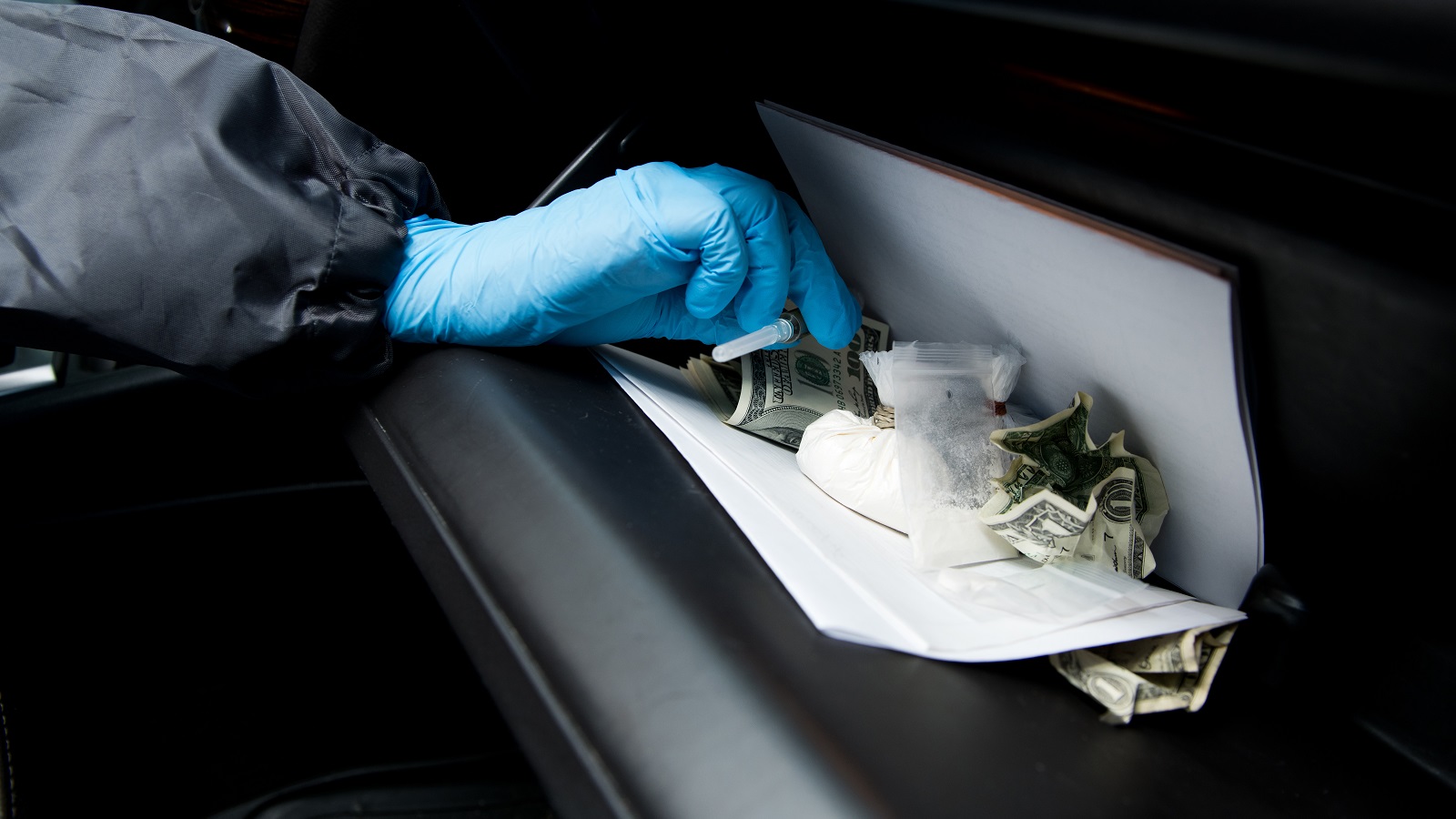
Generally, Chicago police are not allowed to search your car without a warrant unless an exception to the warrant requirement applies. Vehicle searches in Chicago, Cook County, and throughout Illinois have been the subject of several court rulings over the years, resulting in a confusing mess of civil rights colliding with exceptions in specific scenarios.
The Chicago criminal defense lawyers at Combs Waterkotte have a strong presence throughout all of Cook County. Our more than eight combined decades of practicing law means we understand the nuances of the Illinois Criminal Code, and we’re represented hundreds of clients whose criminal charges stemmed from questionable police vehicle searches.
In this guide, we’re going to clear up the confusion around what police are (and aren’t) allowed to do during a Chicago traffic stop. By the time you’re finished here, you should have a general understanding of what to do in these situations and how to assert your right when you’re pulled over by CPD.
What’s in this guide:
- Can a Chicago Police Officer Search Your Car?
- When Can Police Search Your Car in Chicago, Illinois?
- Can Chicago Police Search Your Car Based on the Smell of Cannabis?
- Can You Say No to Police Searching Your Car in Chicago?
- What Constitutes Probable Cause to Search a Vehicle in Chicago?
- What to Do If a Cop Asks to Search Your Car in Chicago
Can a Chicago Police Officer Search Your Car?
Under Article I, Section 6 of the Illinois Constitution, Chicago and Cook County residents are protected from unreasonable searches and seizures of their vehicles by police officers. These are the same protections afforded under the Fourth Amendment to the United States Constitution.
That said, there are certain situations in which a police officer is allowed to search your vehicle during a traffic stop (or even if it’s parked on your property). These situations include:
- When police have probable cause
- When police have your consent
- When police have a search warrant
- When there is a lawful basis for a vehicle search connected to an arrest
In other words, the Chicago Police Department is not allowed to search your vehicle “just because.” They’re only allowed to do so during certain scenarios.
When Can Police Search Your Car in Chicago, Illinois?
Protection from unreasonable searches and seizures is the standard. In order to overcome that standard, Cook County police must prove that certain exceptions exist in order to make a search reasonable. The following scenarios constitute some of the most common exceptions that end up allowing police to conduct a search of your vehicle.
Consenting to Searches
Many Chicago and Cook County residents may unwittingly allow a police officer to search their car without realizing they have the right to refuse consent in the first place. If an officer asks if they can search your vehicle and you voluntarily say yes, that’s not a violations if your rights. Just remember that:
- Drivers generally have the right to refuse consent to police searches of their vehicle
- Refusing consent alone does not create probable cause for the police
Probable Cause Searches
Chicago police are allowed to search your car is they have probable cause to do so. This typically occurs when law enforcement has reason to believe they’ll find evidence of a crime inside your car due to factors like:
- Visible drugs or weapons
- The odor of drugs or alcohol
- Admissions made by the driver during the stop
- Reliable tips from informants
- Alerts from drug sniffing dogs
Searches After an Arrest
Cook County law enforcement may sometimes search a vehicle after arresting its occupant, but their authority in these situations applies much more narrowly than most people may think. These searches hinge on the United States Supreme Court decision in the case of Arizona v. Gant.
In this famous case, police arrested Rodney Gant for driving with a suspended license. They handcuffed him, locked him in a patrol car, and searched his vehicle. After intense litigation, the case finally appeared before the United States Supreme Court, and the Court ruled the search as unconstitutional. They maintained that police may search a vehicle during an arrest only when:
- The arrestee could realistically access the vehicle during the search, or
- Officers reasonably believe evidence related to the arrest offense may be inside the vehicle
In other words, if you’re pulled over for driving under the influence, police generally cannot search your vehicle incident to arrest for evidence of an unrelated assault unless some other exception to the warrant requirement applies.
Drug Dog Sniffs During Traffic Stops
One of the biggest Illinois vehicle search cases was decided in 2005: the case of Illinois v. Caballes. This case was also adjudicated by the United States Supreme Court. It ruled that police may use drug-sniffing dogs during a lawful traffic stop without violating the Fourth Amendment.
The only exception to the ruling is that police are not allowed to extend a traffic stop improperly to give time for a canine unit to show up. If that happens in your case, it could violate your constitutional rights.
Plain View Doctrine
Chicago police are allowed to stop and search a vehicle if they see evidence of a crime in plain site. This often occurs during Cook County traffic stops when police can readily see:
- Open alcohol containers
- Visible firearms
- Drugs on the seat of a car
- Stolen property in plain view
Inventory Searches After Impoundment
Finally, CPD may conduct an “inventory search” of a vehicle after the car is lawfully impounded. This is done to document the contents of the vehicle, and any evidence seized may be used against you later at trial. In these instances, the justification for the search is to:
- Protect your property
- Protect police from theft claims
- Identify potentially dangerous items
Can Chicago Police Search Your Car Based on the Smell of Cannabis?
Historically, the smell of marijuana has been enough to justify Chicago Police Department searches of a vehicle during a traffic stop. Over time, though, the state of Illinois has increasingly narrowed police authority as marijuana has gained legal status in the state.
The Illinois Supreme Court has recently been wrestling with the question of the odor of marijuana during traffic stops and whether or not it provides police with probable cause for a search. Two particular cases have been adjudicated on this subject:
- People v. Molina ruled that because cannabis must be transported in odor-proof, sealed containers, the smell of raw cannabis indicates a violation of the law and gives police probably cause for a search
- People v. Redmond, however, ruled that the scent of burnt cannabis alone does not constitute probable cause because it doesn’t necessarily indicate illegal possession on its own
In practice, this means that probable cause for a warrantless search of a vehicle in Chicago or Cook County hinges on how the cannabis smells. A good defense attorney should be able to use this ambiguity to argue on your behalf.
Can You Say No to Police Searching Your Car in Chicago?
Yes, you do have the right to refuse police vehicle searches in Chicago, Illinois, provided police do not have a warrant and cannot justify exceptions like probable cause or plain-view evidence. Even if police violate your rights and continue with a search, your lawyer can attempt to suppress any evidence police might have uncovered if the search was truly illegal.
What Constitutes Probable Cause to Search a Vehicle in Chicago?
Under Illinois law, probable cause depends on the “totality of the circumstances” of the vehicle stop. Police have to be able to point to a specific fact suggesting that evidence of a crime may be inside the vehicle. They can’t just base their justification on a vague hunch or general suspicion.
That said, here are some common instances of legitimate probable cause during a Cook County traffic stop that would allow for police to search a vehicle lawfully:
- Admissions by the driver or passengers indicating criminal activity
- A drug-sniffing dog alert during a lawful traffic stop
- Seeing suspicious movements suggesting occupants are hiding evidence
- Illegal firearms or ammunition observed inside the car
- Open containers of alcohol or signs of impaired driving
- Blood, burglary tools, stolen goods, or other visible evidence tied to a crime
- Digital alerts from license plate readers connecting the vehicle to criminal investigations
- Probable cause developed during a DUI investigation
What to Do If a Cop Asks to Search Your Car in Chicago
Chicago police can feel imposing and authoritative when they ask to search your vehicle during a traffic stop. As overwhelming as the situation can be, though, it’s important to realize that you have rights and to exercise those rights at all time. Below is a step-by-step guide covering what to do when Cook County law enforcement asks to search your car.
Stay calm and keep your hands visible.
Start by pulling over safely, turning your radio off, putting your car in park, and keeping your hands on the steering wheel at all times unless instructed otherwise. Avoid any sudden movements to ensure your own safety and the safety of the officer.
Be polite, but do not overshare.
During a Chicago traffic stop, you must provide your license, registration, and proof of insurance when an officer asks for it. However, even when questioned, avoid explaining your actions, guessing why you were stopped, or volunteering any extra incriminating information.
Ask whether you are free to leave.
As the stop progresses, clearly ask, “Officer, am I free to go?” If the officer says yes, calmly drive away. If they say no, remain respectful as they continue their investigation. Do not physically resist, as this can escalate the situation and lead to additional charges.
If the officer asks to search your car, clearly refuse consent.
You don’t need to say much beyond, “I do not consent to a search.” Don’t say it aggressively, and do not physically block the officer. A clear verbal refusal will suffice.
Do not lie or interfere.
During your interaction with the police, do not provide any false information, and don’t try to hide, destroy, or move anything inside the vehicle. It’s also imperative never to touch the officer or try to prevent the search in any way. Any violations of your rights can be addressed with an attorney later.
Ask whether the officer has a warrant or probable cause.
If the officer asks to search your car, ask, “Are you searching based on a warrant or probable cause?” If they have neither and continue their search anyway, your refusal can help to preserve the issue later in court.
Use your right to remain silent.
If the police officer asks about anything they find in your vehicle, say, “I’m going to exercise my right to remain silent.” Don’t answer questions about where you are coming from, where you are going, or whether there is anything in the car.
Do not consent just because the officer says it will be faster.
Chicago police may casually say, “Mind if I take a look? It will speed up the process.” You are still allowed to say no. Understand that refusing consent is not an admission of guilt. It’s your right under the law, and police know this.
Pay attention to details.
If and when you can, note the officer’s name, badge number, and agency, and the location, time, and reason given for the stop. Remember whether or not a drug-sniffing dog was used and whether the officer seemed to extend the stop on purpose to allow time for a canine unit to show up. Also, keep in mind what the officer claimed gave them probable cause for the search.
Do not fight the search.
Even if the search seems illegal for you, the safest place to challenge it is always in a court of law. Physical resistance can lead to additional charges. It can be very difficult to exercise patience and restraint, but doing so can bode very well for you.

Call Combs Waterkotte If You Were the Victim of an Illegal Vehicle Search in Chicago
If you believe you were subject to an illegal vehicle search by Chicago or Cook County police, call the criminal defense attorneys at Combs Waterkotte or contact us online today. We’ll go over every detail of your stop to ensure your rights weren’t violated and, if they were, we’ll fight to have the criminal charges against you reduced or dismissed.