
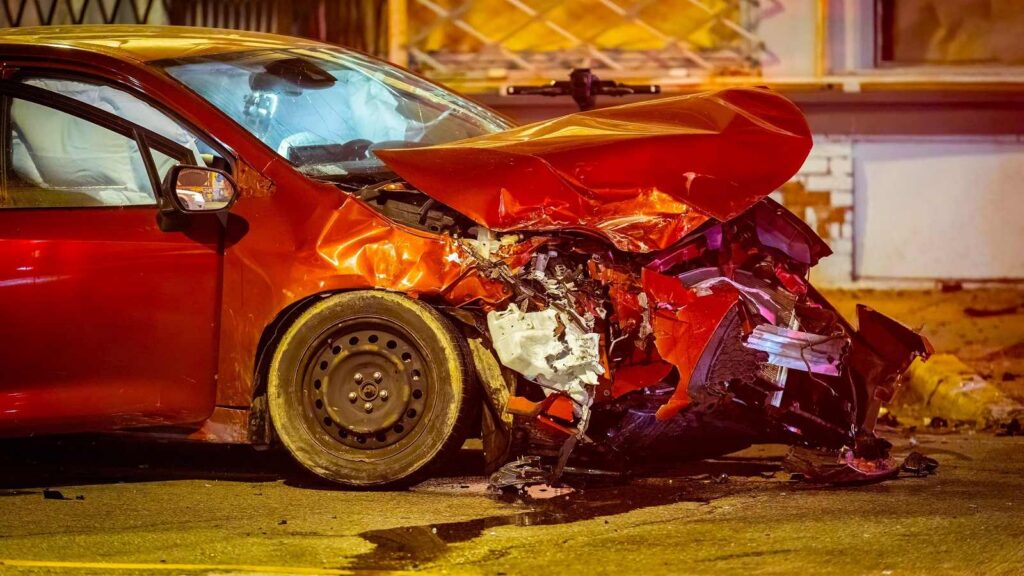
DWI Resulting in Death Lawyer Kansas City, MO
Hire the leading DWI Law Firm in Kansas City, MO to protect your freedom, rights, and future. Whether you have been charged with driving while intoxicated or arrested, we can help.
TO COMBS WATERKOTTE,YOU ARE WHY WE EXIST.


DWI Resulting in Death Lawyer Kansas City, MO
Driving while intoxicated (DWI) is a serious offense. And a DWI resulting in death elevates the violation to a Class B felony, which carries a penalty of up to 15 years in prison.
Combs Waterkotte has defended over 15,000 criminal cases, saving our clients more than 1 million days in prison collectively. If you’ve been charged with a DWI resulting in death, we can provide aggressive yet compassionate representation.

I owe my life to Combs Waterkotte. If not for them, I would be spending the rest of my life behind bars. There is no amount of words that can explain what they did for me and my family. Its the highest recommendation that I can give.
Alexander B.
Felonies
Verify on

If I could give Steve and his team 10 stars I would in a heartbeat. Was facing more then one felony charge and after these guys found the arresting officer violated my 4th Amendment Rights and those charges were dismissed. My family and I can't thank you enough.
Dean J
Felonies
Verify on
I was hands down guilty. ON VIDEO !!! In a smaller town, and a job dealing with the public, this was devastating. I made one phone call and spoke for maybe 15 minutes. I DIDN'T appear in court. I am extremely impressed. QUIETLY relieved of the matter!
Y.I.V.
Theft
Verify on
My fiance had a felony drug charge and Combs Waterkotte got it dismissed! There were no fines, court cost, nothing. Chris is loyal, professional, knowledgeable, and a man of his word. We are forever grateful for you.
Kimberly T.
Drug Crimes
Verify on
If I was found guilty, it would have been over 100 years in prison. They promised me that they would fight like hell and get me out of it. After everything was done, I just felt free. Like this wasn’t gonna end with me rotting away in a prison cell. I felt like I could start my life and have a fresh start.
Caleb
Assault 1st, Armed Criminal Action
Verify on
I was facing, probably 18 years… I actually got 5 years probation and 40 hours of community service. Without Combs Waterkotte’s help, I don’t think my family could have made it without me. It was just a written book to where it's a perfect ending.
Chris
Unlawful Use of a Weapon, Armed Criminal Action
Verify on
I went through what was supposed to be one of the top law firms in St. Louis. They said I wouldn't have no chance. I end up firing the other lawyer and everything and going with Chris. I felt like Combs Waterkotte actually did something for me and wasn't I wasn't just another number on somebody's desk.
Willy
DWI/DUI
Verify onI owe my life to Combs Waterkotte. If not for them, I would be spending the rest of my life behind bars. There is no amount of words that can explain what they did for me and my family. Its the highest recommendation that I can give.
Alexander B.
Felonies
If I could give Steve and his team 10 stars I would in a heartbeat. Was facing more then one felony charge and after these guys found the arresting officer violated my 4th Amendment Rights and those charges were dismissed. My family and I can't thank you enough.
Dean J
Felonies
I was hands down guilty. ON VIDEO !!! In a smaller town, and a job dealing with the public, this was devastating. I made one phone call and spoke for maybe 15 minutes. I DIDN'T appear in court. I am extremely impressed. QUIETLY relieved of the matter!
Y.I.V.
Theft
My fiance had a felony drug charge and Combs Waterkotte got it dismissed! There were no fines, court cost, nothing. Chris is loyal, professional, knowledgeable, and a man of his word. We are forever grateful for you.
Kimberly T.
Drug Crimes
If I was found guilty, it would have been over 100 years in prison. They promised me that they would fight like hell and get me out of it. After everything was done, I just felt free. Like this wasn’t gonna end with me rotting away in a prison cell. I felt like I could start my life and have a fresh start.
Caleb
Assault 1st, Armed Criminal Action
I was facing, probably 18 years… I actually got 5 years probation and 40 hours of community service. Without Combs Waterkotte’s help, I don’t think my family could have made it without me. It was just a written book to where it's a perfect ending.
Chris
Unlawful Use of a Weapon, Armed Criminal Action
I went through what was supposed to be one of the top law firms in St. Louis. They said I wouldn't have no chance. I end up firing the other lawyer and everything and going with Chris. I felt like Combs Waterkotte actually did something for me and wasn't I wasn't just another number on somebody's desk.
Willy
DWI/DUI
DWI Offenses in Missouri
Experts blame impaired driving for approximately 18% of Missouri’s traffic-related deaths. In response, the state has imposed harsh penalties on anyone convicted of causing a traffic death while intoxicated.

“It was my 2nd DWI, but not only did I NOT lose my driving license, but charges were reduced to suspended imposition of sentence… I would ABSOLUTELY recommend [Combs Waterkotte] to anyone who is looking for a great defense lawyer.”
-T.S. | Combs Waterkotte Client
In fact, an earlier version of Missouri’s homicide statutes classified a DWI resulting in death as a form of manslaughter. The law was amended in 2017 to remove fatal DWI accidents from the homicide statutes. Instead, a traffic death increases the penalties for a DWI conviction.
Why Combs Waterkotte is the best Law firm for your case.
Real results for people just like you.

Offenses in the Missouri Revised Statutes That Cover DWI Resulting in Death
The Missouri Revised Statutes contain one offense that specifically applies to fatal DWI accidents. However, there are two additional charges that prosecutors might bring. The three possible charges are as follows.
DWI
Someone drives while intoxicated when they operate a motor vehicle in an “intoxicated condition,” meaning under the influence of alcohol, drugs, or a combination thereof.
The law doesn’t define “under the influence.” However, the Missouri Supreme Court has defined it to mean that a substance has impaired the driver’s ability to operate a motor vehicle.
Common symptoms of impairment include:
- Slowed reactions
- Loss of balance and coordination
- Confusion
- Poor judgment
- Bloodshot eyes
- Slurred speech
Prosecutors often use police officer testimony to prove impairment. The investigating officer might testify about the defendant’s physical appearance, ability to answer questions, and performance on a field sobriety test.
Field sobriety tests use physical and cognitive tasks to indirectly measure a driver’s impairment level. Missouri law allows prosecutors to introduce video of the test during the driver’s trial, allowing the jury to observe the accused’s state.
Evidence of impairment can also come from non-police witnesses. For example, a witness might testify about seeing the defendant drink alcohol or use drugs shortly before the accident, or engage in erratic driving behavior.
Importantly, blood alcohol content (BAC) alone isn’t enough to prove intoxication.
For one thing, BAC can’t tell a police officer anything about a driver’s condition when they’ve allegedly used drugs. Additionally, unlike many states, a BAC over the legal limit isn’t a form of DWI in Missouri. Instead, it’s a separate offense known as “driving with excessive BAC.” This distinction can work both ways.
Someone with a high BAC may be able to prove that their driving ability wasn’t impaired and, therefore, that they didn’t commit DWI. For example, someone with high body mass, a fast metabolism, or a high alcohol tolerance might have an excessive BAC without committing a DWI.
On the other hand, a smaller person or someone with a low alcohol tolerance can commit a DWI even if their BAC was below the legal limit.
The punishment for driving with excessive BAC depends solely on the driver’s prior DWI record. Conversely, the punishment for DWI depends on both the driver’s history and the outcome of any crash. The most serious penalties for DWI apply to drivers whose impairment causes a traffic death.
First-Degree Involuntary Manslaughter
First-degree involuntary manslaughter occurs when someone causes another person’s death due to recklessness. Under state law, “recklessness” means that someone consciously disregarded a substantial and unjustifiable risk, which happens when someone knows the risks involved with a particular act but willfully ignores them.
Drunk driving is a prime example of recklessness in many cases.
Drivers generally know through driver education and training, advertisements, and experience that drunk driving poses a substantial and unjustifiable risk to others. When someone gets behind the wheel after drinking, they arguably must ignore everything they know about impaired driving.
Second-Degree Involuntary Manslaughter
Second-degree manslaughter is another possible charge when a drunk driver accidentally causes a fatal collision.
This offense arises when someone causes another person’s death due to criminal negligence. Criminal negligence occurs when someone fails to be aware of a substantial and unjustifiable risk, and their failure represents a gross departure from the level of care expected under the circumstances.
The difference between recklessness and negligence is the accused’s awareness of the risk their actions pose. “Recklessness” means the accused knew the risks but consciously disregarded them. “Negligence” means the accused didn’t know of the risks but should have.
Possible Defenses Against Charges of DWI Resulting in Death in Kansas City, MO
When you hire an attorney, they’ll tailor a defense strategy to your specific situation based on the facts of your case. That strategy may include the following defenses.
No Causation
Prosecutors must prove that you caused the accident due to criminal negligence. They can’t secure a conviction if the other driver caused the accident.
To illustrate, suppose that you were intoxicated, but the other driver ran a stop sign and hit your car. Even if they died, you wouldn’t be criminally responsible. You may have committed DWI or driving with excess BAC, but you would have a defense against causing the death.
Involuntary Intoxication
A lack of intent generally isn’t a viable defense for DWI because the statute doesn’t require intent. The omission of intent is deliberate because impairment can negate intent. Consequently, the statute only requires proof that the accused was intoxicated and operated a motor vehicle.
However, this rule has one exception based on the idea that it would be unfair to prosecute someone for a crime they had no part in committing.
Someone who became intoxicated involuntarily can argue that they had no knowledge that their driving skills would be impaired. This defense might apply if, unbeknownst to you, someone spiked your drink or gave you a cannabis gummy before you drove.
Alternate Explanation for Condition
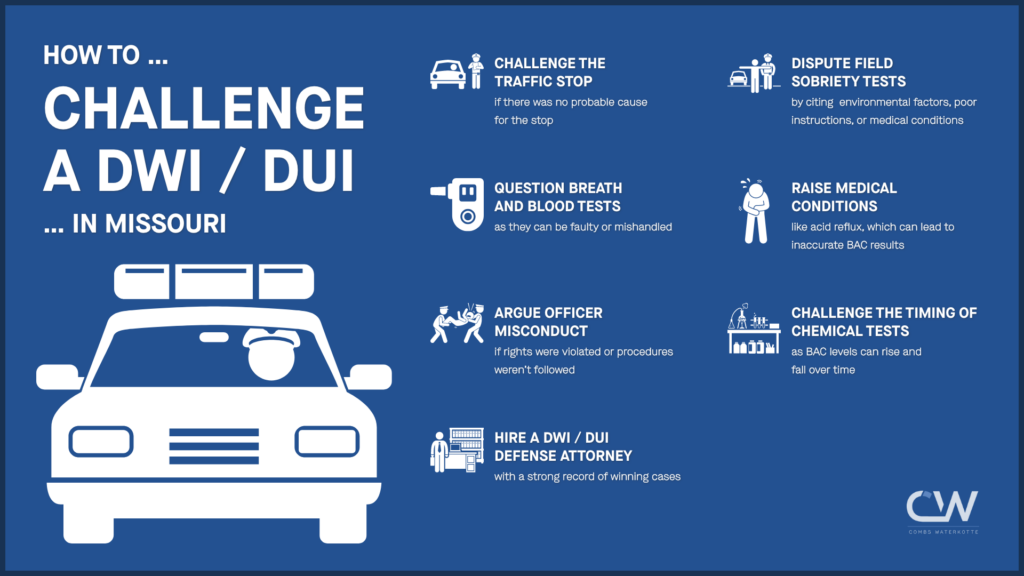
Most prosecutions for DWI after fatal accidents arise from a police officer’s post-accident investigation. The officer might develop a suspicion that you were under the influence of drugs or alcohol based on your behavior at the crash scene. They might follow up on their suspicions by conducting a field sobriety test.
However, there are many possible explanations for an unusual physical or mental condition in the aftermath of a crash. The shock of an accident may cause confusion, memory loss, and poor concentration. Similarly, a brain injury, such as a concussion, might explain slurred speech, poor balance, and a general lack of coordination.
This defense is usually supported by witness testimony and medical records.
Alibi
Witnesses to a crash might be mistaken about your role in it. For example, you may have been a passenger in the vehicle while your sober friend acted as the designated driver.
If you were erroneously identified as the intoxicated driver, alibi evidence, such as witness statements, traffic camera footage, and forensic analysis, might help your lawyer explain your true role in the accident.
Penalties Upon Conviction for a DWI Resulting in Death in Kansas City
The punishment for a DWI that causes death depends on the specific charges. Prosecutors generally start with charges for a DWI resulting in a fatal accident. This offense is punishable as a Class B felony, which carries a sentence of five to 15 years in prison.
However, we may be able to negotiate for an alternative charge of first-degree involuntary manslaughter. This offense is a Class C felony carrying a possible prison term of three to 10 years.
Depending on the circumstances, we may be able to pursue a deal for a charge of second-degree involuntary manslaughter, a Class E felony. This offense carries a potential sentence of up to four years in prison.
| Potential Charge | Possible Prison Sentence |
|---|---|
| DWI resulting in a fatal accident | Class B felony — 5 to 15 years |
| First-degree involuntary manslaughter | Class C felony — 3 to 10 years |
| Second-degree involuntary manslaughter | Class E felony — up to 4 years |
Why Hire Combs Waterkotte to Handle Your Case Involving DWI Resulting in Death?

Our lawyers have over 100 years of experience representing those accused of DWI and accidental homicide. These cases often receive a lot of press attention. Moreover, videos from cell phones, traffic cameras, and body-worn cameras can shape public opinion without telling the whole story.


We’ll make sure your version of events is heard and push for a fair process, even when public opinion threatens to turn jurors against you. We have the resources and legal skills to stand up to the state when your freedom and reputation are on the line.
How We Can Defend You After a DWI Resulting in Death in Kansas City, MO
We’ll start with an in-depth discussion of your accident and the defenses you may have. Then, we’ll scrutinize the prosecution’s evidence and gather evidence for your defense. Once we have a theory of the case, we can discuss possible resolutions with prosecutors.
Legal Video:

Legal Video:
If we can persuade the prosecution that you weren’t driving or that you weren’t impaired, they may dismiss your charges. If there are mitigating circumstances, we’ll try to secure a plea agreement for reduced charges or a downgraded sentencing recommendation.
If we can’t secure a dismissal or reduction in your charges, a trial may be unavoidable. Our capable attorneys will argue your case before a jury and advocate forcefully for an acquittal.
Contact Combs Waterkotte to Discuss Your DWI Defense

A DWI conviction can come with a lengthy prison sentence and lifetime stigmatization. Combs Waterkotte can help defend against these charges, with aggressive negotiation and strategic litigation. Contact us online or at (314) (314) 900-HELP today to learn more about the defenses you may raise in your criminal case.
Resources
For more information on criminal defense in Kansas City or anywhere else in Missouri, call the Combs Waterkotte criminal defense attorneys right away at (314) 900-HELP or contact us online for a confidential consultation.
Explaining DWI/DUI Cases in Missouri
Can You Get Probation for DWI/DUI?
Should/Can I Refuse a Blood Test?
Hidden Costs of a DWI Conviction in Missouri
Should/Can I Refuse a Field Sobriety Test?

Free book
Don’t “Blow” Your DWI/DUI Case: Key Mistakes to Avoid
Combs Waterkotte, Missouri and Illinois’s leading DWI/DUI law firm, has handled over 10,000 cases successfully. This ebook guides you through the DWI/DUI defense process and helps you avoid key mistakes.

